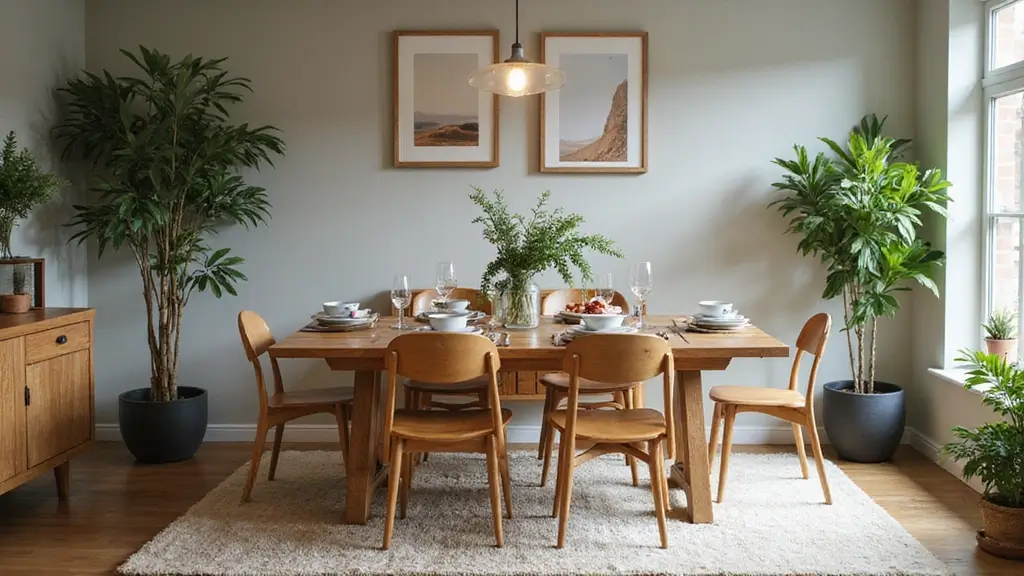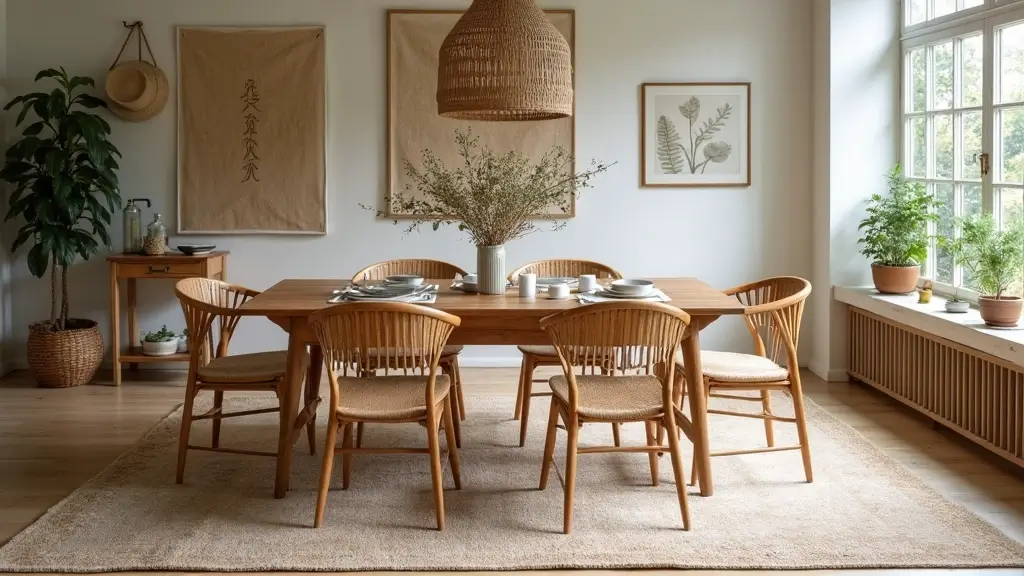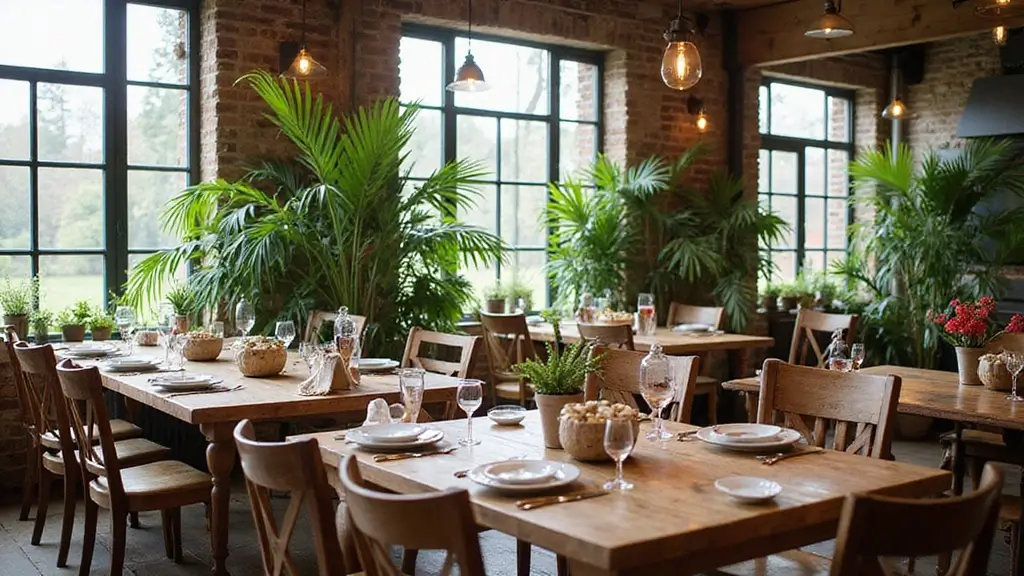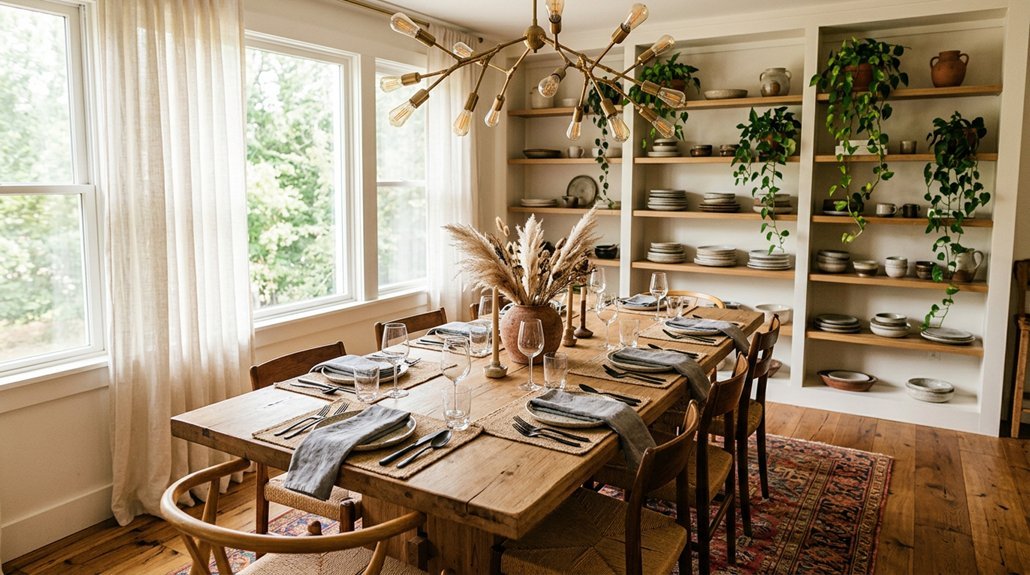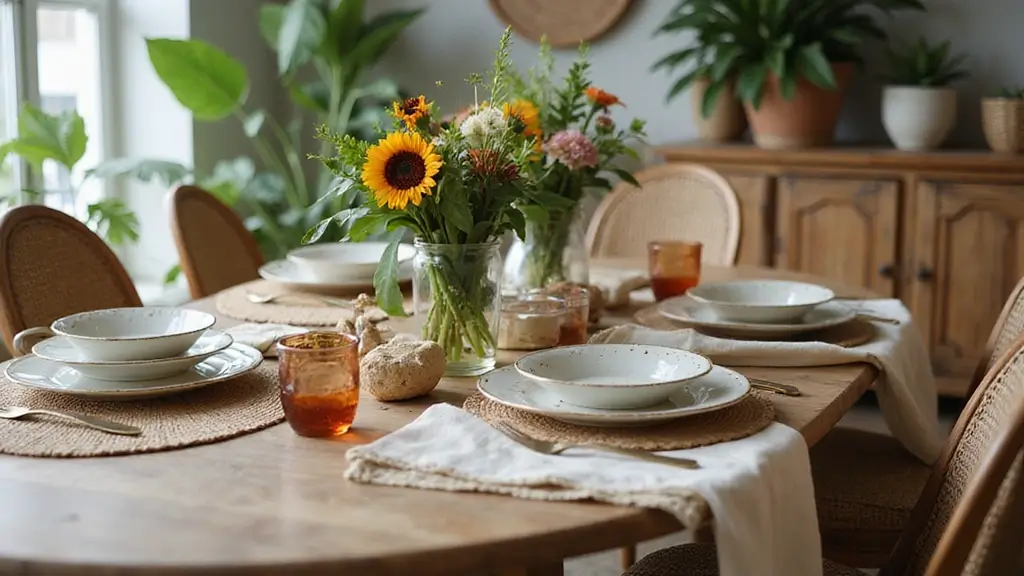

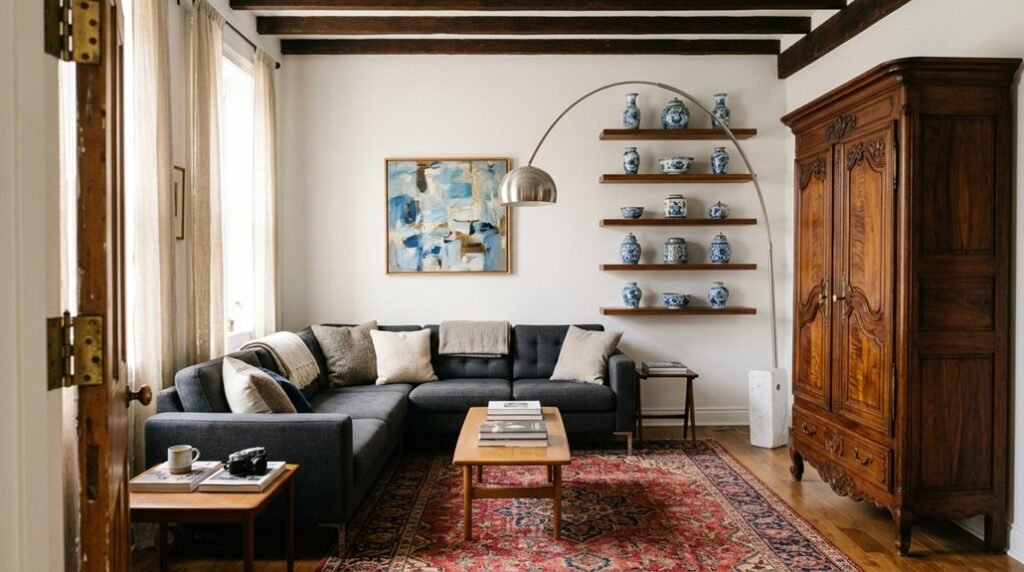
You want your home to feel collected, not chaotic, but mixing modern and traditional pieces can trip you up fast. The wrong pairing turns eclectic into disjointed, and suddenly you’re staring at a room that fights itself. Here’s the thing: it doesn’t have to be that hard. There’s a method that makes old and new talk to each other instead of past each other, and it starts before you buy a single thing.
Start With a Unifying Color Palette
Where do you begin when two distinct design languages need to share one room? You start with a unifying color palette that bridges modern and traditional elements seamlessly.
You select shared hues—blues, greens, mauves, ochres, wood tones, brass, black, or white—to create cohesion between disparate pieces. This palette governs every purchase and placement you make, ensuring vintage items echo the same tones found in your modern selections.
You apply these colors consistently across accessories and textiles, using rugs, pillows, and artwork to visually link contrasting styles. When you add new pieces, you test how they interact with existing items, refining until the space feels harmonious rather than chaotic. Your unifying color palette transforms potential conflict into balanced, intentional design that feels collected, not cluttered.
Recommended Products

Machine Washable & Stain-Resistant: Effortlessly clean this rug in your washing machine on a gentle cycle; made from high-quality faux wool fibers that resist stains, spills, and shedding, making it ideal for busy households with kids and pets.

Machine Washable Area Rugs: Our living room rug, one of the 8x10 area rugs, surfaces is resistant to stains and dirt, and can be easily cleaned with a rag or vacuum cleaner; for deep cleaning, use a washing machine

Pile: Polypropylene - Backing: Cotton - Weave: Machine Made (Power-Loomed) - Made in: Turkey
Choose Your Lead Style, Then Layer the Other
Decision anchors the entire mixing process. You’ll pick one style—modern or traditional—to dominate your space, then focus on layering select pieces from the other. This creates cohesion without visual chaos. Think of your lead style as your foundation; everything else supports it.
Build design bridges to fuse aesthetics seamlessly. You’ll pair a traditional ceiling with modern lighting, or upholster a clean-lined modern chair in classic damask. These connections make the mix feel intentional.
Align your color palette across both styles through shared neutrals or repeated accent hues. This weaving technique unifies everything visually.
Prioritize dominant forms—clean lines for modern, curved silhouettes for traditional—so your secondary style enhances rather than competes. Pin your plan before purchasing, limiting yourself to two or three strategic layers. You’ll visualize exactly how each piece strengthens your lead.
Recommended Products

PRODUCT INFORMATION: Pack of 2, 18X18 inch pillow covers without insert

Special Pattern: Comes with 4 packs, these 18 x 18 inches decorative pillow covers are single-sided printed with vivid patterns, which are suitable for home decorations

Design Color: Solid Silver, Background Color: Grey/Brown Texture, Both Sides Same Colored Fabric
Anchor the Room With One Signature Piece From Each Style
Why settle for one aesthetic when you can command a room through deliberate tension? You’ll anchor your space by selecting one signature piece from each style—perhaps a sleek modern sofa against an ornate traditional credenza.
Choose your dominant style first, then introduce the second through accents that complement rather than compete. You’ll achieve design balance by ensuring both pieces share a unifying color or finish; think blues, greens, mauves, or ochres threading through each element.
Pair your traditional curves and textures with modern clean lines and neutral backgrounds to prevent visual clashes. Keep both pieces proportionate to your room’s scale, leaving generous breathing room around each. This intentional restraint stops clutter and lets each style speak clearly without overwhelming your space.
Recommended Products

Height: 12.25 | Width: 4.5 | Depth: 5.75 | Weight: 0.85 | Location Rating: Damp | Numbers of Bulbs: 1 | Wattage Per Bulb: 60W | Total Wattage: 60W | Bulb Base: Candelabra (E12) | Compatiable Bulbs: B10 | Compatible with Standard Wall Dimmer

Outstanding Design: The 3-light bathroom lights are constructed with an all-metal lamp body, including metal holding rings. This wall mount light finished in a black and gold stylish appearance! It accommodates 3 40W maximum bulbs, each of which is highlighted by a globe transparent glass shade to evenly distribute an inviting glow throughout your bathroom or powder room. Total 19.69 inch L x 6.96 inch W x 9.11 inch H, back plate diameter 5.12inch.

Sophisticated Design with Functional Appeal: This 3-light bathroom fixture features a sleek black frame accented with antique brass, creating a refined contrast that enhances any space. The glass globe shades diffuse a soft, inviting glow, offering both style and practicality. Its versatile design seamlessly fits a range of interiors, from farmhouse to modern, making it an elegant lighting choice for bathrooms, hallways, and beyond.
Upgrade Lighting Fixtures First for Instant Cohesion
Once you’ve anchored your room with signature pieces, you’ll want to swap your light fixtures before tackling anything else. You should tackle lighting fixtures first because they instantly shape mood, cohesion, and how your styles balance together. You’ll create immediate visual unity by choosing fixtures that marry warm metallics like brass with clean, modern lines. These pieces bridge traditional and contemporary aesthetics effortlessly.
You can then build outward, addressing cabinetry colors and hardware that reinforce your cohesive palette. Prioritize statement fixtures that complement shared tones—blues, greens, mauves, or ochres—to strengthen your Modern Traditional blend. By putting lighting fixtures first, you’re establishing the connective tissue that makes everything else fall into place.
Recommended Products

【Mid-Century Modern Design】This mid-century modern console table exudes elegance with its sleek conical legs, smooth clear glass top, and walnut-hued MDF panels. Its design is both simple and exquisite, crafted from sturdy materials that showcase the owner's refined taste.

Extra-Long Design: At 70.86", this exceptionally long entrance console table is designed to create a grand impression. Its extra-long length allows you to adorn it with your favorite decorative pieces, picture frames, or even a stylish table lamp. Leave a lasting impression on your guests, right from the entrance.
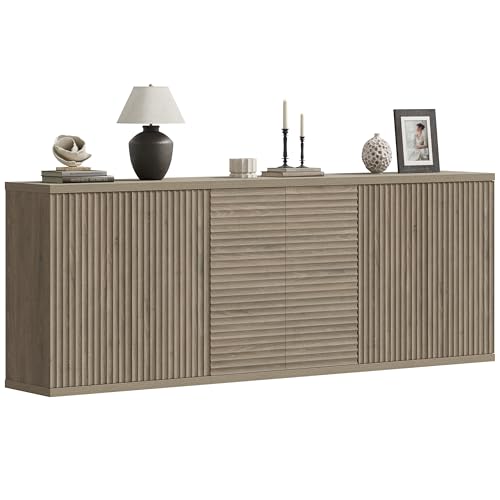
【DIY Fluted Doors】- A key feature of these fluted doors is the ability to assemble the left and right panels to your preference, whether for a symmetrical or asymmetrical design. This flexibility encourages creativity, making them ideal for adding a personal touch to your home. Perfect for DIY enthusiasts, these doors let you upgrade your space effortlessly without costly professional help. Customizable panel arrangements ensure a unique final design tailored to your style.
Source Vintage Pieces That Bridge Both Styles
With your lighting fixtures anchoring the room’s atmosphere, you’re ready to layer in pieces that carry history and character. You’ll find that vintage pieces serve as your most powerful tools for bridging modern and traditional styles. Hunt for items at thrift stores, estate sales, or antique markets—look for pieces whose lines, materials, or finishes echo your established color palette. You’re not collecting random relics; you’re selecting anchors that reinforce harmony.
Let one style dominate your space, then introduce a few carefully chosen vintage pieces to create balance. You’ll pair that carved wooden sideboard or patinated mirror with contemporary lines and neutral backgrounds, maintaining warmth without chaos. If needed, you can plan this integration over time, ensuring each addition strengthens your cohesive vision rather than disrupting it.
Recommended Products
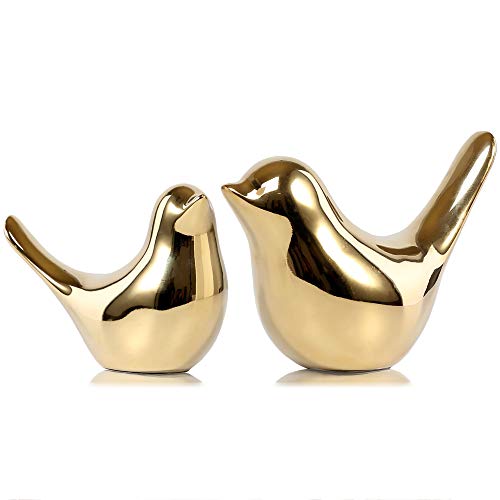
FANTESTICRYAN Small Golden Blessing Birds Statue Brings Us Peace and Love.
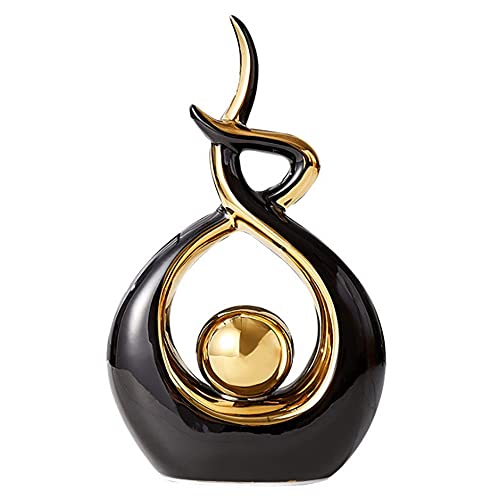
【DEMENSION】:The small size of the unique ceramic abstract figurine decoration is 6.7*2.36*10.63inch ,the large size is 6.3*2.36*12.2inch, right-sized sculptures for modern home decor.

A soft ivory-cream base dominates the field, with muted blue and navy geometric medallions creating the pattern — accented by warm beige and cool gray tones that give the whole palette a faded, antique softness.
Refresh Vintage Chairs With Modern Fabrics
Where should you focus next? Refresh your vintage chairs with modern fabrics to soften those traditional silhouettes while preserving their character. You’ll bridge eras by maintaining the old frame and updating what surrounds it.
Pick a shared bright color palette across your refreshed chairs so they visually connect with your contemporary pieces. Balance those traditional thrifted frames with straight-lined modern legs or hardware—you’re avoiding that cluttered thrift-store look. Test seating comfort before committing to any fabric; prioritize function alongside style.
Then pair your updated chairs with neutral or modern surrounding furniture and lighting. You’ll maintain that cohesive Modern Traditional vibe without letting the past overpower your present. Reupholstering isn’t just about aesthetics; it’s your chance to make a traditional piece functional and fresh for today’s living.
Recommended Products

Neutral Vintage Rug: This area rug features a trendy retro design adorned with floral pattern. Its unique tones blend perfectly with your home decor. Its unique texture and patterns add a layer of sophistication and comfort to any room. Available in multiple sizes and colors this vintage floral rug is suitable for living room bedroom dining room kitchen hallway bathroom office and entryway


Luxuriously Soft & Non-Slip: Crafted with denser low-pile faux wool fibers, this 5x7 area rugs offer a soft and gentle touch underfoot. The enhanced non-slip TPR backing keeps it securely in place on any floor, providing peace of mind for all your family members — whether it's kids or pets
Pair Your Modern Sofa With a Traditional Rug
Now shift your attention from individual chairs to the floor itself. Pair a modern sofa with a traditional rug to create a clear anchor that blends contemporary seating with classic patterns and textures. Choose a traditional rug with muted or complementary colors that echo other furniture tones to unify the space without competing with the sofa. Consider scale carefully: a larger traditional rug under your modern sofa helps establish proportion and cohesive grounding. Balance the look by incorporating modern accessories, like a sleek coffee table or minimal art, that pick up the rug’s color family. Ensure the rug’s material and finish complement the room’s overall palette, aiming for warmth that softens the modern lines of your sofa.
Recommended Products

Design Color: Solid Light Blue Gray, Background Color: Gray / Blue Texture, Both Sides Same Colored Fabric

PRODUCT INFORMATION: Pack of 2, 18X18 inch pillow covers without insert

Design Color: Solid Burgundy, Background Color: Black/Brugundy Texture, Both Sides Same Colored Fabric
Blend Wood Finishes Without Visual Conflict
A successful mix of wood finishes begins with a clear plan: decide whether modern or traditional will dominate your space, then weave in touches of the other style to keep things balanced. You’ll avoid chaos by establishing this hierarchy before mixing styles through your wood selections.
Limit yourself to two or three tones—perhaps light oak, warm walnut, and a painted or whitewashed finish—to prevent visual conflict. Tie these finishes together using shared colors, textures, or shapes that appear across both traditional and modern pieces.
Create bridges between eras by painting a traditional ceiling in a modern hue, or pairing sleek modern furniture with a classic wood finish. These connections harmonize contrasts while supporting your dominant style. Always prioritize cohesive mood and function, ensuring your space remains comfortable and genuinely homey.
Recommended Products

Timeless Elegance: Elevate your space with this stunning chandelier, featuring a sleek black metal frame accented with elegant gold details. The gracefully curved support arms add a touch of sophistication, while transparent glass shade creates a visually open and airy feel, making it an ideal choice for kitchens, dining rooms, foyers, or living spaces.

[Contemporary Elegance] Elevate your space with the modern vanity light that seamlessly infuses glamour into any setting. The sophisticated black and plated brass finish exudes a sense of refinement, complemented by clear glass dome shades that contribute to a sleek and elegant aesthetic. Illuminating with three lights, this brass vanity light ensures abundant brightness to enhance your grooming routine.
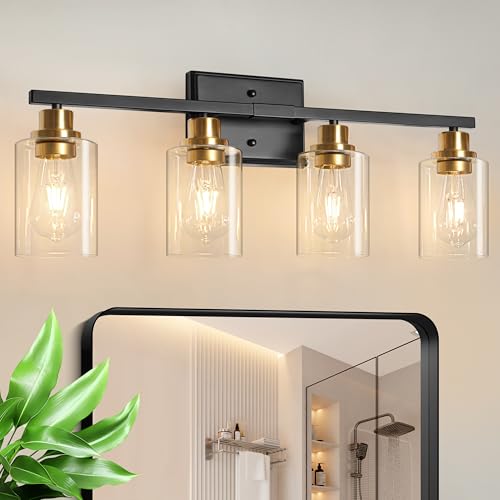
Modern Minimalist Design: This 4-light bathroom light fixture features matte black and gold finish lamp frame and clear glass shades,which is suitable for various decoration styles. A perfect choice to enhance aesthetics for bathroom remodel.
Curate Accessories to Avoid a Cluttered Mix
How do accessories actually bridge modern and traditional styles without overwhelming your space? You anchor the room with a dominant style, then introduce a limited number of contrasting pieces to maintain cohesion. You curate accessories with a shared color palette, textures, or shapes to weave both styles together rather than mix aimlessly.
You use bridges—furniture or architectural elements that fuse both styles—to create harmony, such as pairing traditional upholstery with ultra-modern furnishings. You prioritize quality over quantity, rotating and refining accessories to avoid a cluttered look that undermines your blend. You reference a cohesive mood board to visualize how accessories from both styles will read as a unified space. This disciplined approach lets you layer intentionally without chaos.
Recommended Products

Extraordinary Storage & Practical Organization: - Maximize your space with this sideboard cabinet, featuring 2 adjustable shelves and 2 pop-up doors. At 92.7"W x 34.1"H x 15.6"D, it easily stores dishes, glassware, or decor while keeping your home clutter-free. Ideal as a buffet table, credenza, coffee bar table or accent cabinet for living, dining, or kitchen spaces.

Modern Accent Cabinet- This 4 door storage cabinet with water ripple design is suitable for decorating most homes, and the combination of gold and black will provide an attractive visual effect

【Extraordinary Storage Space】- Overall dimensions: 15.6" D x 103.8"W x 34.6"H. This sideboard buffet cabinet offers significantly more storage space compared to standard models, making it perfect for storing your dining essentials, serving utensils, and decorative items. Its spacious interior provides ample room for organizing and tidying up your dining area or kitchen. Enjoy ample space for dishes, glassware, and more in this larger-than-average buffet cabinet.
Live With Your Mix Before Finalizing It
Why rush to lock in a design when your space can teach you what works? After establishing your dominant style, introducing bridging pieces, and visualizing your mix, you’ve laid the groundwork for mixing styles successfully. Now, let the room breathe.
Live with your arrangement for months—or even up to five years. You’ll discover how traffic flows, where your eye naturally rests, and whether that modern sofa truly converses with your traditional credenza. Notice if colors clash under different lighting or if textures feel jarring at certain hours.
This patience prevents costly mistakes. You might find your mix needs subtle recalibration: perhaps fewer competing shapes or an additional unifying finish. Trust this process. Your space reveals truths no mood board can predict, ensuring your final design feels authentic and enduring.
Recommended Products

QUALITY MATERIAL: The pillow cover is made of high-density linen fabric.which has better visual experience and linen texture compared to traditional linen texture.Our pillow covers are of good workmanship.they are tightly sewn without loose threads

Traditional style cabinet pull adds a sophisticated, classic touch to cabinets, drawers or furniture and has an overall length of 6-1/16 inches with a 5-1/16 inch center-to-center measurement between mounting holes

Package Includes: Two pillowcases, inserts or fillers not included. The hidden zipper adds a touch of sophistication while upholding the cover's clean aesthetic. Our team pays meticulous attention to every detail, ensuring the highest quality and excellence in our products
Conclusion
You’ve got everything you need to blend modern and traditional styles seamlessly. Trust your instincts, let your unifying palette guide you, and don’t rush the process. Live with your choices, adjust as you go, and soon you’ll create a home that feels both timeless and fresh—uniquely yours.