
You’ve probably stood in front of a pillow display, paralyzed by choice, wondering how to stop your sofa from looking like a garage sale. It’s not about buying every pattern you love—it’s about building a system. The trick starts with one piece you already own, and from there, you’ll layer sizes and textures that pull the room together without trying too hard. But where do you actually begin?
Start With a Throw Pillow Color Scheme You Actually Love
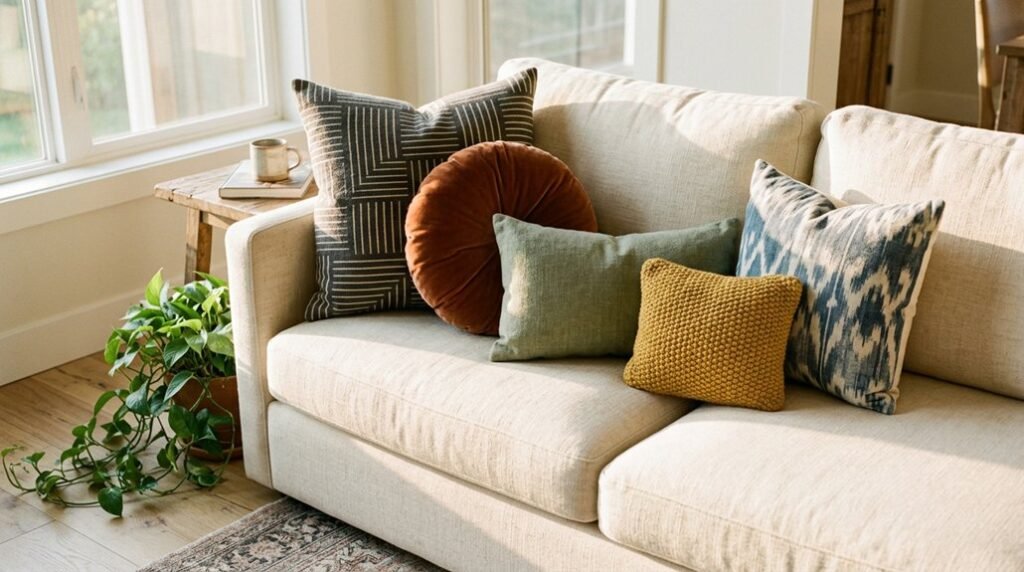
Where do you even begin when your sofa looks bare and every pillow aisle feels overwhelming? You’ll start by building a pillow color scheme you actually love. Look around your room and pull 2–3 colors from your rug, curtains, or artwork—neutrals like ivory, gray, or tan anchor everything while your dominant color commands the largest pillows and accents sparkle on smaller ones.
You’ll want to grab a lead patterned pillow first, one that contains your full palette. From there, you’ll layer two smaller patterns sharing those same hues for cohesive pattern mixing that feels intentional, not chaotic. Stick to an odd-numbered arrangement—three or five pillows create that casual, collected vibe you’re after. You’ll distribute them across your seating, and suddenly your bare sofa transforms into something pulled together and genuinely yours.
Recommended Products

Vintage Botanical Design: Featuring a delicate white wildflower on a deep black background, this vintage pillow cover creates a moody botanical look that complements cottagecore, farmhouse, rustic, and eclectic interiors.

1.【Eco-Friendly Digital Printing】 Crafted with eco-conscious digital printing and soft organic cotton, these decorative pillow covers are as sustainable as they are stunning. Thanks to excellent color fastness, the vibrant patterns resist fading and stay fresh-looking even after many washes. Gentle on the skin and free from irritation — perfect for everyday comfort.
Size Your Throw Pillows to Fit Your Sofa
How exactly should you arrange pillows so your sofa doesn’t look cluttered or sparse? You start with larger square cushions—22×22 inches—at the back to ground your sofa arrangement, then layer medium 20×20 and smaller 18×18 or lumbar pillows in front for depth.
For sectionals, you’ll want euro sizes like 26×26 inches to anchor the setup, ensuring larger square cushions balance smaller ones across the extended seating. You’ll favor odd numbers—three or five pillows—for that casual, collected look.
Don’t forget your pillow inserts: choose ones two inches larger than the cover, so a 22×22 cover gets a 24-inch insert for designer fullness. Vary your pillow sizes to follow the chaise and main seating without crowding, keeping balanced coverage on both ends.
Recommended Products

Soft Pure Cotton Canvas Material: Crafted from premium organic‑friendly cotton canvas, these throw pillow covers are breathable, skin‑friendly and wear‑resistant for long‑term home use. .

Soft Pure Cotton Canvas Material: Crafted from premium organic‑friendly cotton canvas, these throw pillow covers are breathable, skin‑friendly and wear‑resistant for long‑term home use. .

PACKAGING: COVER ONLY. The package contains one (24"x24" / 60x60 CM) single-sided throw pillow cover - Front: floral print fabric / Back: plain cotton fabric. Please note that there may be a 0.5-1 inch size discrepancy due to manual measurement
Anchor Your Mix With an Organic Print
Once you’ve settled on sizes, you’ll want to anchor your pillow mix with a single organic print that sets the tone for the whole arrangement. Choose a botanical or floral motif like Ravenna Block Print or Nettles to establish movement and a natural feel. Your organic print doesn’t need to be multi-colored, but you’ll typically find rich hues to work with. Pull one or two colors from this print to create color ties throughout your cohesive palette.
Use this organic print as your reference point when selecting additional pillows. You’ll guide your choices for solids and other patterns through these established color ties. Balance textures by pairing your lively organic print with calmer solids—this keeps your arrangement inviting rather than overwhelming. Layer varying scales and complementary colors, ensuring at least one shade echoes back to your anchor print for visual harmony across your sofa.
Recommended Products

High-Rebound Filling: These pillows bounce back into shape every time after use. They are filled with 100% virgin fiber. It makes them lightweight, comfortable, and supportive. Solving the long-standing problem of the pillows going flat or saggy
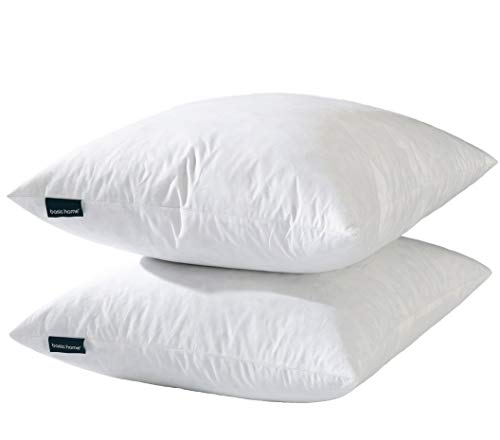
ACHIEVE THE PERFECT HOTEL LOOK Tired of flat, lifeless pillows? Our insert is generously filled to provide the ideal balance of softness and support, allowing you to plump and style it for that luxurious, "chopped" look on your sofa or bed.

【 Premium Material 】- Made of upgrade polyester. Premium fabric is thick and smooth, brings the great handfeel. Fresh up your old pillows with Phantoscope noble velvet pillow covers.
Balance the Organic With a Geometric Pattern
Why stop at one pattern when you can create real visual interest? Once you’ve anchored your arrangement with an organic print, you’ll want to introduce geometric prints to establish visual balance. These two pillow patterns work together beautifully—your organic print brings fluid, nature-inspired motion while geometric prints add structured lines and repetition that ground the composition.
You’ll need to pull at least one color from your organic print into your geometric choice; this cohesive color thread prevents chaos and unifies the pairing. Start with your lead organic print, then layer in a mid- or small-scale geometric as your secondary pattern. This keeps the visual hierarchy clear. Ensure both patterns share a unifying undertone so they complement rather than compete, letting geometric structure anchor the ensemble without overwhelming it.
Recommended Products

Comfort & Support: Our pillow inserts are filled with a premium blend of fluffy virgin microfiber and firm polyester fiber, combining the best features of both materials. Microfibers are soft, fluffy and plush, providing cloud-like comfort. Polyester fibers, with their firmer and more structured nature, add stability and long-lasting support. This fluffy virgin microfiber and firm polyester fiber blend delivers a perfect balance of softness and support, ensuring the pillow stays plump, breathable, and comfortably supportive.

PREMIUM MATERIAL: These pillow inserts are filled by 1615g/3.56lb premium feather down(20% more than other) and the covers are double layered to prevent down overflowing.

High-Rebound Filling: These pillows bounce back into shape every time after use. They are filled with 100% virgin fiber. It makes them lightweight, comfortable, and supportive. Solving the long-standing problem of the pillows going flat or saggy
Add Solid Throw Pillows and Texture for Depth
Patterned pillows set the stage, but you’ll need solids to keep the arrangement from feeling overwhelming. Solid throw pillows act as visual anchors, providing a calm base that unifies your mixed assortment. Choose solids with interesting textures—linen, velvet, bouclé, or leather—to add depth without introducing more patterns. These textures create subtle dimension that prevents your display from falling flat.
When layering, place solid pillows behind or adjacent to patterned ones to ground the display and inform your color story. For leather couches, pair textured solids like bouclé or velvet to balance the sleek surface. Use solids strategically to balance busy pattern combinations and transition between seasonal moods. This approach lets you build a cohesive, dynamic arrangement where every element contributes visual interest without competing for attention.
Recommended Products

Package:One 12x24 inch is included. Please allow 1~2cm deviation because of hand-cutting and sewing.Measure corner-to-corner of your inserts,pulling tight along outer edges.Inserts should be larger than covers for a full look

Premium Quality: Filler is 360g/0.79lb 7D fiber(20% more than other) with good breathability and softness. The cover is smooth brushed fabric, comfortable, durable.

Virgin Filling:The filling of pillow insert is made from soft and supportive 100% virgin microfiber.The cover is smooth and durable non-woven fabric.
Introduce Scale Contrast to Elevate the Mix
How do you keep a mix of patterns from feeling flat? You introduce scale contrast. When you mix and match decorative pillows, pair at least one large-scale pattern with smaller-scale designs to create visual interest without overwhelming your space.
Alternate pillow patterns strategically—let a bold oversized print command attention while tiny micro-prints recede into supporting roles. You’ll reinforce this variation by using different pillow sizes too: combine 22×22, 20×20, 18×18, and lumbar shapes across your arrangement.
When you introduce that eye-catching large-scale pattern, balance it with solid or small-scale pillows in similar colors. This prevents competing motifs from fighting each other. Apply this principle across zones—ends and middle alike—so your overall composition feels cohesive and intentionally varied rather than randomly assembled.
Recommended Products

Soft Pure Cotton Canvas Material: Crafted from premium organic‑friendly cotton canvas, these throw pillow covers are breathable, skin‑friendly and wear‑resistant for long‑term home use.

【HIGH QUALITY MATERIAL】2 PC Imported spring throw pillow cover(Not Contains Insert). Made of durable polyester linen material. Sage green floral Throw Pillow Case is comfortable to touch and lay on.Not deformed and Not fade.
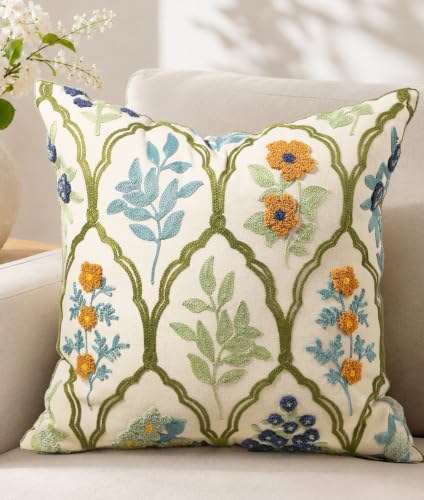
Exquisite Embroidery & Durable Canvas: Crafted from high-quality canvas, this cover features delicate, raised floral embroidery that adds a rich, three-dimensional texture to your sofa. It offers the perfect blend of artisanal craftsmanship and modern durability for a sophisticated home look
Adjust the Formula for Sectionals and Tight-Back Sofas
Where do you start when your standard pillow arrangement won’t fit? You adjust your approach for sectional styling and tight-back silhouettes.
On sectionals, you’ll spread pillow patterns across both sides to prevent crowding. Place larger patterns on the chaise or end sections, balancing them with medium and small-scale designs on opposite arms. Pull at least one color from your organic or geometric prints to maintain harmony throughout the piece. You’ll also drape throws strategically at the chaise end or over a side to introduce texture balance without overwhelming the structure.
For tight-back sofas, you’ll pair bold pillows with a consistent neutral base. Avoid overloading with large-scale patterns—you’re preserving that sculptural silhouette. Vary your sizes and shapes while keeping colors evenly distributed. You’re following the same five golden rules, just scaled to respect your sofa’s clean lines and compact form.
Recommended Products

Product Description : 1 PIECE of single-sided pillow cover measuring (18"x18" / 45x45 CM). PLEASE NOTE: THIS IS A COVER ONLY, no insert. Please allow for a 0.5-1 inch margin of error in size due to manual measurement

Soft Pure Cotton Canvas Material: Crafted from premium organic‑friendly cotton canvas, these throw pillow covers are breathable, skin‑friendly and wear‑resistant for long‑term home use. .

Soft Pure Cotton Canvas Material: Crafted from premium organic‑friendly cotton canvas, these throw pillow covers are breathable, skin‑friendly and wear‑resistant for long‑term home use. .
Choose Practical Quantities and Materials for Daily Use
Your sectional or tight-back styling decisions set the foundation, but daily usability determines whether your arrangement actually works in real life. You’ll want to layer larger 22×22 pillows at the back, then medium 20×20 and smaller 18×18 or lumbar sizes in front—this creates depth you can actually adjust without fighting your setup every morning.
Choose odd-numbered arrangements, like three or five pillows, for that casual, collected look that stays flexible through daily use. Prioritize removable covers so you’re not wrestling with heavy cleaning routines; just unzip, wash, and return.
Mix textures and materials—linen, velvet, bouclé in solids—to anchor patterns while keeping maintenance simple. For high-traffic areas, select fewer pillows with sturdy pillow inserts sized up (24-inch inserts in 22-inch covers) so they maintain fullness without sagging through repeated daily use.
Recommended Products
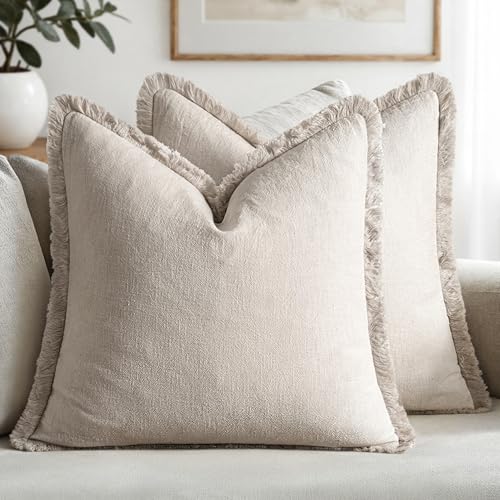
【Exquisite Farmhouse Linen Material】MIULEE's decorative linen pillow covers feature a natural ramie linen blend. The high-quality stone washed linen adds rustic charm, with its textured wrinkles ideal for farmhouse interiors. It gracefully ages with each wash, enhancing its personality and comfort. The linen fabric ensures durability and breathability, providing a soft touch that's suitable for year-round use
PREMIUM MATERIAL: These pillow inserts are filled by 1160g/2.56lb premium feather down(20% more than other) and the covers are double layered to prevent down overflowing.

【Exquisite Farmhouse Linen Material】MIULEE's decorative linen pillow covers feature a natural ramie linen blend. The high-quality stone washed linen adds rustic charm, with its textured wrinkles ideal for farmhouse interiors. It gracefully ages with each wash, enhancing its personality and comfort. The linen fabric ensures durability and breathability, providing a soft touch that's suitable for year-round use
Conclusion
You’ve got everything you need to build a pillow mix that feels intentional, not chaotic. Start with colors you love, anchor with an organic print, then layer in geometry, solids, and texture. Play with scale, stick to odd numbers, and let your sofa’s size guide your choices. Trust your eye—if it feels balanced and inviting, you’ve nailed it. Now go fluff those pillows and enjoy your refreshed space.
Recommended Products

Oversized for Bed Styling: Measuring 26x26 inches, these large euro sham pillow covers are specially designed for bed decoration. Perfect for layering with other pillows, they add fullness and dimension to your headboard area, creating a luxurious hotel-style bedroom look.

【Natural Linen Fabric】 Made of grade natural ramie linen blend. Natural linen fabric makes it soft, comfortable, and breathable—good workmanship, tightly sewn. Color may be different in different light or on different screen

【Natural Linen Fabric】 Made of grade natural ramie linen blend. Natural linen fabric makes it soft, comfortable, and breathable—good workmanship, tightly sewn