
You’ve invested in a beautiful rug, but what lies beneath matters just as much. A rug pad quietly protects your floors from scratches, muffles sound, and keeps everything exactly where it belongs. Without one, you’re risking damage you won’t notice until it’s too late. The right pad transforms how your space feels and functions—and not all are created equal.
What Happens When You Don’t Use a Rug Pad
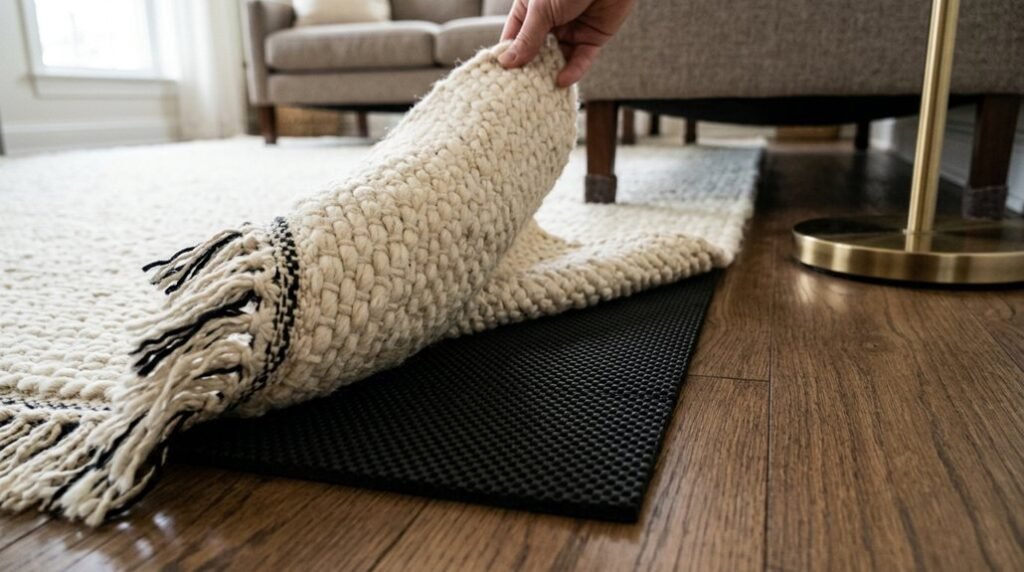
Why undermine your space with a rug that drifts and warps? Without a rug pad beneath your investment, you’re inviting constant movement across smooth floors.
Your carefully curated rug shifts with every footfall, edges curling and bunching into unsightly ridges that disrupt your room’s visual harmony. You’re not just sacrificing aesthetics—you’re accelerating deterioration.
That friction between floor and fiber grinds away your rug’s foundation, demanding replacement far sooner than you’d planned. A rug pad eliminates this slippage, anchoring your piece with purpose while delivering essential wear protection.
You’ll notice the transformation immediately: your rug lies flat, defined, intentional. The silhouette holds. The texture reads true. You’ve elevated the ordinary into something finished, restrained, precisely as you envisioned.
Recommended Products

THE ORIGINAL EXTRA STRONG GRIPPER: our trusted Gorilla Grip nonadhesive rug pads offer a unique, dual sided grip that firmly holds onto both the rug pad and your hard floor to help prevent rug movement
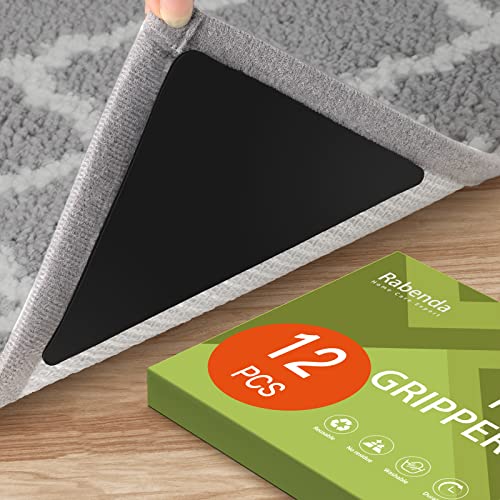
Advantaged Triangle Design: The Triangle Design grippers for area rugs and hardwood floors will maximum increase the contact surface. The strong adhesion will help stick firmly and keep your area rugs in place. Moreover, the rug stickers for wood floors will prevent the rug corners and edges curling and always keep your rugs steady and safe
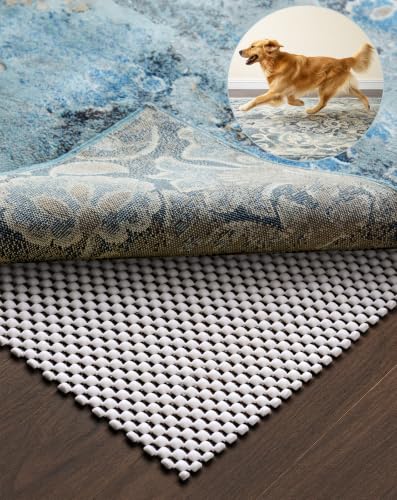
Non-slip Protection: Our pad's signature grip keeps rugs securely in place, preventing bunching and sliding during daily use. It also protects your floors from wear and tear, including damage from high heels, children at play, and more.
How a Rug Pad Protects Your Floors and Extends Rug Life
A buffer between your rug and floor transforms how both age. You install a non-slip rug pad, and immediately you’ve created a barrier that protects floors from the grinding abrasion of daily foot traffic. That cushioned layer absorbs impact, preventing fiber compression and preserving your rug’s knotting integrity. You’re extending rug life with every step you take.
The pad eliminates friction that scrapes finishes and invites dents. You notice less shifting, less readjustment—your edges stay aligned, your pile stays plush. Hidden beneath, improved ventilation whisks moisture away, guarding against the musty buildup that degrades both materials. You see the wisdom now: this slender investment preserves the surfaces you’ve chosen so deliberately, allowing your aesthetic to endure without compromise.
Recommended Products

Upgraded Cushioning and Grip: Unlike other pure felt pads, our pad has a durable natural rubber backing to increase gripping and durability. 1/4" thick felt forming a dense, cushioned surface, aims to make your rugs cozier and provide extra comfort underfoot, even the thinnest rugs can feel soft and comfortable. Dense fibers surface securely holds rugs in place without bunching, while offering noise reduction and insulation

NON-SLIP GRIP FOR SAFETY: Durable latex rubber backing prevents slipping, sliding, bunching, and wrinkles on hardwood, tile, carpet, or any floor—superior hold compared to basic foam pads for everyday use.
NON-SLIP GRIP FOR SAFETY: Durable latex rubber backing prevents slipping, sliding, bunching, and wrinkles on hardwood, tile, carpet, or any floor—superior hold compared to basic foam pads for everyday use.
The Right Rug Pad for Hardwood, Tile, and Carpet Floors
Where you place your rug determines what shields it from below. On hardwood floors, you’ll want a rug pad with natural or synthetic rubber backing—this delivers essential slip resistance while protecting delicate finishes from abrasion. Avoid starch-based or thin mesh options; they’ll leave residue and damage your investment.
Tile and stone demand equal attention. Felt-and-rubber compositions anchor your rug securely, preventing the subtle shifts that misalign your entire room. The weight distributes evenly, preserving both grout and gloss.
Carpet presents its own puzzle. Here, you’ll select felt-plus-rubber designs that grip without harming underlying fibers. The rug pad prevents the friction that accelerates wear between two soft surfaces.
Always verify clearance near doors and furniture. Your choice balances protection, stability, and visual harmony—three elements that elevate your space from furnished to finished.
Recommended Products

Strong gripping power - natural rubber backing keeps rugs anchored firmly in place; prevents slipping, sliding, and wrinkling in high-traffic areas.
NON-SLIP GRIP FOR SAFETY: Durable latex rubber backing prevents slipping, sliding, bunching, and wrinkles on hardwood, tile, carpet, or any floor—superior hold compared to basic foam pads for everyday use.

NOT NON-SLIP - This pad is meant for use with rugs anchored by furniture or heavy rugs that stay in place on their own. For non-slip applications, try one of our felt and rubber options.
How Thick Should Your Rug Pad Be?
Just how much cushion lies between your rug and the floor shapes both comfort and function. You select rug pad thickness based on your floor type and where the rug rests.
Thin pads under ¼ inch suit high-traffic kitchens and hallways, keeping profiles sleek and safe.
Medium thickness, ¼ to ⅓ inch, balances support for living spaces.
Thick pads exceeding ½ inch transform bedrooms into barefoot sanctuaries, though you’ll check door clearance.
The wrong choice risks edge curling, disrupting your carefully curated aesthetic. You want seamless transitions, not tripping hazards. Match your pad to both practical demands and sensory pleasure, ensuring every step feels intentional beneath your feet.
Recommended Products

Unique Design: Do you still worry about the traditional glue rug tape harm your floor ? This gripper uses VACUUM TECH design which grips hard smooth floors firmly and easily, this design can protect your floor perfectly as no glue used on floor. But it does not work for rug on carpeted floor. It does not work for rubber backed rug ,jute rug or fluff backing rug.

STOP CORNER CURLING INSTANTLY: Keep your rugs perfectly flat with our specialized rug gripper system. It prevents rug corners from curling or rolling, instantly improving your home’s safety by removing trip hazards and providing a clean, polished appearance.

NON SLIP AND CURLING: Unstable sliding carpets create household hazards. ZONGOOL rug tape stabilizes rugs and prevents corner curling. Compatible with all rug shapes for indoor and outdoor use, it holds carpets firmly in position and reduces common shifting and curling issues
When to Skip the Rug Pad (and What Works Instead)
Why layer what’s unnecessary? You can skip the rug pad in low-traffic spaces where your rug already delivers a non-slip grip through built-in backing. You’ll still need floor compatibility in mind—hardwood and tile demand protection against scratches and staining.
If you’re foregoing the pad altogether, you reach for alternatives. Non-slip rug grips tailored to your specific floor type offer sleek, invisible security. High-friction backing on quality rugs anchors elegantly without bulk.
You exercise caution with latex-backed rugs; their material degrades and bonds to finishes over time. Here, a breathable barrier prevents sticky residue and preserves both rug and floor integrity.
In humid or outdoor environments, you avoid moisture-trapping pads entirely. Breathable, outdoor-rated solutions or bare placement keeps your aesthetic refined and your surfaces protected.
Recommended Products

Powerful Anti-Skid Protection: Featuring an over 30% thicker design (0.1" vs. standard 0.07" pads), BAGAIL rug pads provide stronger grip and cushioning to keep rugs securely in place. This helps prevent bunching in high-traffic areas, reducing trip hazards on hardwood floors and making homes safer for active kids and pets

Grip, Not Stick: The Only Truly Non-Staining Choice Safe for LVP & hardwood, our advanced Vacuum Suction Technology offers a superior grip without the damage. Unlike traditional rubber or PVC backings that use cheap oils, our rug pad ensures Zero Plasticizer Migration. It won’t yellow, won’t stain, and won’t leave a trace. Experience a residue-free hold that keeps your floors pristine and your home safe

✅ HEAVY DUTY HOLD, INDOOR AND OUTDOOR - Reinforced web mesh double sided carpet tape heavy duty install your carpet tiles, rugs, runners, vinyl, laminate, turf, indoor outdoor carpeting, rubber or carpet squares so they will have a long lasting hold. One 2 in x 90 ft (30 yd) covers up to 220 square feet.
Conclusion
A rug pad elevates your space from merely decorated to thoughtfully curated. You’ll preserve cherished floors, extend your rug’s lifespan, and savor that plush step. Select felt-rubber for hardwood, dense cushioning for tile, and breathable options over carpet—never settling for one-size-fits-all. Skimp where traffic whispers, invest where life unfolds. Ultimately, the humble pad anchors your aesthetic vision while protecting it, proving that true sophistication lies in these quietly essential details beneath your feet.
Recommended Products
NON-SLIP GRIP FOR SAFETY: Durable latex rubber backing prevents slipping, sliding, bunching, and wrinkles on hardwood, tile, carpet, or any floor—superior hold compared to basic foam pads for everyday use.
NOTE: This gripper uses VACUUM TECH design which grips only hard smooth floors firmly and easily, it does not work for rug on carpeted floor. Also it does not work all rugs , it does not work for rubber backed rug ,jute rug or fluff backing rug , please check this. The adhesive surface can not be peeled once affixed on the rug.