
You measure your dining room and sketch the layout, noting doorways and traffic flow. You’ll need thirty inches per diner and clearance around furniture. But selecting the right table while balancing lighting and storage creates unexpected challenges. How do you avoid the sizing mistakes that trap most homeowners?
Plan Your Dining Room Layout Before You Buy
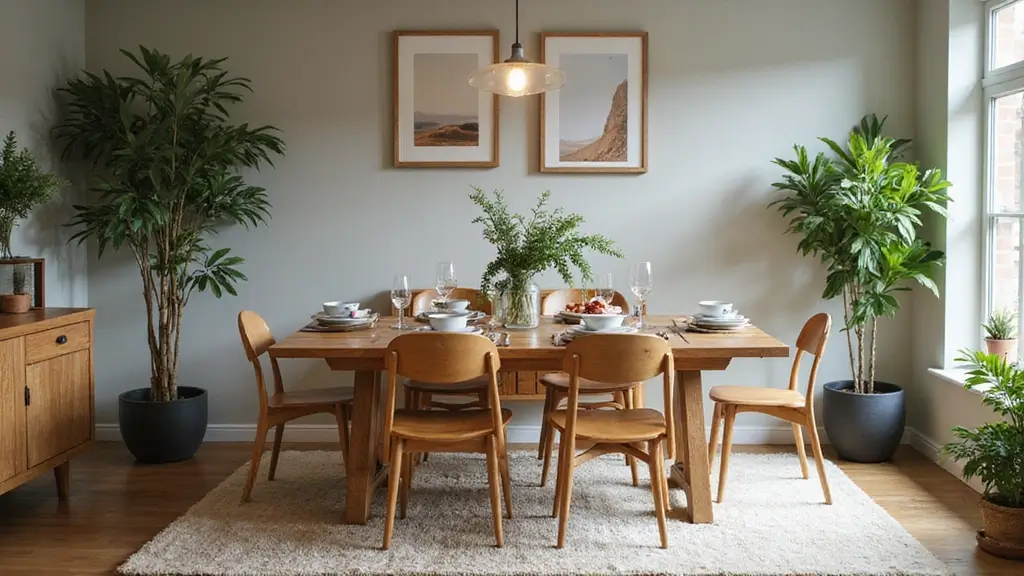
Where do you start when every furniture piece promises to transform your space? You grab your measuring tape and map the room’s dimensions before browsing catalogs. You measure doorways, windows, and permanent fixtures like radiators or built-ins. You sketch a rough floor plan, marking where traffic flows naturally. You consider how you’ll move between kitchen and dining areas when carrying plates. You identify focal points, such as fireplaces or windows, that’ll anchor your arrangement. You plan for adequate clearance—at least 36 inches—between walls and furniture edges. You note ceiling heights and light fixture placements. You establish your layout’s boundaries before committing to specific pieces. This groundwork prevents costly mistakes and ensures your room functions practically. You’ll save time, money, and frustration knowing what fits.
Recommended Products

[Perfect 72 Inches Long]: Our macrame table runner with tassels measures 12 x 72inch, fits a dining table that seats 4-8 people. It can give your tables a rustic and boho look. (Because it is folded in the bag, when you take it out, the table runner will have creases, which will affect your measurement. So, please make sure the table runner is placed neatly and flat before measuring.)

[Perfect 72 Inches Long] Our macrame table runner with tassels measures 12 x 72inch, fits a dining table that seats 4-8 people. It can give your tables a rustic and boho look. (Because it is folded in the bag, when you take it out, the table runner will have creases, which will affect your measurement. So, please make sure the table runner is placed neatly and flat before measuring)

FAUX LEATHER - The design of this tray brings chic decoration to your room, which is suitable for placing in your living room coffee table for hosting, dining room table as a centerpiece, kitchen counter.
Choose a Dining Room Table That Fits Your Space and Life
Your floor plan now guides every table decision you make. Measure twice before you shop, ensuring you leave thirty-six inches between table edges and walls for chair clearance. You’ll want thirty inches per diner, so calculate seats accordingly.
Choose materials matching your lifestyle. Host weekly dinner parties? You’ll need extendable leaves. Toddlers scramble around? Skip glass, pick solid wood that withstands scratches. Compact apartments demand drop-leaf or round tables that improve traffic flow. Rectangular shapes seat more guests efficiently, while round tables encourage conversation in smaller spaces.
Test table height against your chairs before purchasing. Standard dining tables measure thirty inches tall, but you’ll regret a mismatch if seats don’t slide underneath comfortably. Buy quality construction that survives daily use and moving without wobbling.
Recommended Products

Space-Smart Furniture: From a 55" breakfast nook to a 71" party kitchen table, the MECHYIN Walnut Extendable Dining Table is the perfect space-saving solution for small homes. It serves as both a compact apartment dining table (for 2-4) and a spacious family entertainment center (for 6-8). This modern table effortlessly glides from daily meals to holiday hosting. It’s your ideal puzzle table and board game table for memorable family game nights. The intelligent space-saving design keeps your open-concept living area beautifully clutter-free.

RUSTIC CONTEMPORARY LOOK: Clean lines, a plank-style top and a gently distressed, burnished finish give this wood dining room table warm character that complements both modern spaces and the charm of a farmhouse dining table

Extendable Dining Room Table: Featuring a smooth and silent slide rails, this white expandable dining table easily transforms from a compact 47-inch table into a spacious 63-inch rectangular dining table, comfortably seating 4-6 people.The removable leaves retract fully beneath the tabletop when not in use, making it a clever space-saving solution. Whether for an intimate family dinner or a large gathering, it adapts effortlessly as your needs change
Pick Dining Room Lighting That Flatters Food and Faces
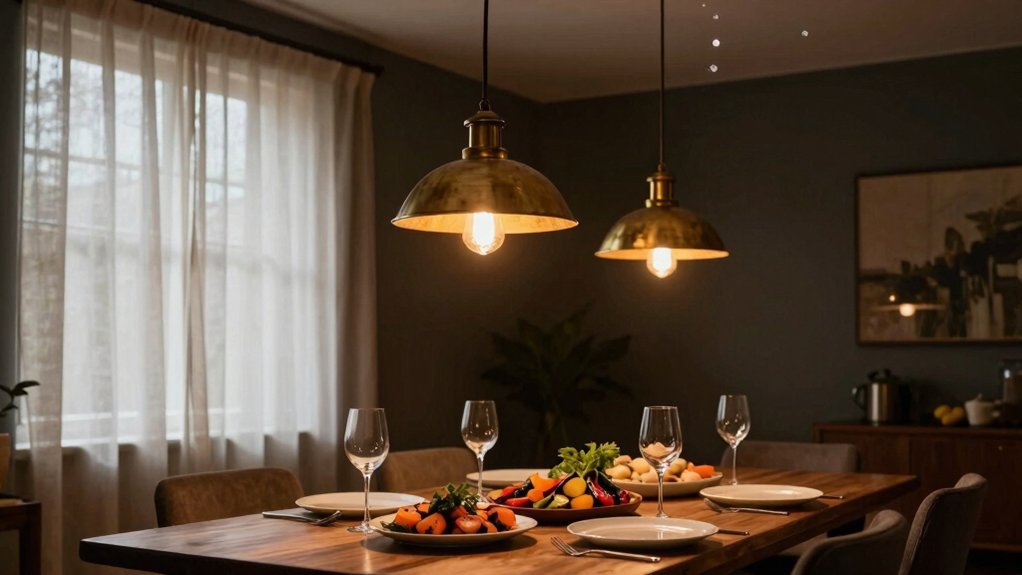
How will overhead lighting transform your evening meals? You’ll discover the answer when you swap harsh fluorescents for layered, warm illumination. Install a dimmer switch immediately―you’ll control brightness for casual breakfasts and formal dinners alike.
Choose pendant lights or a chandelier that hangs 30 to 36 inches above your table surface. You’ll avoid glare and blind spots while creating intimate pools of light. Select bulbs with a color temperature between 2700K and 3000K; you’ll make skin tones glow and food appear appetizing rather than washed-out.
Position wall sconces or buffet lamps to fill shadows. You’ll eliminate unflattering overhead shadows on faces. Consider directional recessed lights aimed at artwork, not faces. You’ll add depth without harshness.
Test fixtures at night before buying. You’ll ensure your dining room welcomes guests with flattering, functional light.
Recommended Products
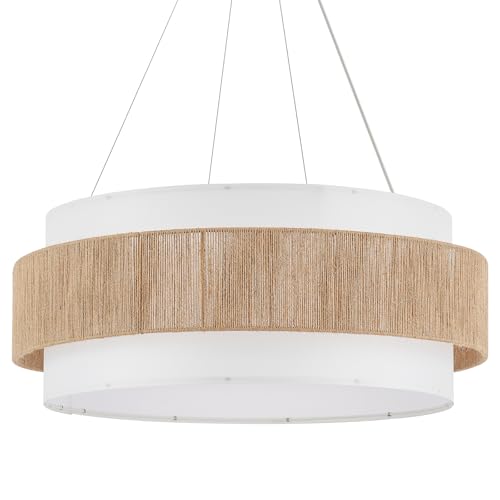
Off White Fabric: This modern chandelier is made of high quality off-white fabric, typically features a soft, neutral-toned fabric shade that provides a warm and inviting glow, which gives the light a gentle diffusion, protecting your eyes and creating a cozy and ambient atmosphere.

Exquisite Nature-Inspired Design: Inspired by the beauty of a blossoming forest, this chandelier features a handcrafted "gold branch" frame. The intricate, nest-like structure paired with shimmering crystal droplets creates a captivating focal point that blends organic aesthetics with high-end luxury.

[BOHO CHIC] This Boho Rattan Chandelier is handwoven by skilled artisans. The light gently filters through the woven rattan, casting beautiful shadows and adding a touch of natural texture to your decor.Complemented by an exquisite gold-plated cylinder lamp rod and drum, it adds a touch of luxury to your space.
Select Colors and Textures That Set the Right Mood
Why settle for a dining room that feels flat when color and texture can transform every meal into an experience?
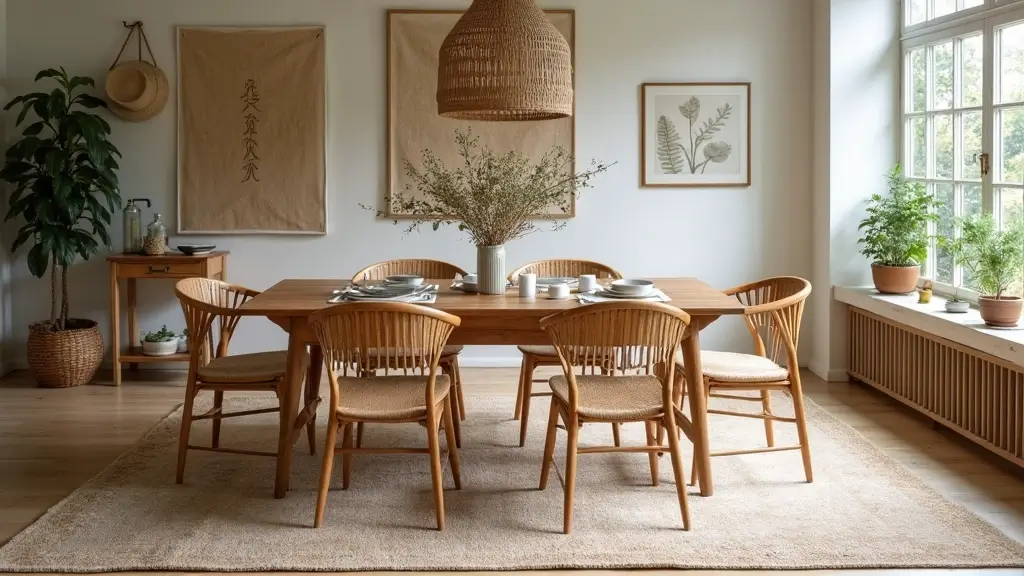
You choose warm tones like terracotta, amber, or soft sage to spark appetite and conversation. You layer these hues through paint, upholstery, and window treatments. You mix textures—rough linen, smooth ceramic, polished wood—to engage the senses and ground the space.
You paint walls in deep navy or charcoal if you want drama; you select cream or blush if you crave airiness. You add a woven jute rug underfoot. You hang velvet curtains that pool slightly. You incorporate natural elements: a live-edge table, ceramic vases, or a wool throw. You balance shiny and matte finishes so the room breathes.
You test samples in your actual light before committing. You trust your instincts.
Recommended Products

Newly Upgraded Large Size: 11.03" L x 11.03" W x 8.04" H. This ceiling light is of larger size, it can be used as a decoration light for wider areas, such as kitchen, bedroom, dining room, powder room, bathroom etc

🌈Dimmable LED Ceiling Light: Light memory function is easy to operate,Modern 6 ring LED chandelier with stepless 5%-100% brightness, 3000-6000K color temperatures dimmable

Modern Sputnik Chandelier - The Modern Sputnik Chandelier is the perfect choice for your new home! Featuring a unique blend of sputnik-inspired design and modern geometric shapes, this chandelier seamlessly combines retro and contemporary styles. It creates a stunning ambiance in any space, whether it’s your living room, kitchen, bedroom, balcony, bathroom, office, bar, café, restaurant, or hallway.
Add Storage Furniture That Works Hard and Looks Good
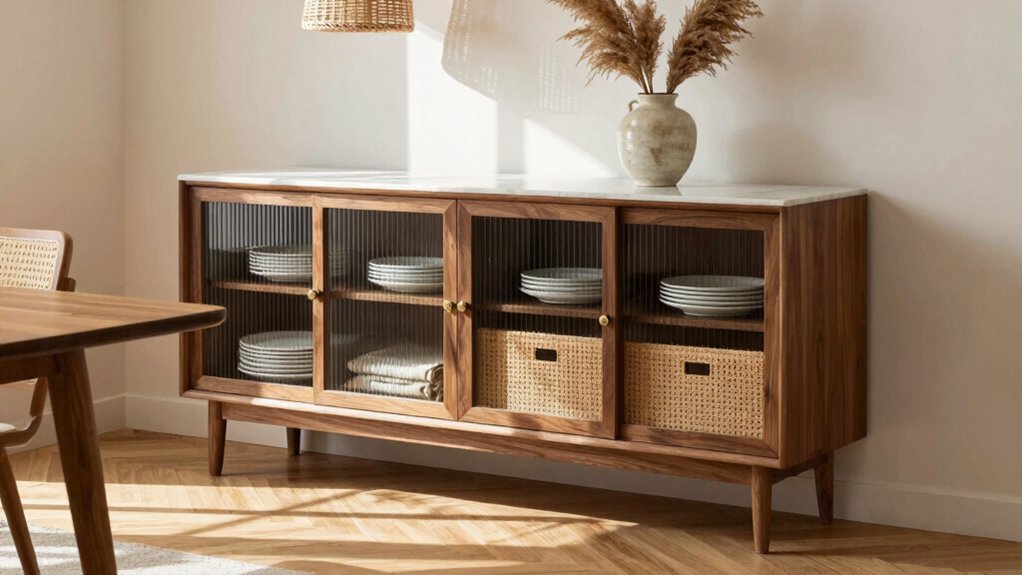
Where does the clutter go when the last guest leaves and you’re left with extra linens, serving pieces, and that growing wine collection? You need storage that handles the mess while elevating your space.
Consider a sideboard that stores plates and napkins behind sleek doors. You’ll maximize vertical space with a hutch displaying serving bowls and hiding thrice-weekly clutter. Choose pieces with drawers for silverware and adjustable shelves for awkward platters.
If you’re tight on space, opt for a bench that seats guests and stashes tablecloths. Open shelving works for dishes you’ll use, but you’ll want closed cabinets for the chaos.
Pick materials that complement your table—warm wood tones unify the room, while painted finishes add contrast. Storage should solve problems, not create them.
Recommended Products
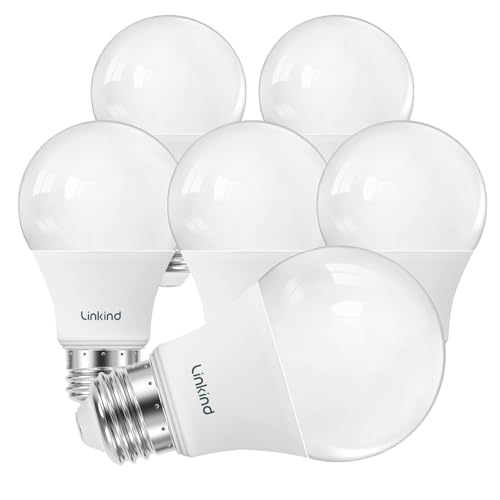
✔ 2700K WARM YELLOWISH LIGHT: The A19 dimmable LED light bulbs give off 800 lumens of 2700k cozy color light. Easy installation with the standard medium screw base E26. NOTE: Please confirm the Kelvin (K) value. This is the most accurate way to select your desired light color. This bulb is 2700K light, which produces a WARM YELLOWISH light. It is not a Bright White or Daylight White bulb. If you prefer a whiter light, please consider our 4000k Cool White or 5000K Daylight options.

Bathroom Light Bulbs 3000K Soft White: The 3000K soft white light of the G25 LED globe bulb means that the color of the light begins to emit a soft white glow while the 2700K is still slightly yellowish. This means that there are fewer shades of yellow or orange in 3000K compared to 2700K, giving a relaxed and vibrant mix. As a result, spaces such as bathrooms, bedrooms, dining rooms, living rooms and dens can largely benefit from this type of lighting.

Excellent Quality without Flicker: Brightever light bulbs have passed rigorous testing standards - are free of harmful substances such as mercury and lead, and will not produce UV and IR radiation. That also means, our bright white light bulbs are Eco friendly bulbs that can help to save the planet you live on. No flicker, strobe or glare, our 40 Watt Equivalent light bulbs emit a stable light to better protect your eyes.
Style Your Table and Walls for Everyday Meals and Gatherings
What transforms a functional dining room into a space you’ll use daily? Style your table and walls thoughtfully, and you’ll create an inviting atmosphere that draws you in.
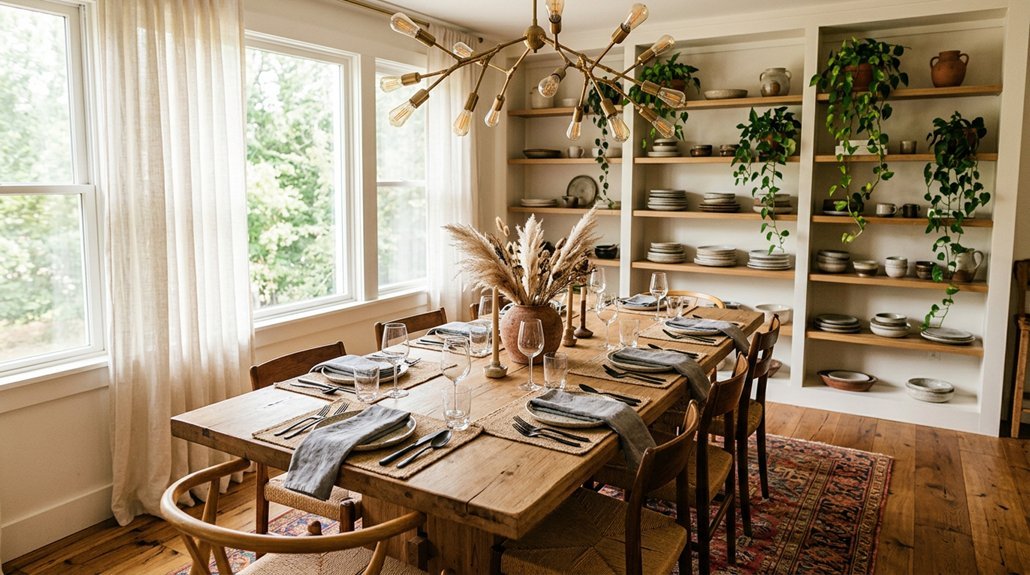
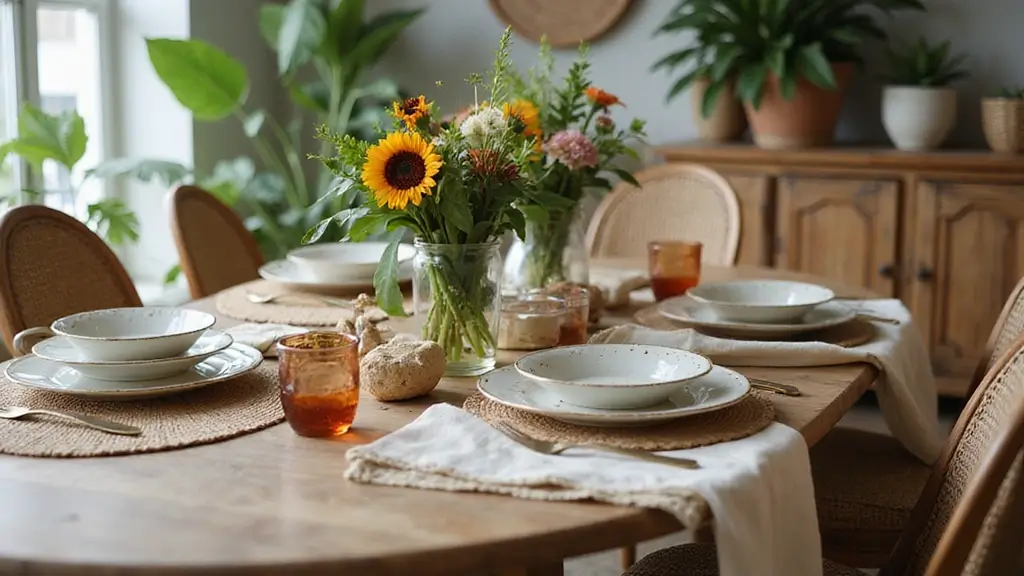
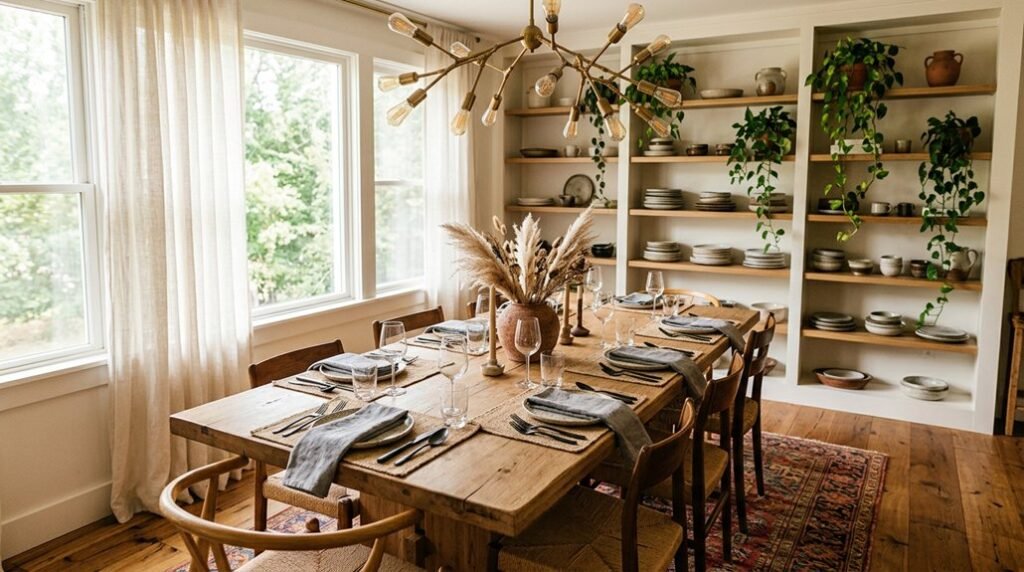
Start with your table surface. Layer a textured runner or stack woven placemats for instant warmth. Keep a ceramic pitcher or wooden bowl centerpiece that works Monday through Sunday—you’ll actually use what sits within arm’s reach. Swap stiff cloth napkins for simple linen ones; they’ll soften the room without feeling fussy.
Turn to your walls now. Hang framed prints or family photos at eye level where you’ll notice them while passing. Add one floating shelf to lean small art or prop a cookbook open. You’ll spark conversation without overwhelming the space. Paint an accent wall a moody shade, and you’ve anchored the gathering area without cluttering surfaces.
Recommended Products


SIZE CHOICE: This oval tablecloth measures 60x120 inches, not the size of the table. The tablecloth size you should choose is the length/width of the table + the desired drop length x 2 (recommended drop length is 8–12 inches). Therefore, this beige oval tablecloth fits tables ranging from 36x96 inches to 44x104 inches
Conclusion
You’ve got everything you need to transform your dining room into a space you’ll actually want to use. Start with smart planning, then build around a table that fits your life. Layer in flattering light, warm colors, and hardworking storage. Finish with personal styling that makes every meal—whether it’s Tuesday takeout or a holiday feast—feel special. Now pull out that tape measure and get started.
Recommended Products
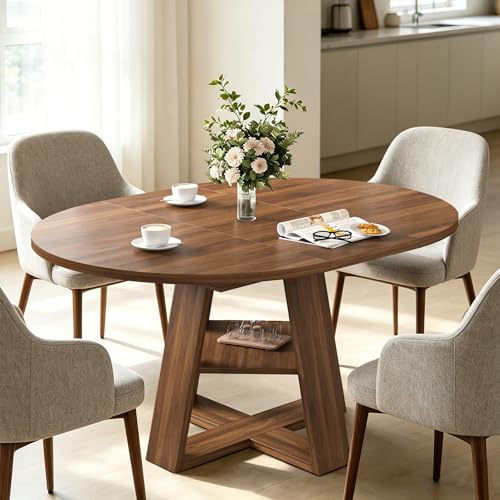
Retractable dining table for 4-8 people: Considering the use in different scenarios, the dining table adopts a retractable design and a smooth and silent rail. By assembling independent extension leaves in the middle of the dining table, it can be quickly and easily expanded from the original 43.3” round dining table to a 59” L x 43.3” W oval dining table. The extension leaves can be stored under the tabletop, making your space more flexible
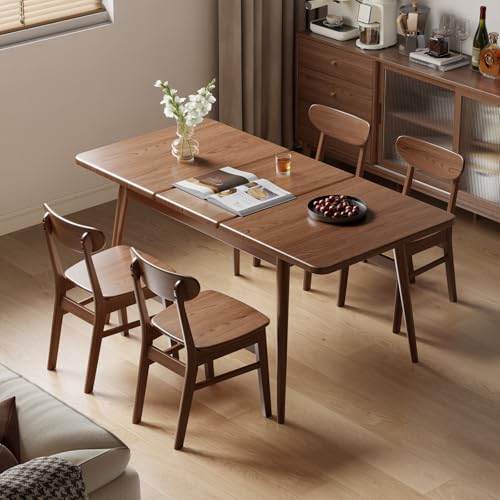
【TABLE ONLY & NO CHAIRS】This purchase includes the extendable dining room table only. Chairs shown are for display purposes and are not included or sold separately

【NO STORAGE HASSLE FLIP DESIGN】 Stop struggling with heavy removable leaves. Our unique flip mechanism allows you to switch from a 42" small round table to a 58" oval entertainer in seconds. The hidden extension leaves stay permanently tucked under the tabletop—no extra closet space required and no risk of losing parts.(Package includes one table only!!!)