
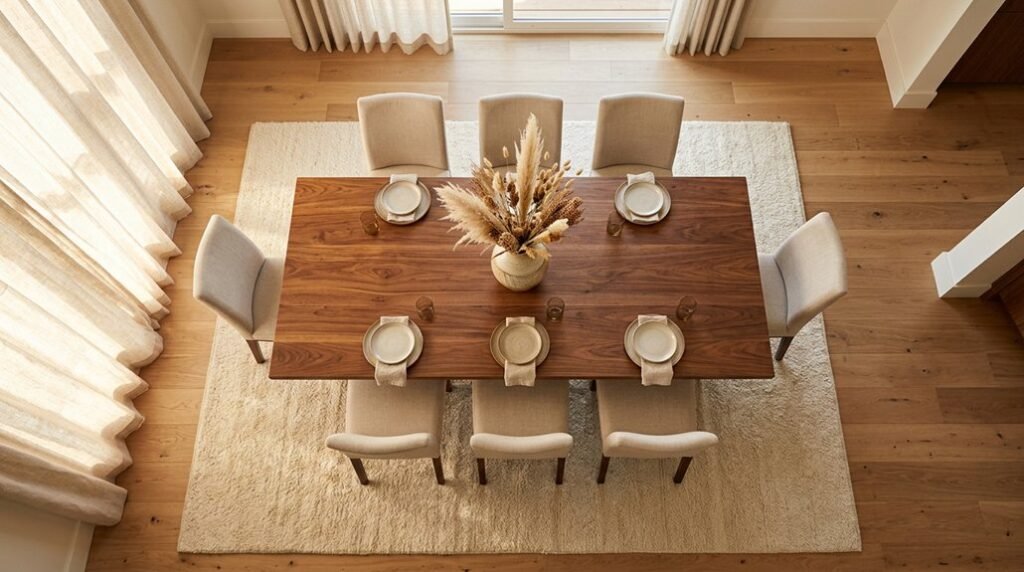
You’ll want to start with your table’s dimensions, then add roughly 24 to 30 inches to each side. This ensures chairs stay fully on the rug when pulled out, maintaining clean visual lines and protecting your flooring. The shape of your table—round, square, or rectangular—determines how those measurements translate into a finished look. But sizing is only half the consideration; material choice and floor clearance will make or break the practicality of your selection.
Start With the 24-Inch Rule for Dining Table Rugs
How do you keep dining chairs from catching on rug edges when guests push back from the table? You’ll solve this through precise rug sizing.
When selecting dining room rugs, you’ll apply the 24-inch rule: extend the rug at least 24 inches beyond each table edge. You’ll measure your table’s footprint, then add 48–60 inches to its diameter for round tables, or 48–60 inches total to length and width for rectangular ones. This ensures pulled-out chairs remain fully supported without wobbling or snagging.
The 24-inch rule creates a defined dining space while protecting your flooring and maintaining visual cohesion. You’ll avoid the frustration of chair legs catching edges or uneven tilting during meals. Master this fundamental measurement, and you’ll establish the foundation for proportionate, functional dining room rugs.
Recommended Products

INCLUDES: One COTTON CRAFT Olivia Jute Braided Table Runner, 13 inch x 36 inch - Natural

💓Gentle Vacuuming Recommended: Use LOW-POWER vacuum (≤20AW) or with a soft brush - high suction may snag fibers or lift rug. Warning: Avoid standard/heavy-duty vacuums (clogging risk). It is perfect as green rectangle rug for dining room tables, 6x9 boho rugs for living room, small bedroom carpet, baby rugs for nursery, playroom persian mat, bedroom bedside rug
Size Your Rug for Round, Square, or Rectangular Tables
Where do you begin when your table shape demands a tailored approach? For rectangular dining tables, you’ll extend the rug size twenty-four to thirty inches beyond each edge—this ensures complete chair clearance when seats slide outward during meals or conversation.
Round tables require proportional thinking. You’ll scale the rug size to extend roughly forty-eight to sixty inches past the table’s diameter, creating visual equilibrium. A forty-eight-inch round dining table pairs with an eight-foot circular rug; scale to nine feet for a sixty-inch surface.
Square tables echo rectangular logic through symmetrical extension. Remember: your rug must receive all chair legs—not merely the front pair—when guests push back from the dining table. Chair clearance isn’t negotiable; it’s the mark of deliberate, refined spatial planning.
Recommended Products

Machine Washable: The short pile design of this washable rug is easy to maintain using a robot vacuum or a low-powered vacuum cleaner. The area rug is also machine-washable for fast and hassle-free cleaning. After washing, a low-temperature iron can help to keep the living room carpet's surface flat and smooth

Pile: Polypropylene - Backing: Cotton - Weave: Machine Made (Power-Loomed) - Made in: Turkey

CASUAL STYLE: This solid-colored outdoor rug adds a simple pop of color that coordinates easily with many different looks.
Measure Your Dining Table and Map Rug Dimensions
Start with your dining table itself—not the room—to anchor your rug search. Measure the tabletop’s length and width; these two figures form the foundation of your rug dimensions. You’ll add forty-eight to sixty inches to each dimension, creating a twenty-four to thirty-inch border that ensures chairs glide without catching edges.
Pull every chair into its fully extended position and measure again. Your rug dimensions must accommodate this real-world footprint, not merely the table’s static silhouette. For rectangular tables, extend your rug sizing uniformly; for round tables, add forty-eight to sixty inches to the diameter.
Verify visually: no chair back or leg should breach the rug’s perimeter. This precision guarantees seamless function and proportioned elegance.
Recommended Products

Machine Washable: For daily cleaning, can be easily cleaned by vacuum cleaner. For deep cleaning,machine wash in cold water (<87℉) and hang it to air dry. Say goodbye to stains, and enjoy a fresh, clean rug effortlessly

Versatile for Any Space: Perfect for kitchens, entryways, hallways, and doorways. Fits under dining tables, in front of doors, or as a decorative throw. Suits tight indoor spaces like home entries or high-traffic pathways

Tides Series – Effortless style that flows with your life.This modern machine-washable non-slip rug features reinforced edges and a low-pile design that resists dirt. Its water-repellent surface makes spills easy to clean - liquids bead up for quick wiping. Simply machine wash in cold water (no bleach) to refresh. The non-slip backing keeps it securely in place. A perfect blend of function and contemporary design for active homes.
Check Floor Space and Wall Clearance
Why compromise on proportion when you’ve already mastered the table’s dimensions? You must now evaluate your floor space and establish precise wall clearance before finalizing rug dimensions.
Measure your room’s length and width, then subtract 24 inches from each measurement to maintain that essential 12-inch exposed floor perimeter on all sides. This boundary ensures your rug doesn’t overwhelm the space while preserving visual breathing room.
Next, assess chair extension. Pull out each chair fully as if someone’s rising from the table; your rug must accommodate this extended position. For rectangular tables, you’ll need 24 additional inches beyond each edge—round tables demand 48 to 60 inches beyond diameter. Remember: chairs remain on the rug during use, or you’ve selected incorrectly.
Recommended Products

Ultra-soft Enjoyment - Extremely soft feel and premium quality appearance.The 8 square area rug surface provides a soft texture and can soothe tired feet.These square washable rugs 8x8 are perfect for the bedroom living room and dining room. The 8x8 square rug will add warmth and comfort to your home!Place this 8ft square rug right by your bed so you can avoid the cold floor and have a super comfy feeling first step each morning.

Lived-in Look and Feel: This exquisitely designed 8x8 area rug features a vintage-inspired motif with a medallion in the center. Its unique, goes-with-anything decor styles from country to contemporary. The inviting colors along with its regal texture create the perfect depth and dimension in your space, allowing you and your loved ones to sit back and relax.

Echoing textile craftsmanship of the 19th-century Arts and Crafts movement, this premium stain-resistant low-pile area rug revives classic carpet artistry with a rich, vintage botanical pattern. Against a warm dark brown backdrop, lush green vines, red berries, and pale gold blooms intertwine, forming a moody elegant tableau. Channeling Victorian ornate aesthetics, the rug’s intricate tendrils and retro motifs exude quiet, timeless charm—infusing your space with understated luxury. Crafted with fade-proof dyes for long-lasting durability, this versatile vintage area rug complements boho, rustic, and modern interior tastes seamlessly
Choose Stain-Resistant, Low-Pile Dining Rug Materials
How do you intend to preserve your investment when inevitable spills meet your dining surface? You’ll prioritize stain-resistant, low-pile materials that withstand rigorous dining demands.
Select polypropylene or nylon for your dining rug; these synthetics resist staining and clean effortlessly, accommodating children and pets without compromise. You’ll appreciate wool’s natural durability and inherent stain resistance when seeking luxurious sophistication beneath your table. Consider moisture-resistant options if humidity threatens your region, ensuring your low-pile selection endures.
Avoid excessive texture; flatwoven constructions minimize tripping hazards and simplify maintenance. You’ll secure your dining rug with proper padding to prevent movement during chair transitions. Evaluate natural fibers cautiously—jute and sisal offer aesthetic appeal but demand careful placement away from heavy traffic. Your material choice ultimately determines longevity, balancing practical resilience with refined visual character.
Recommended Products

𝐃𝐔𝐑𝐀𝐁𝐋𝐄 𝐚𝐧𝐝 𝐂𝐎𝐌𝐅𝐎𝐑𝐓𝐀𝐁𝐋𝐄: Woven and crafted with 100% Polypropylene fibers and a cozy, 0.31” pile height which can endure frequented areas of your home while remaining cozy underfoot; meant for indoor use; highly durable; rug can fit under most doors

Machine made.100% Polypropylene pile for long lasting quality.Pile height 0.39 Inches. Jute backing.

STYLISH DESIGN: This trendsetting modern geometric color block area rug design in a versatile color palette can be perfectly paired with a variety of home décor styles.
Conclusion
Perfectly sizing your dining rug ensures elevated comfort and visual harmony. Add 24–30 inches beyond rectangular tables or 48–60 inches beyond round diameters, keeping pulled-out chairs fully supported. Verify floor space accommodates generous borders, and select low-pile, stain-resistant materials with quality padding for longevity. These deliberate choices transform your dining area into an impeccably defined, functional sanctuary.
Recommended Products

Classic Vintage Aesthetic: Featuring timeless traditional persian medallion floral patterns with a sophisticated faded distressed finish, this living room rug brings warm, vintage charm to your home. Perfectly blending with rustic farmhouse, boho, or modern vintage home decor, it instantly enhances any room — making it an ideal 8x10 area rug for living room, bedroom, dining room, home office, or as an cozy focal point for nursery spaces.

Classic Vintage Aesthetic: Featuring timeless traditional persian medallion floral patterns with a sophisticated faded distressed finish, this neutral rug brings warm, vintage charm to your home. Perfectly blending with rustic farmhouse, boho, or modern vintage home decor, it instantly enhances any room — making it an ideal 8x10 area rug for living room, bedroom, dining room, or as an cozy focal point for nursery spaces.

Multidimensional Scene – Elegant Extension of Space: This classic 5x7 ft area rug is designed to enhance openness and flow, perfect for living room, dining room, bedroom, playroom, or nursery. It blends seamlessly with hardwood, tile, or stone floors while helping protect surfaces and create a soft, inviting atmosphere. The 0.25" low pile ensures smooth door clearance, combining practicality with refined elegance in every detail.