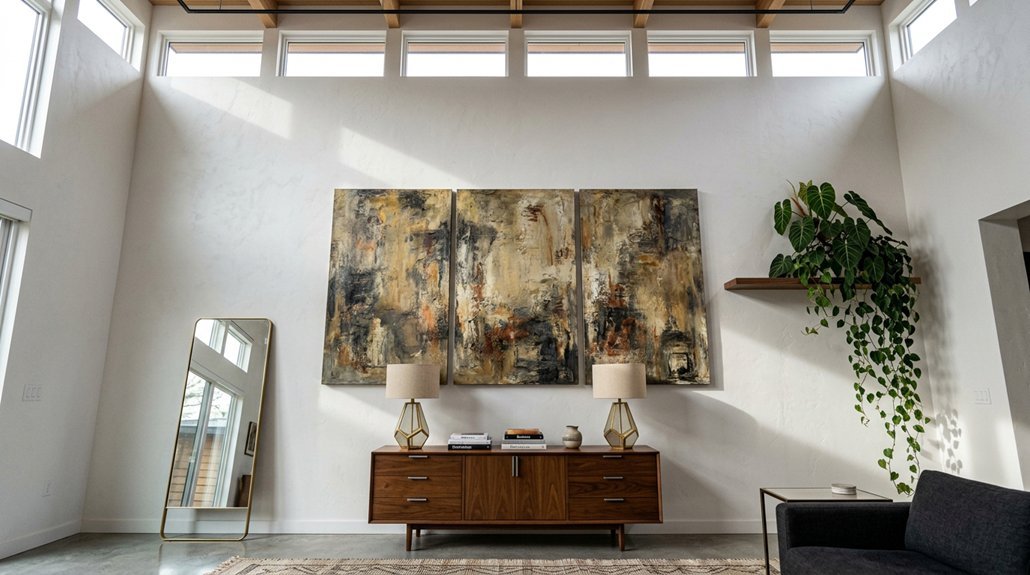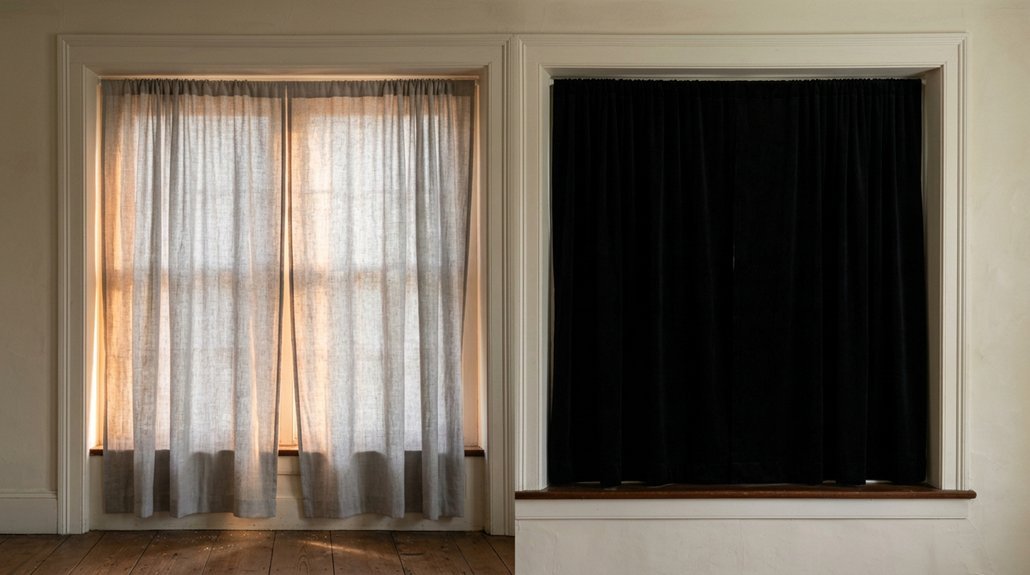

You’re standing in front of your window with a tape measure, wondering if that extra inch really matters. It does. The gap between your curtain hem and the floor can transform a room from polished to awkward, or practical to dramatic. But the rules aren’t one-size-fits-all, and what works in your bedroom might disaster your kitchen.
Do Curtains Need to Touch the Floor? When Length Rules Change
Why do design rules about curtain length seem to shift depending on who you ask? You’ll find that length rules aren’t rigid—they adapt to your specific situation.
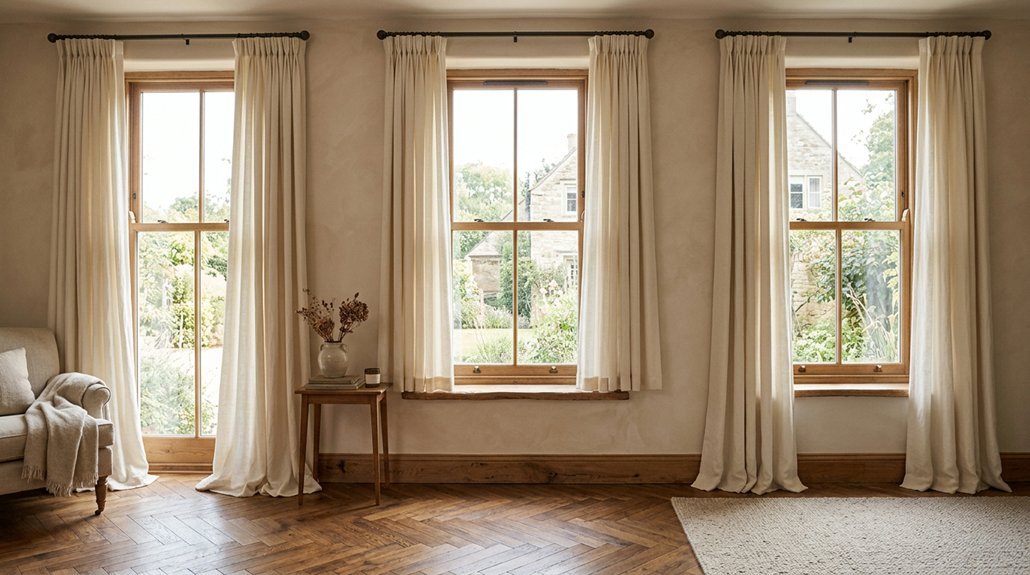
Generally, you’ll want floor-length curtains that kiss the floor, as this creates a polished look and makes your ceilings appear taller. However, you’ll adjust based on room function. In high-traffic areas or homes with pets, you’ll prefer above-floor length—about ½ to 1 inch up—to reduce wear and dirt.
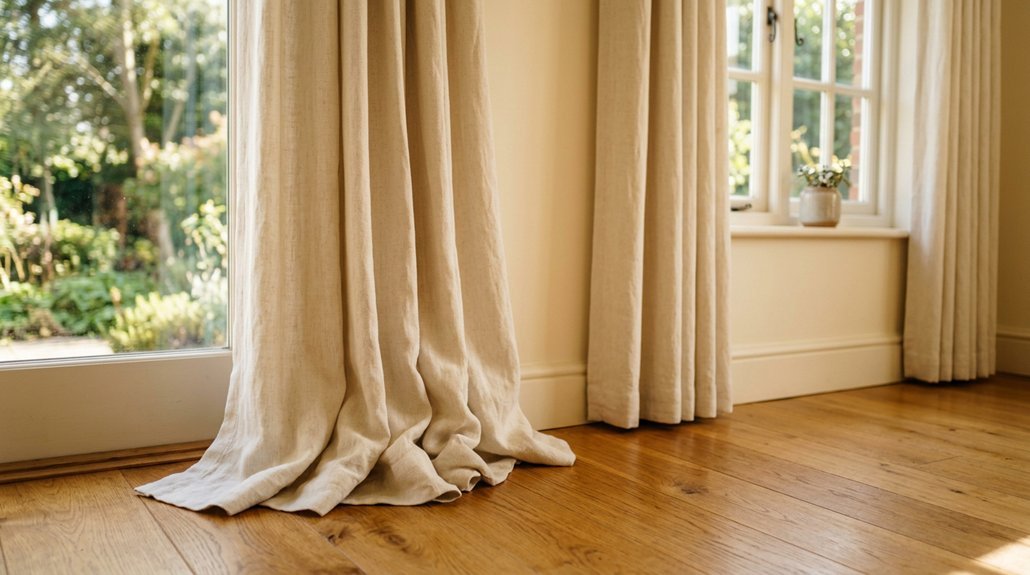
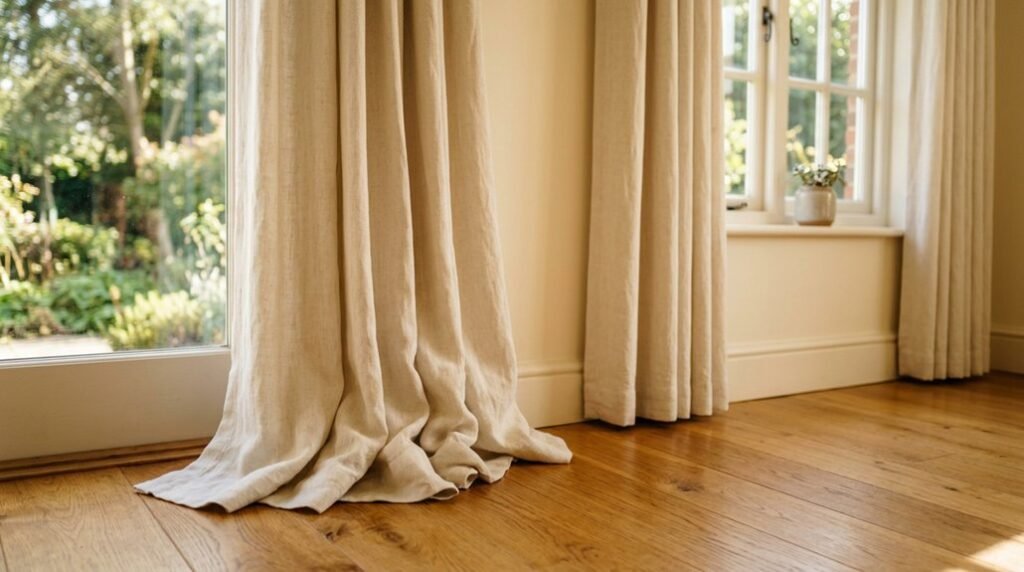
You’ll choose puddle length when you’re after formal luxury, adding 3–6 inches of extra fabric beyond the floor.
For kitchens or bathrooms, you’ll select short curtains to avoid moisture and simplify cleaning.
Your ceiling height and curtain rod height—typically mounted 4–6 inches above the window frame—also influence your final measurement.
Recommended Products

Pair Sold: Each package includes 2 panels of blackout curtains. Each panel measures 40"W x 84"L, with a pair measuring 80"W x 84"L. Each panel has 6 anti-rust silver grommets(1.6 inch inner diameter) which would fit most standard curtain rods

READY MADE: 2 Linen Curtain Panels per package.Each panel measures 52 inches wide by 96 inches long. Top design of Back tab & loop pocket provide 3 hanging options. <1> hanging from the back patch to create an elegant pleated look, <2> from the 3 inch rod pocket for a classic look <3> Hanging with clip rings for easy, slide open and closed (clip rings are not included)

WELL MADE: Package includes 2 pcs high-quality blackout curtains. Each curtain panel measures 52 inches wide and 96 inches long. They can be easily matched with different decoration themes to give your room a modern and elegant style.
The 3 Curtain Lengths: Float, Break, and Puddle Explained
How do you decide which curtain length suits your space? You measure your rod-to-floor distance and choose among three distinct styles.
You achieve a float by hanging curtains ½ to 1 inch above the floor. This floor-length option delivers a crisp, contemporary feel while keeping hems pristine.
You create a break by adding 1 to 2 inches to your measurement, letting fabric kiss the floor. This elongate technique balances formality with practicality.
You craft a puddle by extending 3 to 6 inches past the floor, producing dramatic, luxurious pooling. This demands more upkeep but maximizes opulence.
Your room style ultimately guides you. You select float for modern minimalism, break for timeless versatility, or puddle when you prioritize grandeur. Each curtain length transforms your windows differently.
Recommended Products

Size & Quantity: Each package contains 2 panels, each 42" wide and 36" long, total width is 84", total length is 37.5" including 1.5" header. The rod pocket applicable to curtain rods no wider than 1", the bottom hem rod pocket fits for curtain rods no wider than 1"

Wall Mount Black Heavy Duty Curtain Rods for Windows 48 to 84 Inch.

【Stunning Black Single Curtain Rod with Luxury Jeweled Finials】Elevate your space with this heavy duty black curtain rod,blending modern matte style with bling gold and silver foil crystal accents.Designed for 36-88 inch windows,it offers a sag-free foundation that upgrades your home decor instantly while acting as the sparkling jewelry for your room
How Pets, Kids, and Flooring Should Affect Your Length Choice
Your choice between float, break, or puddle isn’t purely aesthetic—your household reality should weigh heavily into that decision. If you’ve got pets or kids, floor-length curtains become magnets for fur, crumbs, and chaos. Puddle-length traps pet hair daily, while floor-length panels collect dust between sweepings and demand constant cleaning.
You’ll find float length saves you headaches. Hovering above the floor, it dodges spills, muddy paws, and tripping hazards from energetic toddlers. Break length offers a middle ground—barely grazing the floor without full commitment. For maximum durability and minimal maintenance, consider sill-length in playrooms or pet zones.
Ironing and washing floor-length panels exhausts you faster than shorter options. In active homes, prioritize practicality: embrace float or break length to reduce upkeep and extend your curtains’ lifespan.
Recommended Products

Which Color to Choose?: For a cozy warm look,IVORY CREAM (not natural cream) blends beautifully with natural lights.For those love modern neutral vibes,NAUTRAL CREAM a bit muted neutral cream makes the whole style an understated look.Same as WARM BEIGE and NEUTRAL BEIGE.Warm beige is classic beige and neutral beige is like linen color.

Panel Size: Each curtain panel measures 30 inches wide by 24 inches long. Check your window dimensions before ordering to choose the right fit for bedrooms, kitchens, bathrooms or basement windows

SET DETAILS: Pack of single panel charcoal gray curtain, measures 42 inch wide by 63 inch long with 6 silver metal grommets (1.6 inch inner diameter) on top, easy to install and slide smoothly.
Curtain Length by Room: Living Room to Bathroom Guidelines
Where you hang curtains matters as much as how long they are. In your living room, you’ll typically choose floor-length curtains that kiss or puddle on the floor for a polished look; puddling adds formality but demands more maintenance. You should mount rods 4–6 inches above the window frame to maximize perceived height, and you’ll find floor-touching styles help compensate for uneven floors while boosting privacy and light control.
For your bathroom, you’ll want to rethink that curtain length entirely. Moisture and stains make shorter styles far more practical, so you’ll gravitate toward sill- or apron-length options there. When weighing floor-length against shorter choices, you must factor in room function, moisture exposure, and maintenance demands. Smart rod placement and strategic curtain length ensure every space performs exactly as you need it to.
Recommended Products

Size and Quality: Each pack contains 2 White Sheer Curtains, each 42" width and 63" length. The total width is 84", and total length is 64.5" including 1.5" header. These Light Filtering curtains are suitable for curtain rods with a maximum diameter of 1 inch and offer two hanging options (rod pocket or clip rings)

Package Contains: Each pack contains 2 pieces, each 42" wide and 36" long, total width is 84", total length is 37.5" including 1.5" header. The rod pocket applicable to curtain rods no wider than 1", the bottom hem rod pocket fits for curtain rods no wider than 1".

Package Contains: Each pack contains 2 pieces, each 42" wide and 36" long, total width is 84", total length is 37.5" including 1.5" header. The rod pocket applicable to curtain rods no wider than 1", the bottom hem rod pocket fits for curtain rods no wider than 1".
How to Measure for Your Exact Curtain Length
Once you’ve settled on the right length for your space, you’ll need precise measurements to get the fit exactly right. Start by marking where your rod will sit, typically 4–6 inches above the window frame. Measure from rod to floor for your baseline curtain length. For floor-length, stop at the floor; add 1–2 inches for break length or 3–6 inches for puddle length.
Perform a three-point measurement: measure left, center, and right, then use the longest measurement to accommodate any floor irregularities. For floor-touching results, aim for kiss length with the hem grazing the floor. Always account for fabric shrinkage when selecting final dimensions, as materials may tighten after washing or over time.
Recommended Products

Fit for Small Windows: Sold as 2 panels, each 42"W x 36"L. Tailored for small windows in bathrooms, kitchens, basements, and RV/Campers. Pro Tip: These blackout curtains feature a 3-inch rod pocket and support two hanging styles: rod pocket or clip rings (not included). If slightly shorter than your window, simply use clip rings or hooks to adjust the length by 3–4 inches for a perfect fit.

BLACK LACE HALLOWEEN VALANCE: Semi-sheer black polyester lace features spider webs and spiders, finished with a scalloped bat border. The open weave makes the spooky pattern stand out daylight or a light-colored surface

Size & Quantity: Each pack contains 2 tier curtains, each 30" wide and 36" long, total width is 60", total length is 37.5" including 1.5" header. The rod pocket applicable to curtain rods no wider than 1", the bottom hem rod pocket fits for curtain rods no wider than 1"
Break or Puddle? Your Final Curtain Length Decision Guide
Whether you’re aiming for understated polish or dramatic luxury, the final inches of your curtain length determine the entire mood of a room. When deciding break vs puddle, you’ll add 1–2 inches to your rod-to-floor measurement for break length, creating a floor-kissing drape with an elegant finish. For puddle length, you’ll add 3–6 inches for fabric that pools dramatically. Your floor-to-rod measurement matters most here.
Break length offers greater versatility and tolerates uneven floors, while puddle length hides imperfections but demands careful placement. Consider fabric considerations: natural fibers that shrink or stretch make puddling riskier, whereas break length simplifies maintenance. Choose window treatments that fit your lifestyle—break length for active, everyday spaces; puddle length when you want stationary, high-end drama.
Recommended Products

Pair Sold: Each package includes 2 panels of blackout curtains for bedroom. Each panel measures 40"W x 84"L, with a pair measuring 80"W x 84"L. The curtains blackout have 2 hanging options (Rod pocket & Clip Style) with a 3-inch rod pocket to fit standard or decorative curtain rods. Don't worry if this blackout curtain is a few inches shorter than your window. Hang with rings & hooks for easy 3-4" height adjustment.
READY MADE: 2 Linen Curtain Panels per package.Each panel measures 52 inches wide by 108 inches long. Top design of Back tab & loop pocket provide 3 hanging options. <1> hanging from the back patch to create an elegant pleated look, <2> from the 3 inch rod pocket for a classic look <3> Hanging with clip rings for easy, slide open and closed (clip rings are not included)

100% BLACKOUT: These 100% blackout curtains utilize advanced technology to completely block out natural light and effectively filter out UV rays, plunging your room into total darkness so you can enjoy a restful sleep day or night. Combined with excellent thermal and sound insulation, they help maintain a stable room temperature and dampen outside noise, making them ideal for bedrooms, living rooms, and nurseries—creating a peaceful, private space for relaxation.
Conclusion
You’re not locked into floor-touching curtains. Float, break, and puddle lengths each serve different needs—practicality, polish, or drama. Match your choice to your lifestyle: pets and kids favor shorter styles, while formal spaces welcome pooling fabric. Measure carefully from your rod placement, weighing maintenance against aesthetic goals. Ultimately, you’ll find your perfect length by balancing function with the atmosphere you want to create.
Recommended Products

Size & Quantity: Each package contains 2 panels, each 42" wide and 96" long, total width is 84", total length is 97.5" including 1.5" header. The rod pocket applicable to curtain rods no wider than 1", the bottom hem rod pocket fits for curtain rods no wider than 1"

Wall Mount Gold Heavy Duty Curtain Rods Set of 2 Pack 66 to 120 Inch.

Black Heavy Duty Curtain Rods for Windows 120 to 170 Inch.