
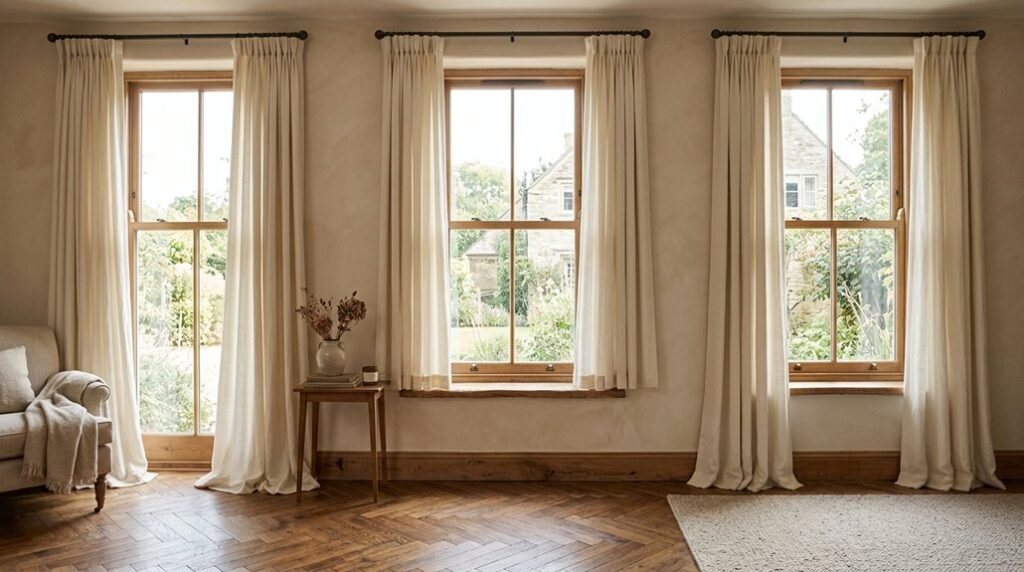
You stand before your windows with a measuring tape, wondering where the fabric should end. The wrong length can throw off an entire room, yet the rules aren’t as fixed as you’d think. Your ceiling height, mount style, and even your radiator’s placement all pull the decision in different directions. There’s more to contemplate than simply “touching the floor”—and one measurement mistake could cost you.
Should Your Curtains Touch the Floor? How to Choose
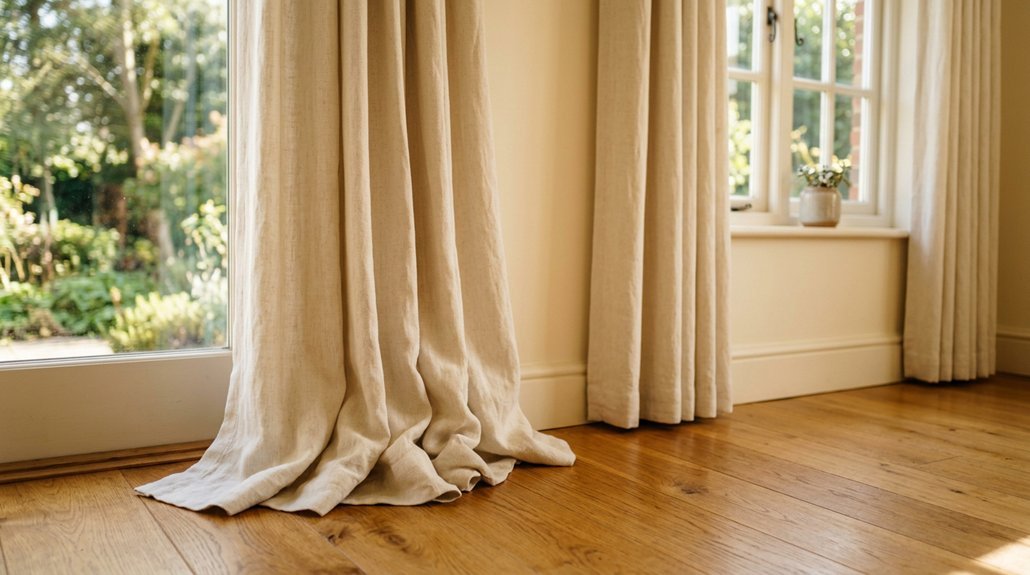
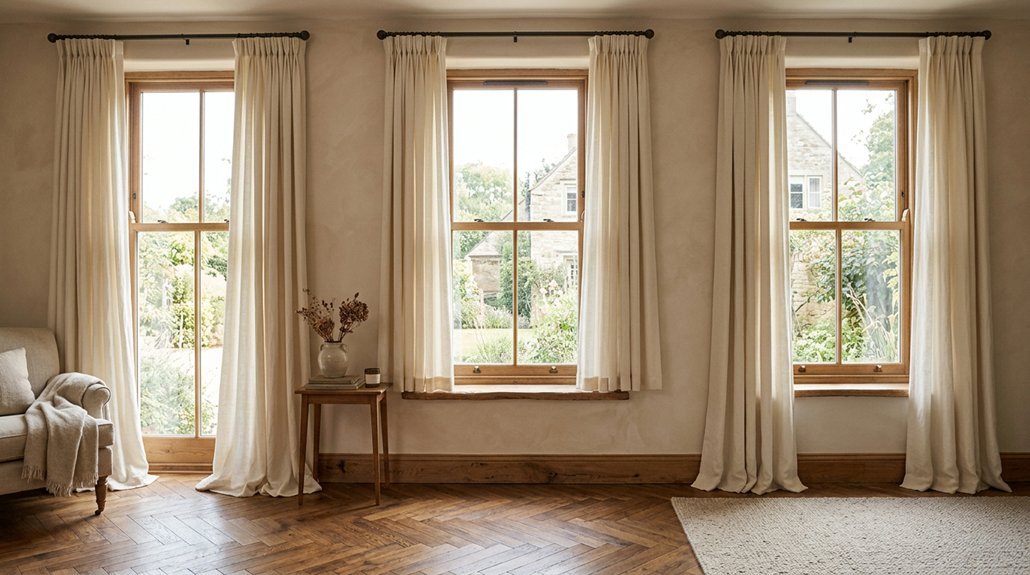
Why do curtain lengths spark so much debate? You’re choosing between competing priorities—cleanliness, style, and function—when selecting floor-length curtains for any room. You’ll find five distinct approaches to positioning your curtain hem. Float length suspends fabric ½ to 1 inch above flooring, simplifying cleaning and suiting modern spaces. Break length extends 1–2 inches past the floor for subtle elegance without tripping hazards. Kiss/grazing length meets the floor exactly, eliminating gaps while maintaining crisp lines. Puddle length indulges with 3–6 inches of pooled fabric, demanding careful placement of your curtain rod/track to achieve drama. Sill-length stops at the window sill, functioning as your practical window treatment where moisture or furniture interferes. Measure precisely from curtain rod/track to your chosen endpoint. The right length transforms your space.
Recommended Products

Size & Quantity: Each package contains 2 panels, each 42" wide and 36" long, total width is 84", total length is 37.5" including 1.5" header. The rod pocket applicable to curtain rods no wider than 1", the bottom hem rod pocket fits for curtain rods no wider than 1"

Size & Quantity: Each package contains 2 panels, each 42" wide and 84" long, total width is 84", total length is 85.5" including 1.5" header. The rod pocket applicable to curtain rods no wider than 1", the bottom hem rod pocket fits for curtain rods no wider than 1"
5 Curtain Length Options and Where Each Works Best
Where exactly should your curtains fall? Your curtain length choice transforms your window treatment and room feel.
Float length hovers ½–1 inch above the floor, giving you a modern, easy-to-clean option on level surfaces. Grazing length lightly kisses the floor for refined minimalism and reduced light leaks. Break length adds 1–2 inches past the floor, elegantly hiding unevenness while maintaining practicality. Puddle length pools 3–6 inches extra, creating luxurious drama in formal spaces. Sill-length curtains stop at the window sill, perfect for kitchens, radiators, or small windows where you’re prioritizing function.
Your ceiling height and desired window look guide this decision. Higher ceilings suit dramatic puddle or break lengths, while standard rooms benefit from grazing or float options. Match your curtain length to your lifestyle and aesthetic goals.
Recommended Products

Unique Pet Friendly Fabric: Made from durable anti scratch tightly woven faux linen fabric offering resistance to scratches, snags and pet hair. A practical choice for homes with cats or dogs.

Package Includes: 2 panels lace sheer curtains, both sides and bottom sewed with scallop ruffle edges. Usually we suggest curtain width equals 2 times of window / pole width

PACKAGE INCLUDE:1 panel linen sheer curtain.each panel size is 55 inch wide by 94 inch long
How to Measure Curtain Length for Your Specific Windows
How do you guarantee your curtains hit exactly where you want them? You’ll start by choosing your mount type. For inside mount, measure window height and width from inside trim, top-to-bottom and left-to-right. For outside mount, measure from outside trim, then determine your rod-to-floor distance.
First install your rod at the desired height—this influences perceived room height—then decide your end look. For float length, you’ll measure half inch to one inch above floor. Break length touches the floor with one to two inches of extra rod-to-floor distance. Puddle length adds three to six inches beyond the floor.
Always measure from the exact hanging point—whether rod top or ring position—to your chosen endpoint. This ensures your curtain length works perfectly for your specific window setup.
Recommended Products

🛁【Premium Quality】: Crafted from high-quality polyester blend fabric, this shower curtain is designed to be durable and resistant to fading. It is carefully...
Why Room and Window Type Dictate Your Ideal Length
What determines whether your curtains skim the floor or pool dramatically? Room type and window type dictate your ideal curtains length.
You use float length in active spaces like kitchens where you’re moving constantly and need quick access. Break length works well for living rooms where you balance everyday functionality with style. You choose puddle length for formal spaces where drama matters more than practicality.
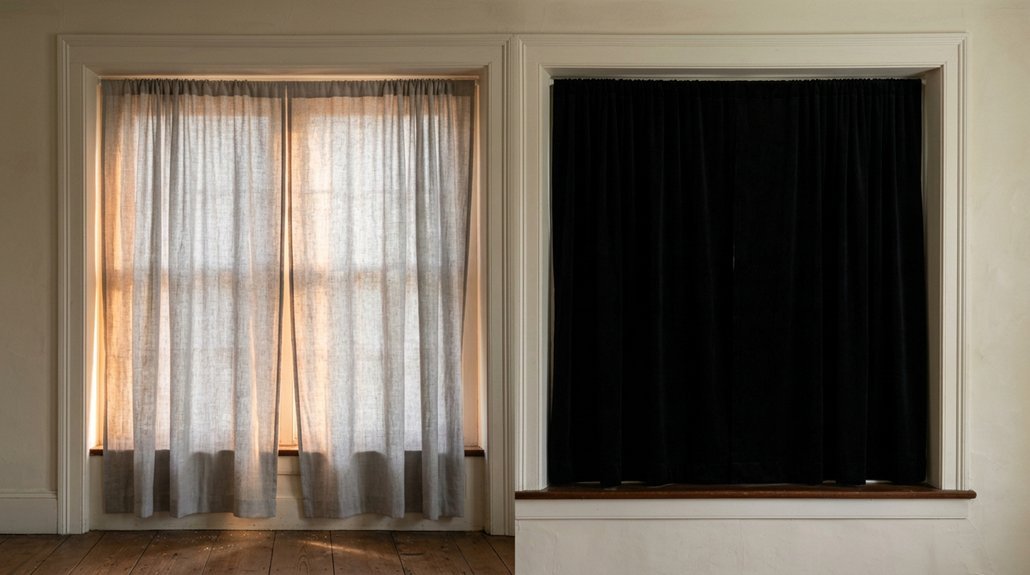
Privacy control and light control drive most decisions. You gain better floor-level blocking from break length or puddle length, especially with bigger windows. Insulation improves with these longer styles too, particularly when you add lining.
Consider fabric behavior before finalizing. Natural fibers shrink or stretch over time, so you’ll adjust your measurements accordingly. Synthetics stay more predictable. You’re balancing aesthetics against how often you’ll open and close them.
Recommended Products

PACKAGE INCLUDE:1 panel linen sheer curtain.each panel size is 78 inch wide by 102 inch long

PACKAGE INCLUDE:1 panel linen sheer curtain.each panel size is 52 inch wide by 84 inch long
Solving Tricky Scenarios: Radiators, High Ceilings, and More
Why wrestle with odd angles and obstructed walls? You can master atypical spaces with smart adjustments.
For radiators, you’ll want sill-length or slightly below-sill curtain length to avoid clearance issues while maintaining coverage. When tackling high ceilings, position your rod height 8 to 10 inches above the window frame to create taller windows, then measure from rod to floor for your curtain length. If you’re after floor-length drama, reserve puddle-length for low-traffic rooms—it’s striking but impractical elsewhere.
Don’t skimp on outside mount fullness; aim for 1.5x to 2x your window width to keep drapes balanced at extended heights. In radiused or unusually tall areas, fix your endpoint first—sill, mid, or floor—then complete your window measurement from rod to that point.
Conclusion
You’ll find your perfect curtain length by balancing style, function, and your specific space. Measure twice, account for shrinkage or clearance needs, and don’t be afraid to test rod placement before committing. Whether you’re floating, grazing, or puddling, the right length elevates your room’s entire feel. Trust your eye—and your measurements.