
You stand in your dining room, tape measure in hand, wondering if that stunning fixture will swallow your space or disappear entirely. Getting the size right isn’t guesswork—it’s a precise calculation involving your table width, ceiling height, and room proportions. Most homeowners get this wrong, hanging fixtures too high or choosing diameters that throw off the entire room’s balance. But the formulas exist, and once you know them, you’ll spot the mistakes in every friend’s dining room.
Size Your Chandelier to the Table (The Formula That Matters Most)
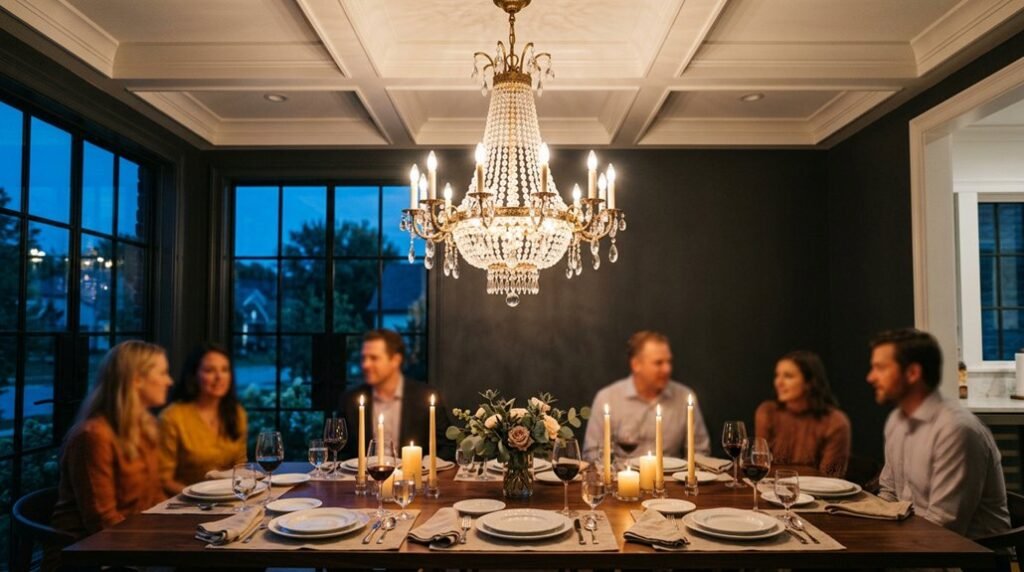
How do you guarantee your chandelier elevates the dining room rather than overwhelming it? You master the proportion rule that ties chandelier diameter directly to dining table width. Here’s the formula that matters: your chandelier width should measure approximately one-half to two-thirds of your table dimensions, leaving roughly six inches of clearance on each side.
For a table 48 inches wide by 60 inches long, you’ll select a chandelier diameter between 24 and 36 inches. The general sizing rule refines this further: chandelier diameter equals half to three-quarters of tabletop width, adjusted for open floor plans and proportion goals.
You position the hanging height carefully too—suspend the bottom 30 to 32 inches above the tabletop, calibrating for ceiling scale and spatial dynamics. Precision transforms installation into architectural statement.
Recommended Products

Brushed Gold Linear Chandelier: The ideal solution for kitchen island and dining room lighting. A brushed gold frame seamlessly complements three 9.8-inch wide soft white linen drum shades, emitting gentle, comfortable illumination. The 3-light gold chandelier design maximizes coverage for optimal brightness

[Modern Black and Gold Chandelier] Upgrade your dining room or kitchen island with the sophisticated charm of this black and gold chandelier. The sleek linear design, paired with clear seeded glass semi-globe shades, creates a seamless blend of modern and mid-century styles. This linear chandelier serves as a stunning focal point, combining contemporary elegance with distinctive design features to elevate your space.

chandelier brushed nickel farmhouse high ceiling pendant light fixtures living room kitchen foyer bedroom glass chandeliers
Find Your Chandelier Diameter When the Room Is Empty
What happens when you’re designing the space before the furniture arrives? You’ll need a reliable measurement method that scales with your room size. For an empty room, add your dining room’s length and width in feet, then convert that sum to inches—this figure becomes your minimum ideal chandelier diameter. A 12′ by 14′ space demands a 26-inch fixture. This approach ensures proportional presence without overwhelming architecture. Consider ceiling height alongside this calculation; taller spaces accommodate elongated shapes that fill vertical volume effectively. Whether you select round, square, or rectangular forms, this diameter formula anchors your design before the table arrives. You’ll establish foundational scale that harmonizes with future furnishings, creating intentional spatial rhythm from the start.
Recommended Products
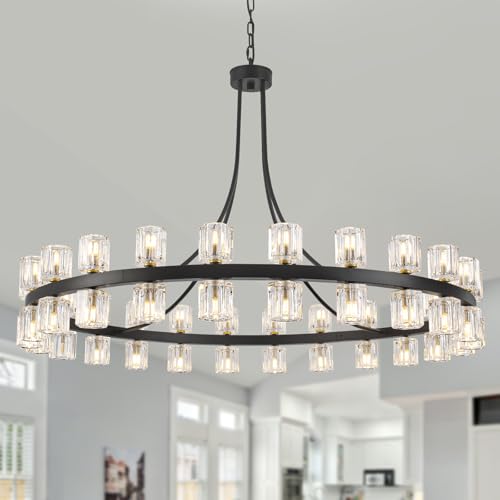
Modern Design: This 48-light round chandelier features a high-quality metal frame and double head clear glass shades, with matte black finish and a little gold accent for a modern look, adds elegance and a touch of luxury to your space.

【Simple and Elegant Design】This dining room light fixture features a well-designed rectangular metal frame and black body, complemented by a slender candle base. Simple and elegant, perfect combination of modern and farmhouse style, reflecting industrial charm and vintage style, enhancing the beauty of the space
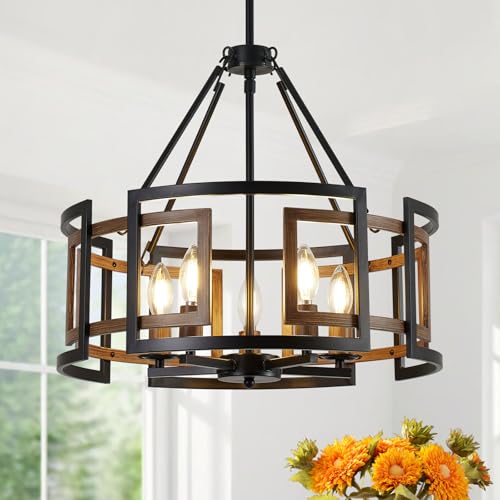
【Farmhouse Chandelier Design Concept】This classic chandeliers for dining room combines matte black metal with a walnut woodgrain frame. Its timeless style fits rustic, modern, mid-century, or farmhouse spaces, and the warm glow is perfect for everyday meals and family gatherings.
Hang It Right: The 30-Inch Rule and When to Break It
Where exactly should your chandelier sit? The 30-inch rule provides your foundation: position the bottom of your fixture approximately 30 inches above your dining table surface. This standard establishes optimal chandelier height for task lighting and visual comfort during seated meals.
However, you’ll need to break it up when your proportions shift. For wider tables or elevated ceiling height, raise your fixture 3 to 6 inches higher to maintain proportional balance. You’re ensuring the chandelier doesn’t overwhelm the space or obstruct sightlines. Rectangular designs accommodate higher placement than round alternatives due to their distributed mass.
Outside dining applications, suspend foyer fixtures at least seven feet from the floor. Your adjustments preserve both functional illumination and spatial harmony.
Recommended Products
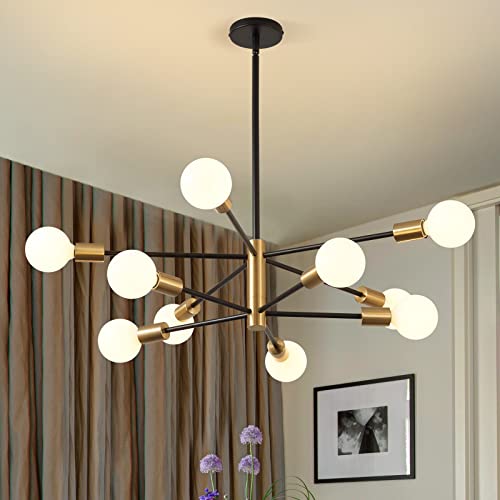
Bulb Requirements - This dining room chandelier over table uses 10 medium-base (E26) light bulbs. Max 40W LED recommended (bulbs NOT included). Could be fully dimmable when used with dimmable bulbs and compatible dimmer switch to create the perfect atmosphere (dimmer switch not include).

Glass and Iron Lampshade: When the clear glass lampshade meets the retro iron lampshade, light shuttles between them, and the textures set each other off, creating a warm and stylish artistic atmosphere for the home

【Boho Rattan Chandelier Style】 This pendant light fixtures is designed with natural rattan to give your room a natural bohemian feel.The 3-light farmhouse chandelier can give you 360° ample light. The deep boho atmosphere of boho rattan light fixture directly enhances your happiness and makes your life warmer.
Adjust for Tall Ceilings and Elongated Fixtures
Why settle for a fixture that disappears in soaring vertical space? You’ll fill that void with an elongated chandelier that commands attention while respecting proportion. As ceiling height climbs, you’ve earned permission to scale up—either expanding diameter or embracing vertical forms that distribute visual weight across greater expanses.
You must still maintain proper clearance; keep the bottom 7–8 feet above living areas for functionality. When the table below demands breathing room or heightened drama, raise the fixture another 3–6 inches. Your diameter should track room width—translate feet to inches as your baseline—then adjust upward for ceiling height and furniture scale. You’ll balance ambition with precision, ensuring the elongated chandelier anchors the room without overwhelming it. Height becomes opportunity when you calibrate every dimension deliberately.
Recommended Products
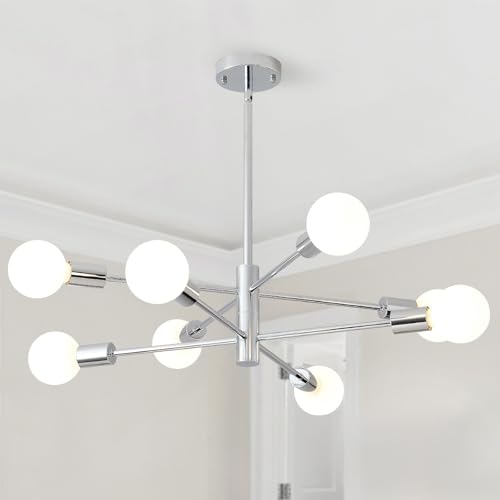
Modern Sputnik Chandelier: Brighten your space with this chrome chandelier. Its rust-resistant finish and striking crossed metal frame add modern industrial style to your living room, dining area or entryway. An eye-catching centerpiece you'll love

Modern Sputnik Chandelier: Brighten your space with this gold chandelier. Its rust-resistant finish and striking crossed metal frame add modern industrial style to your living room, dining area or entryway. An eye-catching centerpiece you'll love
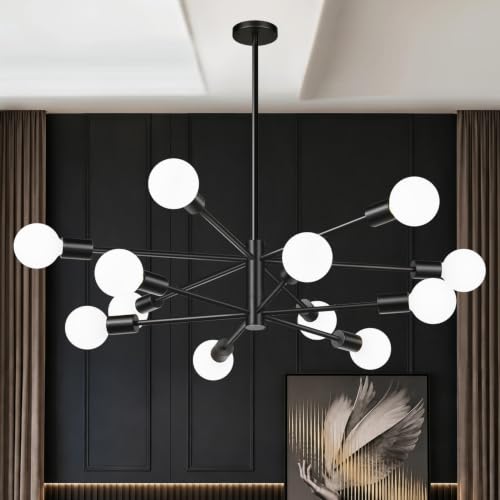
【Modern Chandelier】This chandelier features a high-quality matte black metal frame with 12 minimalist lamp arms. Its sturdy structure and 180-degree angle adjustable frame offers both style and functionality. This matte black dining room light fixture is is an ideal lighting choice for various spaces, including the dining room, kitchen island, living room, bedroom, foyer, entryway and office. (Bulbs NOT Included)
Size and Hang Rectangular Chandeliers Correctly
Tall ceilings and elongated fixtures set the stage, but your table’s geometry demands equal attention. You’ll size your rectangular chandelier’s Width at one-half to two-thirds of your Table width, leaving one foot of Clearance on each side—add six inches if the table’s open-sun or centered.
For Room size calculations, add room length and width in feet, then convert to inches for your Diameter baseline.
Aim for the bottom of your chandelier 30–32 inches above the tabletop. You’ll adjust upward 3–6 inches for wider tables or taller ceilings.
Under eight-foot ceilings, hang 30–34 inches from tabletop; eight-foot-plus ceilings allow 36–40 inches of Clearance—calculate chain Length accordingly.
Without a table, center your fixture over the dining area, maintaining consistent Height and adequate spacing from surrounding furniture for maximum decorative impact and functional illumination.
Recommended Products

[BRING NATURE HOME ]: This gorgeous Chandelier with 100% handcrafted water ripple glass. The Nature-inspired accessories can Strengthen the calming power of your home. Each glass is unique, mimicking the calming, restorative ambiance of the outdoors. Black matt coating metal frame is very friendly to a variety of scenarios.

【Rectangular chandelier】This modern crystal chandelier designed into a rectangle shape, black and rose gold metal frame, super luxury look, this long chandelier suitable for your dining table or kitchen island, with 3 tiers of top grade k9 crystals covers round the whole light fixture, it will be super stunning no matter when you turn on or off the light fixture, with the light sources changed, all the crystals will be reflected into sparkling like diamonds, elegant and never out of date at your home!

WIND CHIME DESIGN: The linear chandeliers for dining room is made of water ripple glass and metal which is heavy-duty and rust-proof. The design concept refers to the wind chimes, you can relax the screws, the wind blows in, our glass chandelier for dining room will collide like the wind chimes and make a pleasant sound.
Fix These 5 Common Dining Room Sizing Mistakes
How often have you walked into a dining room and felt something was off—an oversized fixture crowding the space or a dim light lost in the volume? You’re likely witnessing one of five frequent sizing errors.
First, you’re ignoring the room size formula: add length and width in feet, convert to inches—that’s your minimum diameter.
Second, you’re selecting a chandelier without measuring your dining table; aim for one-half to three-quarters of table width instead.
Third, you’ve hung fixtures without calculating height above table—maintain 30–32 inches for standard setups.
Fourth, you’re dismissing ceiling height; below eight feet requires 30–34 inches clearance, while taller ceilings need 36–40 inches.
Fifth, you’re mismatching lumens to volume—that 12′ × 15′ room demands 1,800–3,600 lumens.
Master these variables and you’ll achieve proper chandelier size effortlessly.
Recommended Products

💡【White Chandelier Light Fixture】The modern farmhouse white crystal chandelier for dining room features high quality white metal frame and sparkling clear crystal accents. The classic candle-style design, paired with cascading crystal droplets, creates a luxurious, The white dining room light fixture are perfect for adding infinite beauty and appreciation to your home.

Modern Farmhouse Design with Durable Finish: Combining modern elegance and rustic charm, this modern farmhouse chandelier features a brushed gold chandelier light fixture frame that is anti‑rust, corrosion‑resistant, and built to last. The classic fabric shades with wavy edges soften and diffuse light – a stunning living room chandelier or dining chandelier that creates a warm, inviting atmosphere for any room.

【Gold Rectangular Chandelier】- Caraluxe 8-light gold chandelier light fixture, a versatile lighting masterpiece that effortlessly enhances any space.From the elegant island chandelier light fixture to the modern dining room chandelier, Caraluxe gold rectangle chandelier adds a touch of sophistication and charm. Its timeless design seamlessly integrates into various settings, becoming a captivating focal point.
Match Your Chandelier to Your Dining Room’s Scale
Fixing common sizing errors gives you a solid foundation, but the real art lies in calibrating your fixture to the full spatial envelope of your dining room. You’ll start by calculating diameter: add your room dimensions in feet, then convert to inches. This yields your baseline scale.
For table width, size your chandelier to one-half or two-thirds its span, leaving six inches of clearance per side. Hanging height demands precision—position the bottom thirty to thirty-two inches above the tabletop, elevating proportionally for grander ceilings or expansive surfaces.
In open floor plans, you’ll anchor the fixture using measured room dimensions to preserve visual equilibrium. Over non-table areas, maintain seven feet of floor clearance minimum. These calibrated relationships ensure your chandelier harmonizes with architectural volume rather than competing against it.
Recommended Products

Farmhouse Wagon Wheel Chandelier Design: Artisan-crafted for the dining room, this 6-light chandelier offers 360° coverage, embodying vintage industrial charm. Ideal for kitchens, stairways, dining tables, and living spaces.

【Unique Contemporary Design】This black chandelier has 2 elegant “Y” shaped arms that reach out from the center in a distinctive interlocking shape, paired with 4 cylindrical glass shades to create a striking geometric silhouette. The modern glass chandelier body is crafted from high quality metal with a matte finish for a premium and classy texture. The transparent glass shades are like a light veil, gently wrapping the light and scattering it softly. The shades and the metal body reflect each other, perfectly blending the ruggedness of the industrial style with the sophistication of the glass, highlighting the unique style.

【Modern Farmhouse Style Black Wagon Wheel Chandelier】: Our this classic and elegant matte black finishes wagon wheel chandelier ( with 16 lights clear glass shade ) is carefully designed to make it blend into the home environment by professional designers. Every part of the lamp body is created by the precise cutting of machinery and the ingenuity of human craftsmanship. The distinctive and eye-catching design of wagon wheel pendant lighting makes them an ideal centerpiece for any room.(Tips: Our wagon wheel chandeliers are too large. Please check the Size of item before purchase to confirm whether it meets your requirements.)
Conclusion
You have the formulas—now apply them with confidence. Size your fixture to your table first, then refine for ceiling height and room scale. Hang it 30–32 inches above the surface, adjusting upward only when scale demands drama. Avoid common pitfalls: undersizing, overclearancing, and ignoring proportion. Your dining room deserves lighting that commands presence without overwhelming. Execute these technical principles precisely, and you will achieve spatial harmony that elevates every gathering.
Recommended Products

Adjustable Height - The chandelier lighting comes with rods(2x3 .93inch. 2x7.87inch and 4x11.8inch ) could be adjusted hanging length according to your preference and design. Ideal as dining room chandelier, kitchen island lighting, pool table light, foyer lighting.

Modern and Farmhouse Design: This Dining room light fixture combines wood and metal, merging rustic warmth with modern lines. As standout kitchen island lighting, it brings that coveted farmhouse feel. The farmhouse chandelier balances sophistication and coziness, making your kitchen or dining area the home’s heart

Modern Farmhouse Design: Embracing a modern and rustic style, this gold farmhouse chandelier features a simple metal structure and a classic fabric shade with a wavy edge. Our chandelier body is made of premium aluminum and outward with brushed gold plating technology, anti-rust, corrosion-resistant and durable. Unlike exposed bulbs, these shades soften and diffuse the light, creating a warm and inviting atmosphere. Combining comfort and practicality, this gold chandelier is the perfect choice for home lighting, and a stunning centerpiece of your space