
You run your hand across percale and feel a crisp, matte snap; you slide it across sateen and meet liquid smoothness with a faint gleam. These textures emerge from opposite weave structures—one tight and breathable, the other dense and draping—and your sleep quality hinges on which surface meets your skin. The wrong choice traps heat or chills you awake, but the right weave transforms your bed into exactly what your body needs. You’ll want to know which that is.
Percale vs. Sateen: What the Names Actually Mean
Why do percale and sateen feel so different against your skin? You’re feeling fabric weave in action, not fiber alone. Both materials can use cotton, polyester, or blends—the percale weave and sateen weave define what you experience.
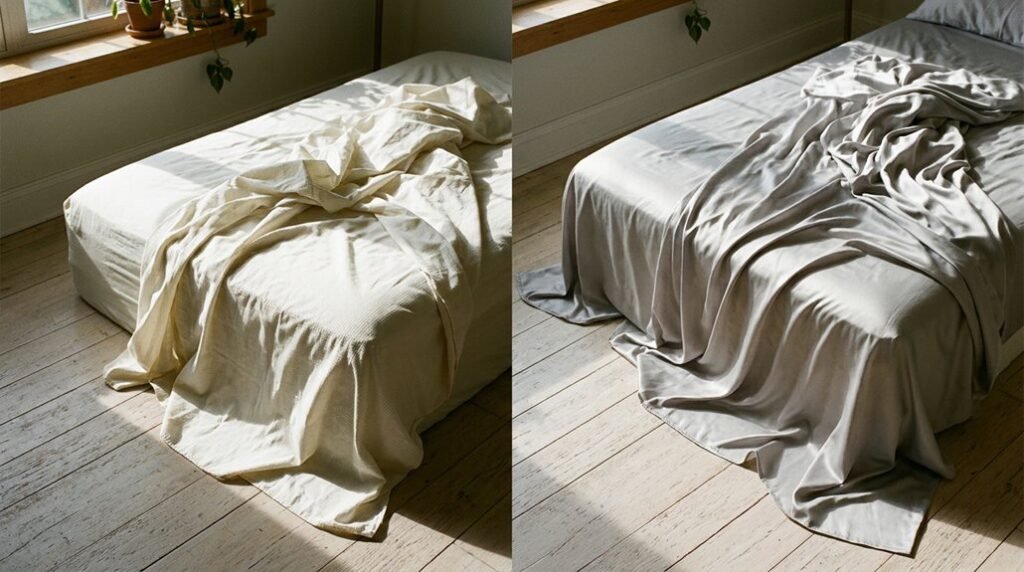
The percale weave follows a one-over-one-under pattern. You get a crisp finish, lightweight structure, and breathable sheets that stay cool. The texture feel registers as matte and slightly rough, snapping gently against your body when you move.
The sateen weave uses four-over-one-under instead. Longer floats create a silky surface with subtle sheen. You notice a warm drape that hugs closer, trapping minimal heat. Where percale pushes air through openly, sateen slides smoothly, feeling slightly heavier and more enveloping against your skin.
Recommended Products
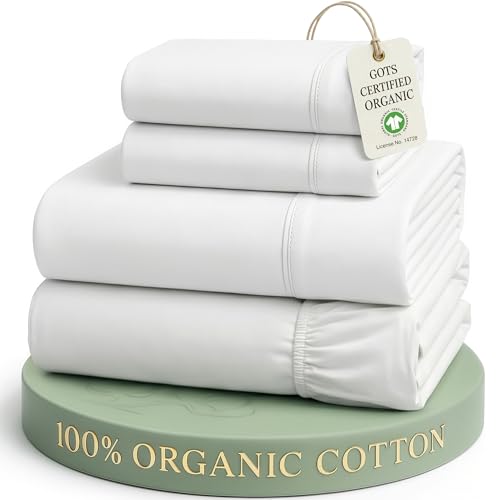
Naturally Cooling Organic Comfort : Stay cool and comfortable with Lane Linen 100% Organic Cotton Percale Queen Sheets, made from GOTS Certified organic cotton. The crisp percale weave and finer yarns create a lightweight, breathable feel that promotes airflow and balanced temperature for year-round comfort. Gets softer and smoother with every wash. Great as deep pocket Queen sheets, a cooling Queen sheet set, and breathable Queen bed sheets.

100% COTTON SHEET SET. 100% Cotton Percale Weave Sheet Set brings the crispiness and longevity that is comparable to prestigious hotel. The sheets are weaved using high quality Long-Staple Combed Cotton yarns in India, to make it the valued crispy percale 200 TC sheets in the industry. Varied colors to match your solid or printed duvet, quilt or comforter set in white, ivory, sage, taupe, dark blue (navy blue), baby blue, silver, and charcoal.

COLORFUL & CLASSIC - Add a splash of colour to your bedroom or guestroom with this premium Lacoste sheet set. Available in a rainbow of warm and cool colours, these luxury sheets are the perfect match for any décor.
How Weave Structure Creates Different Feels
How exactly does the same fiber transform into two distinct sleeping experiences? You’re witnessing the power of weave structure in action.
When you choose percale weave, you’re selecting a one-over-one-under pattern that builds a breathable fabric with a matte finish. You feel immediate crispness against your skin—a texture feel that’s lightweight and structured. The drape stays airy, though you’ll notice more wrinkling over time.
Switch to sateen weave and you encounter four-over-one-under construction. You’re touching a silky surface with subtle luster, created when longer yarn floats dominate the fabric face. Your fingers detect enhanced wrinkle resistance and a heavier, more fluid drape that clings closer to your body.
The weave—not merely the cotton—determines what you experience. You decide: airy structure or lustrous drape?
Recommended Products

Winner of the 2026 Good Housekeeping Best Bedding Award - Everyday Ease Cotton Sheets: Our 400 thread count bed sheets queen size are made with single-ply 100% long-staple cotton for a smooth hand feel and lightweight comfort. Independently tested to earn the prestigious Good Housekeeping Seal. Complete your bedding ensemble with these queen bed sheets.

Winner of the 2026 Good Housekeeping Best Bedding Award - Everyday Ease Cotton Sheets: Our 400 thread count king size sheets set is made with single-ply 100% long-staple cotton for a smooth hand feel and lightweight comfort. Independently tested to earn the prestigious Good Housekeeping Seal. Complete your bedding ensemble with these king sheets.
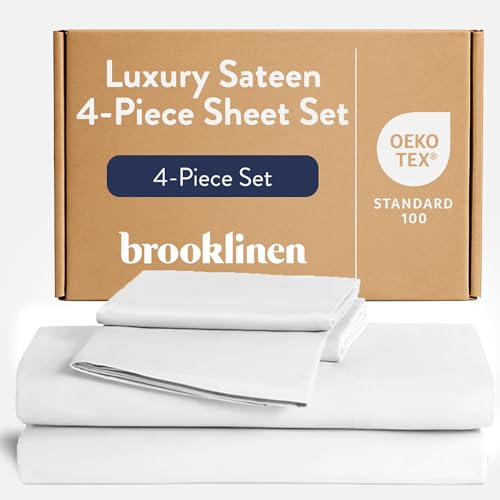
LUXURY SATEEN 4-PIECE SHEET SET: Featuring a rich, buttery-smooth weave, our best-selling Luxe Sateen Sheets are the ultimate bedding upgrade. Perfect for elevating your sheet game, these bed sheets feature a luxurious 480 thread count and a slightly luminous finish. Start styling your bed with the Core Sheet Set, which includes 1 fitted sheet, 1 flat sheet, and 2 pillowcases.
Which Weave Sleeps Cooler: Percale or Sateen?
When you climb into bed, your weave choice directly determines your thermal comfort. Percale delivers a cool sleep through its one-over-one-under plain weave structure. This breathable weave creates an open finish that maximizes airflow and accelerates moisture evaporation across your skin. You’ll feel the lightweight, crisp texture drawing heat away from your body.
Sateen operates differently. Its four-over-one-under weave produces denser threads and heavier drape, increasing heat retention against your body. While luxury sheets in sateen offer silky smoothness, you’ll notice the warmth accumulating through the night.
For warm sleepers, percale’s technical advantage is clear: the open structure dissipates thermal energy efficiently. You’ll trade some of sateen’s cozy opulence for temperature regulation. Choose percale when cooling matters; select sateen when you prioritize warmth and that distinctive liquid-smooth hand-feel.
Recommended Products

COLORFUL & CLASSIC - Add a splash of colour to your bedroom or guestroom with this premium Lacoste sheet set. Available in a rainbow of warm and cool colours, these luxury sheets are the perfect match for any décor.
Naturally Cooling Organic Comfort : Stay cool and comfortable with Lane Linen 100% Organic Cotton Percale King Sheets, made from GOTS Certified organic cotton. The crisp percale weave and finer yarns create a lightweight, breathable feel that promotes airflow and balanced temperature for year-round comfort. Gets softer and smoother with every wash. Great as deep pocket King sheets, a cooling King sheet set, and breathable King size bed sheets.

Pure Organic Comfort: Experience the luxurious comfort of our Lane Linen white sheets twin size, meticulously crafted from OEKO-TEX certified 100% Organic Cotton. The crisp percale weave provides a hotel-quality feel—soft, yet durable—offering breathability and supreme comfort.
Wrinkles, Pilling, and Durability Compared
Where exactly do percale and sateen diverge in long-term wear? You’ll notice percale wrinkles more readily, its matte surface creasing where sateen’s silky fabric finish resists folding. Yet durability favors percale’s tight one-over-one weave; you’re feeling fibers that resist pilling through repeated washing, softening without fraying. Sateen seduces with smoothness but betrays you under harsh care—its float-rich weave snags and pills when you ignore care instructions, heat attacking those exposed threads.
You preserve both by washing in cool or warm water with gentle detergent, removing promptly from drying cycles. Sateen demands you treat it delicately to maintain luster; percale forgives more readily. Your vigilance with drying temperature and cycle length determines which weave outlasts the other in your linen closet.
Recommended Products
Winner of the 2026 Good Housekeeping Best Bedding Award - Everyday Ease Cotton Sheets: Our 400 thread count queen size bed sheets are made with single-ply 100% long-staple cotton for a smooth hand feel and lightweight comfort. Independently tested to earn the prestigious Good Housekeeping Seal. Complete your bedding ensemble with this queen sheet set.

600 THREAD COUNT SATEEN WEAVE: Crafted from a cotton-rich blend with a buttery smooth sateen weave, this 600 thread count sheets twin size set offers a soft hand feel and refined finish designed for everyday comfort. The soft-finish fabric and high thread count sheets design offer everyday comfort along with wrinkle resistant, quick dry, and durable performance. The sateen weave adds an elegant touch that complements guest room or college dorm room essentials and your aesthetic bedroom decor.

PREMIUM 1200 THREAD COUNT SHEETS SET: Experience the comfort of our 1200 thread count sateen sheets, crafted from a cotton-rich blend & a smooth sateen weave with a luxurious sheen. This full size bed sheets & pillowcases set brings together softness, durability, quick dry convenience, and wrinkle resistance. Featuring OEKO-TEX STANDARD 100 and MADE IN GREEN certifications, these OEKO-TEX sheets are made in facilities focused on quality assurance and responsible production.
Who Should Choose Percale vs. Sateen?
Why settle for sheets that fight your biology? If you’re a hot sleeper, you need Percale’s one-over-one-under weave. Its 200-400 thread count delivers breathable coolness and crispness that actively wicks heat away from your skin. You’ll feel the matte texture snap against you, light and airy.
Sateen suits you better if you crave warmth and luxurious softness. Its four-over-one-under weave traps body heat, while the 300-600 thread count creates that signature silky drape. You run your hand across the subtle sheen and feel the difference immediately.
Consider your climate and your body’s thermoregulation. You choose Percale for dry, breathable nights; you choose Sateen for cocooned, satiny warmth. Your weave determines your sleep architecture.
Recommended Products

BACKED BY THE GOOD HOUSEKEEPING SEAL - Soft, Lightweight, Durable: Crafted from 100% cotton sateen, this white queen sheets set starts with a slightly crisp feel - becomes noticeably softer wash after wash. This queen size cotton sheets set offers a smooth finish with subtle sheen and year-round comfort. Complete your bedding ensemble with this queen sheet set.
Winner of the 2026 Good Housekeeping Best Bedding Award - Everyday Ease Cotton Sheets: Our 400 thread count full size bed sheets set is made with single-ply 100% long-staple cotton for a smooth hand feel and lightweight comfort. Independently tested to earn the prestigious Good Housekeeping Seal. Complete your bedding ensemble with this bedding.
BACKED BY THE GOOD HOUSEKEEPING SEAL - Soft, Lightweight, Durable: Crafted from 100% cotton sateen, this white sheets king size set starts with a slightly crisp feel - becomes noticeably softer wash after wash. This king bed sheet set offers a smooth finish with subtle sheen and year-round comfort. Complete your bedding ensemble with these 100% cotton sheets.
Care Tips for Your Chosen Weave
How do you preserve the precise hand-feel your weave was engineered to deliver? Master fabric weave care by matching your routine to your weave’s structure.
For Percale care, select cool or warm washing temperature and employ gentle detergent to safeguard the crisp, matte surface. The one-over, one-under construction softens without surrendering its cool, breathable hand. Tumble drying on low supports wrinkle prevention, though you’ll notice percale wrinkles more readily than its counterpart.
Sateen care demands precise dryer timing—remove promptly to minimize pilling and creasing. Its four-over, one-under weave yields natural wrinkle resistance when handled correctly.
Both require adherence to manufacturer care instructions for optimal fabric finish preservation. Your attention to these variables determines whether your sheets develop enhanced suppleness or deteriorate prematurely.
Recommended Products
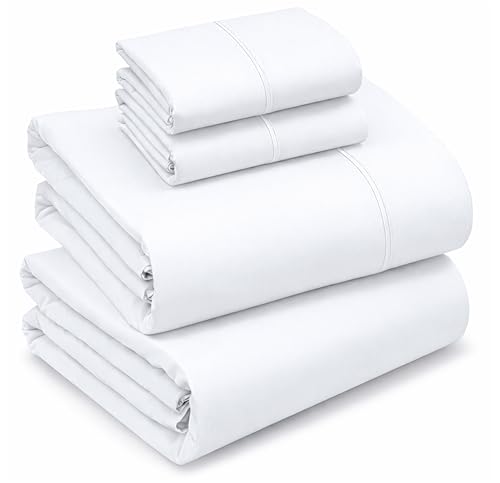
COOLING AND BREATHABLE FOR HOT SLEEPERS: Enjoy a crisp, cool sleep with 100% Cotton Percale sheets that promote airflow, reduce heat buildup, and keep you refreshed all night. Lightweight sheets for summer, hot sleepers or anyone who sweats while sleeping.

CHOOSE THIS IF YOU LOVE CRISP, COOL FEEL 100% ORGANIC KING SIZE COTTON BEDSHEETS: Percale is a classic woven cotton weave with a distinctly crisp, cool feel and matte finish — like a freshly pressed dress shirt, and NOT a silky or smooth sateen weave. It continues to stay crisp and gets softer with every regular wash. Not for sleepers expecting smooth, or silky sheets with sheen— made for those who love the cool, airy feel of true cotton percale.

COOLING AND BREATHABLE FOR HOT SLEEPERS: Enjoy a crisp, cool sleep with 100% Cotton Percale sheets that promote airflow, reduce heat buildup, and keep you refreshed all night. Lightweight sheets for summer, hot sleepers or anyone who sweats while sleeping
Conclusion
You’ll feel percale’s crisp, matte breathability cool your skin through its one-over-one grid, while sateen’s four-over-one float wraps you in sleek, warm drape. Your sleep temperature and texture preference dictate the winner: choose percale for airy coolness, sateen for lustrous weight. Both weaves demand proper care—gentle cycles preserve percale’s structure, while avoiding harsh agitation protects sateen’s surface. Match your sheets to your sensory priorities and maintain them accordingly.
Recommended Products
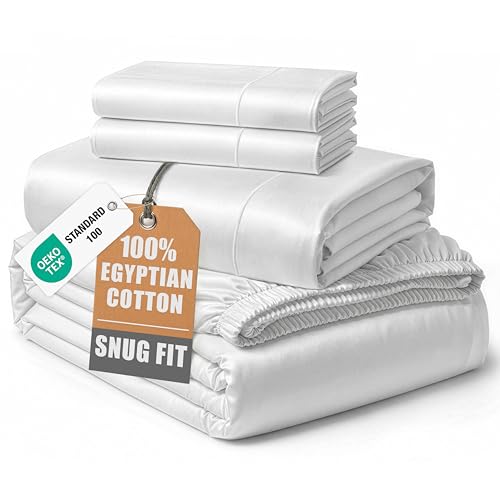
Silky-Smooth 100% Egyptian Cotton Sateen : Sink into true hotel luxury with Lane Linen 100% Egyptian Cotton King Sheets, woven in a lustrous sateen from long-staple Egyptian cotton for a buttery-soft, silky feel with a subtle sheen. Breathable and naturally temperature-regulating - cool in summer, cozy in winter - and softer with every wash. Great as king size sheets set, king bed sheets, king size sheets deep pocket set, king size sheets set cooling.
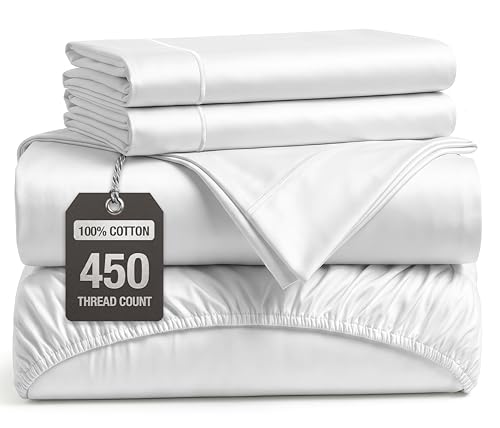
450 THREAD COUNT QUEEN SHEETS : Lane Linen's 450 thread count queen sheets are woven from 100% long-staple cotton in a smooth sateen weave for a soft, silky & breathable feel on skin and durable, luxury comfort all year round.

LUXURY SATEEN 4-PIECE SHEET SET: Featuring a rich, buttery-smooth weave, our best-selling Luxe Sateen Sheets are the ultimate bedding upgrade. Perfect for elevating your sheet game. These bed sheets feature a luxurious 480 thread count and a slightly luminous finish. Start styling your bed with the Core Sheet Set, which includes 1 fitted sheet, 1 flat sheet, and 2 pillowcases.