
You stand in the lighting aisle, two bulbs in hand, and realize you cannot trust your eyes alone. The Kelvin rating printed on the package promises precision, yet your kitchen feels sterile while your bedroom looms too dim. One choice reshapes your alertness; the other, your rest. The wrong temperature fractures a room’s coherence, and you are about to discover why.
Warm White vs Cool White: What’s the Difference?
How exactly does a single fixture shift your perception of a space? You’re manipulating colour temperature, measured in Kelvin, where subtle shifts alter everything.
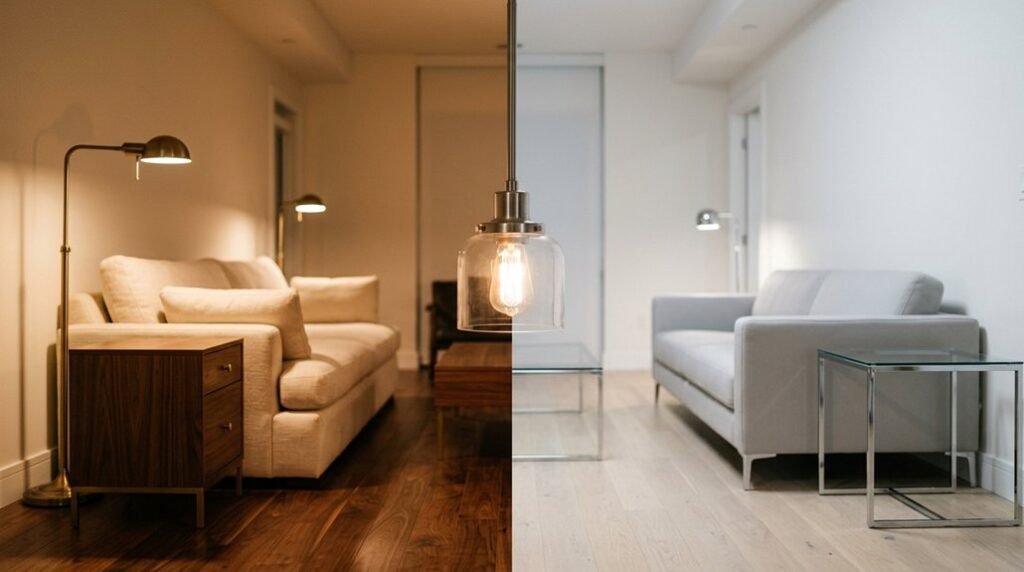
Warm White spans 2700K–3000K, casting orangey-yellow tones that relax you. Cool White hits 4000K–6500K, delivering bluer light that sharpens your focus. You’re not choosing brightness—you’re selecting psychological response.
With LED bulbs, this choice becomes precise. These semiconductor sources maintain stable Kelvin ratings across thousands of hours, eliminating the drift you’d expect from older technologies. Your room lighting translates directly into ambience: Warm White signals your nervous system to unwind; Cool White triggers alertness.
The distinction isn’t arbitrary. You’re calibrating biological response through spectral composition, transforming identical spaces through calculated photon emission.
Recommended Products

10000 Hours Lifespan: Each bulb has an impressive lifespan of 10,000 hours, lasting over 9 years based on 3 hours of daily usage.

Efficient LED Bulbs: Ascher pack of 6 units E26 A19 non-dimmable LED light bulbs. Replace 60W incandescent bulb by 6W LED, save over 90% on electricity bill. Note: This E26 LED bulb is not dimmable, please do not use them with dimmer switch

The A19 LED light bulbs are energy-saving 9-watt bulbs (equivalent to 60-watt traditional incandescent bulbs). Compared to traditional 60-watt incandescent bulbs, they can save up to 90% of energy. These LED bulbs are well-designed and highly efficient, making them an ideal alternative to traditional bulbs.
Room-by-Room Guide: Where to Use Each Temperature
Where do you actually need alertness, and where do you surrender to rest? You navigate this room-by-room through deliberate lighting temperature choices.
You deploy Cool White (4000K–5000K Kelvin) in kitchens where task lighting demands visual precision for food preparation; contamination disappears under its clinical beam. You’ll mirror this in bathrooms, positioning Cool White vanities at face level to eliminate shadow during grooming rituals. Never mix temperatures within one space—optical dissonance shatters cohesion.
You reserve Warm White (2700K–3000K) for sanctuaries of repose. In living rooms, you’ll layer these sources, sculpting ambiance through pooled luminosity. Bedrooms surrender completely to Warm White’s soporotic signature, though you’ll select 3000K for bedside reading to preserve eye comfort without betraying relaxation’s threshold.
Daylight registers 5000K–6500K: you relegate this stark extremity to commercial zones, never domestic refuge.
Recommended Products

ENERGY EFFICIENT: These 9W LED light bulbs provide the brightness of 60 watt light bulbs, saving $56.10 in energy costs over their lifetime compared to the incandescent equivalent (based on 3 hours/day)

【Dimmable & Versatile】Smoothly adjust brightness with TRIAC dimmer compatibility. Tailor your lighting from soft to bright, ideal for relaxing evenings or task-focused environments. Not compatible with smart dimmers
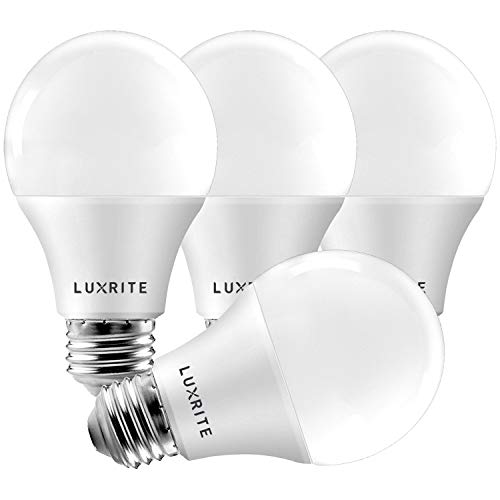
Brightest - Giving you 800 lumens of crisp, quality lighting that is perfect for any atmosphere and brighter than your standard A19 Led bulb. Provide more light to your kitchen, bedroom, living room, office, or any space for brighter home lighting.
5 Colour Temperature Mistakes That Ruin Your Lighting
Why do your illuminated spaces feel subtly wrong, though you’ve invested in quality fixtures? You’re likely committing fundamental colour temperature errors.
You mix Warm White and Cool White within single rooms, spawning visual dissonance and fractured atmosphere. You ignore room function, forcing sleepy amber tones into task-intensive kitchens or blasting Cool White where you unwind. You fail standardizing temperature range across fixtures, corrupting color rendering and spatial coherence. You disregard how each space operates, deploying mismatched lighting that obstructs purpose. You overlook LED stability, trusting chips won’t drift spectrally across decades; they do, muting your calibrated environment.
These oversights degrade perception. Audit your specifications. Match source to zone. Verify consistency. Your architecture demands precision—deliver it through intentional thermal control of your luminous field.
Recommended Products
✔BRIGHTEST - Giving you 800 lumens of crisp, quality lighting that is perfect for any atmosphere and brighter than your standard A19 LED bulb. Provide more light to your kitchen, bedroom, living room, office, or any space for brighter home lighting.

💡 Technical Features - 24 Pack, light bulbs 60 watt equivalent, E26 base, 4000K cool white/neutral White, non-dimmable, A19 shape, AC-120V, CRI 80, 180 degree, turn on instantly

Energy Efficient & Energy Saving: Replace 60W ( 800 lumens ) incandescent bulbs with just 9W LED , saving up to 85% on energy costs. With an estimated annual energy cost of only $1.08 (based on 3 hours/day). Non-dimmable
How Colour Temperature Affects Mood and Sleep
Your calibrated fixtures now sit aligned, yet their spectral output still acts upon you in ways specification sheets rarely acknowledge. Warm white (2700–3000K) triggers parasympathetic response, lowering cortisol and preparing you for rest. Cool white (4000–6500K) mimics solar noon, activating suprachiasmatic nuclei that govern your circadian architecture.
You’re negotiating daily between these lighting temperatures. Evening exposure to cool white suppresses melatonin secretion, delaying sleep onset and fragmenting restorative cycles. Warm white preserves your dim-light melatonin onset, stabilizing mood through predictable circadian entrainment.
Your brain maps colour temperature to environmental safety; inconsistency breeds neural dissonance. Task performance demands cool white’s acuity, but unwinding requires warm white’s spectral softness. You’re not merely illuminated—you’re chemically recalibrated by every photon.
Recommended Products

G25 LED Bulb With Even Lighting: The more uniform the light, the much easier for you to makeup quickly. The high light transmission lampshade and 80+ CRI of the G25 LED globe light bulbs allow the object looks closer to realistic. Visible flicker may result in eye-fatigue. However, the stable current of these mirror light bulbs provides you with a better lighting experience without flicker to protect your eyes.

Smooth Dimming:Dimmable ST58 Edison bulbs are designed with the latest light source technology, which makes them compatible with most dimmers in the market(recommended dimmers are listed in the product description), providing a smooth dimming control with the highest brightness at 100% and the lowest brightness at 10% without flicker or buzzing. The smooth dimming pattern allows you to adjust the perfect brightness for your room anytime

Technical Features - 4 Packs, light bulbs 40 watts equivalent, E26 base, 5000k daylight, non-dimmable, A19 shape, AC-120V, CRI 80, 180 degree, turn on instantly
Can You Mix Warm and Cool White Lighting?
How might you inhabit a space where coral dusk and arctic noon coexist? You navigate Colour Temperature strategically—Warm White and Cool White serve distinct functions, but you mustn’t blend them carelessly. Mixing Lighting within one zone risks visual fragmentation; you’ll sacrifice Ambiance Cohesion. Temperature measured in Kelvins demands intentional separation. You deploy Multi-Temperature Fixtures—adjustable downlights toggling between 3000K and 5000K—to shift atmosphere without swapping hardware. Zone Switching becomes your primary tool: you’ll isolate kitchen task zones at 4000K while keeping adjacent living areas at 2700K. Separate circuits prevent spectral collision. You recognize that consistent Temperature measured in Kelvins per room preserves psychological comfort, yet your adaptive fixtures permit functional transformation when circumstances warrant. Precision governs your luminous architecture.
Recommended Products
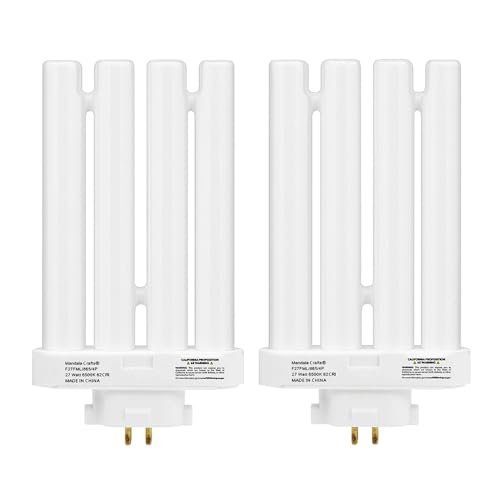
FML-27W-6500K Compact Fluorescent Bulbs: The lead-free gx10q CFL light bulbs with 4 prongs and quad tubes simulates full spectrum natural daylight or sunlight.

Good replacement for 100W halogen bulb by A19 12W E26 LED bulbs, it saves 88% on your electricity bill. NOTE: This LED bulb is not dimmable, please DO NOT use them with dimmer switch!

Energy efficient: Philips Indoor CFL Light Bulbs have an estimated dollar 1.57 estimated annual energy cost (based on three hours/day)
How to Read Kelvin Temperature Ratings on Bulb Packaging
You’ve mapped the architecture of zones and circuits, but now you face the packaging itself. Scan the bulb packaging for Kelvin ratings—they quantify color temperature through precise numerical values. You’ll find 2700K-3000K designating warm white, its amber resonance receding toward thermal comfort. Higher registers, 4000K-6500K, signal cool white or daylight spectra, their blue-tinged clarity cutting through shadow. LEDs preserve these values throughout their operational lifespan, their spectral output fixed where older technologies drifted.
Note explicit numerals or color temperature icons printed on cartons. Some fixtures display dual thresholds—3000K/4000K—suggesting configurable output. Maintain consistency within each volume; mismatched temperatures fracture spatial coherence, creating visual dissonance across contiguous planes. You select the rating, you control the atmosphere.
Recommended Products

60W Incandescent Replacement Bulb: A19 LED bulbs are more energy efficient than incandescent bulbs but generate less heat. No lead or mercury, no IR radiation. It provides a comfortable lighting space and protects our visual health at the same time

Energy-Saving Brilliance: The EVELOR A19 LED light bulbs consumes only 13W while delivering the same brightness as a 100W incandescent bulb, achieving up to 90% energy savings. It's the perfect upgrade from outdated, inefficient lighting.

【Energy Efficient & Cost-saving】Adopting energy-efficient LED chips, DEGNJU A19 LED light bulbs offer the same brightness as traditional 60-watt light bulbs while utilizing only 8.5 watts with the same lighting quality, which helps in decreasing the bill cost greatly.
Tunable Temperature Bulbs: Adjustable Light for Any Task
Why settle for fixed illumination when a single fixture can traverse the thermal spectrum? Tunable temperature bulbs empower you to manipulate color temperature at will, shifting between 2700K warm white and 4000K cool white without swapping hardware. You command adjustable light through remote interfaces or integrated controls, dialing precise kelvin values for each scenario. At 4000K–5000K, you’ll sharpen visual acuity for detail-oriented tasks; at 2700K–3000K, you’ll cultivate ambient lighting conducive to decompression. These systems preserve spectral stability throughout their operational lifespan, eliminating the chromatic drift plaguing legacy fluorescent technologies. You’ll optimize spatial zones independently, though you must isolate temperature variations to prevent discordant illumination. One fixture, infinite thermal gradients—your environment obeys your circadian and functional imperatives.
Recommended Products

💡 Technical Features - Pack of 12, light bulbs 60 watt equivalent, E26 medium base, 3000K warm white, 8 watts, 800 lumens, A19 shape, AC-120V, CRI 80, turn on instantly, dimmable light bulbs

Start saving today with these energy efficient MR16 LED Light Bulbs. These lights have a GU10 base.

💡 Technical Features:Dimmable led light bulbs warm white 12 pack A19 LED bulb,9W 800 lumens (60W equivalent),warmwhite 3000K ,E26 base,Frosted,AC 120V,CRI 80+,Beam angle 230°,instant on, no warm-up time
Warm White vs Cool White: Which Saves More Energy?
Where does the burden of your electricity bill actually reside—within the thermal signature of your bulbs or elsewhere entirely? You’ll find the answer not in color temperature, but in wattage and LED architecture. Warm White and Cool White draw identical power when matched for lumen output; your lighting choice alters ambiance, not consumption. Some Cool White LEDs achieve marginally higher lumens per watt, yet this variance stems from phosphor formulation and driver efficiency, not the Kelvin value itself. You maximize energy efficiency by selecting lower-wattage LEDs with robust efficacy ratings, not by favoring one color temperature. Daylight spectrums at 5000K–6500K offer no intrinsic savings. Your electricity meter registers joules consumed, not hues rendered—so specify lumens, not Kelvins, when pursuing conservation.
Recommended Products

⭐ DIMMABLE BR30 LED FLOOD LIGHT BULB, 10%-100%. These BR30 LED flood light bulbs dim smoothly from 10% to 100% with compatible dimmers, giving precise control over light intensity for any room or application. Instant-on technology means no warm-up delay, and flicker-free output keeps light consistent throughout the dimming range. A direct dimmable replacement for 65-watt incandescent BR30 flood light bulbs in 5-inch and 6-inch recessed cans, track lighting, and wide-coverage indoor flood light applications. E26 medium base fits standard sockets with no adapter required. Compatible with standard leading-edge and trailing-edge dimmers.
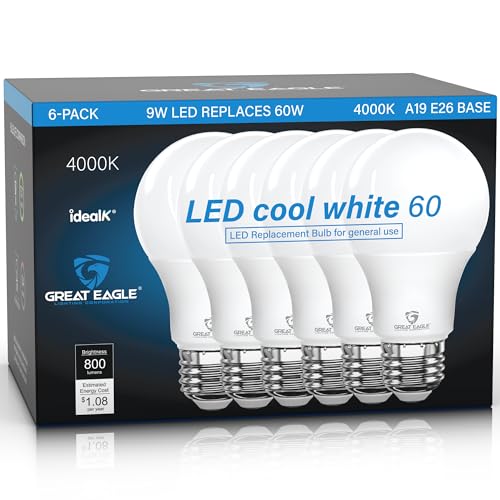
60-WATT REPLACEMENT, ONLY 9 WATTS USED: These E26 A19 LED light bulbs deliver a bright 800 lumens while using just 9W — the same light as a 60 watt incandescent at roughly 85% less energy. Standard light bulbs that pay for themselves in lower power bills.
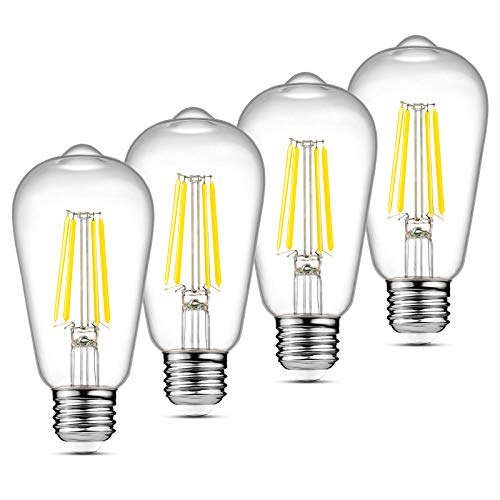
Efficient LED Bulbs: Ascher pack of 4 units E26 LED filament bulbs replace 60W incandescent bulb by 6W LED, save over 90% on electricity bill of lighting. Note: This E26 LED bulb is not dimmable, please do not use them with dimmer switch
When to Call a Lighting Designer: Beyond DIY Selection
How do you know when your own calculations reach their limit? You sense misalignment between Warm White glow and Cool White clarity, yet can’t reconcile them across shifting zones. You’re calculating color temperature for room function, weighing 2700K relaxation against 4000K precision, but the math fragments under biological complexity and circadian need. You’ve researched CRI, distinguished ambient lighting from task lighting, yet fixtures clash, temperatures drift, and dimming curves resist synchronization.
You enlist a lighting designer when layering demands technical orchestration beyond consumer defaults. They audit your architecture, eliminate mixed-temperature dissonance, and specify exacting CRI thresholds for accurate color rendering. They calibrate Warm White against circadian rhythm, deploy Cool White where alertness governs, and engineer seamless transitions between ambient and task planes. You receive documented specifications, consistent model sourcing, and installation clarity.
Recommended Products

COZY MATT OPAL FINISHED: Special matt opal glass, it was designed for not only lighting but also for the elegant artwork, match with your wall lamps and pendant lamps

Perfect for Bathroom Vanity & Makeup Lighting: Designed for bathroom vanity mirrors and makeup areas, the 5000K daylight white light provides bright, clear illumination that helps reduce shadows on the face and improves visibility for daily grooming and makeup application
Conclusion
You navigate your spaces through Kelvin’s spectral truth: 2700K’s amber embrace quiets your neural pathways for restoration, while 4000K’s blue-forward photons drive your cortical alertness. Your circadian architecture demands precision—mismatched temperatures fracture visual coherence, degrading both psychological comfort and task performance. Calibrate deliberately. Layer with intent. Let your lighting design honor the dual imperatives of atmospheric resonance and biological alignment, transforming mere illumination into intentional environmental choreography.