
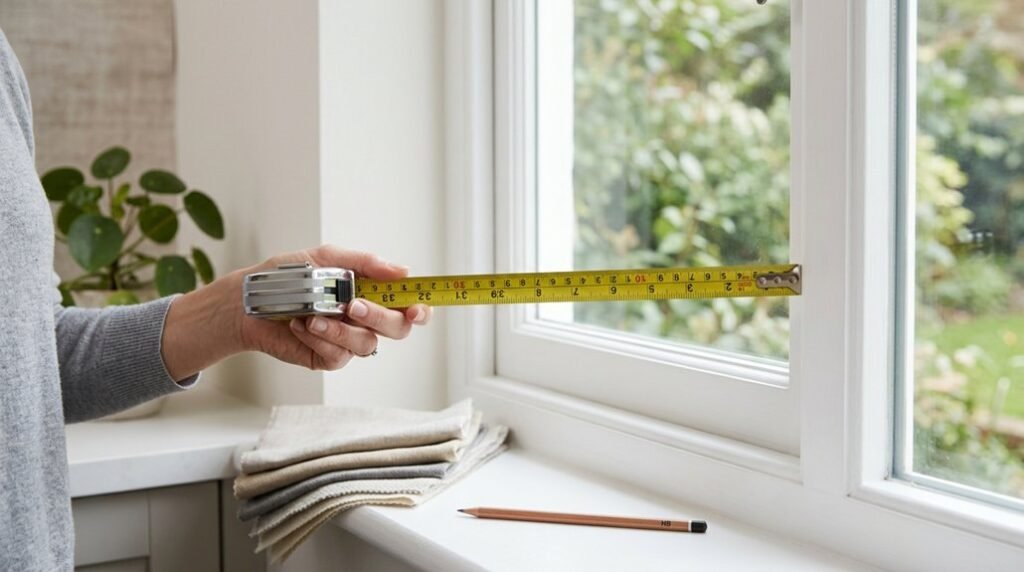
You’re staring at your windows, unsure where to even hold the tape measure. Mount inside the frame or extend past it? Measure from the rod or the floor? Get these basics wrong, and you’ll end up with curtains that gap, drag, or simply look off. The good news: once you know the key decisions upfront, the rest falls into place.
Where to Place Your Curtain Rod
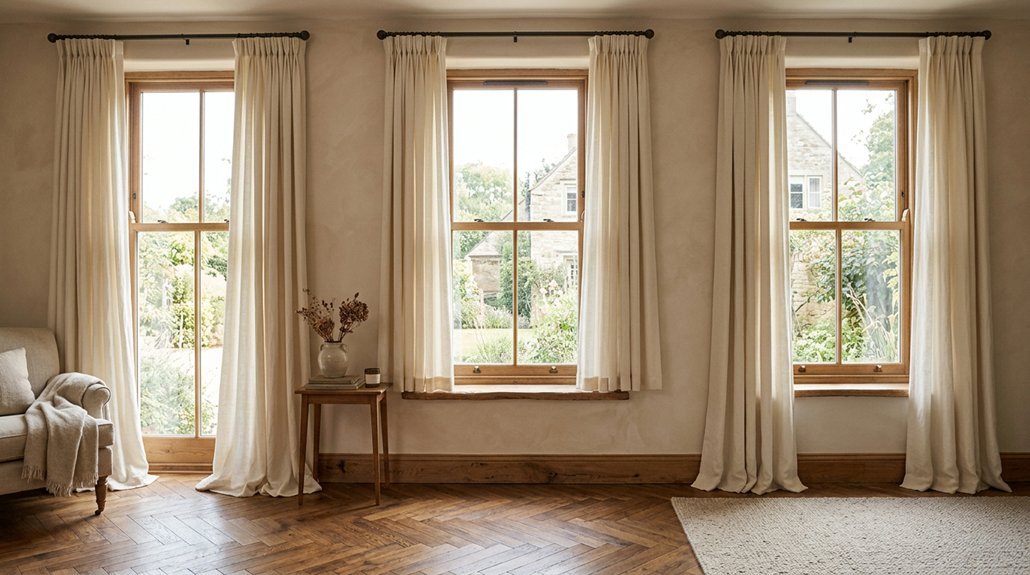
Where exactly should you position your curtain rod? For outside-frame mounting, you’ll extend the rod 6–15 inches beyond each side of the window. This placement ensures your curtains stack neatly without blocking light or views. You’ll also raise the rod 6–10 inches above the frame to create height and maximize natural light.
When you measure placement, consider how rod height and side extensions work together. Your rod length must account for these extensions so curtains achieve full coverage when closed. Calculate track or rod length as window width plus both extensions, then double this for total length. This accounts for proper fullness and elegant drape. You’re balancing coverage, style, and function—getting this right transforms your window treatment from basic to beautiful.
Recommended Products

NO DRILL, NO MEASURE INSTALLATION FOR QUICK SETUP Fast Fit design installs easily without drilling or measuring, helping save time and reduce wall damage during setup.

Product Package: the inside mount curtain rod bracket is packed with 2 pairs and 4 individual pieces, including built in pole holders; They are suitable for 3/8 inch aluminum or steel bars or rods
Measure Your Curtain Width
How wide should your curtains actually be? First, decide if you’re using an inside mount or outside mount. For inside mount, measure the window width including any casing, then add at least 4 inches per side to your total width. For outside mount, extend your rod 6 to 15 inches beyond each side of the frame.
Grab a metal tape measure and round to the nearest 1/8 inch when you measure the width.
Now calculate your curtain width based on fullness—multiply your window width by 1.5x to 3x depending on your header style and fabric choice.
For two-panel setups, ensure your total curtain width covers the window completely when closed, leaving no gaps.
You’ll get proper coverage and that luxurious gathered look you want.
Recommended Products

100% Metal 50LB Heavy Duty: Built with a 1-inch diameter rod (0.7mm thick), multi-layer metal end brackets, and a strong middle bracket, the heavy duty curtain rods supports up to 50 lbs of heavyweight draperies in total. Made from 100% premium metal with a rust-resistant coating, the wrap around curtain rod passes salt spray, alcohol wipe, and adhesion tests for lasting strength and durability. (Note: Multi-jointed design for safe transit. Assembly required. Not 1-2 whole pieces. No middle bracket for 58" version.)
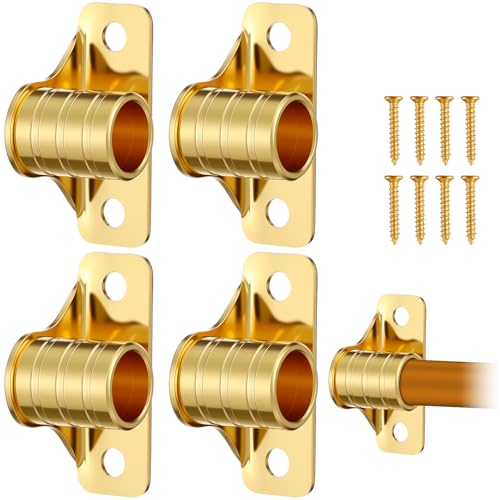
Versatile Package Contents: the package comes inclusive of 4 pieces of curtain rod brackets, making them ideal for mounting multiple curtain rods; Made with metal, these brackets provide strength and reliability, make long term service

Ivilon adjustable bracket for curtain rods is compatible with any rod of 7/8 or 1 inch diameter rods.
Measure Curtain Drop by Header Style
Why does header style matter when measuring curtain drop? Different header styles change how your curtains hang and where you must measure from top to bottom.
For track or rod installation, you’ll measure curtain drop from the mounting point to your endpoint—floor, sill, or below. With inside mount setups, start at least 4 inches above the window frame. Outside mount installations extend beyond the frame for better fullness and coverage.
Pencil-pleated and pinch-pleat headers require precise drop calculations since they attach directly to hooks or rings. Tab-top and grommet styles slide along the rod, so account for the header’s height in your measurement. Rod pockets reduce visible drop, so measure accordingly. Match your header style to your chosen fullness to ensure proper drape and proportion.
Recommended Products
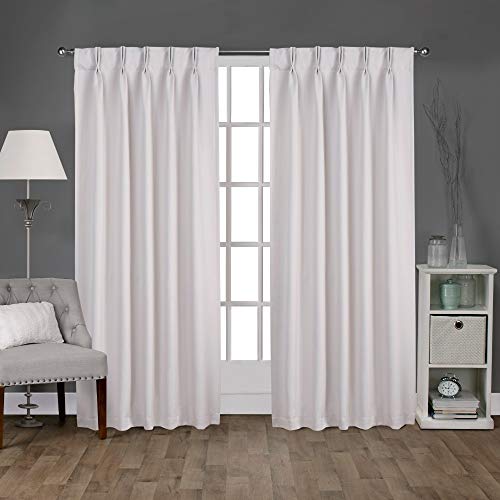
RICH SATEEN: The Exclusive Home Sateen curtain panels are woven in a rich, sateen twill in a neutral linen hue and room darkening blackout opacity. They feature a pinch pleat top and offer a luxuriously elegant look for your windows.

RICH SATEEN: The Exclusive Home Sateen curtain panels are woven in a rich, sateen twill in a neutral linen hue and room darkening blackout opacity. They feature a pinch pleat top and offer a luxuriously elegant look for your windows.

RICH SATEEN: The Exclusive Home Sateen curtain panels are woven in a rich, sateen twill in a neutral linen hue and room darkening blackout opacity. They feature a pinch pleat top and offer a luxuriously elegant look for your windows.
How Full Should Your Curtains Be?
When you’re choosing curtains, fullness determines whether they’ll look skimpy or luxurious once hung. Curtain fullness measures how much fabric gathers across your window width. For pleated styles, you’ll need 200–230% fabric fullness, meaning your curtain widths total 2 to 2.3 times the window width to form proper pleats. Soft top and grommet styles start at 100% but look better at 150–200% for richer drape. Ripple Fold curtains default to 200% fullness using specialized tape systems. When measuring for double-panel setups, aim for 2× to 3× overall fullness depending on your header choice. For extra opulence, increase your measurements to 2.5× the window width. Always calculate curtain panels individually, then combine for total curtain widths that achieve your desired look.
Recommended Products
NO DRILL, NO MEASURE INSTALLATION FOR QUICK SETUP Fast Fit design installs easily without drilling or measuring, helping save time and reduce wall damage during setup.

Size & Specifications: Each pack contains 2 pieces of 96 inch hunter green sheer curtains for bedroom, each 42" wide and 96" long with 1.5" beautiful header, total width is 84". The top 3" rod pocket is suitable for most curtain rods, which makes the hunter green sheer voile curtains easy to hang or slide.

Package Included - Sold as Pair (2 window curtain panels); Sparkle glitter gold grey sheer curtains dimensions: 52 in. wide x 45 in. length(Each); For a Combined width of 104 in; Classic Dual-Rod Pocket Top: 1.2"+2.8" which can fit most standard curtain rod. Easy for hanging and open.
Adjust for Floor Clearance and Length Style
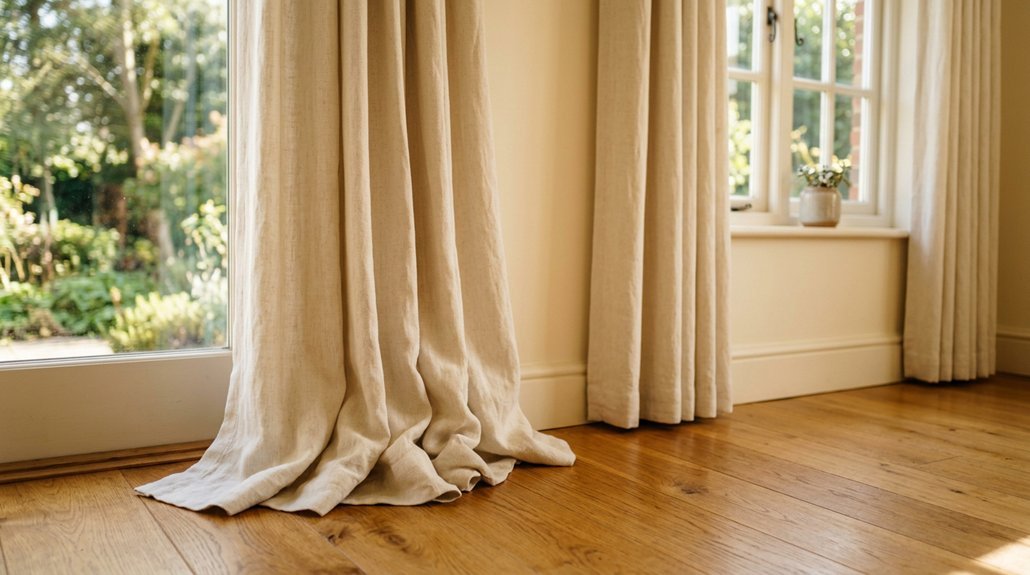
Where exactly should your curtains land? You decide this by choosing your curtain length based on style and floor clearance. For a clean look, you’ll hang curtains 0 to 0.4 inches above the floor. For romance, add a puddling length of 2–4 inches beyond the floor.
Your measurement drop starts from either rod height or track height. Subtract any hardware clearance—about 2 inches for track height, 0–2 inches for rod height—to find the true drop. Inside-mount options end at the window reveal, while outside-mount setups extend past the frame for fuller coverage.
Common styles include floor-length, barely-above-floor, or deep puddling at 2–7 inches extra. You’re matching function to aesthetic here. Choose what fits your space, then finalize this number before you shop.
Recommended Products

3 Inch With, 32 Feet

Secure and Reliable Hold: These drapery hooks measure 1.2 inches in length and 0.8 inch in width, featuring sharp tips that glide effortlessly through header tape and grip fabric firmly without slipping, loosening, or falling out. Enjoy peace of mind all day long

Thick Linen Fabric with Timeless Texture: Crafted from premium thick linen blend fabric, these pleated curtains feature a rich woven texture that adds warmth and depth to any room. The soft neutral color palette complements a wide range of décor styles, making them an ideal choice for living rooms, bedrooms, dining rooms, home offices, and modern farmhouse, coastal, Scandinavian, or minimalist interiors.
Calculate How Many Curtain Panels You Need
Once you’ve locked in your length, you’ll need to figure out how much fabric you’re actually buying. Start with the width of your window and decide your curtain fullness—choose 2x for standard or 2.5x for luxury. Multiply to find your total width, then round up.
When you measure curtains for panel count, factor in track or rod extension requirements. Extend 12–24 inches beyond each side for tracks or 8–16 inches for rods, adding this to your calculations.
Check minimum panel width limits based on your hook type—typically 12–16 inches for standard 4-finger hooks, though some accommodate up to 28–30 inches. For double panels, aggregate both panels’ widths to hit your fullness target, with combined widths usually spanning 24–63 inches per panel depending on hardware. Divide your total width by your chosen panel width to finalize purchasing.
Recommended Products

Product Package: the inside mount curtain rod bracket is packed with 2 pairs or 4 individual pieces, including built in pole holders to suit your need; They are ideal for 3/8 inch brass, aluminum or steel bars or rods

Seamless Integration with Hidden Brackets: receive 2 pairs of hidden socket brackets, ensuring your space remains uncluttered; Perfectly designed for 3/8 inch brass, aluminum, or steel rods, these brackets address your needs with seamless integration

Product Package: the inside mount curtain rod bracket is packed with 2 pairs and 4 individual pieces, including built in pole holders to suit your need; They are ideal for 3/8 inch aluminum or steel bars or rods
Measuring Blackout and Sheer Curtains
Why treat blackout and sheer curtains the same? You won’t, because each demands distinct measuring strategies. For blackout curtains, you must measure from top to ceiling height, positioning your curtain rod position higher and wider than the window frame. This extended width and length blocks light leakage at edges. You choose a fuller fullness ratio—typically 2.0 to 2.5—to eliminate gaps when closed.
Sheer curtains serve different priorities; you still calculate width and length carefully, but you’re layering them over functional panels or using them alone for filtered light. You adjust curtain size based on desired opacity—less fullness creates airier effects. Both types require precise measurement, yet blackout demands stricter attention to coverage dimensions while sheers offer more styling flexibility within your window treatment plan.
Recommended Products

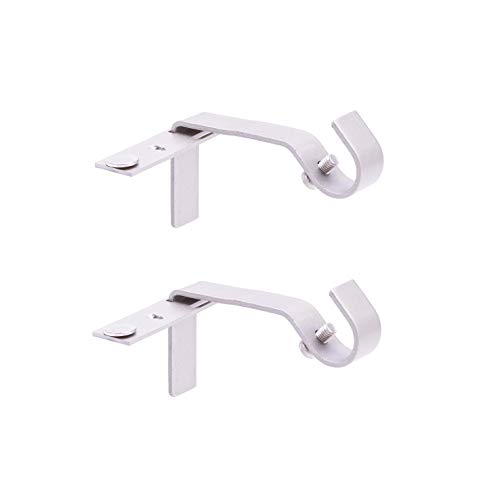
Adjustable: The curtain rod holder can holds fits rods up to 1-inch (2.54cm) in diameter. Adjustable length: Extends from 4.8 to 6.2 inches out from the wall

For use with rods up to 3/4” diameter

Anndason Heavy Duty Adjustable Curtain Rod Brackets,add a dash of Style and Elegance to your – home, office or anywhere else you decide to use then.
Final Measurement Check Before Ordering
Before placing your order, pause to verify every measurement—this step saves you from costly mistakes and ill-fitting panels. Perform a thorough measurement check by confirming your curtain width equals 1.5x to 3x the window width based on your desired fullness. Double-check your rod placement: install 6–10 inches above the frame and extend 6–15 inches beyond each side. For track length, calculate total length as (window width plus extensions) × 2 when hanging from both sides. Verify total length by measuring from rod installation point to your desired end point, adjusting for floor clearance. Recalculate finished width and finished length after finalizing fullness—use 2x for standard or 2.5x for luxury headers—to ensure proper folds and elegant drape.
Recommended Products

RICH SATEEN: The Exclusive Home Sateen curtain panels are woven in a rich, sateen twill in a neutral linen hue and room darkening blackout opacity. They feature a pinch pleat top and offer a luxuriously elegant look for your windows.

LINEN LOOK: The Exclusive Home Bella curtain panels in natural have a textured linen look and a sheer opacity and are designed to bring a light and airy, elegant look to any room.

Chateau drapes offer a wide horizontal stripe pattern, constructed by luxurious silk fabric
Conclusion
You’ve got everything you need to order with confidence. Double-check your width, drop, and fullness calculations, then verify your panel count against your rod length. Don’t forget to account for header style and puddling preferences. With these measurements in hand, you’re ready to transform your windows beautifully.
Recommended Products


Pleasent Experience: made of 100% polyester fiber, high-quality fabrics give you a silky touch

ELEGANT DESIGN: 2 panels per package. Each Blackout Curtain Panel measures 42 inches wide x 36 inches long. The NICETOWN drapery is constructed with rod pocket, fitting the curtain rod of your choice up to 2 inches in diameter, making the curtains easy to install and slide.