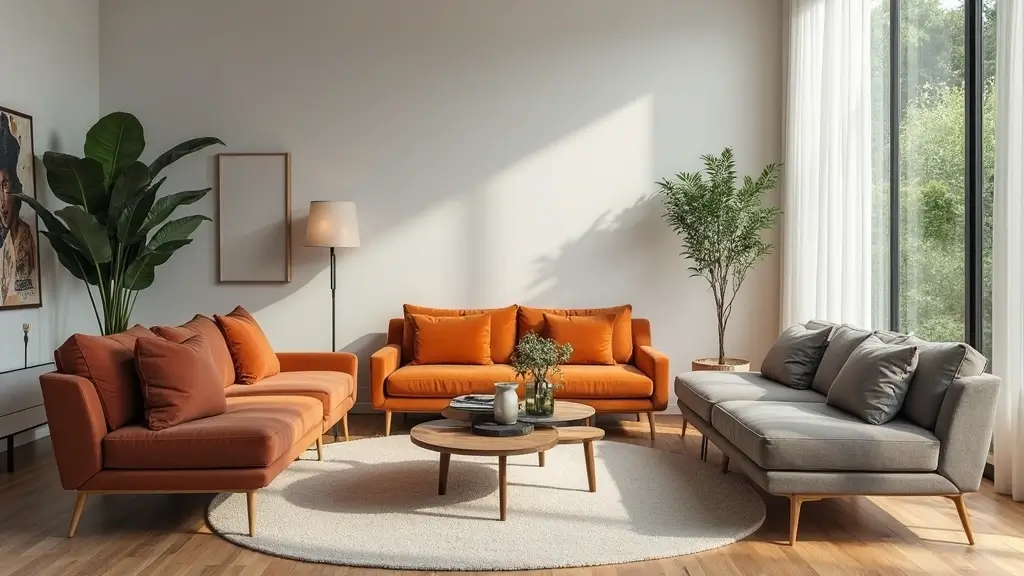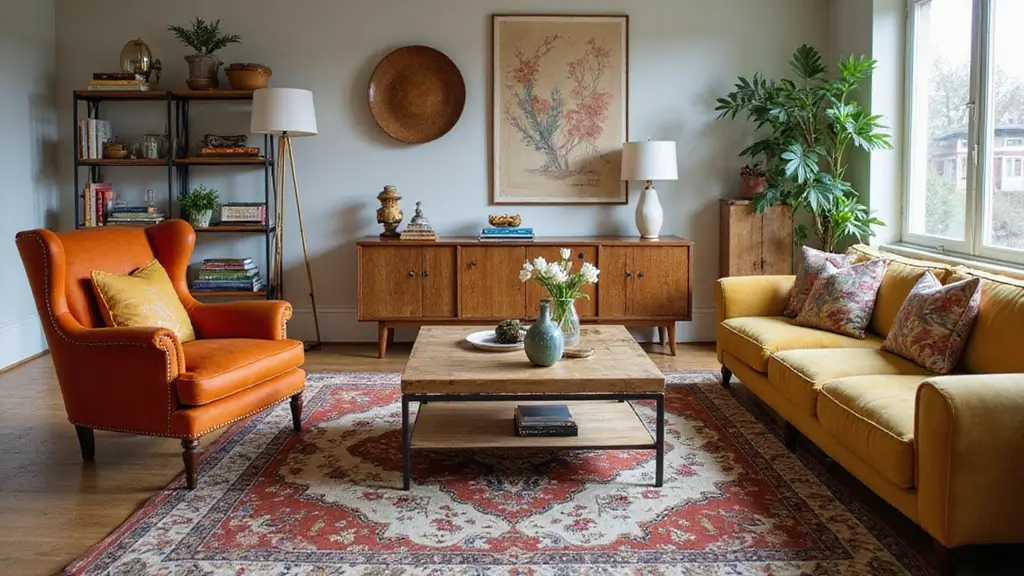

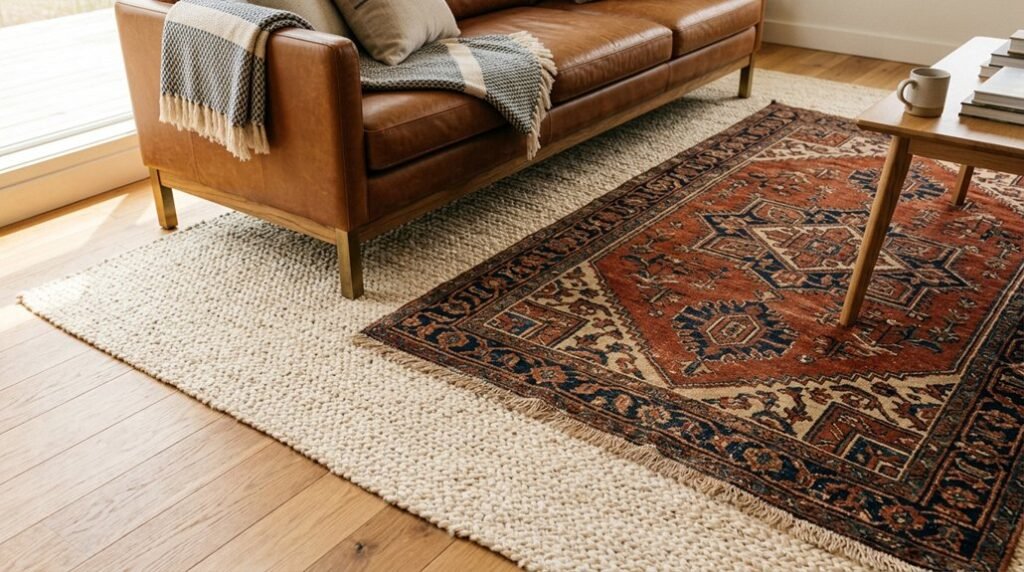
You anchor a room by layering rugs with intention. Start with a durable base—jute, sisal, or flatwoven wool—and let a plush, smaller top rug define your focal zone. The contrast in texture, proportion, and edge overlap creates visual tension that elevates the entire space. But proportion alone won’t carry the design.
Pick Your Base Rug: Where Layering Starts
Where does the art of rug layering truly begin? You’ll start with the base rug—the anchoring element that establishes your room’s spatial hierarchy.
You’ll select a natural fiber rug in jute, sisal, or flatwoven wool. These materials provide durability underfoot and visual weight without competing for attention. Your base rug creates a neutral foundation, allowing subsequent layers to introduce pattern and chromatic complexity.
When approaching rug sizing, you’ll mark your floor with blue painter’s tape first. This visualization prevents costly errors before purchase. You’ll position furniture so pieces sit at least halfway across the base rug’s surface, typically requiring 8′ x 10′ or larger dimensions. This placement secures the room’s proportions and ensures the layering composition reads as intentional, curated, complete.
Recommended Products

NATURAL SISAL - Crafted from 100% pure natural sisal fibers, this sisal rug delivers a clean woven texture with subtle variations that add character. A timeless natural rug aesthetic that pairs well with modern, rustic, or neutral decor.

Size Rugs to Layer: Base and Top Proportions
How precisely should you calibrate the dimensional relationship between your base and top rugs? You’ll achieve optimal proportions by sizing your top rug one to three feet smaller in each dimension than your base rug, yielding approximately sixty to seventy percent of the base’s surface area.
In rug layering, visible edges matter: you must expose sufficient base rug perimeter to generate contrast and spatial depth. Position an eight-by-ten foot or larger base rug beneath living room seating, ensuring sofa and chair front legs rest upon it to anchor the arrangement. Layer your smaller top rug centrally.
For bedrooms, extend your top rug eighteen to twenty-four inches beyond the bed’s sides and foot, maintaining the proportional hierarchy. These measured relationships establish visual balance and architectural intent.
Recommended Products

Soft Comfort & Certified Materials — Made from soft 100% polyester carpet material certified to OEKO-TEX STANDARD 100, this washable rug offers a cozy, comfortable feel underfoot. Available in compact, runner, and room-size options, it adds warmth to entryways, hallways, bedrooms, home offices, living rooms, and dining areas. Inviting for barefoot use and active households, it brings together everyday comfort, versatile style, and trusted material standards.

Soft Comfort & Certified Materials — Made from soft 100% polyester carpet material certified to OEKO-TEX STANDARD 100, this washable rug offers a cozy, comfortable feel underfoot. Available in compact, runner, and room-size options, it adds warmth to entryways, hallways, bedrooms, home offices, living rooms, and dining areas. Inviting for barefoot use and active households, it brings together everyday comfort, versatile style, and trusted material standards.

Soft Comfort & Certified Materials — Made from soft 100% polyester carpet material certified to OEKO-TEX STANDARD 100, this washable rug offers a cozy, comfortable feel underfoot. Available in compact, runner, and room-size options, it adds warmth to entryways, hallways, bedrooms, home offices, living rooms, and dining areas. Inviting for barefoot use and active households, it brings together everyday comfort, versatile style, and trusted material standards.
How to Layer Rugs With Mixed Patterns
Why settle for a single visual statement when you can orchestrate a dialogue between patterns? When layering rugs with mixed patterns, you’ll establish visual depth through deliberate scale contrast.
Begin with a large-scale base layer—Persian-inspired or Boho prints work exceptionally—and position a tighter-patterned top rug strategically above. You’re creating tension and harmony simultaneously.
Anchor your composition by ensuring both rugs share at least one color, maintaining room cohesion without sacrificing dynamism. You’ll want your top rug to cover 60 to 70 percent of the base, balancing prominence with revelation of the underlying design. Reserve bold top-pattern choices for simpler, neutral base patterns—this prevents visual chaos while elevating the upper element.
Position your layered arrangement beneath central seating or dining areas to maximize the pairing’s impact on architectural focal points.
Texture Pairings: Flat Base, Plush Top
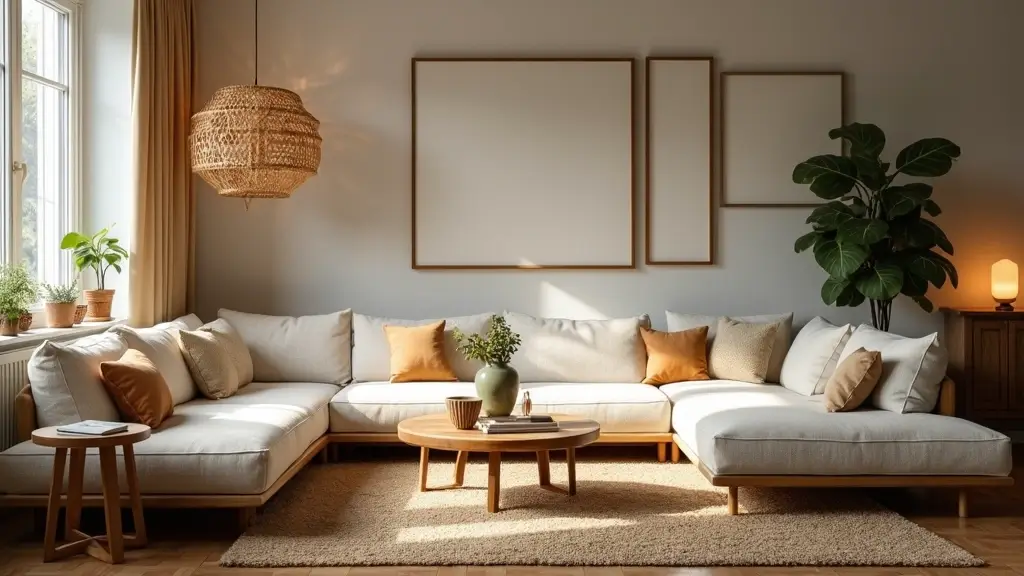
What transforms a room from merely furnished to deliberately composed? You master layering texture through strategic pairing. You establish a flatwoven base—jute, sisal, or low-profile weave—to create visual grounding. You then introduce a plush top rug, smaller by twelve to thirty-six inches on at least one edge, generating a defined border that frames the composition. This juxtaposition maximizes tactile contrast: matte against pile, restraint against indulgence. The flatwoven foundation anchors seating zones with neutrality, while the plush element directs focus and invites touch. You secure stability with a non-slip pad beneath the base and verify the top rug remains fixed. Through this calibrated interplay, you achieve spatial coherence without sacrificing sensory richness.
Recommended Products

Luxuriously Soft & Non-Slip: This 8x10 area rugs features dense low-pile for ultra-soft underfoot comfort. Enhanced TPR non-slip backing keeps it securely in place on all floors, providing peace of mind for families with kids and pets

Soft & Durable: This 8x10 area rug low-pile combines soft faux wool fibers with a 0.25-inch height for comfort. Tight weaving reduces shedding and edge fraying, making it perfect for high-traffic areas like living rooms, bedrooms, and entryways

Ultra-Soft Low Pile Rug: Gent drizz living room rugs 8x10 made of Upgraded durable low pile faux wool fibers, 0.25'' thick, featuring a soft fuzzy density surface, soft and pliable to the touch, providing great comfort for your bare feet. The low pile makes it easy for your Large area rug to clean and is perfect for homes with kids and pets
Color Strategies for Layered Rugs: Subtle to Bold
Where should color reside in your layered composition? You’re establishing a hierarchy through deliberate color strategy, ensuring each layer performs a distinct visual function.
Your base rug anchors the scheme; you’ll keep it neutral or low-saturation to provide tonal stability. Your top rug carries the chromatic intent—whether you whisper or shout depends on your pairing logic.
You achieve cohesion by maintaining temperature alignment: cool grays beneath cooler, muted tones above create seamless layering. For bold impact, you’ll deploy high-contrast hues sharing one anchor color between base rug and top rug, preserving continuity.
You’ll define zones through variable intensity—lighter foundations with slightly darker upper layers carve distinct areas without spatial fragmentation. Finally, you echo the top rug’s pigment throughout existing furnishings, reinforcing cohesion while permitting it to function as your focal color accent.
Recommended Products
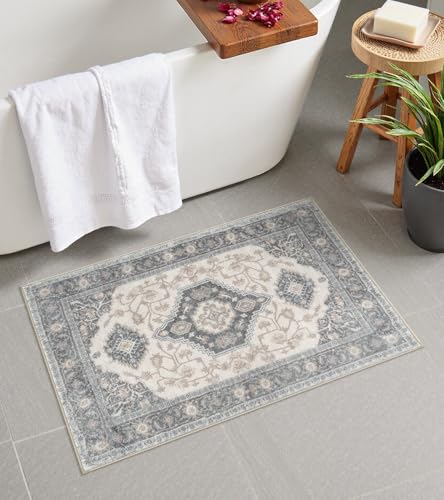
Vintage Boho Charm: Add warmth and character to your bathroom with this vintage-style rug. Featuring faded ornamental patterns and rich boho tones, it brings a cozy, collected look that pairs beautifully with farmhouse, rustic, or eclectic interiors

Waffle Pattern Design: This boho-inspired bath mat is expertly crafted with upgraded yarns for a perfect blend of style and durability. The use of heavier, thicker threads ensures the pattern stays firmly intact and well-defined—guaranteed to hold its shape over time!

Bathroom Rug: This classic bohemian bathroom shower rugs feature oriental vintage design. Its distinctive design adds an artistic and luxurious sense to your house. Such an excellent bath mat will add a touch of old-world charm to your house
Shape Combinations: Round on Rectangle and More
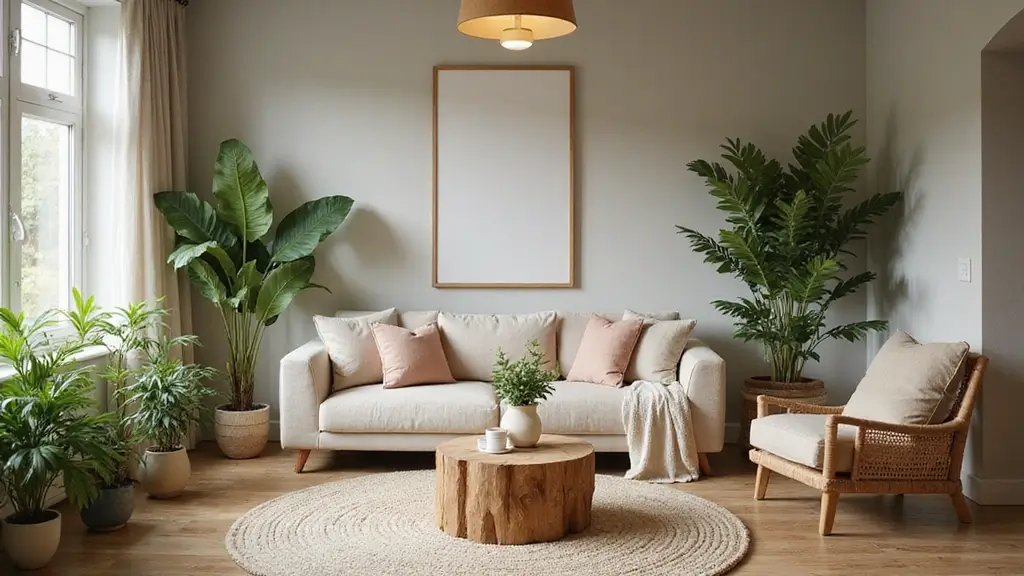
How do you modulate spatial geometry through deliberate juxtaposition? You anchor your layout with a rectangle base, then introduce a round layer to disrupt linear rigidity. This configuration remains your most reliable strategy: the expansive rectangle grounds the perimeter while the smaller round form creates a concentrated focal point beneath your coffee table.
You’ll soften angular furniture silhouettes and define seating zones simultaneously. The exposed border of your base maintains spatial definition, preventing visual collapse. Center the round element precisely under your coffee table to anchor the arrangement with intention.
Consider oval or irregular top shapes for similar softening with added movement. Your layered rugs achieve maximum effect when you maintain proportional hierarchy—never obscure the base entirely. This calculated contrast introduces curated tension without overwhelming the compositional balance.
Recommended Products

[COLOR & DESIGN]: The Martha Stewart x SAFAVIEH rug ribs a beige weave from sisal and jute; its 1/4" pile is flat and firm; color and pattern contrast may look different in person, and shade can vary depending on lighting and screen settings.

Natural Materials: This jute rug woven with a blend of 80% Jute and 20% Cotton, offers a natural choice for your home decor. Please note that shedding is common in jute rugs for the first few months. Please do not pull loose ends, if any

[COLOR & DESIGN]: SAFAVIEH's Natural Fiber rug ribs undyed jute into a natural field; its 1/2" pile is firm and textural; color and pattern contrast may look different in person, and shade can vary depending on lighting and screen settings.
Layer Rugs Room by Room: Living, Bedroom, Hallway
Why confine your layering strategy to a single formula when each room demands its own spatial logic? You execute this room-by-room approach with precise spatial calibration.
In living rooms, you position the base rug beneath the seating area so all furniture front legs rest on it, then you layer a smaller top rug—approximately 60–70% the base size—to delineate the coffee table zone.
For bedrooms, you select a wide base rug extending 18–24 inches beyond bed sides and foot, topping it with a smaller piece anchoring nightstands.
Hallways accommodate layered runners: you lay a long, neutral base rug and stack a shorter, patterned runner atop.
You maintain cohesive grounding by ensuring furniture always sits on the base rug, never isolating the top rug.
Recommended Products

Ultra Fluffy Living Room Rug: 8x10 living room rugs is made of high-quality microfiber and memory foam. Soft and comfortable touch, you will feel like walking on the clouds whether you are standing, sitting or lying. While enjoying the warmth and comfort, this rug will not shed, making it an ideal choice for the bedroom, living room or nursery.

[Exclusive Design Accent Rug] - This oriental area rug brings a vibrant color scheme and bohemian floral style print to your space. It mainly features a fuchsia, yellow stone, pretty light blue, pink ash brown design patterns, has a mystical quality that feels right out of a fairy tale, with purposeful distressing to add vintage appeal to your space.
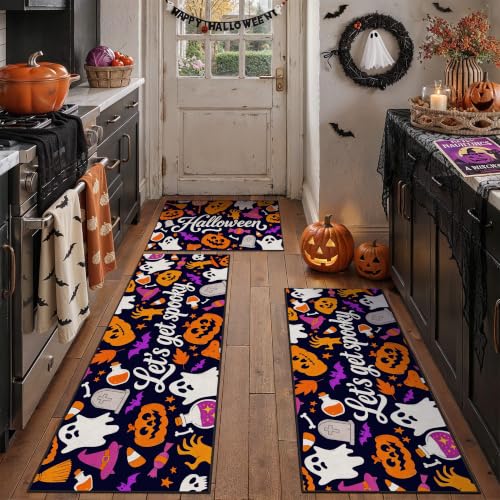
Unique Halloween Pattern: This kitchen rug set features classic Halloween elements including ghosts, pumpkins, black cats, witch hats and bats, matched with stylish spooky holiday slogans. The cohesive themed design instantly boosts charming Halloween festive atmosphere for your home.
Yes, You Can Layer Rugs Over Carpet
Your room-by-room approach to layering needn’t exclude carpeted floors. You anchor your layered rugs by selecting a base rug—jute, sisal, or flatweave—that provides structural stability atop existing carpet. This foundation lets you introduce a smaller top rug, sized roughly sixty to seventy percent of the base, which delivers pattern, color, and texture without visual heaviness.
You position the base rug so all seating furniture rests upon it, then center or offset the top rug to delineate zones and establish focal points. You prevent shifting by installing rug pads or non-slip backing between layers. For simplified maintenance, you might select machine-washable covers that withstand regular cleaning without compromising the curated aesthetic.
Recommended Products

Soft Chenille Comfort — Step onto thousands of soft chenille fibers in our high-pile design the moment you leave the shower, crafted for genuine everyday comfort. OLANLY's OEKO-TEX STANDARD 100 certified chenille delivers a cushioned, cozy feel underfoot — gentle on tired feet, certified safe for little ones, and friendly for furry companions. Minimal shedding means less lint, less maintenance — just shake to refresh the high-pile plush or toss it in the machine as needed. From the first step to the last, every single day — premium comfort at an everyday price.

LUXURIOUS 1.88" EXTRA-THICK PLUSH & SUPER ABSORBENT: Experience ultimate comfort with our Disolla bath mat, featuring an impressive 1.88-inch high-pile microfiber shaggy. This ultra-thick texture creates a cloud-like, decadent feel underfoot. Crafted with premium microfiber, it delivers exceptional water absorbency, efficiently soaking up water to keep your feet cozy and your bathroom floor protected

[Supreme Comfort and Softness] Treat yourself to the luxurious comfort of the OLANLY Machine Washable Area Rug. Its plush, high-density pile provides an incredibly soft, plush feel underfoot. Enjoy the warmth and coziness, all while the rug remains fiber-shed-free, making it ideal for your bedroom, living room, or nursery.
Fix These 5 Rug Layering Mistakes
Where exactly does rug layering falter? You’ll encounter five common mistakes when you execute this technique without precision.
First, you’re hiding depth when your top rug matches your base rug’s dimensions. Scale your top rug one to three feet smaller to expose strategic borders.
Second, you’re creating visual chaos by clashing patterns without shared anchor colors. Unify both pieces through at least one hue from your room palette.
Third, you’ve selected a base rug too small for your space, leaving furniture stranded. Ensure front legs rest on substantial foundations.
Fourth, you’re neglecting textural contrast. Mix flatweave with plush or rough with soft so one rug commands attention.
Fifth, you’re positioning your top rug beyond seating edges. Center it to define focal zones while keeping furniture grounded on the base rug.
Recommended Products

Trendy Modern Rug: Our area rug is designed in today's popular minimalist style, featuring adaptable printed patterns that seamlessly blend into a wide range of interior aesthetics. This neutral rug adds understated elegance with a strong feeling of individuality to your living room, bedroom, dining room, nursery or playroom.

DURABLE AND PLUSH: Crafted from 100% Polypropylene, Long-lasting and sturdy jute backing (rug pad recommended), 0.39 inch rug thickness, meant for indoor use, perfect for high traffic areas, ideal for homes with childrens, fits under most doors

Ultra Soft Fluffy 8x10 Area Rugs for Living Room: shag rug treat your feet to cloud-like comfort with our ultra-soft, high-density plush microfiber pile—designed to stay fluffier longer without shedding. Whether walking, sitting, or lying down, each step feels luxuriously soft. Furry fibers resist matting, keeping the plush texture season after season. Ideal for bedroom, living room, or nursery
Conclusion
Anchor your space with a durable natural-fiber base, then curate deliberate contrast through proportion, texture, and tone. You’ll build dimensional, intentional environments by centering a 60–70% scaled top rug with 12–36 inch overlaps, manipulating pile height and pattern interplay, and deploying shape tension strategically. Master these technical relationships across substrates—hardwood, tile, even carpet—to transform flat planes into edited, gallery-worthy compositions that define zones without visual competition.
Recommended Products

SMALL SIZE: Measuring 2' x 3', this area rug is perfect for small spaces like entryways, doorways, kitchens, and bathrooms; ideal as an accent rug in bedrooms and offices. Other sizes available to fit any space in your home

Machine Washable & Easy Care – This washable cotton rug can be vacuumed, shaken, or machine washed on a gentle cycle with cold water. Cotton material may shrink or wrinkle after washing. If needed, use low heat ironing to restore shape

Machine Washable: With a flat-weave design, farmhouse bathroom rugs runner is dust and stain resistant, making maintenance a breeze. Simply machine wash or vacuum to keep your space fresh and clean. No bleach required, tumble dry low or air dry