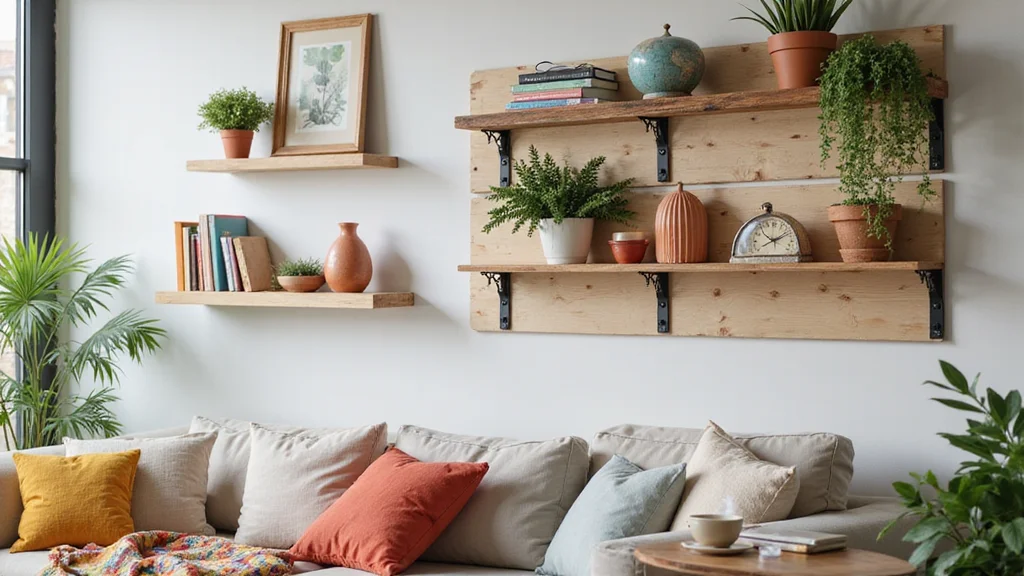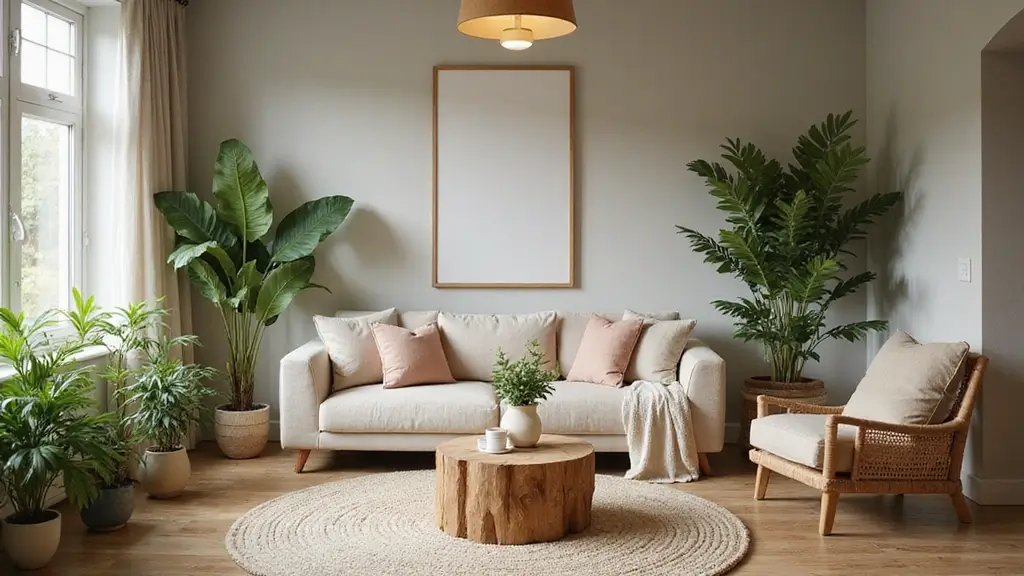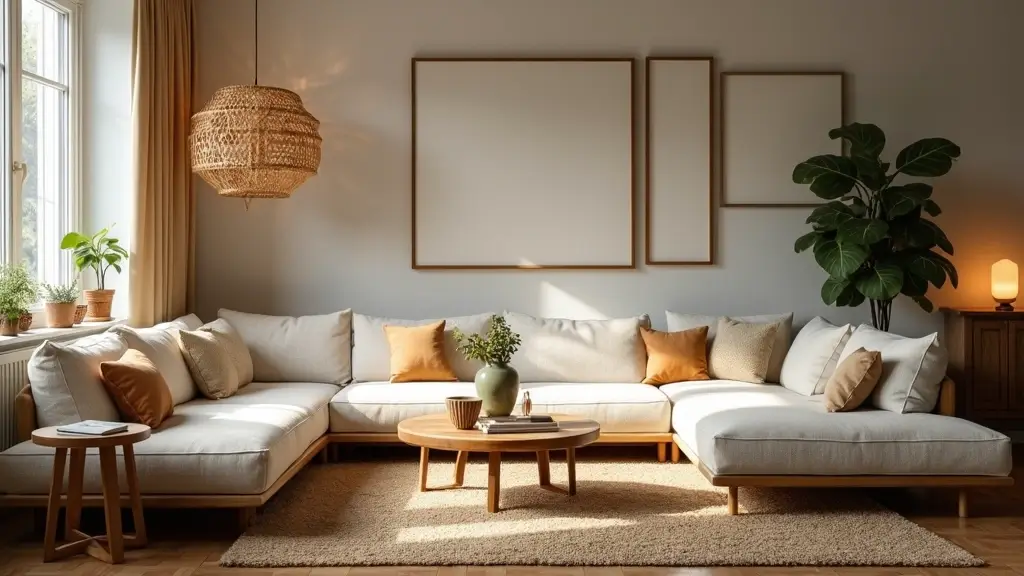

You stand before your built-in shelves, wondering where to even begin. Empty them completely—every book, every frame, every dusty souvenir—and you’ll finally see what you’re working with. The blank space reveals possibilities you hadn’t noticed, but it also exposes the real challenge ahead. What you choose to put back, and what you leave out, will make or break the entire look. The first decision you make sets everything in motion.
Empty Your Built-In Shelves and Start Fresh
Where do you begin when your built-in shelves feel tired and cluttered? You strip them bare. You pull everything off, creating empty shelves that transform chaos into possibility. This bold move gives you a fresh start and a clean slate for reimagining your space.
You stand back and assess that blank canvas. You take a before photo, then build your vision from zero. You examine each item, deciding what deserves a spot in your new arrangement. You release clutter that’s collected dust, revealing vertical and horizontal space you forgot existed.
You plan cohesive groupings as you picture where each piece belongs. You’re envisioning focal points and spacing. You’re crafting visual balance from the ground up, and that mental inventory helps you build something intentional, harmonious, and entirely yours.
Recommended Products

【Rustic Hair Dryer Holder 】✅ Bathroom organizer set Included 2 Tier wooden Bathroom Tray & Clear Wall rack ( Hair bow jewelry organizer). provides enough storage space for hair care accessories, Keep all your hair care tools separated, organized and easy to find out.

Stretchy and Comfortable Rib-Knit Fabric: This long sleeve shirt is made of soft rib-knit fabric which is stretchy, ensuring a comfortable and flexible fit throughout the day
Anchor With Heavy, Eye-Catching Pieces First
How do you keep a shelf from feeling scattered and unfocused? You anchor it with your largest items first. Grab that substantial vase, bold sculpture, or oversized framed art and create an immediate focal point. You’ll want to place these heavy pieces off-center on lower shelves to ground your arrangement and avoid a top-heavy look.
Pair your substantial anchor with vertical elements like tall books or tams to boost its visual weight and establish balance. Use this heavy piece as a guide for surrounding objects, ensuring smaller items relate through size, color, and texture. Don’t crowd multiple heavy items together—stagger them across shelves to maintain rhythm and breathing room throughout your display.
Recommended Products

ARTISAN SANDSTONE TEXTURE: Elevate your space with our handmade 3D wall art, featuring a premium sandstone texture that provides a sophisticated, tactile depth unlike flat printed canvases. This textured stone decor creates authentic light and shadow effects, bringing an upscale, refined atmosphere to your living room, hallway, or entryway.
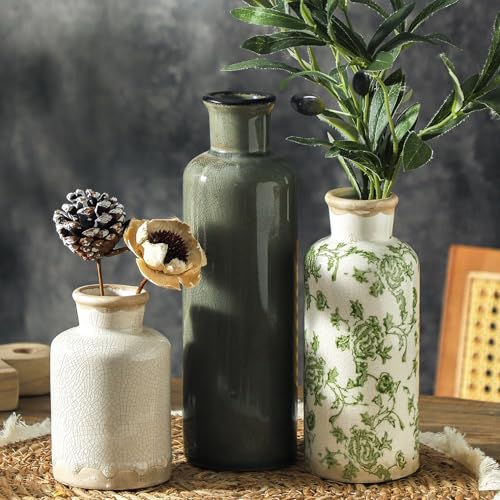
【Vintage Ceramic Vases】More than vases, they are wonderful home decor. This set of ceramic vases is perfect for artificial flowers or fresh flowers and plants, can be placed individually or in combination, as a room decor, home decor, living room decor, farmhouse decor, table decor, bookshelf decor,entryway decor, kitchen decor, boho decor, house decor, office decor,shelf decor and more.

FARMHOUSE RUSTIC POTTERY DECOR: Featuring a classic rounded jar silhouette with a richly distressed, weathered texture, this ceramic vase brings warmth and character to your space. Its matte, earth-toned finish complements farmhouse, rustic, vintage, and wabi-sabi interiors—beautiful as a standalone accent or styled with simple florals.
Stack Books and Layer In Personal Objects
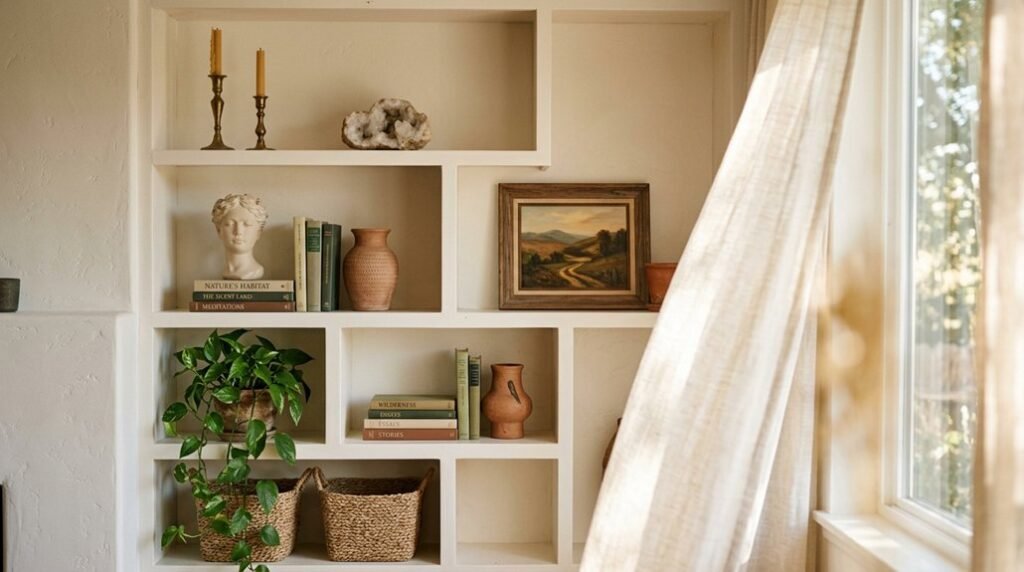
Why settle for a shelf that looks like a library display? You’ve already anchored with heavy pieces, so now you’ll stack books to build dynamic structure. Start at the bottom shelf—stack books horizontally to ground the display, then lay some flat as risers to create tiered levels. You’ll vary heights by alternating orientations: face-out, spine-out, and stacked arrangements. This prevents flat uniformity and introduces natural movement.
Once you’ve established your book foundation, weave in personal objects. Slide framed photos between stacks, nestle collected souvenirs atop horizontal piles, and tuck small vases into gaps you’ve intentionally left. You’re mixing hardcover and paperback finishes for subtle texture contrast. This shelf styling approach—combining functional books with meaningful mementos—transforms built-ins from storage into storytelling.
Recommended Products

Designer Aesthetic & Realistic Texture:Elevate your space with these upgraded decorative books wrapped in premium faux linen fabric. Featuring realistic textured page edges, structured spines, and exquisite gold foil-stamped artistic titles, they look and feel exactly like real hardcover books that blend seamlessly with your collection—guests won't notice they are secret storage boxes. Perfect fake books to add a touch of modern farmhouse, coastal, or minimalist charm to any room. No assembly required—they arrive ready to style right out of the box.
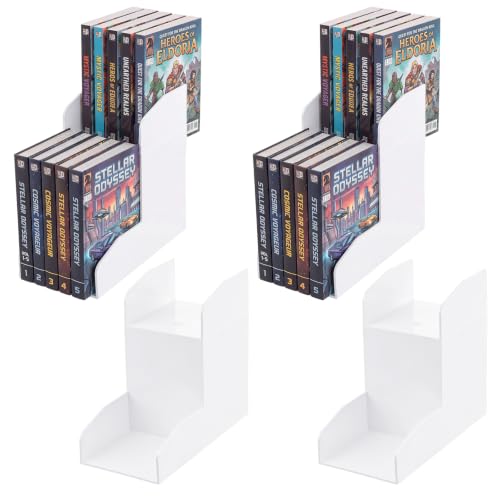
2 Tier Double Row Integrated Design: overall size about 5.9 x 6.7 x 3.3 inches, these book shelf risers are sized to fit most bookshelves; They optimize your vertical storage space, cleverly doubling your storage capacity by elevating the back row of books, ensuring each title is clearly visible and easily accessible; One piece design, no tools or assembly needed, simply place them on the bookshelf and you can start organizing immediately

Double Your Display Space: Utilize the vertical space on your existing shelves by adding this riser, which allows for two tiers of storage. It’s perfect for doubling the display area without needing additional furniture.
Create Movement With Color Repeats and Texture Mixes
Once you’ve anchored your shelves with books and personal objects, you’ll want to pull the eye through the entire display using diagonal color repeats that zigzag across levels—placing a rust ceramic on the lower left, then echoing that tone with a similarly hued frame on the middle right, and completing the movement with a leather-bound book on the upper left. These color repeats create visual movement that guides attention naturally through your arrangement.
Layer your texture mix by pairing matte ceramics with glossy metals and weaving soft baskets between hard surfaces. You’ll add tactile depth without overwhelming the eye. Anchor your palette with neutral bases—taupe, white, or black—then punctuate with saturated accents. Plan repeats across sizes and materials, like matching brass vases to amber book spines, reinforcing unity while keeping variety alive.
Recommended Products
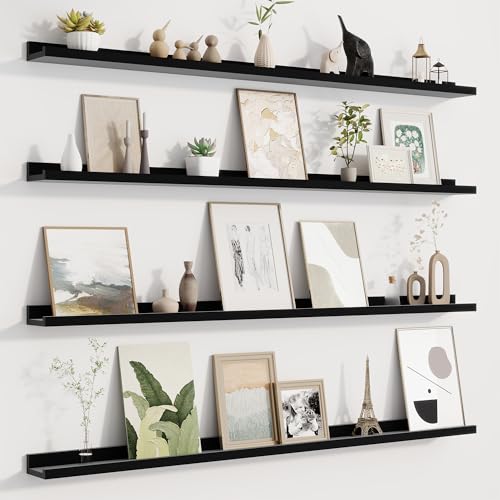
MEMORIES SHOWCASE SHELF: Do you have a lot of memorable photos, but don't know how to display them, Fun Memories picture ledge shelves (especially in large sizes) are perfect for you to display them! With our hanging racks, you can store and display different types and sizes of photo frames in one place without worrying about

Size:This wooden photo frame fits the 5x7 inches photo,dimensions of 9.4x7.4 inches.
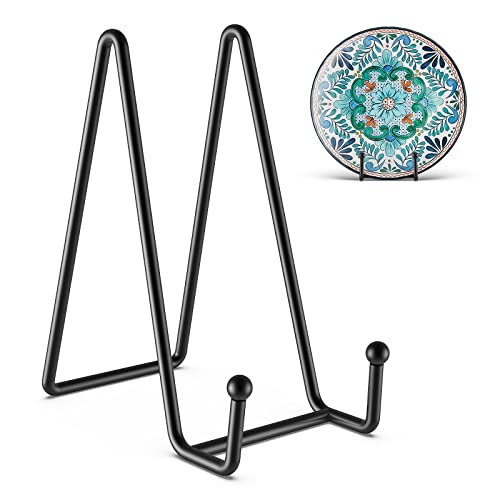
What You Get: A 3‑pack of 6‑inch plate display stands with a 1.6‑inch lip, suitable for items 7 to 15 inches tall. Built with 4.8mm thick iron for strength. These picture holders are great for elegantly displaying plates, frames, tiles, canvases, cookbooks, and magazines, while securely supporting heavy books too
When to Stop: Edit Built-In Shelves Before They Feel Done
Where do you draw the line between styled and overstuffed? Step back before you think you’re finished. Start by emptying your shelves completely—you’ll spot negative space opportunities you’d otherwise miss.
Effective shelf styling demands restraint. Group items by size, mixing large focal pieces with smaller accents to establish visual weight without chaos. Leave some shelves partially bare; negative space prevents that cluttered, junky feel you’re trying to avoid.
Stagger heights and scatter similar pieces across the unit to create rhythm. Cluster small items on trays, layer art before books, and balance weight and color through intentional pairing.
When you’re tempted to add one more object, stop. Edit one piece out instead. Your built-ins will breathe better for it.
Recommended Products

【EASY TO APPLY & REMOVABLE】 Transform your space in minutes with no messy glue or professional tools needed. Simply peel and stick to any smooth, clean surface. It’s completely removable and repositionable without leaving sticky residue, making it perfect for renters and DIY enthusiasts.
【EASY TO APPLY & REMOVABLE】 Transform your space in minutes with no messy glue or professional tools needed. Simply peel and stick to any smooth, clean surface. It’s completely removable and repositionable without leaving sticky residue, making it perfect for renters and DIY enthusiasts.

Perfect Size:The Owl statue is measures 4.5”x2.9”x3.7”inch,item weight is 0.39LB.The Small and Cute Owl figurine is perfect for indoor decor and looks great anywhere to your home decor accents.
Conclusion
You’ve emptied, anchored, layered, and edited your built-in shelves with intention. Trust your eye—when color flows, textures converse, and negative space breathes, you’re finished. Step back, live with the arrangement, and tweak only what feels off. Great shelf styling isn’t about perfection; it’s about balance that reflects you. Now enjoy the shelves you’ve built into something personal.
Recommended Products

【Complete Compatibility Wall-Mounted Holder for Shark FlexFusion】 Our new hair-tool holder, made of sturdy metal, features a stepped-pillar design that is perfectly compatible with Shark FlexFusion, for Shark FlexStyle hair dryers. It serves as a storage rack for the dryer, all attachments, and the cord, keeping your complete set of accessories—designed for Shark FlexStyle HD430/435/440BK/641/642 and more—neatly organized. Overall Dimensions: 12.20 × 5.31 × 5.12 in (31 × 13.5 × 13 cm)

SPACIOUS CLOSET ORGANIZER: The Internet's Best Hanging Closet Organizer with Drawers features 6 shelves and 3 removable drawers, providing ample storage for clothes, shoes, accessories, and more. Perfect for maximizing space in small rooms, dorms, or closets, keeping your items neatly organized and easily accessible.

Dual-Zone Organization: This two-piece cabinet offers dedicated storage in both its upper and lower sections, designed to keep your everyday items neatly organized. The display cabinet features three shelves, perfect for your favorite books, collectibles, or office supplies. Below, 3 shelves provide flexible space for everything from desk accessories to linens and personal belongings.