
You’ve probably stared at sheet labels wondering if 800 thread count justifies the price jump over 400. The number’s seductive, but it obscures how manufacturers twist thin, multi-ply yarns into inflated figures that feel heavy yet fray within a season. What you’ll discover next reframes how you evaluate every set you touch.
Thread Count Explained: What the Number Actually Means
Why does a 400-thread-count sheet sometimes feel inferior to one labeled 200? You encounter this paradox because thread count quantifies warp and weft threads per square inch combined, not quality itself.
A 50-plus-50 construction yields 100; manufacturers multiply strategically.
You decode labels precisely: thread count proves meaningful only with 100% cotton using single-ply yarns, where each thread counts individually.
Multi-ply yarns twist fragile fibers together, inflating numbers without improving performance.
You’re misled when blends or synthetics enter the calculation.
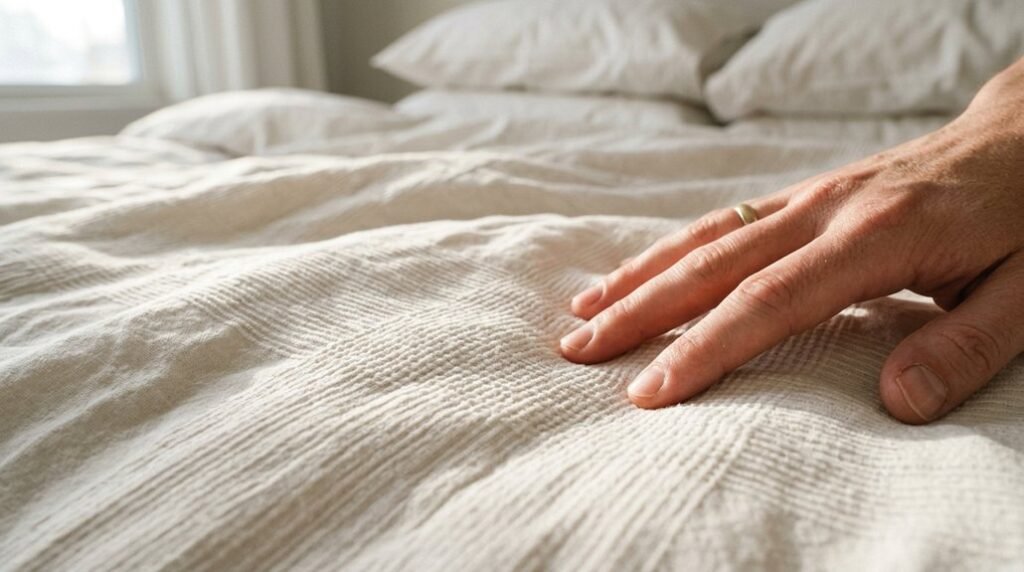
You assess breathability and tactile response through fiber quality and fabric weave—percale’s crisp grid versus sateen’s dense float structure—rather than digits alone.
You’ll prioritize these structural elements over inflated thread counts when evaluating genuine sheet performance.
Recommended Products

CRISP COTTON PERCALE FOR COOL COMFORT: Crafted from 100% cotton percale with a 200 thread count, this sheet set delivers breathable softness, lightweight comfort, and a cool crisp feel for everyday sleep

500 TC Cotton Sateen Sheets: Our 100% cotton sateen is woven in a smooth 500 thread count finish, giving your bed a refined feel that washes well and becomes softer after every wash
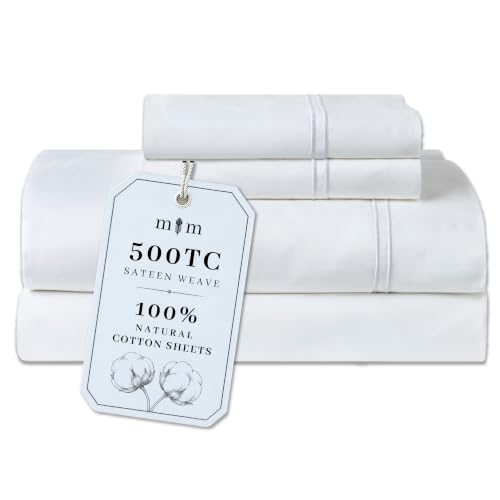
500 TC Cotton Sateen Sheets: Our 100% cotton sateen is woven in a smooth 500 thread count finish, giving your bed a refined feel that washes well and becomes softer after every wash
The Best Thread Count Range for Most Sleepers
When you’re selecting sheets, what thread count delivers optimal performance without unnecessary expense? The thread count range of 200–600 hits the mark, balancing softness, durability, and breathability. You’ll find 300–500 especially rewarding—this mid-range sweet spot lets quality fibers and appropriate weaves perform without excessive weight.
Understand percale vs sateen to refine your choice. Percale’s crisp, breathable structure excels at 180–400 TC, while sateen’s silky drape thrives at 300–600 TC. Push beyond 800–1000 and you’re paying premium prices for diminishing returns, particularly when fabric quality underlying those inflated numbers proves subpar.
Treat thread count as one metric among several. You’ll optimize sleep comfort by weighing material, weave structure, and fiber integrity together—never letting thread count alone dictate your purchase decision.
Recommended Products

PREMIUM LONG STAPLE COTTON SHEETS SET : Crafted from long staple fibers, this cotton 400 thread count sheets queen size set features a classic percale weave that delivers a cool, crisp & lightweight texture. Designed for airflow, this super soft queen sheets set maintain a smooth surface with hotel comfort that gradually softens with washing while preserving structure and breathability.

AUTHENTIC COTTON PILLOWCASES: Crafted from 100% cotton fabric in a 400 thread count percale weave, these standard pillow cases set of 2 deliver the distinctly crisp, cool, and breathable feel that percale is celebrated for, offering hotel-quality sleep surface that feels refreshing & comfortable against your skin every night.

Winner of the 2026 Good Housekeeping Best Bedding Award - Everyday Ease Cotton Sheets: Our 400 thread count king size sheets set is made with single-ply 100% long-staple cotton for a smooth hand feel and lightweight comfort. Independently tested to earn the prestigious Good Housekeeping Seal. Complete your bedding ensemble with these king sheets.
The 600+ Thread Count Scam: What You’re Really Paying For
How exactly do manufacturers inflate thread counts to 600+ without delivering proportional quality? You encounter this thread count scam when companies twist multiple inferior fibers into multi-ply yarns, then count each ply as separate threads. You’re not receiving finer, denser fabric—you’re buying bulkier, often stiffer sheets that trap heat.
The deception deepens when you examine what’s actually woven. High thread counts built from short-staple cotton or synthetic blends sacrifice breathability and durability. You feel the difference immediately: these sheets lack the supple drape of superior materials.
Here’s what you must prioritize instead. You evaluate fiber quality first—long-staple Egyptian or ELS cotton delivers genuine softness and strength. You examine weave structure—percale versus sateen determines your tactile experience. You use thread count as a secondary consideration, recognizing that beyond approximately 500-600, you’re frequently paying for marketing mathematics, not measurable performance gains.
Recommended Products

Mercerized thread spread egyptian cotton sheets For Improved Softness & Shine: Our 400 Thread Count sheets queen are made from mercerized cotton for increased luster and brighter, deeper colors that don’t fade and pill after multiple washes. What’s more? Cotton is naturally good and keeps you cool, light, and breathable at night, especially in hot weather. These queen sheets are OEKO-TEX certified and safe for sensitive skin.

100% Egyptian Cotton: Our 600 Thread Count standard size pillow protectors are made of long staple cotton fiber and a gorgeous sateen weave. Thicker than other 200 and 300 thread count while being softer, more breathable and durable. Sateen weave offers a silky feel, keep you relax & cozy, you and your family will have a perfect sleeping experience with this cotton pillowcase

ALL-IN-ONE SOFTNESS & COMFORT WITH 100% PURE COTTON JACQUARD BEDDING: Welcome cool and cozy sleepy nights with our simple, everyday use 300 thread count collection. Crafted with long staple cotton yarns, these smooth sheets have the unmatched comfort, lightweight, and softness of a cloud. This signature jacquard design bedding set provides remarkable elegance and durability, making them completely worth the price.
How to Spot Fake or Inflated Thread Count Claims
Market shelves overflow with 1,000-thread-count labels promising luxury, yet you’re often confronting mathematical artifice rather than textile excellence. Thread count inflation exploits multi-ply yarns—twisting multiple weaker strands together—then counting each ply separately to double or triple the advertised number. You’re seeing this deception when sheets feel stiff, pill after minimal laundering, or trap heat despite astronomical claims.
To identify authentic construction, you must scrutinize specifications. Prioritize single-ply designation, which indicates individual, untwisted threads woven at true density. Verify fiber quality through certified origins—100% Egyptian cotton or Pima—with stated weave structures like percale or sateen. Reputable manufacturers disclose these details; vague “premium cotton” alongside 1,000+ TC signals manipulation. You’re investing wisely when you value fiber integrity and verifiable construction over inflated numerals.
Recommended Products

Naturally Cooling Organic Comfort : Stay cool and comfortable with Lane Linen 100% Organic Cotton Percale Queen Sheets, made from GOTS Certified organic cotton. The crisp percale weave and finer yarns create a lightweight, breathable feel that promotes airflow and balanced temperature for year-round comfort. Gets softer and smoother with every wash. Great as deep pocket Queen sheets, a cooling Queen sheet set, and breathable Queen bed sheets.
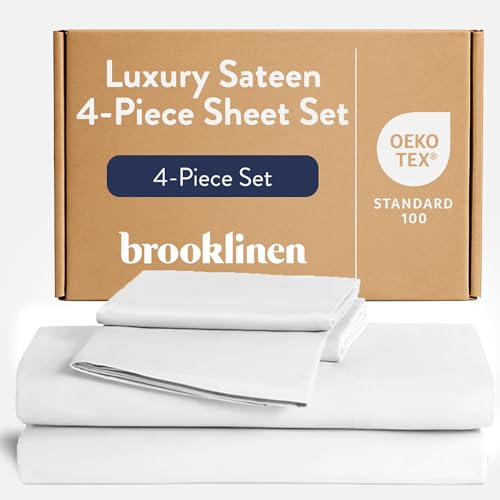
LUXURY SATEEN 4-PIECE SHEET SET: Featuring a rich, buttery-smooth weave, our best-selling Luxe Sateen Sheets are the ultimate bedding upgrade. Perfect for elevating your sheet game, these bed sheets feature a luxurious 480 thread count and a slightly luminous finish. Start styling your bed with the Core Sheet Set, which includes 1 fitted sheet, 1 flat sheet, and 2 pillowcases.

VIBRANT FLORAL PRINTS THAT BLOOM FRESH WASH AFTER WASH - Linen Home's floral printed percale sheets undergo rigorous high-color-fastness testing to keep your flower garden designs sharp, saturated, and stunning. The percale weave acts as a precision canvas—every delicate petal, bloom gradient, and leaf detail renders with crystal clarity. Your flower patterns stay vivid through 50+ wash cycles. No fading petals. No blurred blooms. Feminine florals that last.
The Fabric Cheat Sheet: When Thread Count Helps (and When It Doesn’t)
You’ve learned to see past inflated numbers; now you’re ready to understand where thread count actually earns its place in fabric selection.
Thread count measures warp and weft density per square inch, indicating tightness—but it elevates fabric quality only alongside superior fibers and proper weave. You’ll find 300–500 TC optimally balances softness and breathability for cotton; 400 TC often delivers ideal performance. Beyond 800–1000 TC, you’re likely encountering marketing inflation without tangible benefit.
Your weave selection dramatically shifts the utility of thread count: percale performs crisply at 180–400 TC, while sateen achieves optimal drape between 300–600 TC. You must prioritize fiber origin, staple length, and finishing over raw numbers. Thread count serves as one diagnostic tool—never the sole determinant of superior bedding.
Recommended Products

Soft & Breathable Material: This car headrest cover is crafted from ice silk fabric, offering a smooth and delicate feel with excellent breathability. Its tightly structure provides superior abrasion resistance, withstanding daily scratches and minor pulls without tearing easily. The overall texture is skin-friendly and soft, delivering comfortable support during your drive.

Breathable & Cool Material: The car steering wheel cover is made of high-quality ice-silk fiber fabric, which has great wear resistance and is not easily damaged during daily use, and can maintain good condition for a long time. In addition, the fabric is cool and breathable, providing a comfortable touch without feeling stuffy. Secondly, it has excellent resilience and can maintain its effectiveness even under repeated pulling, providing users with a stable and comfortable grip experience.

【Cooling Experience】: This seat cushion is ideal for summer use, providing a cool and comfortable seating experience. The 3D ice-cool fabric features a raised dot design for enhanced breathability and sweat-wicking. The TPR cooling gel does not easily transmit heat and adopts a three-dimensional mesh structure for improved ventilation.
How Weave Type Changes Your Thread Count Sweet Spot
Why does the same 400-thread-count sheet feel crisp in one store and silky in another? The weave type determines how thread count translates to tactile performance, shifting your thread count sweet spot considerably.
Percale employs a plain one-over-one-under structure that maximizes breathability. You’ll find its optimal range at 180–400 TC; push higher and airflow degrades, producing stiffness without benefit. Sateen utilizes a satin weave with multiple surface threads, creating density that tolerates 300–600 TC before weight accumulation causes diminishing returns.
In practice, you’re selecting weave first—percale for cooling, sateen for drape—then calibrating thread count within that framework. Beware inflated counts in multi-ply sateen; surface fullness mimics luxury while obscuring actual fiber quality. Your effective thread count sweet spot emerges only when weave structure and numerical density align functionally.
Recommended Products

500 TC Cotton Sateen Sheets: Our 100% cotton sateen is woven in a smooth 500 thread count finish, giving your bed a refined feel that washes well and becomes softer after every wash
500 TC Cotton Sateen Sheets: Our 100% cotton sateen is woven in a smooth 500 thread count finish, giving your bed a refined feel that washes well and becomes softer after every wash

BREATHABLE COTTON SATEEN: Crafted from 100% cotton in a smooth 300-thread count sateen weave, this single-ply sheet set delivers a silky-soft feel, breathable comfort, and a sleek finish that becomes softer with every wash.
Percale vs. Sateen: Thread Count Works Differently Here
How exactly does the same 250-thread-count sheet behave so differently across weave structures? You’ll find the answer in how thread count interacts with weave architecture.
Percale employs a plain one-over-one-under weave that produces a matte, crisp hand. In this structure, you’re targeting 200–400 thread count; push higher and you’ll sacrifice the breathability that defines percale’s appeal. Excessive thread counts here create stiffness, not luxury.
Sateen weaves more threads over the surface, generating silkier drape and sheen, and it tolerates higher thread counts without dense, harsh results.
For percale specifically, prioritize long-staple Egyptian or Pima cotton rather than chasing inflated thread counts. Evaluate finish, weight, and fiber quality holistically—you’re optimizing for coolness and longevity, not numbers alone.
Recommended Products

Winner of the 2026 Good Housekeeping Best Bedding Award - Everyday Ease Cotton Sheets: Our 400 thread count sheets queen size bed set are made with single-ply 100% long-staple cotton for a smooth hand feel and lightweight comfort. Independently tested to earn the prestigious Good Housekeeping Seal. Complete your bedding ensemble with this queen sheet set.
Winner of the 2026 Good Housekeeping Best Bedding Award - Everyday Ease Cotton Sheets: Our 400 thread count full size bed sheets set is made with single-ply 100% long-staple cotton for a smooth hand feel and lightweight comfort. Independently tested to earn the prestigious Good Housekeeping Seal. Complete your bedding ensemble with this bedding.

AUTHENTIC COTTON PILLOWCASES: Crafted from 100% cotton fabric in a 400 thread count percale weave, these standard pillow cases set of 2 deliver the distinctly crisp, cool, and breathable feel that percale is celebrated for, offering hotel-quality sleep surface that feels refreshing & comfortable against your skin every night.
Thread Count for Hot Sleepers, Cold Sleepers, and Everyone Between
Where exactly does your body temperature sit when the lights go out? You need to match your thread count and weave (percale vs sateen) to that baseline. If you run hot, you’ll want a lower thread count—specifically 200–400—with percale weave to maximize breathability and maintain crisp, cool airflow against your skin. If you’re a cold sleeper, you’ll favor higher thread counts, typically 400–600, often in sateen weave for softer warmth without excessive heaviness. For everyone between, you’ll target 300–500 thread count, delivering balanced durability and comfort regardless of room temperature. You should recognize that counts above 800–1000 rarely improve comfort and can actively reduce breathability, particularly on inferior fibers. Your best choice ultimately depends on fiber and weave: percale prioritizes cooler, breathable performance; sateen delivers smoother, warmer sensation even at moderate thread counts.
Recommended Products

100% Cotton: Royale Linens 300 Thread Count queen size fitted sheet is made from double-brushed 100% cotton fabric for a soft, breathable feel. Wash before use for true softness.

ALL-IN-ONE SOFTNESS & COMFORT WITH 100% PURE COTTON SATEEN BEDDING: Welcome cool and cozy sleepy nights with our simple, everyday use 300 thread count collection. Crafted with long staple cotton yarns, these smooth sheets have the unmatched comfort, lightweight, and softness of a cloud. This signature sateen weave bedding set provides remarkable elegance and durability, making them completely worth the price.

Luxurious Feel: Experience unparalleled comfort and luxury with this premium Egyptian cotton sheet set, specially designed for a perfect fit with deep pockets. The high-quality dense weave of these 100% Egyptian cotton sheets ensures a silky-smooth texture, allowing you to indulge in a cozy night's sleep
Staple Length, Ply, and Finish: The Quality Checklist Beyond Thread Count
When exactly does thread count stop telling the whole story? You’ll find the answer in three overlooked variables: staple length, ply, and finishing techniques.
Staple length determines fiber integrity. Long-staple cotton—Supima, Egyptian—spins into smoother, stronger yarns that withstand repeated washing without pilling, regardless of thread count. Short-staple fibers yield coarse, weak threads that degrade quickly.
Ply structure reveals construction quality. Single-ply yarns deliver honest thread counts; multi-ply twists inflate numbers artificially without improving hand or durability. Two-ply yarns double the count mathematically, not experientially.
Finishing techniques—mercerization for luster and strength, calendering for surface smoothness, enzymatic treatments for softness—transform base fabric dramatically. These processes determine breathability and tactile response where thread count cannot.
You’ll assess sheets comprehensively only by weighing these factors together.
Recommended Products

BACKED BY THE GOOD HOUSEKEEPING SEAL - Soft, Lightweight, Durable: Crafted from 100% cotton sateen, this white queen sheets set starts with a slightly crisp feel - becomes noticeably softer wash after wash. This queen size cotton sheets set offers a smooth finish with subtle sheen and year-round comfort. Complete your bedding ensemble with this queen sheet set.
Winner of the 2026 Good Housekeeping Best Bedding Award - Everyday Ease Cotton Sheets: Our 400 thread count queen size bed sheets are made with single-ply 100% long-staple cotton for a smooth hand feel and lightweight comfort. Independently tested to earn the prestigious Good Housekeeping Seal. Complete your bedding ensemble with this queen sheet set.

450 THREAD COUNT QUEEN SHEETS : Lane Linen's 450 thread count queen sheets are woven from 100% long-staple cotton in a smooth sateen weave for a soft, silky & breathable feel on skin and durable, luxury comfort all year round.
Your Thread Count Decision Map: From Bargain Buys to Splurge Sheets
Why does the same thread count feel luxurious in one set and stifling in another? You’re encountering the interplay between thread count, weave, and fiber quality.
For percale, you’ll find ideal breathability between 180–400 threads per square inch; sateen demands 300–600 for that characteristic drape. You shouldn’t chase counts exceeding 800–1000—they’re often marketing constructs that sacrifice airflow and add weight without improving durability.
Your best value proposition sits at 300–500, where softness, longevity, and price converge, provided you’ve verified fiber quality.
When you’re shopping, treat thread count as one coordinate in a larger matrix. You’re evaluating how weave structure interacts with staple length and finishing techniques. This integrated assessment prevents you from overpaying for inflated numbers or underspending on inadequate construction.
Recommended Products

Premium Material: Crafted from high-quality ice silk, this steering wheel cover boasts exceptional wear resistance to effortlessly withstand daily friction, maintaining its sleek appearance. Its washable properties make it easy to clean—simply wash and air dry, then it's ready for next use

High Quality Material: This product is made from two materials: air mesh and polystyrene. The air mesh is lightweight and highly elastic; it returns to its original shape after being stretched and has a sturdy structure that resists deformation. The polystyrene offers excellent strength and rigidity; it is hard and durable, providing stable support for the product.

Cool & Breathable Material: This car seat cushion features a cooling fabric surface that is wear-resistant, scratch-resistant, skin-friendly, and soft. It resists damage, cracking, and pilling. The interior incorporates TPR gel material, offering a refreshingly breathable texture that significantly reduces heat transfer. It maintains excellent performance even with prolonged use, delivering a comfortable experience for drivers and passengers.
Conclusion
You now understand that thread count functions merely as a secondary indicator, not a definitive quality metric. Prioritize 300–500 single-ply thread count constructed from long-staple Egyptian or Supima cotton with clearly specified weaves. Disregard inflated 600+ claims utilizing multi-ply manipulation. Your superior selection demands evaluating staple length, yarn construction, and finishing treatments alongside personal thermal preferences. Armed with this technical framework, you’ll navigate marketing obfuscation and invest deliberately in genuinely superior bedding engineered for durability, breathability, and tactile satisfaction.