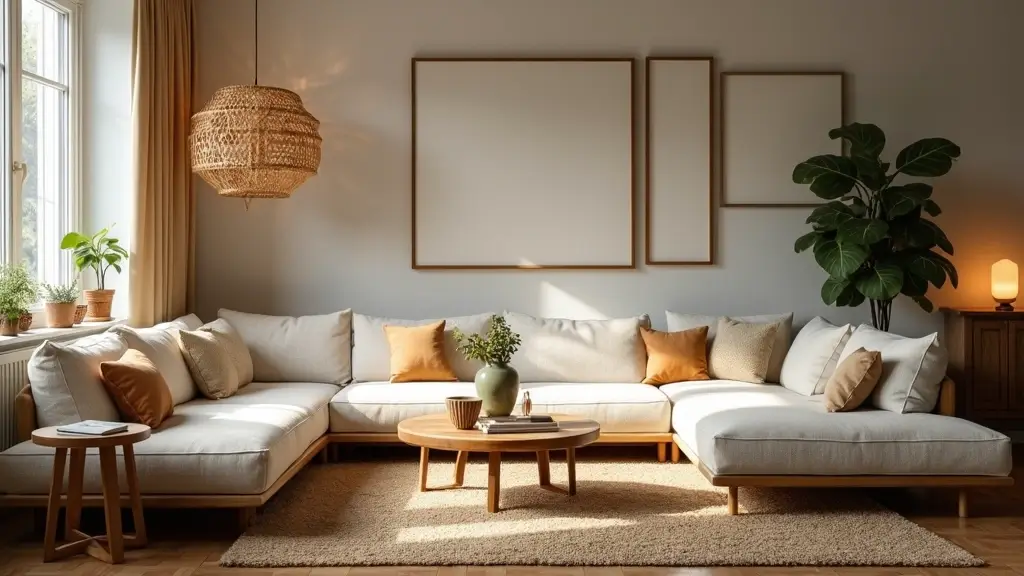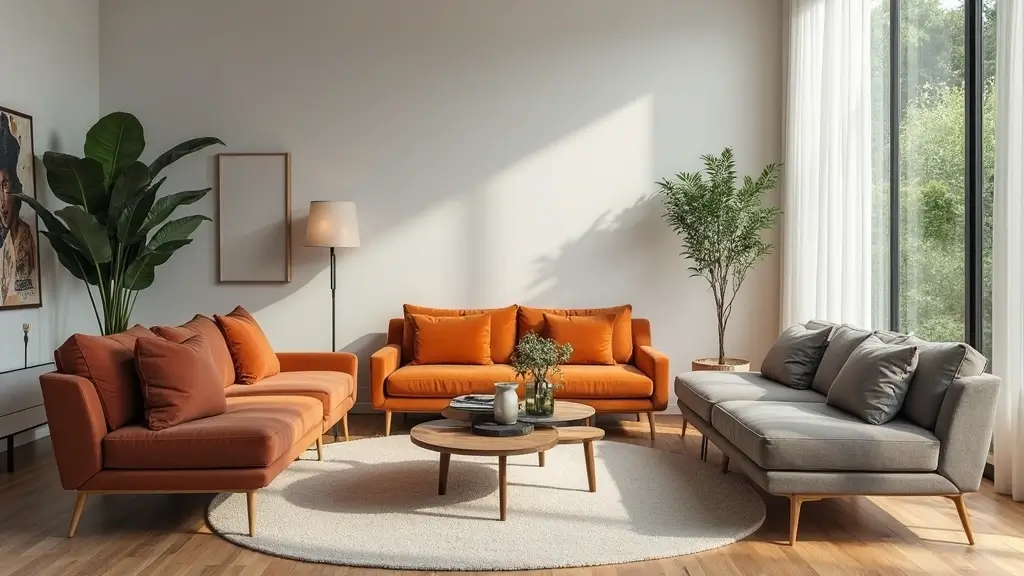

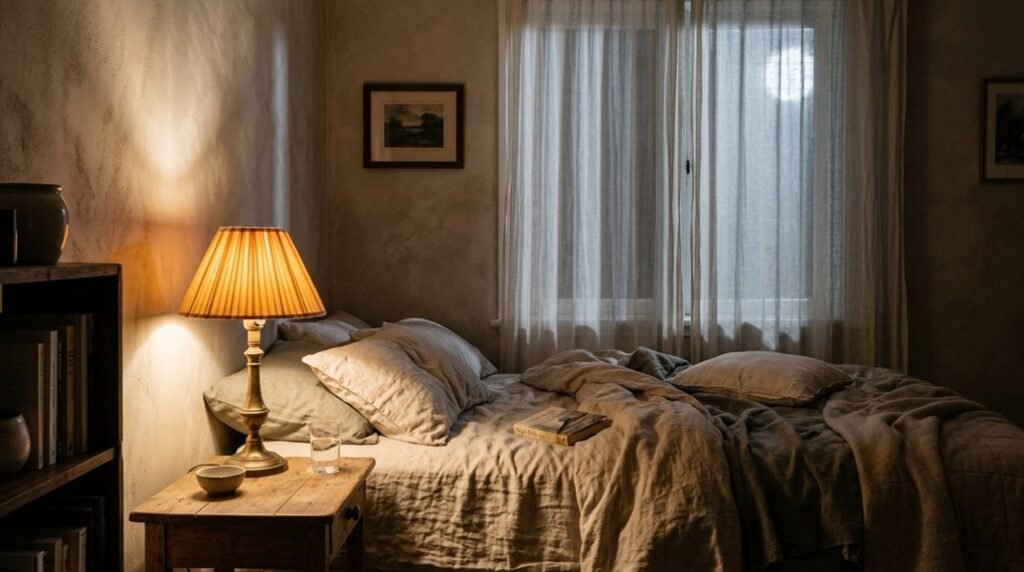
You step into a room, and before you notice any fixture, you feel the space—this is ambient lighting at work. It erases harsh shadows and sets the neurological stage for everything that follows. But the sources you choose, and the temperatures you deploy, will determine whether that stage invites calm or agitation. You might think overhead illumination is simple; it isn’t.
What Ambient Lighting Means and Why It Matters
Why does a room feel instantly livable—or starkly uninhabitable—the moment you flip the switch? You’re experiencing the power of ambient lighting, the general lighting that establishes your space’s foundational character.
This base layer floods the whole room with consistent, shadow-minimized illumination. You’ll achieve it through ceiling lights, recessed fixtures, wall sconces, and indirect lighting that bounces off surfaces rather than assaulting your eyes. Color temperature dictates your emotional response: 2700–3000K wraps you in warmth, while higher values sharpen your alertness.
You activate ambient lighting first; it provides comfortable visibility before you layer task or accent sources. This light layering strategy lets you sculpt atmosphere precisely. Without this primary distribution, rooms collapse into cavernous gloom or sterile overexposure. You’re not merely illuminating—you’re constructing psychological inhabitable space.
Recommended Products
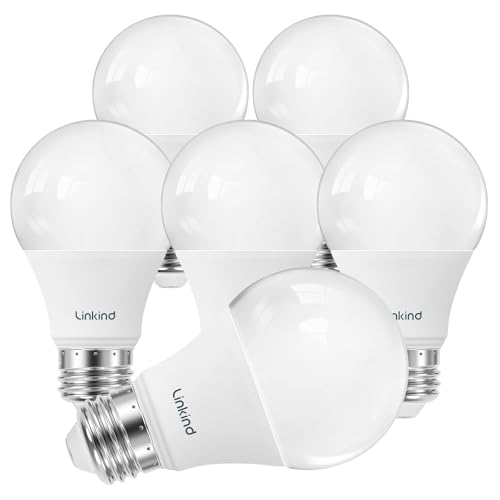
Reminder: Color temperature, measured in Kelvin (K), determines the hue of white light. LOWER Kelvin values produce a WARMER, YELLOWER light, while HIGHER Kelvin values produce a COOLER, Whiter light.

Excellent Quality without Flicker: Brightever light bulbs have passed rigorous testing standards - are free of harmful substances such as mercury and lead, and will not produce UV and IR radiation. That also means, our bright white light bulbs are Eco friendly bulbs that can help to save the planet you live on. No flicker, strobe or glare, our 40 Watt Equivalent light bulbs emit a stable light to better protect your eyes.

GU24 Twist Base LED Bulbs: These 10W LED bulbs feature a GU24 twist base and produce 1300 lumens of warm white (2700K-3000K) light, comparable to 80-100W incandescent bulbs or 13W 18W 23W T2 Mini-Twist Spiral CFL light bulbs.
The Best Fixtures for Ambient Lighting
How do you sculpt darkness into habitable space? You deploy overhead fixtures—chandeliers, pendants, ceiling-mounted lights—to establish foundational ambient lighting with broad, diffused output.
You layer in recessed lighting and track lighting for evenly distributed planes with directional flexibility. You position floor lamps and table lamps throughout margins, using multiple units to soften shadows and fill volumetric voids. You conceal LED lightstrips behind furniture, shelving, screens—crafting indirect lighting that emits glow without glare, eliminating harsh contrast zones.
You calibrate total ambient brightness precisely: target 1,500–3,000 lumens for living rooms and bedrooms, scaling downward for compressed footprints, intensifying for kitchens and bathrooms where visual acuity demands higher photon density.
You weave these elements into cohesive luminous architecture—fixture as instrument, shadow as material, brightness as calculated medium.
Recommended Products

DUAL-MODE: Recessed LED canless downlight features 2 lighting modes: downlight mode for general area illumination and night light mode for a gentle ambient glow. Perfect for bathroom night light or hallway night light applications!

Downlight / Night Light Options: This 6 inch led recessed light has night light mode, which emits 2000K amber light for very soft glare-free ambient illumination

5CCT: 2700K, 3000K, 3500K, 4000K, 5000K, 5 color temperature selectable, flip the switch on the Junction Box and then choose your favorite light color. No need to worry about what color temperature to buy. Five in one meets your different needs, eliminating the hassle of returning or exchange products due to inappropriate color temperature
Ambient vs. Task vs. Accent Lighting: What’s the Difference?
Where does illumination become intentional? You discover the answer when you grasp ambient vs task vs accent as distinct yet interdependent systems. Ambient lighting establishes your foundation—ceiling lights and similar fixtures cast a breadth of light that delivers overall illumination throughout your space. You rely on this general illumination to navigate safely and establish room mood.
Task lighting then contracts your focus: brighter, directed beams reduce eye strain where you read, cook, or work. Accent lighting completes the composition, isolating textures or architecture for dramatic effect without aiding visibility. You achieve balanced lighting only by weaving these lighting layers together. The space feel transforms when you control each element precisely—ambient lighting shapes atmosphere while its partners sharpen function and intent.
Recommended Products

USB Powered for Easy Use: This TV lights COB LED strip light is powered by a usb interface, making it compatible with power banks, laptops, USB adapters, and more; No complicated wiring is required—simply plug and play, ideal for a variety of settings
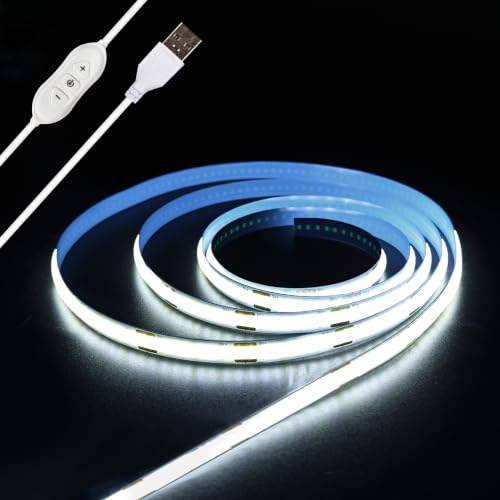
USB Powered, Plug & Play:USB powered for easy use. Compatible with power banks, laptops, USB adapters, and more. No hardwiring needed—just plug in and enjoy instant lighting anywhere.

【Plug in LED Strip Lights】: AUZIWE 24V COB LED Strip 9.84ft provides excellent lighting effects! Warm led strip lights super bright with high LED density, delivering perfectly even illumination across the entire length with no visible hot spots from individual LEDs.You plug the 110 volt AC adapter into the wall, and the round plug out of that adapter plugs into the female for the dotless led strip lights. the 180-degree beam angle can provide a wider lighting range. Professional-grade design enhances your installation project!
How to Choose Ambient Lighting by Room Type
When you shift from understanding layers to selecting fixtures, the real work begins. You’ll identify each room type first, then calibrate ambient brightness and color temperature to match function.
In living rooms and bedrooms, you’ll install warm light—2700–3000 K—to cultivate softness. You’ll anchor these spaces with ceiling light and indirect lighting, layering sconces and floor lamps to eliminate flatness. Kitchens demand different overhead fixtures: cooler color temperature, 3500–5000 K, delivering crisp ambient for precision work.
You’ll deploy dimmers throughout. They transform static illumination into responsive mood lighting, adapting to circadian rhythms and activities. You won’t rely on a single source; multiple ambient points prevent shadow pools and visual fatigue. You’re building atmosphere through technical choices—temperature, intensity, placement—each decision tightening the relationship between architecture and perception.
Recommended Products

Small but Mighty, Simple to Install: Designed with a compact profile, these modern wall lights create a beautiful up-and-down wall-washing glow that adds depth and ambiance without overwhelming your space. The peel-and-stick magnetic mount installs in minutes, so you can enjoy wall lighting without wiring, drilling, or electrical work

【Wireless Sconces & Easy Installation】 NO Wiring Required! Our battery operated wall sconce set of 2 are home-friendly and incredibly easy to install: fix the scones lighting on the wall with included screws(Tips: If the wall lights cannot be light up, please rotate the lamp tube slightly)

Smart Motion Sensor: Automatically turns on when motion is detected in low-light conditions, with up to 10 ft detection within a 120° range, then turns off after 20 seconds. For best results, install 5–6 ft high with the sensor facing your walking path. Detection distance may vary with space and walking direction
How Smart Controls Upgrade Ambient Lighting
You’ve mapped temperature and placement to each room’s demands; now you’ll wire that intention into responsive systems. Smart lighting transforms ambient lighting from static illumination into dynamic architecture. You’re commanding brightness and color temperature through app control, shifting from 2700K warmth to 4500K alertness without touching a switch.
Scheduling and automation let you program circadian rhythms into your walls—morning coolness dissolving into evening amber. Dimming eliminates fixture swapping; you’re sculpting luminance in 1% increments. Scenes synchronize with curtains, climate, and sunrise data, while mood control coordinates entire zones through voice commands or geofencing.
You’re no longer adjusting lights. You’re orchestrating photon behavior—precision automation that responds before you reach for the switch.
Recommended Products

Fashion Decor and Industrial Style: Matte black Boostarea LED 4 light track lighting kit with classic lines completes the look with a hint of modern Industrial character. this ceiling pendant light fits perfectly with any style decor from modern Industrial to the farmhouse which is a great idea for your Living Room, Kitchen, Dining Room, Bedroom, Kids Room, Hallway, Porch, Stairwell, Bar, Hotel and Restaurant, coffee shop, art display.
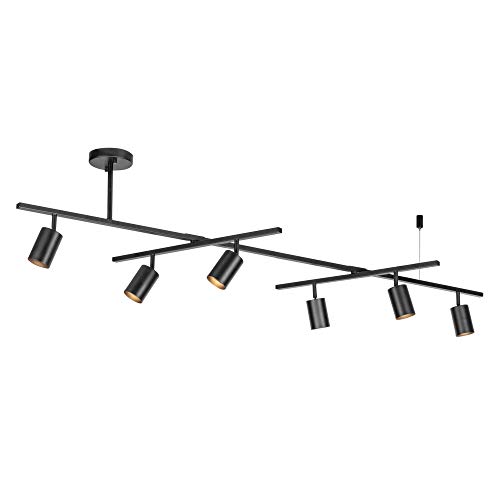
CUSTOMIZABLE LIGHTING: The center swivel bar and six adjustable spot heads deliver targeted, directional lighting perfect for kitchens, studios, and open areas.

Concise Design: The Unicozin led track lights has an industrial yet traditional design, the straight line of the track bar pairs with the exposed socket construction and is finished with matte black to complete the perfect minimalist design
Getting Color Temperature and Brightness Right
How precisely do you want your spaces to feel? You’ll manipulate color temperature and brightness to sculpt atmosphere through ambient lighting. Deploy warm light at 2700–3000 K for intimate environments; shift toward neutral light at 3500–5000 K where clarity dominates. You’ll measure output in lumens—target 1,500–3,000 for living areas, scaling upward in task-intensive zones. Dimming refines your control, preserving perceived warmth while attenuating intensity. Smart lighting automates these transitions, pushing cooler temperatures during daylight hours, then retracting into amber as evening deepens. You’ll construct indirect lighting through coves and valances, eliminating glare and preserving chromatic fidelity. Layered lighting completes your architecture—ceiling washes, wall grazes, and floor glows interweave into seamless brightness fields.
Recommended Products

1 case of 12 Packs, 12 Count Total
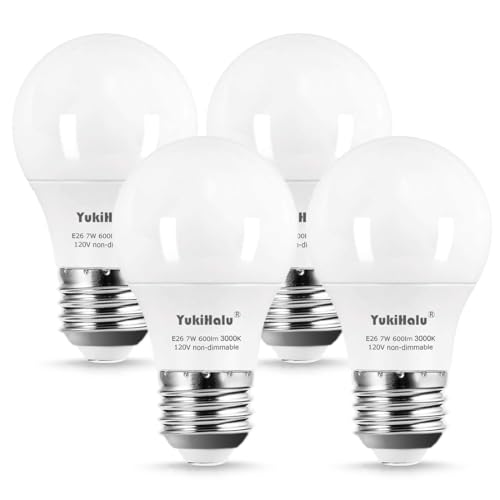
Perfect LED Light Bulb: Waterproof, instant on, No heat, No flicker, No blue light. A15 120V 7W 600 lumens. Perfect color rendering effect with CRI>80. E26 base with nickel-plated aluminum, never rust. Suitable for damp location

Unprecedented Ultra-thin Ceiling Lights - We've used cutting-edge raw materials renowned for their flexibility and strength to create this incredibly slim round led light, measuring just 0.67 inches thick. This design surpasses the thickness limitations of traditional lights for ceiling. Regardless of your ceiling height, it seamlessly integrates into your home decor, adding a modern and stylish allure
Conclusion
You’ve built a foundation, a luminous substrate. Warm 2700K pools in your living spaces; cooler tones sharpen focus where demanded. Your fixtures—washed, hidden, indirect—erase harsh edges. Smart systems let you sculpt lumens across the day’s arc. Now you understand: ambient light isn’t mere visibility. It’s atmosphere made material, the invisible architecture governing how rooms breathe, feel, settle into themselves. Control it precisely. Live inside it comfortably.
Recommended Products

Soft Amber Night Light: 6-inch IC-rated LED recessed light features a 2000K amber nightlight on the trim for soft glow and safe nighttime movement. Mode switches by quick power cyclez, no extra controls needed.

Soft Amber Night Light: 4-inch IC-rated LED recessed light features a 2000K amber nightlight on the trim for soft glow and safe nighttime movement. Mode switches by quick power cyclez, no extra controls needed.

【Premium Materials】: The LED recessed lighting is flicker-free and glare-free, crafted from aviation-grade aluminum with high-efficiency energy-saving LED chips and a high-transmittance lens. This combination results in low heat output and excellent heat dissipation, making these recessed LED lights more energy-efficient, durable, and safe. The brushed finish enhances the high-quality design, adding to the visual appeal of these mini spotlights.