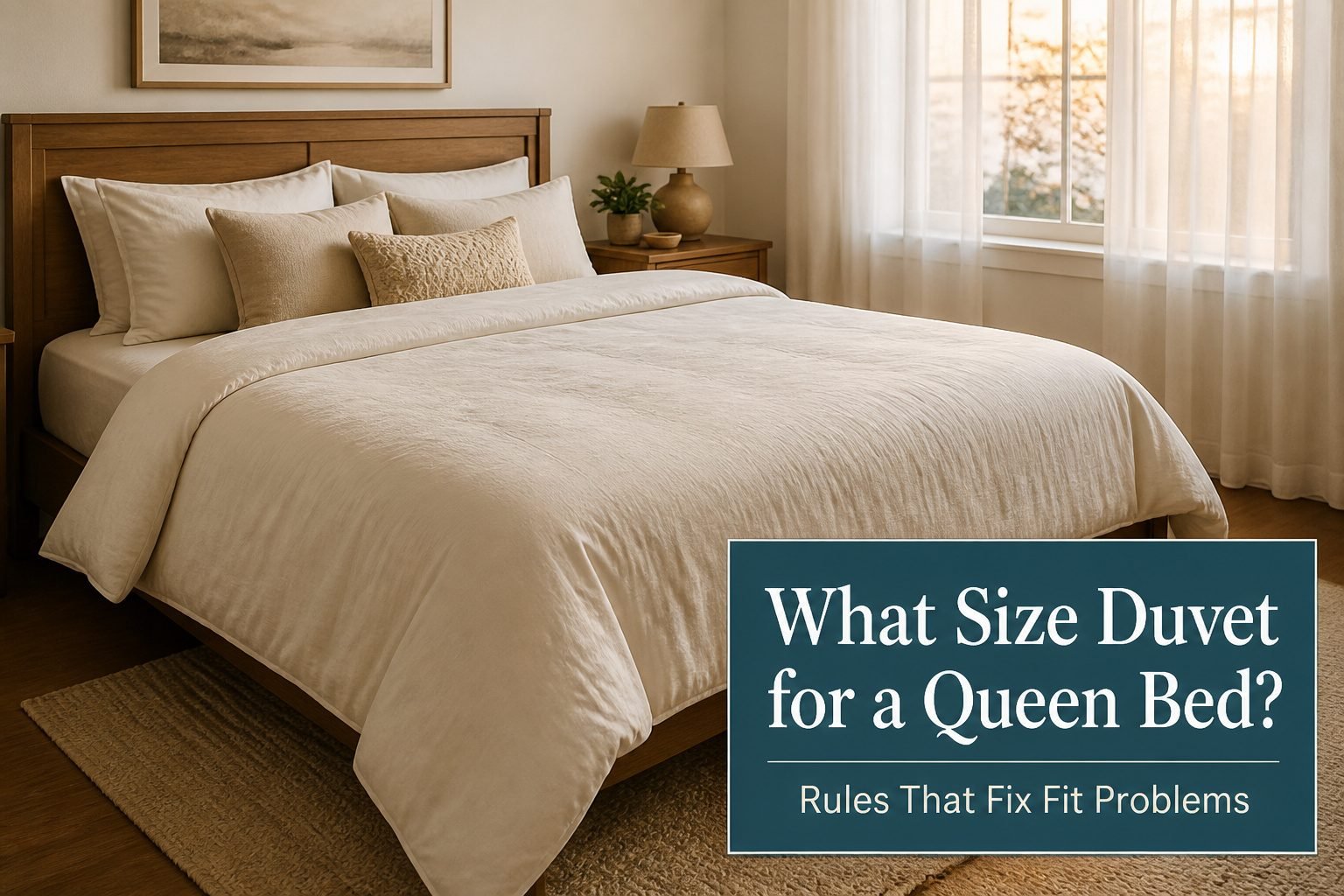


The duvet cover that actually fits a queen bed is roughly 90 inches by 90 inches, but that only holds if your mattress hasn’t grown.
A pillow-top or memory-foam topper can eat several inches of drop you were counting on, which is how an 88 by 92 inch "Full/Queen" cover can end up barely reaching the box spring.
1. The Queen Duvet Size That Actually Fits

A queen mattress is 60 inches by 80 inches, and the duvet cover that actually fits it is roughly 90 inches by 90 inches. That extra ten inches on each side gives enough fabric to drape without fighting the corners every morning.
How much that drape drops depends on what you want to see. Two inches of overhang per side keeps things neat and barely clears the mattress edge, while ten inches gives the fuller, hotel-bed look that hides the box spring.
I land somewhere in the middle, around six inches, because my bed sits on a simple metal frame I don’t care about showing off.
Thickness matters too.
A puffy down comforter eats space inside the cover that a flat cotton insert doesn’t. If your duvet is thick, the same 90 by 90 cover that looks generous on a slim comforter will pull tight and flatten the fill.
Standard sizing beats smaller "just fits" options, and that couple inches of built-in slack keeps the whole thing from looking skin-tight after the first wash.
2. Every Duvet Cover Size in Inches

Standard duvet covers come in five sizes that rarely line up the way you’d expect.
A twin cover measures 66" x 86", full or double runs 80" x 86", and queen jumps to 90" x 90"—square, not rectangular. King spreads to 104" x 90", while California King reverses the proportions at 104" x 98" for taller sleepers.
| Size | Dimensions | Best For |
|---|---|---|
| Twin | 66" x 86" | Single beds, dorms |
| Full/Double | 80" x 86" | Cozy solo sleepers, guest beds |
| Queen | 90" x 90" | Balanced width and length |
| King | 104" x 90" | Extra spread on larger beds |
| California King | 104" x 98" | Longer beds or taller sleepers |
The cover needs to be 20–30 cm longer than whoever sleeps under it.
At 5’10" I land right at the edge; a 90" queen cover gives me about four inches of foot clearance, which disappears fast if I stretch out or the duvet shifts.
Shorter than 5’7" and a full cover starts looking viable. Taller than 6′ and that California King length becomes worth hunting down, even on a standard queen mattress.
3. Why a Queen Duvet on a Queen Bed Can Still Go Wrong

A queen duvet labeled 90 by 90 inches sounds like it should fit a queen bed, but the labeled size only tells half the story.
Mattress depth has crept up over the years, and a pillow-top or memory foam topper can add several inches that the original sizing never accounted for.
The duvet ends up fighting for the same fabric, pulling at the corners and leaving the sides hanging short.
Platform height matters too. A mattress sitting low in a platform frame needs more overhang to reach the floor evenly; one on a tall box spring and frame needs less, or the cover pools and looks sloppy.
The only way to know is to measure your actual mattress stack, label aside, from the top of any topper down to where you want the duvet to fall.
Thicker duvets also need more room inside the cover.
A lightweight summer insert slides around easily, but a dense down or down-alternative comforter fills out the corners and shortens the effective drape. If your insert is bulky, the cover size that works on paper will feel tight in practice.
4. How Much Overhang Looks Right

A queen duvet on a queen mattress typically leaves 2 to 10 inches of overhang per side, and where you land in that range matters more than most people expect.
Less overhang, closer to that 2-inch mark, gives the bed a cleaner, more tailored silhouette. The duvet sits almost flush with the mattress edge, which looks sharp in photos and stays out of the way in tight bedrooms.
A narrow drop barely covers the sides of the mattress, so if you sleep with a foot hanging off the bed or your mattress sits on a tall frame, you will feel the edge.
More overhang, up toward 8 or 10 inches, drapes the sides in a way that reads relaxed and hotel-like. It also buys you forgiveness if your mattress is thick or your bed frame lifts it high off the floor.
The risk is bulk: too much length on a low platform bed or a thinner mattress pools on the floor by morning, picking up dust and tripping you on the way to the bathroom.
Your mattress height is what splits the difference. A standard mattress plus box spring might sit 24 inches off the ground, while a platform frame with a memory-foam mattress could be closer to 14.
The same duvet drops very differently on each. My own bed sits fairly high, so I gravitate toward the deeper overhang; anything under 6 inches looks skimpy once the bedding settles.
If your frame is low, the neater end of the range probably serves you better, or you will be tucking fabric under the mattress every few days to keep it clean.
5. When a Larger or Smaller Duvet Cover Works

A duvet cover half a size bigger than the insert settles into a fuller, loftier look because the extra fabric lets the fill expand without pulling seams tight.
That slight looseness is usually harmless, even desirable, if you like a cloudier silhouette on the bed.
Sizing up on purpose is a different calculation.
A king cover on a queen bed gives you several extra inches of overhang on each side, which can look intentional in a room with a tall frame or a mattress sitting high off the floor.
The trade is bulk: more fabric to lift when you make the bed, more weight in the wash, and a cover that can read as sloppy if the bed itself is low and minimal.
The real problem runs the other direction. A cover smaller than the insert forces the fill to bunch and compress, leaving cold flat spots no amount of shaking fixes.
You notice it first at the corners, where overstuffed pockets pull the whole thing out of square by morning.
How to Measure Before You Buy

- Measure the mattress itself, not the bed frame. Width, length, and depth all matter now that mattresses run anywhere from 12 to 20 inches thick. A tape measure across the top gives the real numbers; labels like "queen" won’t.
- Add the drop you want on each side. Two to 10 inches per side is the usual range. I aim for enough to cover the crack where the mattress meets the box spring, which one linen shop video calls the make-or-break detail for a finished look.
- Account for loft. A puffy down insert needs more cover fabric than a thin one. If your current duvet sits too short, the insert is likely the reason.
- Measure your existing duvet if you have one. Lay it flat and note width and length. It may not match any standard label, but those dimensions tell you what actually worked.
- Check cover dimensions, not bed size labels. A "queen" cover can vary by brand. Add your mattress depth plus desired drop to each side, then match that total to the cover’s listed width and length.
Fabric That Handles Real Washing

Cotton and linen breathe well and survive the washing machine without drama, which matters more than thread count once you pass a moderate range.
I wash my duvet cover every two weeks to a month, though weekly feels better if you sweat heavily or let pets sleep on the bed.
Natural fibers like organic cotton or bamboo also irritate allergies less, and they hold up to that frequency without pilling immediately. A cover that can take real washing beats one that demands gentle cycles you will skip.
What I Got Wrong the First Time

A "Full/Queen" label does not mean it actually fits both well; the dimensions matter more than the combined sizing.
It was an 88 by 92 inch cover, which sounded generous enough on the rack. What I did not account for was the 3 inch memory foam topper we had added six months earlier.
That topper lifted the mattress surface and ate the drop on every side. The duvet barely reached the box spring, and my husband’s feet poked out the bottom by morning.
A year later I swung the other direction and ordered a king size cover without checking our bed height first.
At 104 by 90 inches, it pooled on the floor on three sides. Excess fabric stuffed under the mattress just to walk around the bed without tripping is a sign the cover is too long.
The right overhang for most queen setups runs 2 to 10 inches per side, but that range assumes a standard mattress profile.
Measure your bed from the top of the mattress to where you want the cover to fall, then add that drop twice to the base dimensions. Labels skip those variables entirely.
Frequently Asked Questions
What size duvet for a queen bed?
A queen bed typically needs a duvet cover around 90 inches by 90 inches. That extra width and length gives you 2 to 10 inches of overhang per side, depending on how much drape you want and how thick your mattress is.
Measure your actual mattress stack rather than trusting the bed size label, since pillow-tops and toppers add inches the standard sizing never accounted for.
Can I use a duvet cover larger than my duvet?
A cover slightly larger than your insert is usually fine and can even give a fluffier, more relaxed look.
The extra fabric lets the fill expand without pulling seams tight. Just avoid going so large that the duvet shifts around inside constantly, which gets annoying to fix every morning.
How often should I wash my duvet cover?
Every two weeks to a month is the usual range, though weekly feels better if you sweat heavily or let pets sleep on the bed.
Cotton and linen covers handle that frequency without drama, and natural fibers like organic cotton or bamboo irritate allergies less than synthetics.
Should you buy a bigger duvet than your bed?
Sizing up half a size gives a fuller, loftier look because the extra fabric lets the fill expand.
Going a full size up, like a king cover on a queen bed, adds several inches of overhang that works best with tall frames or high mattresses.
On a low platform bed, that much extra fabric pools on the floor and looks sloppy.
Should I put a king size duvet on a queen bed?
A king cover on a queen bed gives you extra overhang that can look intentional with a tall frame or thick mattress, but it adds bulk.
More fabric to lift when making the bed, more weight in the wash, and enough length to pool on the floor if your bed sits low.
The writer tried this once and spent a winter stuffing excess fabric under the mattress just to walk around without tripping.