
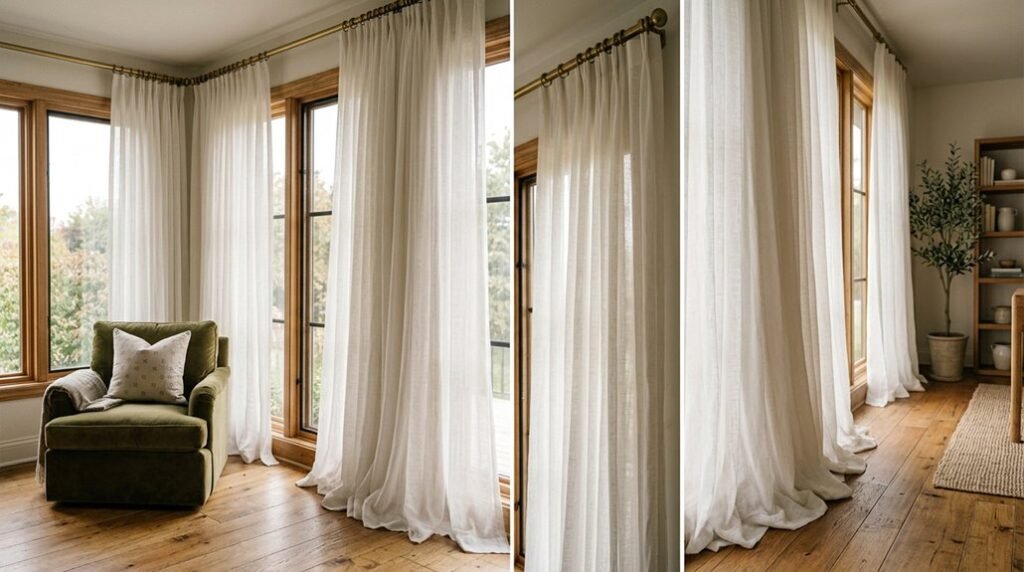
You stand before your windows with a tape measure, wondering if two panels will suffice or if you’re about to make a costly mistake. The truth is, curtain width isn’t dictated by your window alone. Get it wrong, and you’ll face gaps, sad folds, or fabric that fights its own purpose. But there’s a method to this madness that starts with one simple question: how much drama do you want your room to hold?
How Wide Should Curtains Be? The Double-Width Rule
How do you decide the right curtain width without guessing? You’ll rely on the double-width rule, a straightforward method for achieving proper fullness. You measure the width of the window, then multiply by 1.5 to 2 times for standard fullness, or 2 to 2.5 times for fuller, more dramatic drapes.
For example, when you’re covering a 48-inch window, you’d aim for about 72 inches of total panel width for standard fullness, or roughly 96 inches for richer folds. You achieve this by pairing panels whose combined curtain width hits your target.
Many ready-made panels run 48 inches each, so you’ll often need two for narrow windows. Custom options let you fine-tune. Remember, outside mount choices affect how you measure and perceive the final look.
Recommended Products

Package Included: SpaceDresser sheer curtains are made of High-Quality polyester fabric, soft to touch. Each pack includes 2 sheer panels of 52" wide x 72" length.
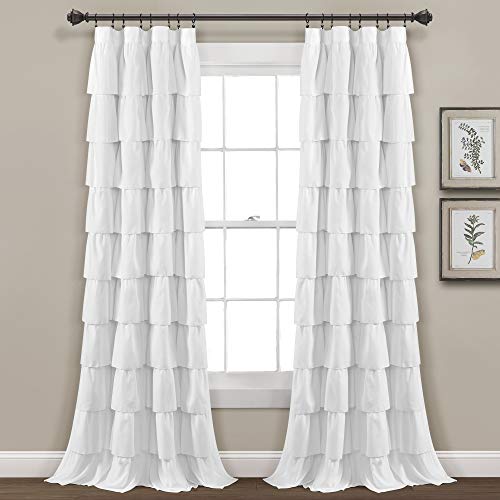
Ruffle Curtains: Add charming texture to your nursery or kids bedroom with the Lush Decor Ruffle Light Filtering Curtains. Designed in a solid color with layers of cascading ruffles, these bedroom curtains create a soft, feminine look to your windows.

Sold as 2 Panels: Each package includes 2 pieces white sheer curtains. Each sheer curtain measures 42 inch width, 84 inches long( The curtain length not include top 1.5 inch header,total length 85.5 inch) 2 pieces total width is 84 inches, Sheer curtains width is 1.5-2 times wider than your window to show a nice look. Multiple Length are available, please measure your window first for the right choose
Measure for Fullness: Inside Mount vs. Outside Mount
Where you mount your rod shapes everything about your fullness calculation. When you outside mount, you’ll extend the curtain rod 6 to 12 inches beyond each side, creating a wider frame. Measure your window width, then multiply by 1.5 to 2 for proper fullness—aim for a fullness ratio of 2x when you want that full, tailored look. For a 60-inch window, plan total width around 90–120 inches using standard panels.
You’ll approach inside mount differently. Here, your panel width equals or slightly exceeds the window width, giving you less fabric but a cleaner fit. Your fullness ratio drops to 1.0–1.5, suited for decorative panels that won’t pinch or bunch. Choose your mount first, then calculate your width requirements accordingly.
Recommended Products

Basic Information:The grommet top has an inner diameter of 1.6 inches. Each curtain panel is available in 35-inch and 52-inch width options. Available lengths: 63 inches, 72 inches, 80 inches, 84 inches, 90 inches, 95 inches, 102 inches, 108 inches, and 120 inches. Each set includes 2 detachable tiebacks.

Double Layered Curtains: Crafted with a sheer lace layer, our boho curtains for bedroom boast a smooth, delicate handfeel, while the linen layer is soft and durable. With one-piece cutting and neatly sewn edges, our linen curtains 84 inches long 2 panels strike a balance between beauty and practicality. They are suitable for bedroom, living room, nursery, office and other places

PACKAGE INFORMATION: Package includes 2 pieces of double-layer curtains. The curtains come with 2 tie-backs. Each panel has a crushed sheer layer over a blackout curtain measuring 52"W x 54"L with 8 silver grommets(1.6-inch inner diameter)top.
Pick Your Header Style: Rod Pocket, Grommet, or Pinch Pleat
Why does header style matter so much for width? Your header style directly dictates how you’ll calculate curtain panels and achieve proper fullness across your window width.
With rod pocket and grommet styles, you’re measuring flat-out width, so a 60″ panel won’t cover 60″ of window. You’ll need multiple curtain panels to reach 1.5x–2x fullness, or 2.5x–3x for luxury. Sheer vs solid fabrics also affect how much gathering you’ll want.
Pinch pleat works differently—fullness is sewn in. A 48″ pair covers roughly 36″ after accounting for overlap/return, so check your measurement carefully.
Consider how each header style behaves when drawn. Pinch pleat maintains its folds, while rod pocket can flatten without enough panels. Choose grommets for soft, easy folds at lower fullness ratios.
Recommended Products

The adjustment distance of the rod is small, so make sure to measure your area first and don't forget the overlap space


【Fits 1–2" Headrails Depth】Designed specifically for blind headrails measuring 1–2" deep. If your headrail measures 2.25–3", choose the 2.25–3" version instead.
Extend Your Rod 6–12 Inches: Why Placement Changes Everything
What’s the fastest way to ruin an otherwise perfect curtain setup? You skimp on curtain rod extension. When you mount your rod flush with the window edges, you choke the glass and block precious daylight. Instead, stretch your hanger rod length 6–12 inches beyond window frame on each side. This window widening trick transforms ordinary openings into architectural statements. Your decorative drapery stacks neatly when open, preserving light control and maximizing views. For dramatic flair, push to 12–18 inches; cramped walls still need 4 inches minimum. Proper rod placement balances visual proportion and ensures your standard curtain lengths drape elegantly. You’ll achieve superior window fullness without extra fabric—just smart positioning that elevates every room.
Recommended Products

Linen Textured Curtains: The package includes 2 panels of semi sheer flax linen curtains. Each panel measures 50 inches wide and 112 inches long with 32 hooks. Our linen curtains are crafted from linen and polyester blend fabric, with a linen textured surface that showcases a natural look and a cozy feeling. The poly-linen combination is a more cost-effective option, with greater durability and wrinkle resistance
Linen Textured Curtains: The package includes 2 panels of semi sheer flax linen curtains. Each panel measures 50 inches wide and 108 inches long with 32 hooks. Our linen curtains are crafted from linen and polyester blend fabric, with a linen textured surface that showcases a natural look and a cozy feeling. The poly-linen combination is a more cost-effective option, with greater durability and wrinkle resistance

100% Physical Blackout: 100% total light blocking is achieved through our heavy double-layer fabric. Are you struggling to sleep during bright hours due to piercing sun glare or blinding streetlights? Our dual-panel system utilizes two layers of high-density 230GSM woven polyester with a built-in black lining to shut out all incoming light. Imagine transforming your sun-drenched room into a serene midnight sanctuary, allowing night-shift workers and infants to enjoy deep rest.
How Much Fullness Do You Want? Minimalist to Luxury Looks
How dramatically do you want your curtains to transform your space? Your choice of fullness determines everything from sleek minimalism to opulent grandeur.
For a minimalist look, you’ll use 1x to 1.5x your window or curtain rod width, creating clean drapes with subtle folds.
Standard fullness—1.5x to 2x width—offers balanced versatility and practical light control.
Luxury fullness demands 2.5x to 3x width, delivering dramatic, hotel-worthy folds that command attention.
Your curtain style affects these calculations. Pinch-pleated drapes arrive with built-in fullness; a 48″ pair covers roughly 36″ of width after installation.
With grommet curtains, target 1.5x to 2x fullness for soft, unbulky folds.
Rod-pocket styles follow similar guidelines. Measure your curtain rod carefully—your width calculations start there, not the glass itself.
Recommended Products

Protect Drapes: No need to pull by hand sothat your white drapes, silk drapes or heavy straight curtains won't rip, tear, or get dirty, fabrics will last longer.

📏【ADJUSTABLE LENGTH】 This curtain pull wand extends from 26 to 38 inches with a segmented design that adjusts in 13-inch increments. Ideal for floor length drapes, high windows, and RV curtains—no more struggling to reach tall or hard-to-reach curtains.

Forest Hill panels offer a contemporary branch motif on a linen look woven blackout fabric
Curtains for Weird Windows: Doors, Arches, and Tiny Openings
Where do you even begin when your window defies every standard measurement?
You start with the same principle: curtain width determines coverage. For doorway curtains or arch window curtains, you’ll want a fullness ratio of 1.5x to 2x the opening width. Measure door-sized openings at their widest point, then add rod extension—6 to 12 inches per side—to maximize your stackback distance and create visual breathing room. For tiny arches, scale back to 1x to 1.5x fullness; excess panel width overwhelms narrow spaces. Your arch window treatment depends on precise measuring: width at the base plus your rod extension, multiplied by your chosen fullness. Two standard 48-inch panels overlapping can yield 72 inches total width—sufficient for moderate coverage on many unconventional openings.
Recommended Products

Package Included: SpaceDresser sheer curtains are made of High-Quality polyester fabric, soft to touch. Each pack includes 2 sheer panels of 52" wide x 84" length.
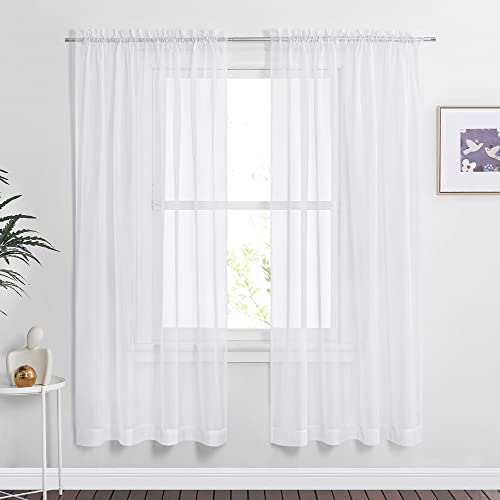
READY MADE: 2 panels per package. Each panel measures 60" width, 45", 63", 72", 84" and 95" lengths (from the top edge of installed rod to bottom sheer) are available. 2" Diam rod pocket opening to suit most curtain rods.

Match Fabric Weight to Curtain Width: Heavy vs. Light Rules
You’ve figured out how to cover tricky openings—now you need to pair that width with the right fabric. Your fabric weight directly determines your curtain fullness, so adjust those width guidelines accordingly.
Heavy fabrics like velvet or brocade need 2x to 3x panel fullness for a crisp look, while light fabrics—sheer, voile, lightweight cotton—max out at 1.5x fullness. Heavy fabrics appear full quickly, so pushing higher ratios creates unwanted bulk.
Your heading style matters too. Pleated curtains demand 2x to 2.5x fullness for sharp folds, but grommet curtains and rod-pocket curtains work better at 1.5x to 2x to prevent top bunching.
Watch those ready-made panels. Standard 48-inch widths often require extra panels when you’re working with heavy fabrics to achieve proper drape without skimping.
Recommended Products

PACKAGE MADE:2 panels per package. Each Lined Curtain measures 52" wide x 84" long. 8 Silvery Grommets per panel. This silvery grommet (1.6 inch inner diameter) fits many rods. Easy to hang and smooth to slide. The simple design gives people a sense of ease.

CURTAIN DETAILS: The room divider curtain's fabric is super soft, thickness and heavy innovative triple-weave polyester fabric. The 12 silver grommets top (inner diameter is 1.6-inch) adds a modern touch and easy hanging. ONLY CURTAIN INCLUDE.
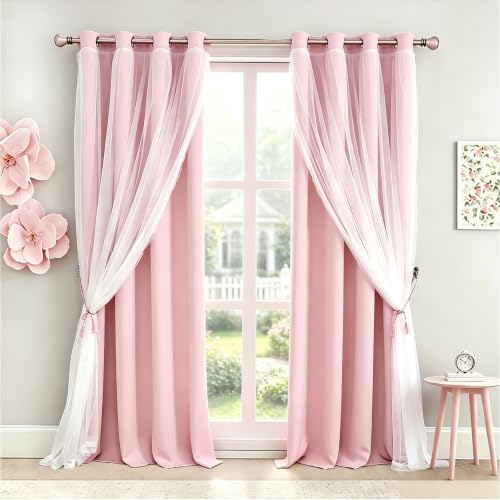
PACKAGE INFORMATION: Package includes 2 pieces of pink double-layered blackout curtains. Each panel has a crushed sheer layer over a blackout curtain measuring 52"W x 84"L with 8 silver grommets(1.7-inch inner diameter)top.
Signs Your Curtains Are Too Narrow (And How to Fix It)
Why do your curtains still let light leak through the edges even when drawn tight? You’ve likely got a curtain width problem. Narrow panels destroy both light control and privacy, leaving embarrassing side gaps.
To fix this, measure width properly: aim for fullness at 1.5× to 2× your window width. That 36″ window needs roughly 72″ in panels, sometimes 90–120″ for richer looks. Most ready-made panels span 48″, so you’ll probably need multiple panels or wider options.
Don’t overlook rod extension either. Extend your rod 6–12″ beyond each side for effective gap reduction when curtains pull open. This trick compensates for slightly narrow panels and improves overall coverage. Nail these adjustments, and you’ll finally achieve the privacy and darkness you’ve been missing.
Recommended Products

Luxe Design - MODE Premium Collection side mount curtain rods includes sleek end caps for a modern look. A dedicated team of designers used the latest design trends to create a luxurious feel.

【No-Rust and Non-Slip material 】Shower Curtain Rod is made of premium stainless steel, waterproof and rust-proof,the end of the black shower curtain rod comes with two Non-Slip rubber pads that fit tightly against the wall to prevent the rod from slipping.

The adjustment distance of the rod is small, so make sure to measure your area first and don't forget the overlap space
Conclusion
You’ve measured your window, chosen your mount, and picked a fullness that matches your style—now you’re ready to hang. Remember: wider almost always wins. When in doubt, go fuller; skimpy panels never look polished. Trust the 2–2.5x rule for everyday elegance, and let your fabric and header guide the rest. Your windows will thank you.
Recommended Products

100% Physical Blackout: 100% total light blocking is achieved through our heavy double-layer fabric. Are you struggling to sleep during bright hours due to piercing sun glare or blinding streetlights? Our dual-panel system utilizes two layers of high-density 230GSM woven polyester with a built-in black lining to shut out all incoming light. Imagine transforming your sun-drenched room into a serene midnight sanctuary, allowing night-shift workers and infants to enjoy deep rest.

Linen Textured Curtains: The package includes 2 panels of semi sheer flax linen curtains. Each panel measures 50 inches wide and 105 inches long with 32 hooks. Our linen curtains are crafted from linen and polyester blend fabric, with a linen textured surface that showcases a natural look and a cozy feeling. The poly-linen combination is a more cost-effective option, with greater durability and wrinkle resistance
Linen Textured Curtains: The package includes 2 panels of semi sheer flax linen curtains. Each panel measures 50 inches wide and 107 inches long with 32 hooks. Our linen curtains are crafted from linen and polyester blend fabric, with a linen textured surface that showcases a natural look and a cozy feeling. The poly-linen combination is a more cost-effective option, with greater durability and wrinkle resistance