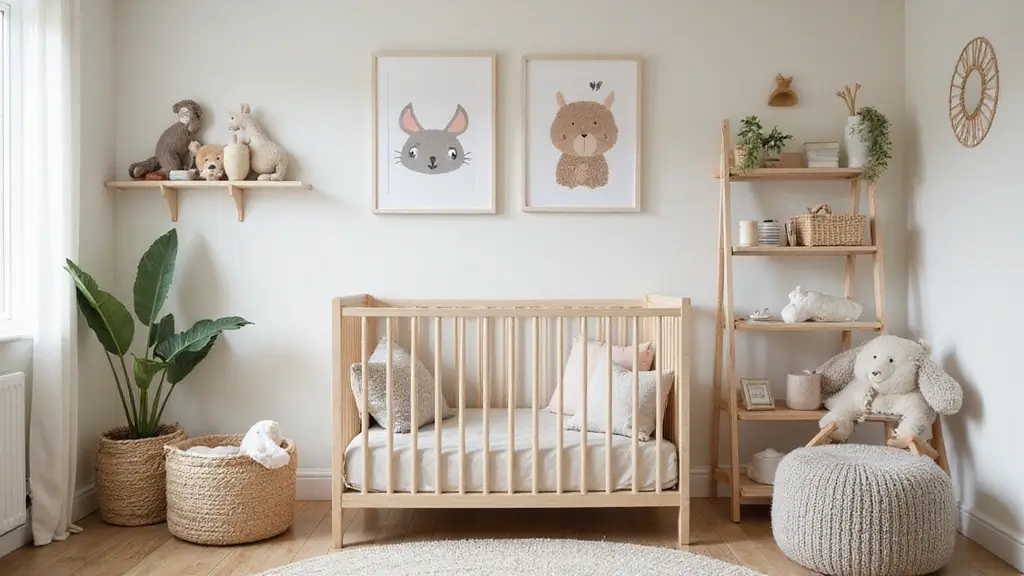

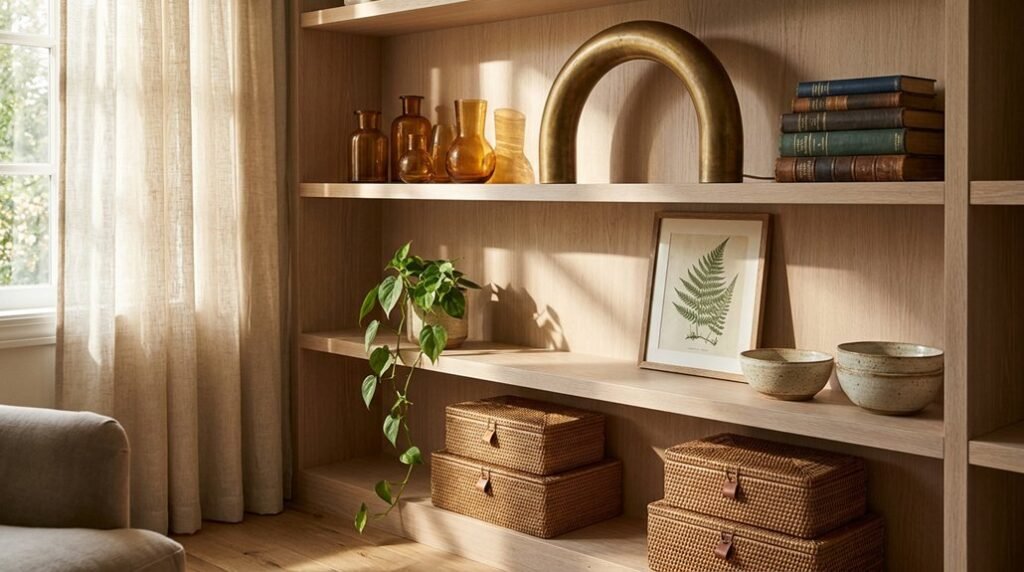
You’ve stared at your empty shelves, unsure where to start. A designer would tell you that styling isn’t about filling space—it’s about creating balance with intention. Start at the top, anchor with your tallest piece off-center, and resist the urge to crowd every inch. There’s a method to the asymmetry, and once you learn the four formulas professionals rely on, your shelves will transform from cluttered storage to curated display. But first, you need to understand why your eye craves that specific empty corner.
Start With a Game Plan (and Skip the Overwhelm)
Few decorating tasks feel as intimidating as staring at empty shelves, but you don’t need a design degree to pull together a display that looks intentional. You simply need a framework that guides your choices and prevents that scattered, cluttered look.
You’ll work in three moves: start with top-shelf emphasis to anchor the entire arrangement, then build two-groupings on the shelves that follow. This rhythm creates visual flow without demanding matching sets. You’re free to use items you already own—books, vases, small frames—arranging them through layering to introduce depth and varying heights. You’ll leave intentional white space so each piece breathes and draws the eye. The result reads as one cohesive display, personally meaningful and professionally finished.
Recommended Products

Enhance Your Space with Bohemian - Style: These bohemian - inspired floating shelves are a perfect addition to any home decor enthusiast's collection. The unique design, featuring a combination of wood and rattan elements, exudes a laid - back, yet stylish boho vibe that effortlessly elevates the aesthetic of your living room, bedroom, or even a cozy reading nook
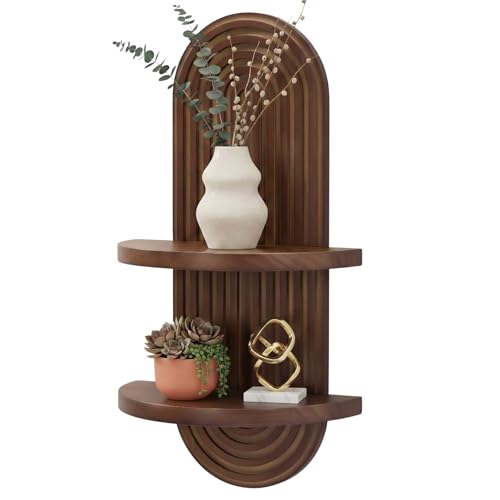
Art and Utility in One -- Elevate your space with the aesthetic room decor shelf, a harmonious blend of mid century modern and art deco design. Showcase your cherished items and collections in a stylish, eye-catching display.

Modern Rustic Floating Design: Elevate any room with a clean rustic wood grain finish and invisible bracket design that creates a true floating effect. Perfect for displaying photos, plants, books, and décor while blending seamlessly into farmhouse, modern, or minimalist interiors
Gather Your Materials: Then Style From the Top Down
Where do you find the pieces that’ll transform those empty shelves? Scout your home—books, art, boxes, baskets, vases, and sculptures—to build a collection with varied heights and texture for successful shelf styling.
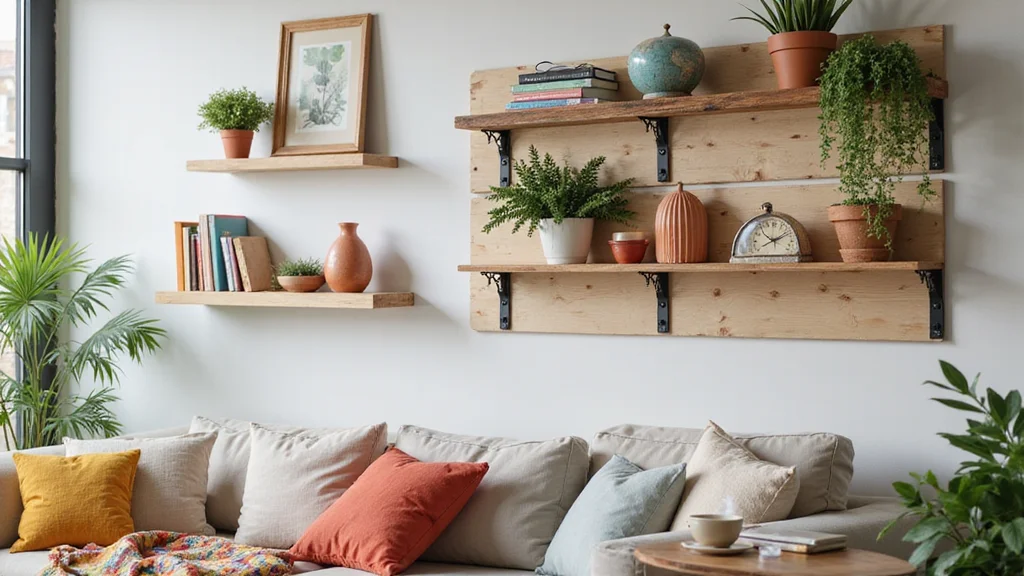
Start on the top shelf. Spread decor across most of this space, keeping ends open for balance and vertical breathing room. You’re layering tall and small pieces, mixing smooth, rough, and woven texture to create visual depth. Place your tallest item off-center to establish deliberate asymmetry that feels curated, not cluttered.
This top shelf becomes your focal point, guiding the eye downward through the composition. Once you’ve arranged it, step back, snap a photo, and review it later for fresh perspective on balance. You’ll spot tweaks needing refinement before tackling lower shelves.
Recommended Products

Unique Design: Inspired by traditional Chinese "Coins," this statue is more than just decor. These decorative ornaments feature an innovative blend of traditional and modern aesthetics. It embodies ancient beliefs in wealth, prosperity, and good fortune, adding a layer of deep cultural significance and positive energy to your space

【HANDCRAFTED WOOD BOOK STACK】This farmhouse decorative books decor consists of 2 books made of thick solid cedarwood. White painted with antique finish. 2 farmhouse wood books glued together, won't move to get loose, bookstack bound with rustic twine,the hemp rope's ends are threaded with white wood beads.

Decorate Your Home with Personality – Showcase your style with this decorative aqua, orange and green rustic farmhouse ceramic vase set of 3. Create a space in your home with bold, rustic yet elegant and effortlessly beautiful home décor pieces
Apply 4 Go-To Formulas I Use on Every Shelf
Once you’ve set your top shelf, you’ll need repeatable strategies for the rest. These four formulas transform scattered items into cohesive shelves.
Formula one: Stack two to three books horizontally, ascending in size, and crown them with a textured object for movement.
Formula two: Lean art against your shelf’s back wall and layer one to three smaller pieces in front, varying height and shape for real depth.
Formula three: Group objects with different heights and shapes, mixing vintage finds to inject personality.
Formula four: Arrange three to five books vertically, flanking them with sculptural pieces or bookends.
Across all styling, aim for eighty percent fullness, balancing books with art and baskets. Leave breathing room between groupings—you’ll maintain visual balance without clutter.
Recommended Products

Large Capacity Storage: Cubby storage organizer (36"L* 11.6"W * 24"H) features 6 spacious compartments (11.5"W *11"H * 11.5"D each), providing ample storage for books, toys, office supplies, and more. This space-saving shelf keeps your essentials neatly stored and within reach
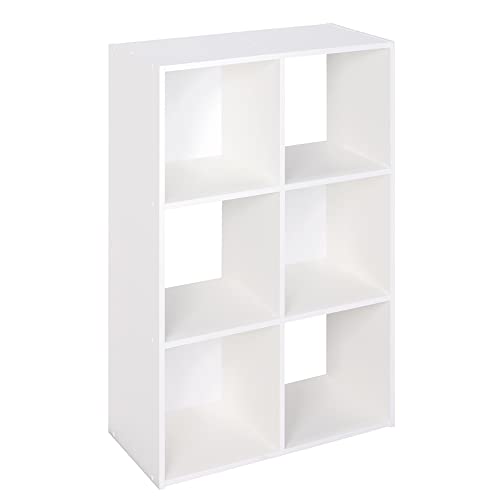
CUBE ORGANIZER: 6-Cube design with six square, cube openings for horizontal or vertical display orientation

【Maximized Space with 6-Cube Organizer】Measuring 24.1"W x 11.6"D x 35.9"H, this cube storage organizer features 6 cubbies (11.22"W x 11.22"H x 11.61"D), each perfectly sized to fit standard 11" storage bins or baskets (not included). Ideal for organizing toys, books, clothes, decor, crafts, record, album and office supplies - transform any room into an orderly, storage and display space with ease!
Use the Two-Grouping Rule on Middle and Bottom Shelves
While your top shelf anchors the overall look, you’ll need a simpler approach for everything below it. Apply the two-grouping rule on middle and bottom shelves by placing two distinct clusters on either side or with deliberate space between them. This shelf styling technique creates instant balance without complexity.
Within each grouping, mix heights and textures so the arrangement doesn’t appear flat or mirrored. You’ll want negative space between the clusters—that breathing room lets the eye rest and prevents overcrowding. Maintain this same placement method consistently across all lower shelves to establish an easy, repeatable system.
After arranging each shelf, snap a photo and review it. Confirm the two-grouping rule delivers intentional balance and a steady visual rhythm throughout the entire unit.
Recommended Products
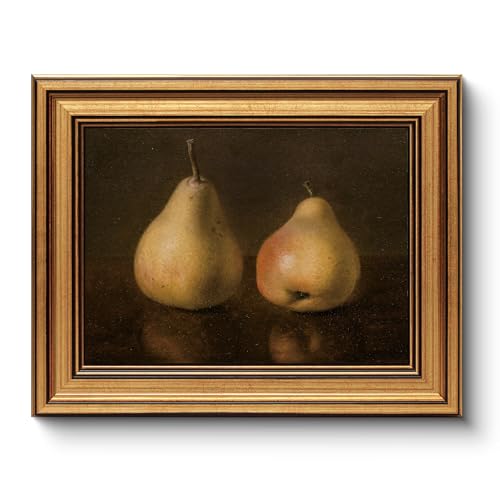
CLASSICAL ROOM DECOR: Vintage Still Life Pear painting, this wall art picture print utilizes the classic chiaroscuro technique. The two pears, gently leaning toward each other, symbolize a sense of companionship—whether familial, friendly, or romantic. Or abundance, life, and family. The detailed rendering of the fruit’s delicate blemishes and organic imperfections lends an authentic, timeworn charm to the artwork. Inviting viewers to reflect on the beauty of simplicity and everyday life

Decorative shelves: This frame shelf is great for displaying your favorite green plants,trophies,vases,decorations,and photos.Whether in the living room,bedroom,or office,these modern wall shelves will make your items more chic and eye-catching

Vintage Framed Wall Art for Living Room【Size & Fit】12L" x 10W" wall art (1pc). Versatile for walls, tables, or floating shelves—adds charm anywhere
Snap, Step Back, and Know When to Stop
Pinpointing the exact moment your shelves feel finished can feel maddening, which is why you’ll want to build in deliberate pauses. After styling each shelf, step back to assess balance and spacing from a distance—if you can’t see the overall vignette, you’ve lost your way.
Set a timer for 15–20 minutes to prevent overworking the arrangement and triggering decision fatigue. You’ll know you’ve hit your stopping point when every shelf retains some negative space; never fill every inch. If something feels crowded, remove one item or swap a smaller piece for a taller one to restore visual rhythm.
Trust groupings of three or five items—when they feel complete, stop. That’s your cue to walk away.
Recommended Products

VFINE Heavy Duty Metal Bookends -- Made of heavy gauge steel with advanced stamping processing, strong and heavy enough to keep all your books neat and upright. Sturdy and long-lasting all-metal construction with one-piece molding without solder joints.

1.Sturdy Metal Build: Crafted from premium steel with advanced stamping, these book ends firmly hold books upright without bending. Perfect for heavy books on shelves, desks, or classrooms. Durable and long-lasting.
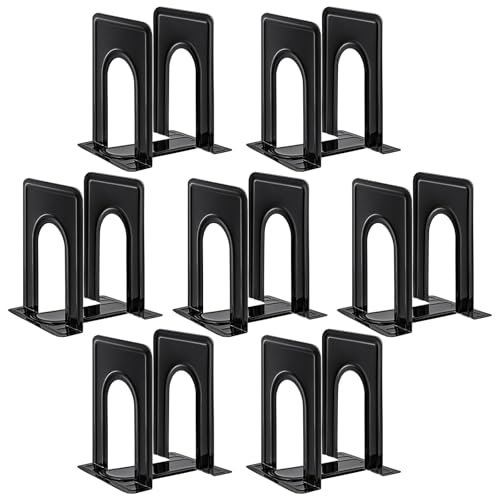
【Sturdy Metal Bookends】: T-shaped design and steel material enhance the stability and robustness of bookends. The heavy-duty bookend can keep your books, magazines, notebook, and folder upright easily.
Style Your Books as Display, Not Just Storage
Your bookshelves shouldn’t hide your collection behind uniform spines—let your titles step into the spotlight. In shelf styling, you’ll display books as intentional art rather than mere storage. Prop prized covers on small easels or lean them against the back panel to create visual hierarchy and transform literature into gallery-worthy pieces.
You’ll want to mix vertical and horizontal arrangements, stacking some titles while standing others tall. This rhythm creates movement and lets you weave in decorative objects between groupings. Place shorter accents before taller spines to build depth and dimension across each level.
Organize by height first for stability, then consider color for cohesion. Remember to embrace negative space—don’t pack every inch. When you balance your collection with breathing room and curated accents, your books become the sophisticated focal points they deserve to be.
Recommended Products

Timeless Victorian Artistry: Elevate your home with this exquisite antique gold wall-mounted shelf. Featuring a classic French Fleur-de-lis motif and a Victorian-inspired silhouette, this gothic wall decor piece adds a touch of dark academia or royalcore elegance to any entryway or hallway

Decorative Shelf for Wall Decor - Walasis architectural corbels wood ledge shelf white are adorned with distressed crown molding, exuding an unique French country wall accent. Whether you want a shabby-chic farmhouse style, or a touch of vintage, these victorian wall shelf are the utility choice.

[Premium Metal Construction] This bedside wall organizer is made of thickened cold-rolled steel, far sturdier and more durable than flimsy plastic organizers. It resists bending, cracking and fading, serving as a long-lasting wall organizer for bedroom that keeps your daily items neat. Designed as a practical wall mounted bedside shelf, it holds phones, remotes, cosmetics, small gadgets and more, perfectly solving clutter troubles for bedrooms and compact spaces.
Fill or Edit: Find Your Shelf’s Sweet Spot
What separates a cluttered shelf from a curated one? You start by choosing a theme or palette to guide your decisions. Then, assess each shelf for shelves balance—place a focal element on top, then edit toward two-groupings on lower levels to create resting eye points. You apply the Top Shelf Strategy by covering most of that shelf end to end, but leave negative space on both sides for visual breathing room. Fill about eighty percent with books, decor, and baskets, letting that negative space prevent overwhelm. Treat editing as ongoing maintenance: rotate titles and objects regularly to keep everything fresh and cohesive. Step back often—you’ll spot uneven weight immediately. This disciplined approach transforms random objects into intentional design.
Recommended Products

✨ ELEVATE your shelf decor accents, UPGRADE your living room coffee table decorations, or RESTYLE your desk decor. Use this set of 2 arches to create sculptures of different form. Also makes VERSATILE modern home office decor.

【HANDCRAFTED WOOD BOOK STACK】This farmhouse stacked books decor consists of 3 books made of solid cedarwood. White painted with slight distressing finish. Warm quote "this is us" printed on top book face, while books' spine has heart decored "OUR LIFE. OUR STORY. OUR HOME". 3 farmhouse wood books glued together, won't move to get loose, bookstack bound with rustic twine,the hemp rope's ends are threaded with white wood beads.

Unite Your Wood Palette - Harmonize your shelf decor accents for a professionally curated home. This dual-tone set acts as a visual bridge between light and dark furniture, ensuring your bookshelf decor feels intentionally cohesive.
Conclusion
You have got everything you need to style shelves like a pro. Start with a plan, work from the top down, and trust the four formulas to guide you. Keep checking your progress with photos, respect that eighty percent sweet spot, and do not be afraid to rotate pieces until it clicks. Your shelves will look curated, balanced, and distinctly yours.
Recommended Products

CUBE ORGANIZER: 6-Cube design with six square, cube openings for horizontal or vertical display orientation

CUBE ORGANIZER: 6-Cube design with six square, cube openings for horizontal or vertical display orientation, compatible with 11 in. fabric cube drawers

【Extra Large 12-Cube Storage Organizer】:Each of the 12 independent cubes measures 15.74 × 11.8 × 11.8 inches (40 × 30 × 30 cm), offering a larger capacity than most standard options. It provides ample room for books, clothes, toys, and various household items to meet your daily organization needs efficiently.