
You’re standing in front of your window with tape measure in hand, but you’re not sure where to start. One wrong measurement and your curtains will hang like an afterthought instead of finishing the room. The difference between custom-looking drapes and a sloppy install comes down to a few specific numbers you’ll need to get right.
Key Takeaways
- Use a metal tape measure to record the window’s width at three heights and its full height.
- Choose inside or outside mount before measuring, as each requires different width and height approaches.
- Select curtain length style—floating, kiss, or puddled—to determine endpoint and fabric requirements.
- Multiply measured width by two for standard fullness, then divide by panel count for per-panel sizing.
- Measure height from planned rod placement to endpoint, adding extra for rings, grommets, or hardware.
Recommended Products
Measuring range: 0 to 60 inches and 0 to 150 centimeters. There is a centimeter scale on the back, which is accurately printed in inches and centimeters. Both sides can be measured according to your requirements. You can put one in your pocket or backpack without taking up too much space

2 Pack Soft Fashion Measuring Tape Set. Double sided, 60 inch / 150 cm, portable,durable tape measure. Small and light pocket size measuring tape.

【Quantity & Packaging Notice】 2 Rolls Included in 1 Pack: Contains 1 roll of 1/4" x 49ft and 1 roll of 1/2" x 49ft (Total 98FT). Note: Both rolls are securely packed together in a single package—please check the inner layer if you think any roll is missing. Specifically designed for clothing repair, folding, and crafting. Whether used for temporary or daily repairs, these sizes ensure efficient and convenient use.
What You Need to Measure for Curtains
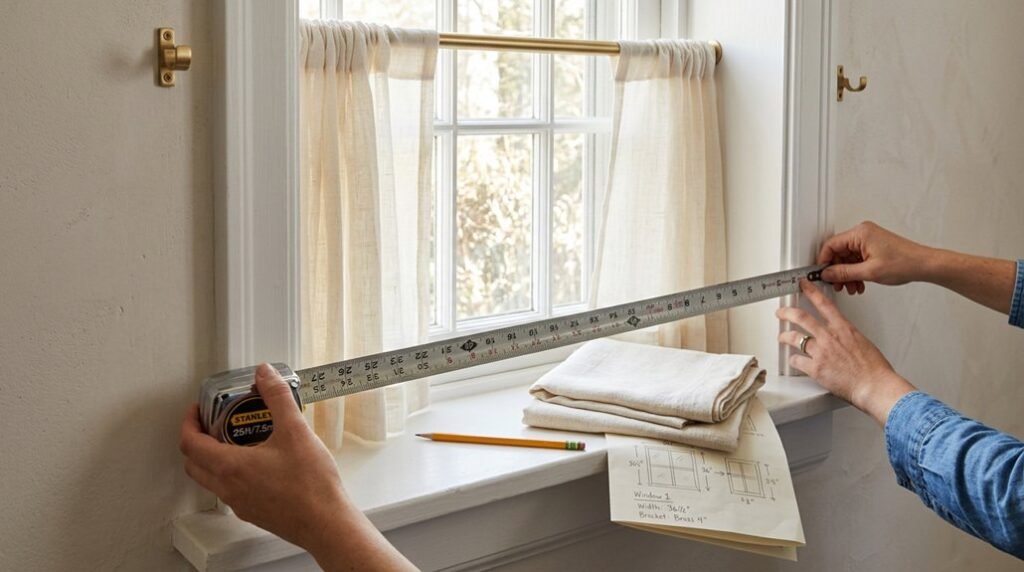
Why guess when you can measure? You’ll need three basic items: a metal tape measure, a pencil, and paper. Grab a sturdy metal tape measure rather than a cloth one, since it’ll stay straight across wide spans and deliver accurate numbers. You’ll hold it taut, stretching from edge to edge without sagging.
You need to record two key dimensions for every window. Measure the width across the frame, jotting down the number immediately so you don’t forget. Then measure the height from top to bottom. Write both figures clearly, labeling which window each belongs to if you’re dressing multiple openings.
Double-check every measurement before you shop. Curtains come in standard sizes, and you’ll match your numbers to these options. A small error means gaps, dragging hems, or awkward pooling you’ll regret.
Recommended Products

Product Package: the inside mount curtain rod bracket is packed with 2 pairs or 4 individual pieces, including built in pole holders to suit your need; They are ideal for 3/8 inch brass, aluminum or steel bars or rods

Product Package: the inside mount curtain rod bracket is packed with 2 pairs and 4 individual pieces, including built in pole holders; They are suitable for 3/8 inch aluminum or steel bars or rods

Seamless Integration with Hidden Brackets: receive 2 pairs of hidden socket brackets, ensuring your space remains uncluttered; Perfectly designed for 3/8 inch brass, aluminum, or steel rods, these brackets address your needs with seamless integration
Decide Where Your Curtains Will Hang: Inside or Outside the Frame
Where exactly do you want your curtains to sit? You’ll face two basic choices: inside the window frame or outside it.
If you mount inside the frame, you’ll recess your rod or track within the window opening. This showcases your trim and creates a clean, minimal look. It works best when you’ve got deep, attractive molding and want to maximize wall space. Measure the width and height of the opening precisely.
If you mount outside, you’ll extend your treatment beyond the frame. This hides unsightly trim, blocks more light, and creates the illusion of larger windows. You position the rod several inches above the frame and extend it past the sides. This demands different measurements entirely.
Your decision here changes every number you’ll record, so settle this before grabbing your tape measure.
Recommended Products

TOOL-FREE INSTALLATION: Quick and easy outside mount installation requires no drilling or special tools, suitable for rental homes and apartments
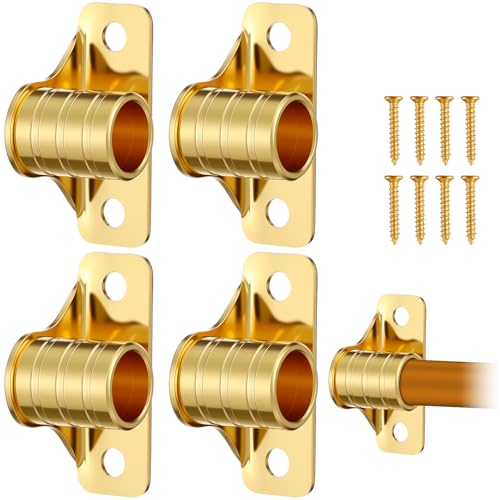
Versatile Package Contents: the package comes inclusive of 4 pieces of curtain rod brackets, making them ideal for mounting multiple curtain rods; Made with metal, these brackets provide strength and reliability, make long term service

【Check Compatibility Before Purchase】Designed for outside-mounted blinds with exposed top headrails measuring 1.2"-2.2" wide. Please confirm your blind type and measure the headrail (top rail) before ordering.
Pick Your Curtain Length Before You Measure
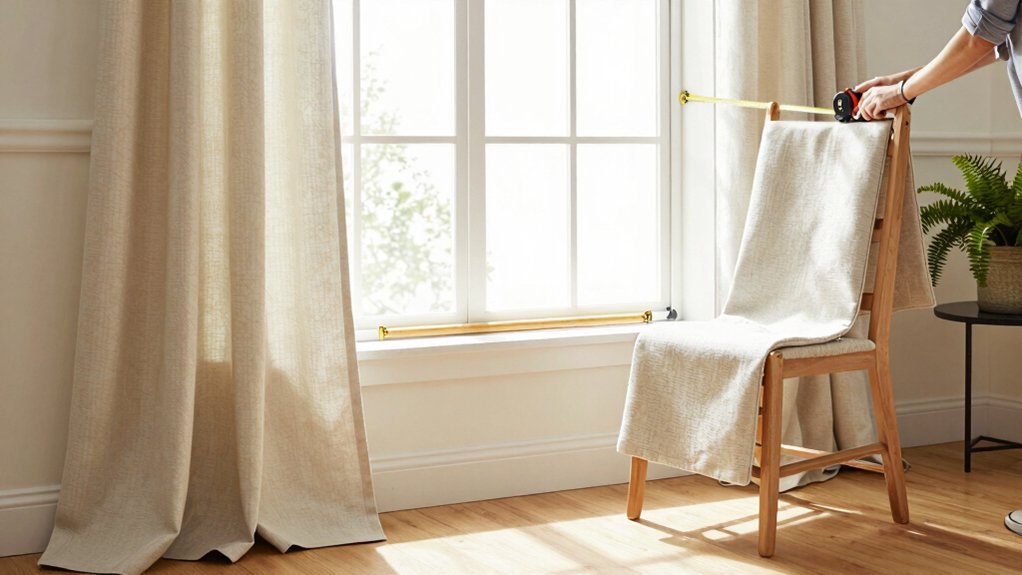
How exactly do your curtains meet the floor? You’re choosing between three main styles. Puddled curtains gather luxuriously on the floor, adding drama but demanding extra fabric and regular fluffing. They work best in formal spaces where you won’t open and close panels frequently. Kiss-length curtains skim the floor surface precisely, giving a tailored, modern look. You’ll need exact measurements since there’s zero margin for error. Floating curtains hover about half an inch above the floor, preventing dust collection while maintaining clean lines. They’re practical for high-traffic areas and homes with pets.
Your rod placement matters here. Higher mounts create elongated, elegant proportions. Lower mounts suit casual, cozy rooms. Decide your preferred length now because it dictates exactly where you’ll position that rod and how you’ll take every vertical measurement.
Recommended Products
Package Include:1 Pack Soft Retractable Black Dual Sided Tape Measure Body Measuring Tape Set, Dual sided, 150cm/60inch in length, large and clear markings in both Inches and CM for easier reading, Retractable black measuring tape size 2 x 2 x 0.5 inches, weight 0.02 KG/0.7 OZ

DUAL COLOR/DUAL FUNCTION FULL BODY MEASURING TAPE - Only body tape with dedicated yellow side for easy error free circumference measurement. Yellow side automatically calculates body circumference with no extra adding or subtracting on your part.
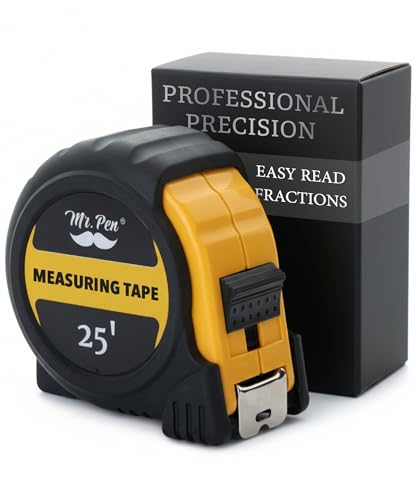
Mr. Pen tape measure is an essential tool for anyone from homeowners and interior designers to professional handypersons, carpenters, metal or woodworkers, and architects.
Measure Your Window Width for Curtains
With your length style and rod height settled, you’re ready to tackle the next piece of the puzzle.
Grab your measuring tape and measure the width of your window frame from edge to edge. Don’t guess—write down the exact measurement. You’ll extend your curtain rod several inches beyond this frame, so note your window width separately from your planned rod width.
Measure at three points: top, middle, and bottom. Windows aren’t always perfectly square, so use the widest measurement if they differ. Record this number clearly.
If you’re mounting inside the frame, measure the exact interior width at the top where brackets will sit. Check for any obstructions like window cranks or handles that could interfere with your curtain panels.
Keep this measurement handy—you’ll need it shortly.
Recommended Products

FEATURE: Inside mount rod brackets rod holder end holder support are use for closet rod, shower rod, and other window frame. Rustproof

For a sleeker look consider our Hidden Inside Mount Brackets on Amazon #B084P3PPD9

NO DRILL, NO MEASURE INSTALLATION FOR QUICK SETUP Fast Fit design installs easily without drilling or measuring, helping save time and reduce wall damage during setup.
Calculate Extra Width for Fullness and Coverage
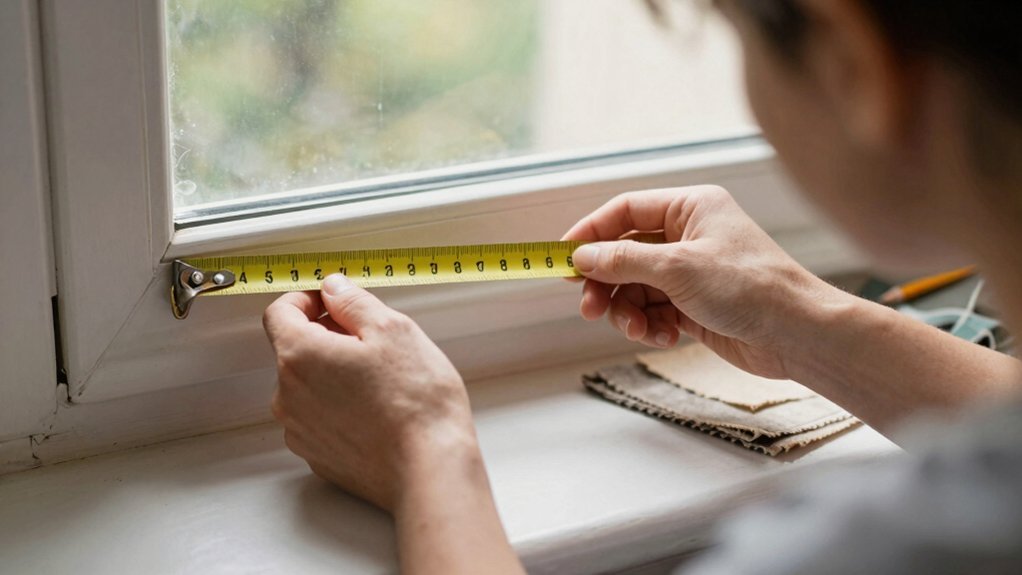
Why settle for flat, skimpy curtains when you can achieve that lush, designer look? You need to multiply your measured window width to create proper fullness. For standard drapes, multiply your width by 2. You now have the total fabric width required. Want extra opulence? Multiply by 2.5 or even 3. Sheer panels demand more—use a 3x multiplier for that billowing effect.
You’ve got your total, but don’t forget to factor in your panel count. Divide your total width by how many panels you’ll hang. You now know each panel’s necessary width. Always round up to the nearest standard size. This extra fabric ensures your curtains stack beautifully when open and provide complete privacy when drawn. Your windows will thank you.
Recommended Products

Versatile Package Contents: the package comes inclusive of 8 pieces of curtain rod brackets, making them ideal for mounting multiple curtain rods; Made with metal, these brackets provide strength and reliability, make long term service

【Fits 1–2" Headrails Depth】Designed specifically for blind headrails measuring 1–2" deep. If your headrail measures 2.25–3", choose the 2.25–3" version instead.
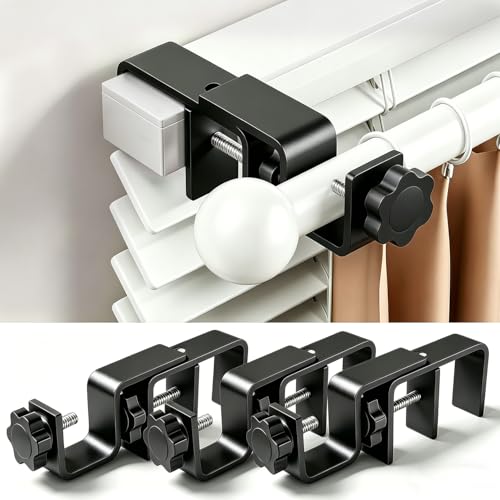
NO DRILLING, NO WALL DAMAGE: The ultimate renter-friendly solution. These brackets attach directly to your existing outside-mounted blind headrails, eliminating the need for drills, screws, or sticky adhesives that peel off paint. Perfect for apartments, dorms, and temporary setups.
Measure Curtain Height Based on Your Length Choice
Where exactly do you want your curtains to fall? Measure from the top of your planned rod placement down to your chosen endpoint. For sill-length curtains, stop at the windowsill. For apron-length, measure about four inches below the sill. Floor-length curtains touch the floor exactly or hover one-half inch above. Puddle-length drapes extend one to three inches onto the floor for a dramatic effect.
You’ll record this vertical measurement as your curtain length. Add extra height if you’re using rings or grommets—these add drop from the rod itself. Double-check your numbers at both corners and the middle, as floors and ceilings aren’t always perfectly level. Round up rather than down when finalizing your purchase length. Manufacturers list curtain sizes by width first, then height, so you’ll specify this second number when ordering.
Recommended Products

Tape measure with MID accuracy and both inch and metric scales; measures up to 16 feet (5 meters)
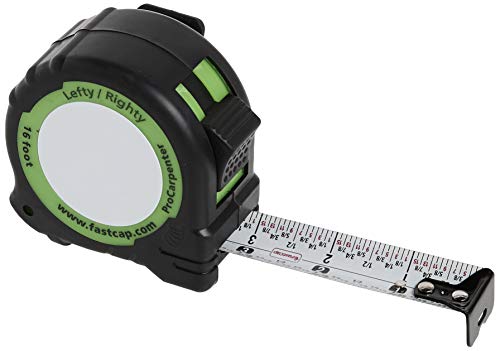
Dual Reading Capability: The Standard/Standard Reverse features standard measurements that are readable when the tape is extended from either the right or left hand
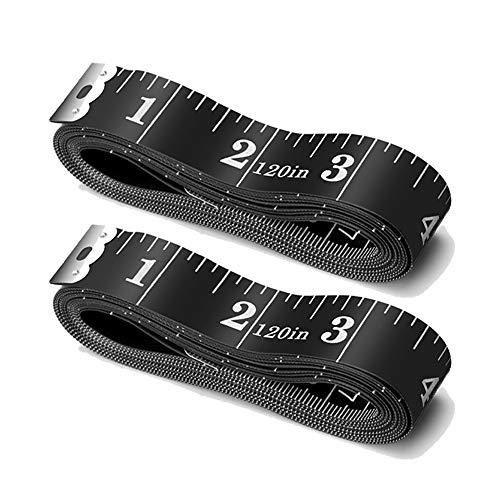
Ultra Long Measuring Range: Different than normal 60 inch soft tape measure, ours are 120 inch long, which can meet more needs and get you out of the trouble of insufficient length.
Don’t Forget the Rod and Brackets
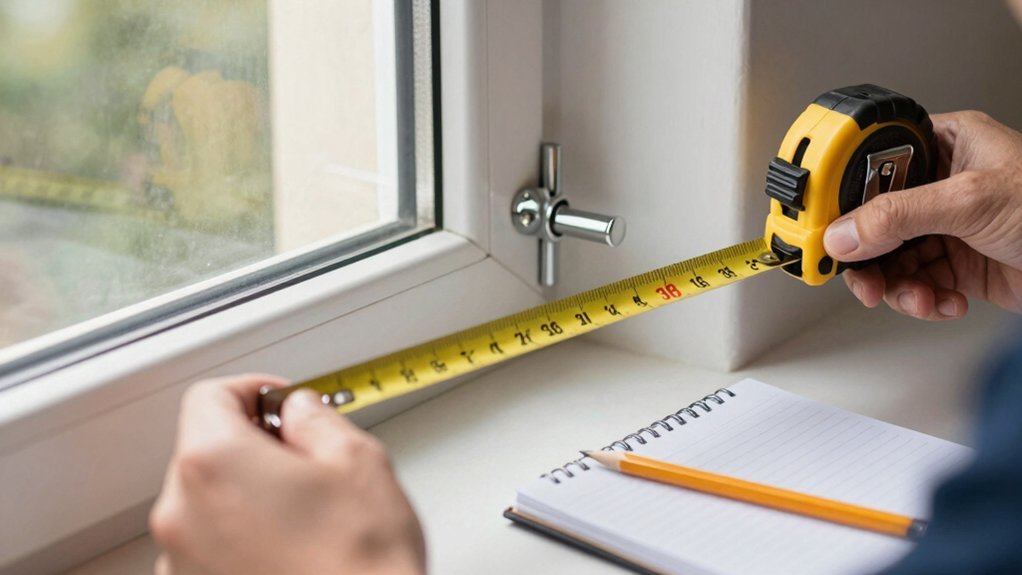
Your curtain measurements won’t mean much if you haven’t accounted for what’s holding them up. You need to factor the rod and brackets into your plans before you finalize anything.
First, decide where you’ll mount the rod. You’ll extend it beyond the window frame—typically 3 to 6 inches on each side—so your curtains stack neatly without blocking glass. Add this extra width to your curtain calculation. If you’re using finials, include their length too.
Next, consider projection. Your brackets need to clear any trim, molding, or outward-opening windows. Measure from the wall to where you want the rod’s front edge; deeper brackets push curtains farther out.
Finally, check your rod’s weight capacity against your chosen fabric. Heavy drapes require sturdier hardware. Record these hardware dimensions, then adjust your curtain width and height accordingly.
Recommended Products

【Applicable to exterior and built-in blinds】Before purchasing, please carefully compare the product pictures with your blind style to ensure that you choose the style that best suits your windows. The accompanying instructions also describe applicable scenarios in detail to help you make accurate judgments. If you want to effectively prevent light leakage from your curtains, magnetic curtain buckles will be your ideal choice, providing you with better privacy protection

Seamless Integration with Hidden Brackets: receive 2 pairs of hidden socket brackets, ensuring your space remains uncluttered; Perfectly designed for 3/8 inch brass, aluminum, or steel rods, these brackets address your needs with seamless integration
Avoid These Common Measuring Mistakes
How often do you double-check your numbers before ordering curtains? You rush, you assume, and you waste money.
You measure once. You stop. You order. Then your panels pool on the floor or hover above the sill. Measure twice, order once.
You assume all windows match. You check one, you apply everywhere. Measure each window individually—trim, framing, and drywall vary.
You ignore the stack-back. You buy panels that cover glass when open. Add eight to twelve inches per side so fabric clears the window.
You skip the floor clearance. You drag hems across carpet. You catch them on radiators. Leave a half-inch gap for clean function.
You mix width and height. You write 54″ x 84″ when you mean 84″ x 54″. Label every number. Verify before you buy.
Recommended Products

Designed for Vertical Blinds: The ultimate no-drill solution for hanging curtains over outside-mounted vertical blinds. Attaches directly to your existing vertical blind...
Write Down Your Measurements (and What to Tell the Store)
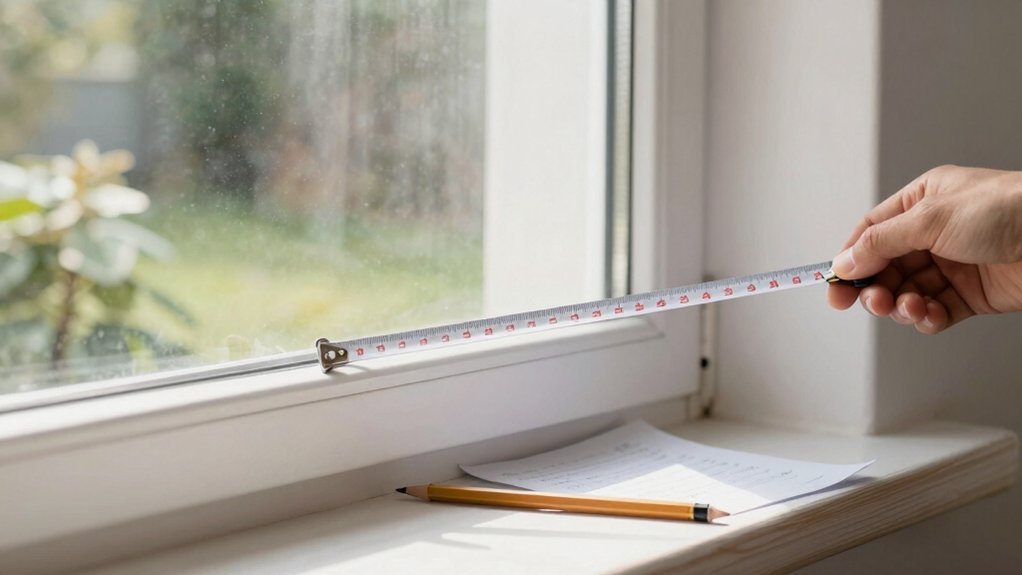
Every measurement risks collapse if you trust memory alone. Grab a notebook and pen immediately. Write each dimension clearly: width first, then length, then depth. Label what each number measures—”window frame,” “rod-to-floor,” “clearance needed.” The store you’re visiting won’t decipher your scribbles; they’ll need precision.
When you arrive, speak their language. Say “finished width” when you mean the curtain’s final span, not the window itself. Specify “fullness” if you want gathered fabric, or “flat panel” if you don’t. Mention your mounting style—inside mount, outside mount, or ceiling-hung—and whether you’ve already purchased rods.
Bring your written notes, not your phone’s photo gallery. Numbers don’t blur like digital zoom. Hand them the paper. Watch them read it back. Confirm everything matches. Then breathe.
Recommended Products

Compact Casing: Features a space-saving design with heavy-duty protective rubber boot for durability and portability on any job site Built-in Fastpad: Convenient integrated...
Conclusion
You’re now ready to measure your window with confidence. Gather your tape, pencil, and notes, then work through each step carefully. Double-check every measurement before cutting or ordering. Remember that precise calculations now mean beautiful, well-fitting curtains later. Write everything down clearly—you’ll thank yourself when it’s time to shop. Your perfectly dressed window awaits!