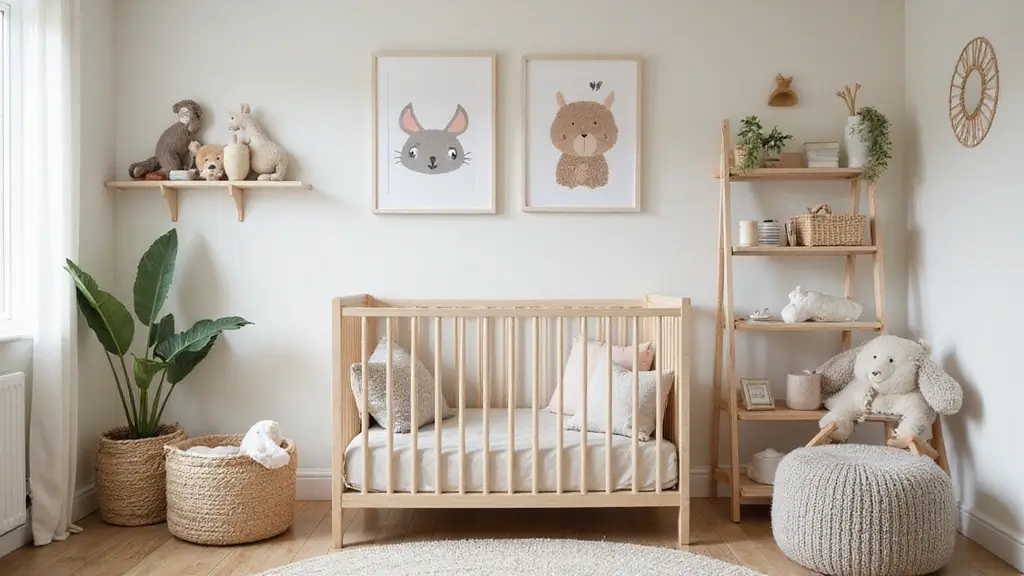

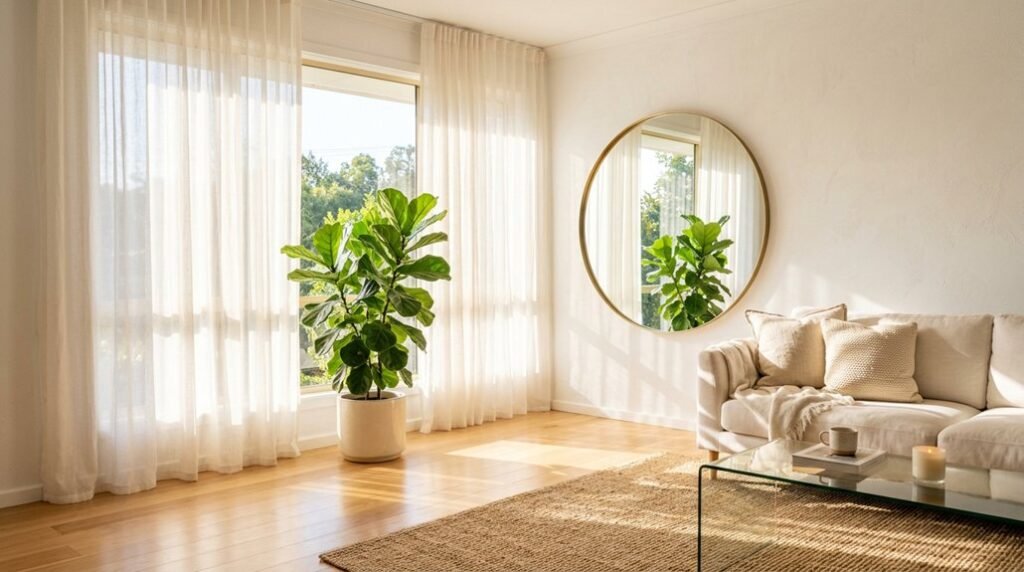
You position a mirror opposite your window and watch the daylight fracture across the room. You’ve solved half the problem already, but luminance isn’t just reflection—it’s controlled emission, surface albedo, and spatial layering working in concert. The ceiling height, the bulb’s CRI, the sheen value of your paint: each variable shifts the room’s perceived volume. There’s a threshold where technique becomes atmosphere, and you’re not quite there yet.
Use Mirrors First: The Fastest Way to Brighten a Dark Room
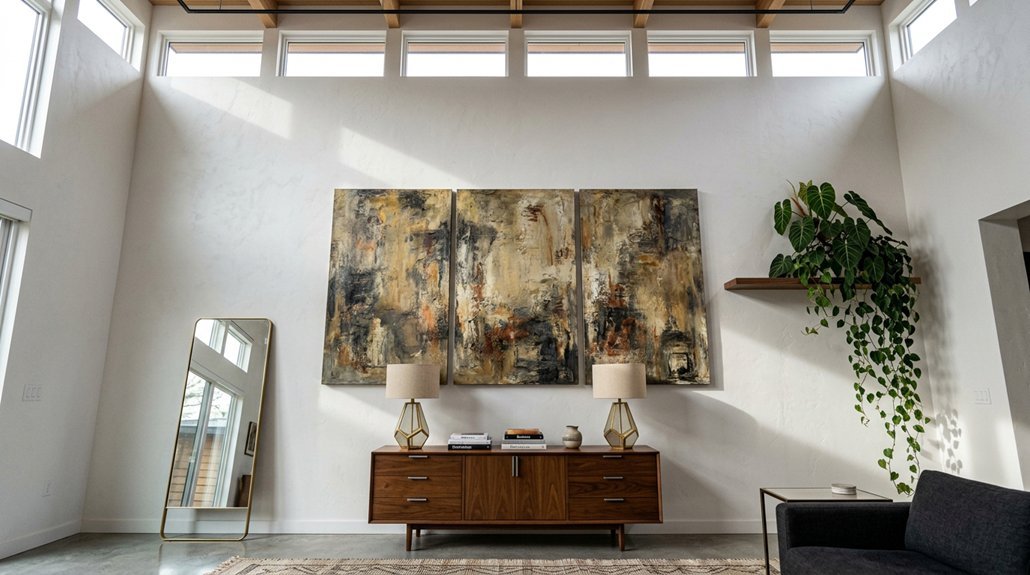
Why struggle with dim spaces when mirrors offer an immediate solution? You’ll maximize light reflection by positioning a large mirror opposite window—this captures natural light and redirects it deep into your dim room, creating an immediate daylight bounce that transforms spatial perception.
For sophisticated light distribution, you’ll arrange gallery mirrors across focal walls, varying sizes to scatter illumination while maintaining aesthetic coherence. You’re not limited to wall-mounted solutions; reflective furniture—glass-topped tables, mirrored consoles—further amplifies brightness without structural intervention.
Position mirrors to intercept evening lamplight, ensuring continuous luminosity after sunset. Each placement decision you’re making operates on optical principles: angle, surface area, and source relationship determine luminous efficacy. The technique demands no electrical modifications yet yields measurable spatial expansion. You’re engineering perception through calculated reflection.
Recommended Products

Daytime Privacy & Clear Views: This one-way mirror film provides daytime privacy. When outside is brighter, its reflective surface blocks outside views while you see out clearly. Draw curtains at night for privacy when indoor lights are on

Daytime Privacy & Clear Views: This one-way mirror film provides daytime privacy. When outside is brighter, its reflective surface blocks outside views while you see out clearly. Draw curtains at night for privacy when indoor lights are on
Daytime Privacy & Clear Views: This one-way mirror film provides daytime privacy. When outside is brighter, its reflective surface blocks outside views while you see out clearly. Draw curtains at night for privacy when indoor lights are on
Choose the Right Bulbs: Color Temperature and Placement for Dark Spaces
Once you’ve established reflection as your spatial foundation, you’ll need to engineer the light itself. Select LED bulbs for superior lumen efficiency—9 watts yield 60-watt equivalent output. In dark spaces, you’ll manipulate color temperature spatially: deploy warm white (2,700–3,000K) for ambient lighting intimacy, or specify daylight-like LED (4,000K) where visual acuity demands true color rendering. You’ll maintain chromatic consistency across fixtures to eliminate perceptual discontinuity.
Consider dim-to-warm technology; as you reduce brightness, temperatures shift warmer, preserving flattering tonal quality. Your placement strategy layers sources—ambient, task, accent—creating even luminous distribution without glare pools. You’ll calculate each zone’s function: higher Kelvin for precision tasks, lower for atmospheric depth. This technical calibration transforms spatial experience through controlled photometric intervention.
Recommended Products

Energy Efficient & Energy Saving: Replace 60W ( 800 lumens ) incandescent bulbs with just 9W LED , saving up to 85% on energy costs. With an estimated annual energy cost of only $1.08 (based on 3 hours/day). Non-dimmable
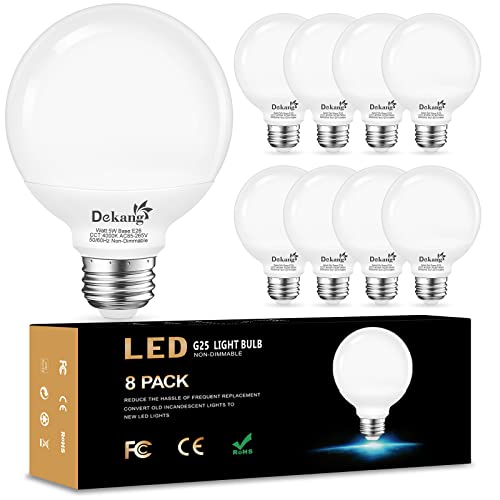
Vanity Light Bulbs 4000K Natural Daylight : 4000K natural daylight is the dividing line between 3000K warm light and 5000K Daylight white, which imitating natural light provides a lively and clean look, without appearing too blue or sterile. This natural light allows you to relax and stay awake. Suitable for light fixtures with E26 sockets like vanity mirror, dressing mirror. Appropriate for rooms like living rooms, bathrooms, kitchens, and other residential spaces.

Energy-Efficient Brightness: Our 6W LED Edison bulb delivers 600 lumens of light, equivalent to a 60W incandescent bulb, while using 90% less energy.
Paint Strategically: Colors and Finishes That Reflect Light
Where does your room’s light actually live? It resides in your surfaces’ capacity for light reflectivity. You’ll maximize this by selecting LRV paints with values above 70, deploying white ceilings to lift shadowed volumes, and wrapping vertical planes in off-white walls that balance warmth with luminosity. Choose a matte finish; you’ll diffuse photons evenly rather than creating harsh specular highlights that betray dim conditions.
Extend brightness through spatial continuity—pair bright wall colors with light floors to push boundaries outward and expand perceived volume. Construct neutral color schemes grounded in whites and taupes, then introduce moody accents as deliberate punctuations rather than dominant masses.
You’re engineering an environment where every painted surface functions as a secondary light source.
Recommended Products
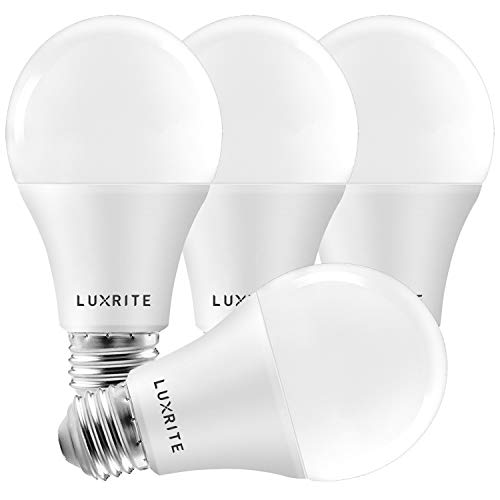
BRIGHTEST - Giving you 1600 lumens of crisp, quality lighting that is perfect for any atmosphere and brighter than your standard 100 watt light bulb. Provide more light to your floor lamps, ceiling fans, chandeliers, kitchen, patio, living room, sconces, post lamps, porch, pendant fixtures, office, or any space for brighter home lighting.

【Dimmable & Versatile】Smoothly adjust brightness with TRIAC dimmer compatibility. Tailor your lighting from soft to bright, ideal for relaxing evenings or task-focused environments. Not compatible with smart dimmers

DIM TO WARM 2000K~2800K - It solves the problem of having a one-size-fits-all lighting solution by offering adjustable brightness and color temperature. This adaptability allows you to enhance both the functionality and ambiance of your space.
Pick Furniture With Legs and Light-Reflective Surfaces
The furniture you select functions as a spatial filter, either obstructing or channeling luminosity through your room’s vertical datum. You’ll maximize light distribution by selecting elevated furniture with thin legs—particularly bed frames and seating that permit photons to traverse beneath, eliminating shadow pools. Mid-century style pieces exemplify this logic through their airy silhouettes and vertical restraint.
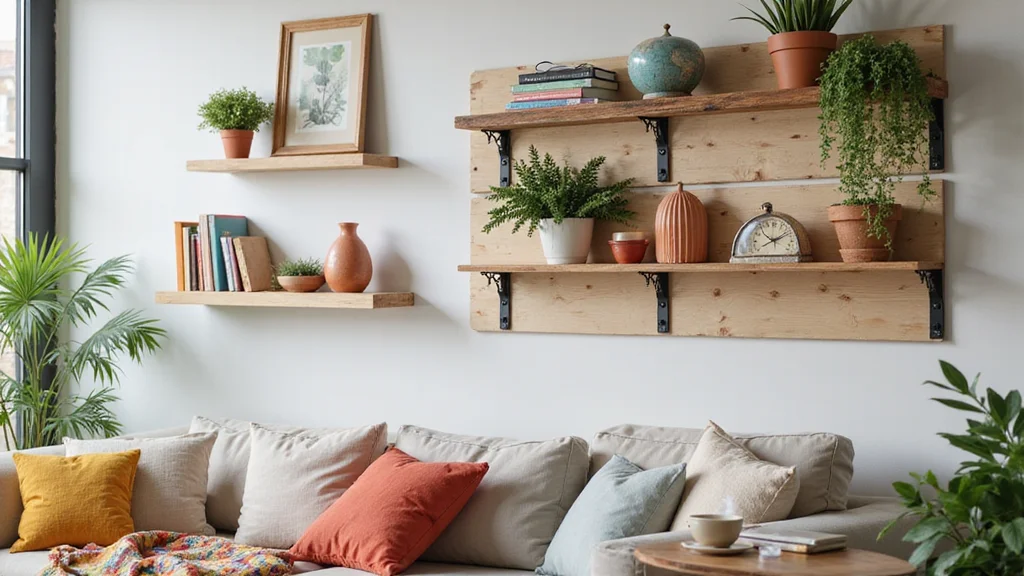
Incorporate glass surfaces, mirrors, and glossy finishes across tabletops, shelving, and leg details to specularly reflect ambient illumination. These light-reflective surfaces scatter photons throughout your volume, amplifying perceived brightness without additional fixtures. You’ll curate open pathways between components, ensuring circulatory routes don’t block luminous trajectories. Avoid bulky, floor-hugging masses that absorb light and compress spatial perception. Instead, deploy pieces that float visually, maintaining clear sightlines and permitting daylight to penetrate your plan’s full depth.
Recommended Products

Vertical aerosol for overhead professional projects

Ready-mixed, grab-n-go white ceiling paint

Never miss a spot- goes on pink and dries to white so you can clearly see which areas are left to paint
Swap Heavy Curtains for Sheer, Light-Filtering Textiles
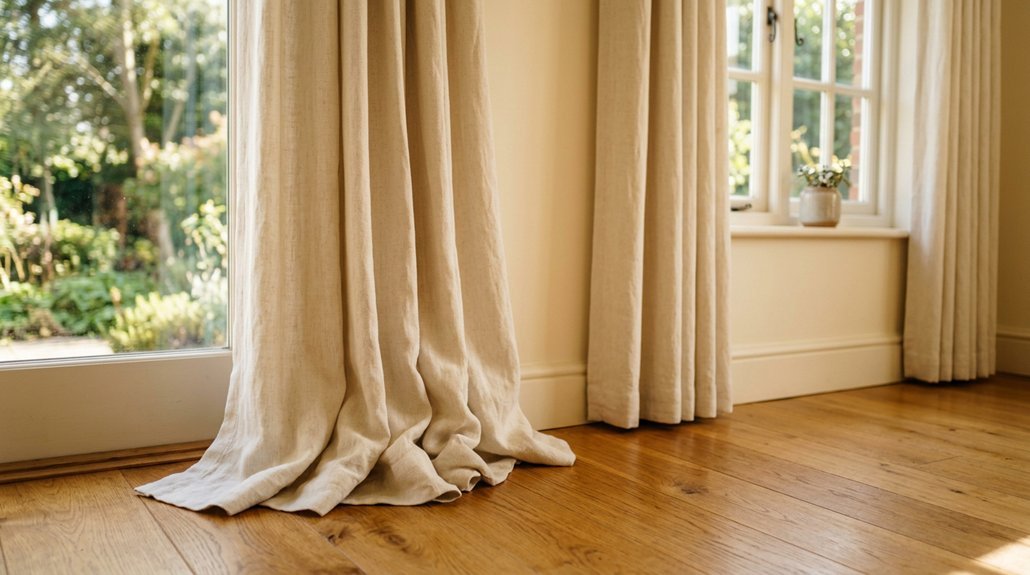
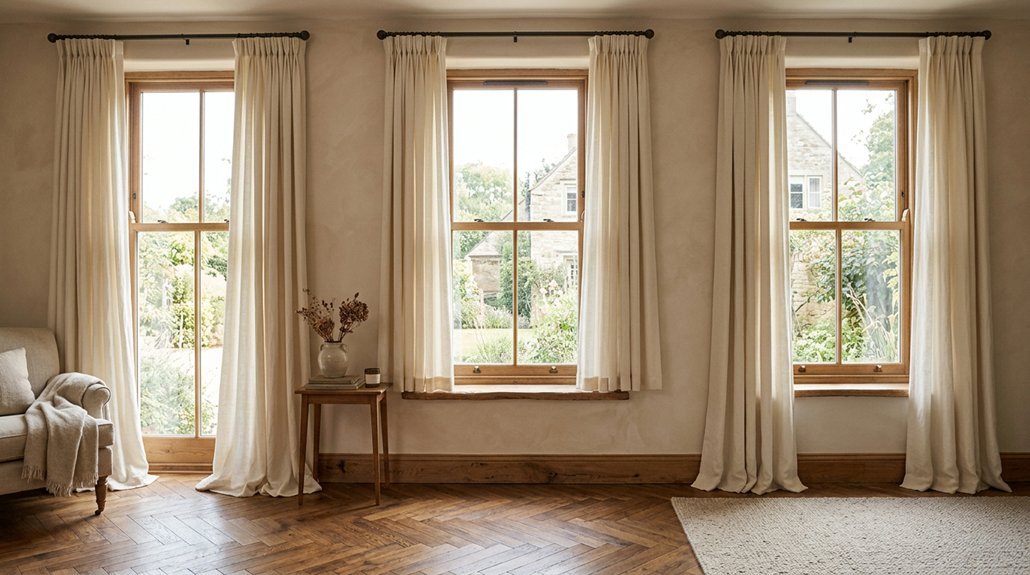
Your surfaces and furnishings now channel luminosity, yet apertures remain the primary conduits for daylight ingress—treat them accordingly. You swap heavy curtains for sheer, light-filtering textiles to maximize daylight transmission. Sheer curtains soften incoming natural daylight, transforming harsh beams into diffuse light that permeates spatial volume without glare.
You select curtain fabric in pale tones—white, cream, or neutral weaves—to amplify reflectance and achieve privacy with light. These window treatments absorb minimal photons while scattering luminance across interior planes. You install curtain pole extension hardware, positioning drapery beyond the frame’s edge; when drawn, daylight enters unobstructed, expanding the brighter room’s perceived boundaries. Spatial perception shifts: airy, luminous, technically precise.
Recommended Products

COLORS CRAFTED BY ANNIE SLOAN: A timeless off-white, that works with everything. Old White is a sophisticated and understated neutral that will give your walls a soft, chalky, traditional look and feel.

Instant Color Matching (3-Color Shades Kit): This Sundaze 3-pack touch-up paint kit includes 1 fluid ounce bottles of Matte White (Flat Finish) paint in color shades: Pure White, Ivory White, and Winter White. Premium paint formulated for use alone or mixed to achieve a perfect, seamless color match on almost any surface. Instantly eliminate color-chart guesswork and perfectly repair scratches, chips, and stains.
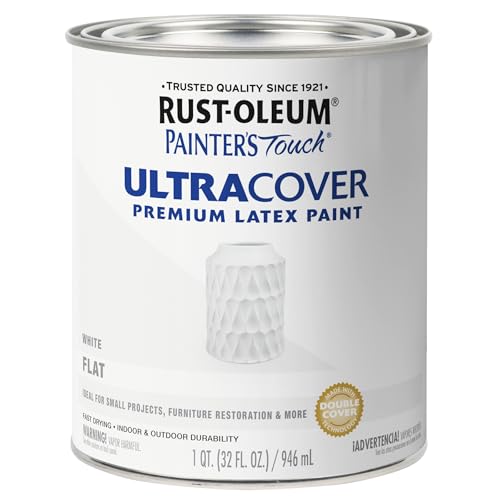
Use for a variety of indoor and outdoor project surfaces including wood, metal, plaster, masonry or unglazed ceramic
Add Reflective Decor and Plants for Visual Energy
How might light behave once you’ve cleared its path through the windows? You’ll amplify it through strategic placement of mirrors opposite glazing, creating recursive light paths that expand spatial perception. Position mirrors in grouped configurations—varying scales fracture and redistribute daylight across planes.
You’ll establish light-reflective surfaces systematically: white walls and ceilings function as primary diffusion planes, while light-wood floors ground the space in reflective warmth. These surfaces don’t merely reflect light; they modulate ambient brightness through controlled scattering.
You’ll layer translucent curtains to filter without occlusion, maintaining luminous continuity.
Finally, you’ll integrate indoor plants—specifically variegated or glossy-leaved specimens—as living optical elements. Plants intercept and refract light, generating subtle luminosity variations. Together, these interventions construct a brighter room through calculated materiality and biophotonic interaction.
Recommended Products

【Backlit+Front-lit, Double Lighting Sources】: loaao led bathroom mirror is designed with both backlight and front light; Double lighting sources designed to make the mirror bright enough for doing makeup; skin care; shaving and dressing up; Super bright

2 In 1 Window Squeegee: Our Car Squeegee for Window Cleaning consists of 2 parts. One side is soft scrubber nylon netted sponge for cleaning any surface. The other side is a rubber blade that gives you professional cleaning power

【Backlit + Front Lit, Light Strips】Koonmi LED bathroom mirror built-in LED light strips makes the backlight and front light can be controlled for lighting. The waterproof and high quality energy saving light strips we use can keep the light working stably, high brightness, even light, no delay, provide good lighting conditions, make the LED bathroom mirror durable for a long time without replacement.
Conclusion
You’ll reshape luminance through layered interventions: mirrors amplify daylight recursively, high-LRV surfaces normalize reflectance, and tunable LEDs extend spectral control past dusk. Spatial transparency—achieved through legged furniture, sheer membranes, and uninterrupted sightlines—distributes photons volumetrically. Your palette of warm whites, glass, and living materiality balances technical efficacy with perceptible atmosphere, transforming enclosed geometry into a field of continuous, responsive brightness.
Recommended Products
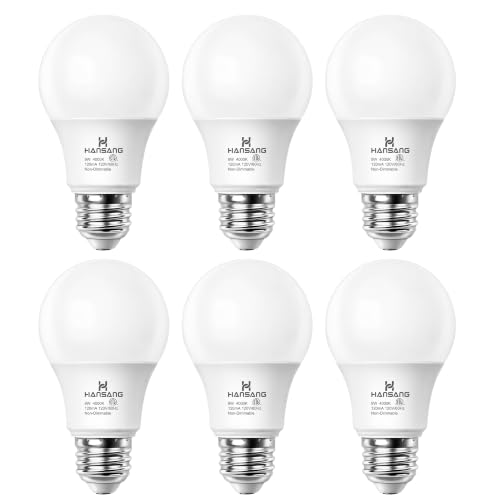
E26 led bulb 60 watt & Efficient 9W: Our A19 LED light bulbs make it easy to create a energy-efficient home—it's the perfect replacement for traditional 60 watt incandescent light bulbs. Consuming only 9 watts of power while delivering an impressive 800 lumens, this e26 led bulb 60 watt equivalent slashes your electricity consumption by up to 90%.

⭐ DIMMABLE BR30 LED FLOOD LIGHT BULB, 10%-100%. These BR30 LED flood light bulbs dim smoothly from 10% to 100% with compatible dimmers, giving precise control over light intensity for any room or application. Instant-on technology means no warm-up delay, and flicker-free output keeps light consistent throughout the dimming range. A direct dimmable replacement for 65-watt incandescent BR30 flood light bulbs in 5-inch and 6-inch recessed cans, track lighting, and wide-coverage indoor flood light applications. E26 medium base fits standard sockets with no adapter required. Compatible with standard leading-edge and trailing-edge dimmers.

Uniform Illumination: With high light transmission lampshade, this G25 led globe light bulb is able to emit a balance and sufficient natural daylight with high color rendering index, allow the objects look more natural and true.