
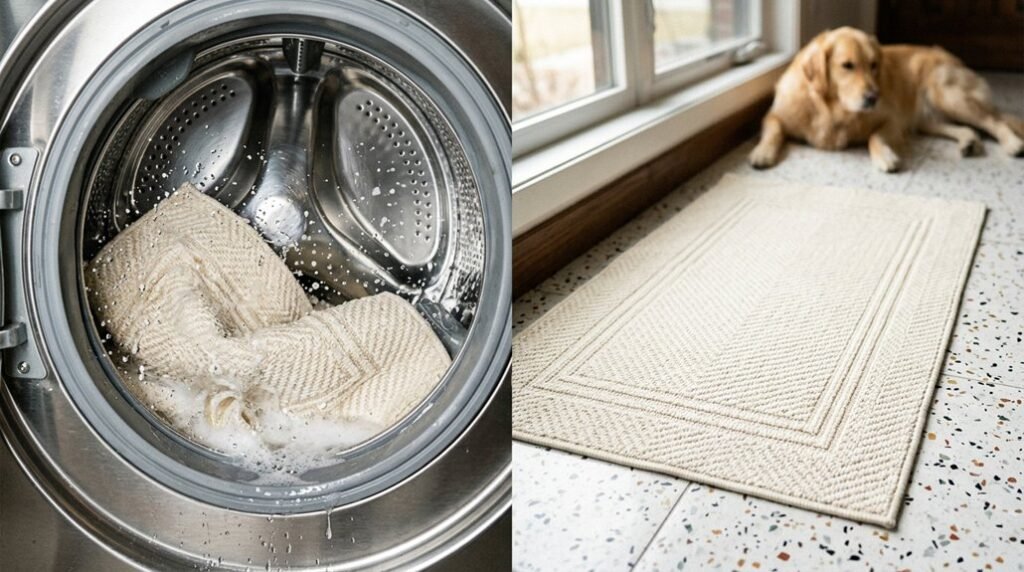
You’re weighing whether a washable rug justifies its premium over conventional options, and the answer depends on how you prioritize lifecycle cost against convenience. Spills, pet accidents, and high-traffic zones create distinct maintenance profiles that alter the value calculation. But the marketing rarely captures the full operational picture—washer capacity constraints, edge stability failures, and hidden pad requirements can shift the economics in unexpected directions.
What Makes a Rug Machine-Washable?
How exactly does a rug shift from strictly dry-clean-only to toss-it-in-the-washer functionality? You analyze the construction: a machine-washable rug employs a removable cover system. The top layer detaches from a water-resistant rug pad via Velcro-like fastening, letting you lift the cover alone into your washing machine. Alternatively, you encounter one-piece flat-weave designs where the entire rug enters the washer, though you’ll still add a separate rug pad for stability. You must assess dimensions against your washing machine’s capacity; 8×10 or 9×12 rugs demand bulky-item cycles. Your care pattern specifies cold water, low-heat tumble drying, and air-drying completion. The top layer’s thin, lightweight construction enables this functionality without compromising structural integrity.
Recommended Products

Ultimate Cloud-Like Softness & Luxury: Indulge your feet in the softest chenille imaginable. Our extra-thick bath mat features an ultra-plush, high-density pile that gently cradles and cushions every step, transforming hard bathroom floors into a pillow-soft sanctuary. Designed for the entire household, it provides a cozy retreat for bare feet and a favorite lounging spot for your furry friends. Far more than just a functional accessory, it elevates your daily routine into a serene, spa-like escape. Experience the perfect blend of plush support and sophisticated comfort with every step you take
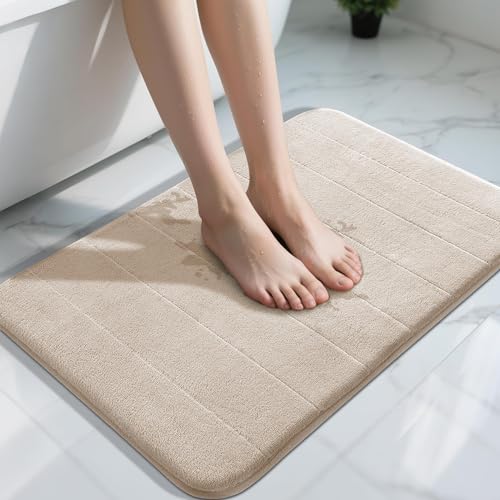
【Cloud-Like 5X Softness: Memory Foam Supreme Comfort】Made with premium memory foam that’s 5x softer than ordinary bathroom mat, providing a cushiony feel underfoot. The luxurious material gently conforms to your feet, offering unmatched comfort after every shower or bath

[Heavy Density Microfiber]This 4-piece kit contains 2 rectangular bath mats, 1 U-shaped contour rug and 1 toilet lid cover, all equipped with nearly 1-inch thick fluffy pile. Every item adopts high-density microfiber with fiber-locking craft, delivering consistent cloud-like cushioning for feet and gentle touch on toilet surfaces. Ideal for those who prefer thick cushioned contact during daily washing routines, it brings consistent soft texture across all bathroom functional zones.
How to Actually Wash a Rug at Home
Understanding a rug’s washable construction sets up the execution: you need operational specifics for cleaning without damage. You remove the washable top cover from your Ruggable’s non-slip rug pad. You assess your washer’s capacity; you’ll split larger loads or visit a laundromat if drum dimensions constrain fit. You select a cold water cycle with standard detergent, minimizing thermal stress on synthetic fibers. You transfer promptly to low heat dry, monitoring for residual moisture. You’ll finish with air dry protocols for shrinkage control, particularly at perimeter edges where curling propagates. You inspect post-wash dimensions; you’ll stretch or trim minor deviations before reattaching. You reposition the refreshed cover onto the machine-washable base, verifying pad integrity. You maintain this cycle iteratively, tracking dimensional stability across repeated cleans.
Recommended Products

Ultra Thick High Density Elasti Foam: 1.6" Thickness Baby Play Mat for Ultimate Protection & Comfort. This thick, padded memory foam mat offers superior impact absorption for tummy time, crawling, and first steps-protecting delicate knees and joints while supporting healthy bone growth

Ultra Thick High Density Elasti Foam: 1.6" Thickness Baby Play Mat for Ultimate Protection & Comfort. This thick, padded memory foam mat offers superior impact absorption for tummy time, crawling, and first steps-protecting delicate knees and joints while supporting healthy bone growth

Non-slip Protection: Our pad's signature grip keeps rugs securely in place, preventing bunching and sliding during daily use. It also protects your floors from wear and tear, including damage from high heels, children at play, and more.
Are Washable Rugs Worth It?
Whether you’re weighing convenience against upfront cost or durability against tactile luxury, washable rugs demand a calculated assessment of your actual living conditions. You must evaluate whether machine-washable construction justifies the premium over traditional pile rugs. Ruggable and similar brands engineer layered systems—detachable covers atop specialized rug pads—that streamline spill cleanup. Their durability data indicates structural integrity beyond fifty wash cycles, though you’ll notice reduced pile height compared to wool alternatives. For high-traffic zones—entryways, kitchens, pet areas—you’ll find maintenance simplified considerably. The trade-off? You sacrifice plush underfoot sensation. Newer all-in-one designs minimize curling and eliminate separate components. Your calculation rests on usage patterns: frequent messes and cleaning cycles favor washable rugs’ lifecycle economics; low-traffic formal spaces render the investment inefficient.
Recommended Products
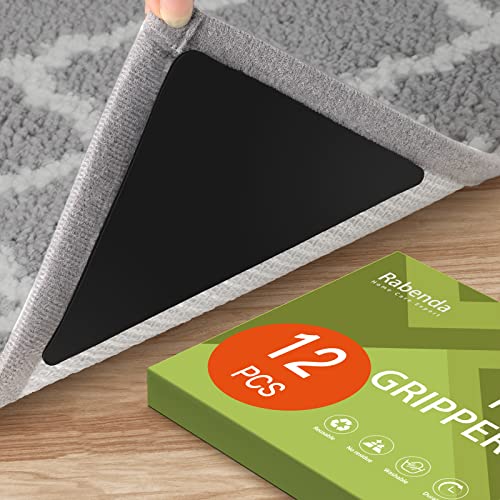
Advantaged Triangle Design: The Triangle Design grippers for area rugs and hardwood floors will maximum increase the contact surface. The strong adhesion will help stick firmly and keep your area rugs in place. Moreover, the rug stickers for wood floors will prevent the rug corners and edges curling and always keep your rugs steady and safe

THE ORIGINAL EXTRA STRONG GRIPPER: our trusted Gorilla Grip nonadhesive rug pads offer a unique, dual sided grip that firmly holds onto both the rug pad and your hard floor to help prevent rug movement

Non-slip Protection: Our pad's signature grip keeps rugs securely in place, preventing bunching and sliding during daily use. It also protects your floors from wear and tear, including damage from high heels, children at play, and more.
The Hidden Costs of Washable Rugs
The decision calculus shifts when you examine lifetime expenditures beyond the sticker price. Washable rugs carry hidden costs that inflate their apparent affordability. The upfront price benchmarks at $249 for entry systems, with newer all-in-one designs pushing higher. You’ll add rug pad expenses to prevent migration, particularly on thin constructions with poor inherent grip.
Maintenance escalates disproportionately at scale—10×12 or 10×14 formats force laundromat or commercial facility visits, monetizing your time and transport. Edge curling degrades dimensional stability over repeated cycles, triggering replacement or accessory purchases that compound total ownership.
Stain resistance delivers tangible long-term value, yet shrinkage from aggressive washing erodes pad coverage and fit precision. You must amortize these variables against projected lifespan to determine true cost-effectiveness.
Recommended Products

Non-Slip Safety: Featuring durable TPR backing for a firm grip, this rug reduces slips and falls. Ideal for high-moisture areas, its anti-slip design ensures safety and stability, staying securely in place while protecting floors

Non-Slip Safety: Featuring durable TPR backing for a firm grip, this rug reduces slips and falls. Ideal for high-moisture areas, its anti-slip design ensures safety and stability, staying securely in place while protecting floors
Non-Slip Safety: Featuring durable TPR backing for a firm grip, this rug reduces slips and falls. Ideal for high-moisture areas, its anti-slip design ensures safety and stability, staying securely in place while protecting floors
When Washable Rugs Deliver (and When They Disappoint)
You encounter disappointment through edge curl on larger dimensions and pad stability issues during initial setup, requiring thicker pads or corner anchoring to mitigate lift.
Capacity constraints force you toward laundromats or professional cleaning for oversized pieces, inflating maintenance cost beyond projections.
While washable construction delivers practicality that spurs repurchase intent, you accept trade-offs: higher upfront investment, learning-curve assembly, and persistent curling in some configurations.
For messy, active spaces, the calculus favors performance over perfection.
Recommended Products

DESTROYS STUBBORN STAINS THE FIRST TIME: Penetrates deep to lift and remove tough pet stains like feces, vomit, dirt and their odors
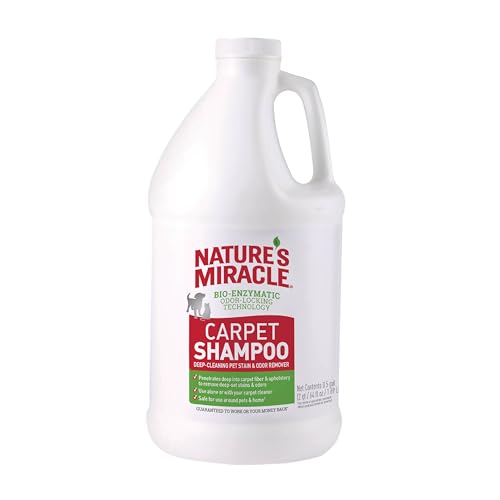
REMOVES OLD AND NEW STAINS & ODORS: Penetrates deep into carpet and upholstery fibers.

SPOT STAIN & ODOR REMOVER: Begins to break down and remove stains immediately on contact.
Rooms That Destroy Washable Rugs (and Where They Thrive)
Placement determines whether a washable rug justifies its investment or accelerates its decline. You maximize value by deploying washable rugs in high-traffic spaces and spill-prone rooms—kitchens, entryways, children’s playrooms—where frequent soiling demands machine washable remediation. In these environments, superior staining resistance and rapid revival post-wash offset initial costs.
Conversely, you encounter operational failure when placing these rugs where constraints exceed specifications. Large sizes necessitate commercial-grade equipment; standard residential washers accommodate 8×10 foot maximums. You observe accelerated edge wear in zones with chair-drag abrasion or pivot-heavy activity. Without rug pads anchoring placement on smooth substrates, you’ll detect corner curling and lateral shift that compromise stability and accelerate degradation. Optimal outcomes require calibrated room selection matched to product limitations.
Recommended Products

【Cloud-Like 5X Softness: Memory Foam Supreme Comfort】Made with premium memory foam that’s 5x softer than ordinary bathroom mat, providing a cushiony feel underfoot. The luxurious material gently conforms to your feet, offering unmatched comfort after every shower or bath

Bathroom Rug Sets 3 Piece: Made from chenille material, the 32"x20" bath rug, 20"x20" U-shape contoured keep your toes warm on the cold floor, and the length from 17.5 to 21 inches and the width from 15 to 19 inches toilet lid cover with strong elastic edges bring the cover kind of adjustability. It offers protection to your toilet lid from scratches. Generous size, fits most standard toilet lids.

Slip-resistant PVC backing keeps bathmats for bathroom securely in place on tile or hardwood. Ideal bathroom sink rug that adds safety and softness after showers or baths.
Washable Rug Brands That Survived Real Life Testing
Selecting a washable rug brand demands scrutiny beyond marketing claims, requiring validation through sustained domestic use. Real life testing reveals divergent performance profiles between major competitors.
Ruggable delivers a two-piece modular system: you machine washable the top layer while reusing the rug pad beneath, minimizing replacement costs despite higher initial investment. You’ll notice corner curling tendencies and handling challenges with larger dimensions. Durability remains satisfactory, though management demands coordination.
RugsUSA provides more accessible entry points—you acquire thinner constructions that achieve adequate softness through supplemental rug pad integration. Stain resistance proves robust against sodas, juice, paint, and marker exposure.
Both brands demonstrate three-year durability with minimal shrinkage post-wash and intact edge binding. You’ll optimize either selection by pairing with a dedicated non-slip pad for stability on hard surfaces.
Recommended Products

【 Waterproof Rug Pad】--Felt + Waterproof TPR carpet pad for all types of carpeting. The rough fabric of the felt top layer grips the carpet tightly to prevent it from curling and crawling, while the non-slip backing prevents the carpet from slipping in any direction.
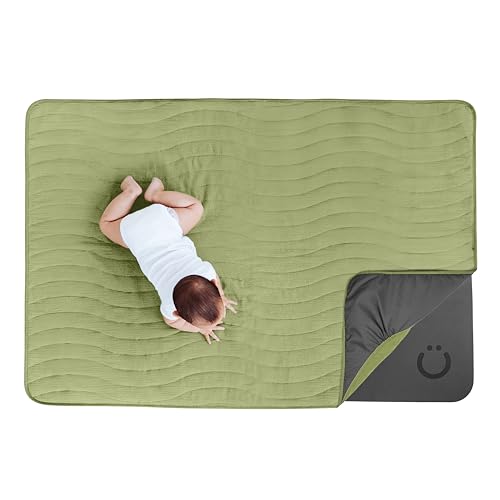
MACHINE WASHABLE & EASY TO CLEAN: Removable cotton muslin cover is fully machine washable for stress-free cleanup and everyday hygiene. Foldable design allows for easy storage and convenient travel use at home, daycare, or on the go.

【Comfortable Material】This pet couch covers for dogs are made from high-quality fabric, featuring thickness, slip resistance, softness, comfort, and durability. Pet couch covers for sofa effectively prevents pilling while maintaining an aesthetically pleasing and attractive appearance. Additionally, these couch cushion covers protect your furniture from dust, spills, pet hair, and everyday wear and tear, sectional sofa covers for dogs ensuring sofa stays clean and pristine over time.
How Long Do Washable Rugs Actually Last?
Durability benchmarks for washable rugs extend beyond manufacturer claims into measurable performance across repeated cleaning cycles. You observe Ruggable’s two-piece system maintaining structural integrity past 50 wash cycles, though you’ll notice corner curling persists—a defect the October 2025 all-in-one system update targets specifically. You mitigate curling through thicker pads or upgraded construction.
You evaluate Rugs USA alternatives and find comparable durability: initial shrinkage occurs, but edge integrity remains intact across years of use. You deploy these washable rugs in high-traffic zones—kitchens, play areas—and confirm repeated laundering sustains performance without degradation.
You calculate lifecycle value: upfront costs offset by eliminated professional cleaning and extended replacement intervals. You note larger formats require laundromat facilities, constraining convenience. You conclude washable rugs deliver quantifiable longevity when you match construction specifications to use-case demands.
Recommended Products

STRONG NON-SLIP GRIP: Designed with a powerful double-sided grip, this rug pad effectively secures your carpet, preventing slipping, bunching, or shifting. Whether in high-traffic areas or for daily use, it keeps your carpet flat and stable, providing a safer experience.

Grip, Not Stick: The Only Truly Non-Staining Choice Safe for LVP & hardwood, our advanced Vacuum Suction Technology offers a superior grip without the damage. Unlike traditional rubber or PVC backings that use cheap oils, our rug pad ensures Zero Plasticizer Migration. It won’t yellow, won’t stain, and won’t leave a trace. Experience a residue-free hold that keeps your floors pristine and your home safe

NOTE: This gripper uses VACUUM TECH design which grips only hard smooth floors firmly and easily, it does not work for rug on carpeted floor. Also it does not work all rugs , it does not work for rubber backed rug ,jute rug or fluff backing rug , please check this. The adhesive surface can not be peeled once affixed on the rug.
Who Actually Needs a Washable Rug?
Where exactly does a washable rug shift from convenient upgrade to essential infrastructure? You need one when you’re managing mess-prone households—new parents, pet owners, or anyone navigating kitchens and playrooms where spills accumulate faster than you can blot them. High-traffic homes demand stain-resistant maintenance that doesn’t require professional intervention for every incident. You’re evaluating the machine-washable option not for occasional convenience, but for operational necessity. Consider the constraints: washer size limits cap your dimensions, and a thin rug pad exacerbates edge curling underfoot. Lorena Canals, Revival Rugs, and Ruggable’s two-piece system address these variables, but you must calculate frequency of laundering against long-term fiber fatigue. Lightweight constructions from RugsUSA solve partial problems—you’re balancing immediate cleanability against structural integrity over hundreds of cycles. Your decision hinges on behavioral patterns, not aspirational tidiness.
Recommended Products

Ultra Soft & Comfort: Crafted with premium microfiber, this bath rug features a densely woven, ultra-soft surface that delivers exceptional comfort underfoot. The advanced microfiber not only enhances durability but also retains its softness even after repeated use

Non-Slip & Secure: Designed with a durable non-slip rubber backing, this rug firmly grips the floor, staying securely in place even in high-moisture areas. Enjoy stable, slip-free comfort every time you step out of the shower or bath
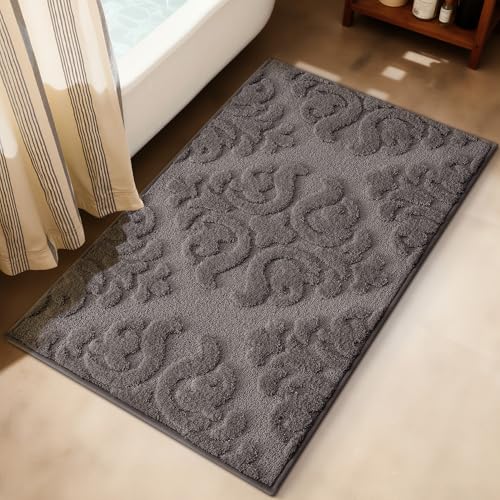
Ultra Soft & Comfort: Crafted with premium microfiber, this bath rug features a densely woven, ultra-soft surface that delivers exceptional comfort underfoot. The advanced microfiber not only enhances durability but also retains its softness even after repeated use
Ruggable vs. RugsUSA: Which System Wins?
How precisely do you prioritize between modularity and operational simplicity when investing in a machine-washable rug system?
Ruggable offers a two-part architecture—detachable top layer plus non-slip underpad—enabling design interchangeability but introducing corner curling risks and complex edge securing.
Its October 2025 all-in-one system addresses these mechanical drawbacks while maintaining high-traffic durability.
RugsUSA delivers one-piece flat-weave washable rugs requiring separate padding; you’ll find simpler deployment with minimal edge roll and easier spot-clean maintenance.
RugUSA bundles more affordably, though you’ll sacrifice layer interchangeability.
Evaluate stain resistance: RugsUSA’s three-year performance shows minimal shrinkage on light colors with thick pad support, while Ruggable’s grip excels but challenges persist in corner stabilization.
Your choice hinges on whether you value system flexibility or streamlined operational reliability.
Recommended Products

POWERFUL ENZYMATIC CLEANING: Advanced enzymatic formula breaks down tough stains and odors at the molecular level, providing deep, professional-quality cleaning for carpets, rugs, upholstery, and pet accidents efficiently.

COMBAT PET STAINS WITH CONFIDENCE: Pets bring joy and occasional messes. This 2-in-1 Oxy-Powered Pet Stain & Odor Remover is tough on pet accidents on carpets, including mud, vomit, feces, and stains up to 7 days old. Designed for carpets in busy, high-traffic homes, it helps restore a clean look at home and is safe around pets

PREMIUM QUALITY MATERIALS:Our meticulously crafted hand-woven area rugs skillfully blend the durability of polyester with the natural comfort of cotton fiber, so this entryway runner rugs is known for its ultimate soft texture, which can bring you an unparalleled comfortable touch, and the excellent fade-resistant performance ensures that hallway rug will remain as vibrant as ever after long-time use.
Conclusion
You should evaluate washable rugs against your household’s spill frequency, traffic density, and laundering capacity. Two-piece systems optimize modularity but introduce mechanical failure points at edges and connectors; one-piece constructions improve structural stability yet demand compatible padding systems. Lifecycle cost analyses favor washable options when replacement intervals exceed 18–24 months. Prioritize polypropylene or polyester pile densities above 250 GSM for durability, and verify drum capacity accommodates rug dimensions before purchase. Your specific use case determines worth.