
You want your space to glow with that effortless warmth you’ve seen in magazines, but you’re staring at blank walls and wondering where to even begin. The right hardware, the perfect drape, the hidden cords—each choice shapes whether your room feels curated or cluttered. One misstep with adhesive or tension, and you’re patching drywall by morning. There’s a quieter art to this than simply pinning up a strand. You’ll want to know the difference before you start.
Match Your Hanging Hardware to Light Weight
Wherever you envision your lights cascading, you’ll want the hardware to match their weight with quiet precision. You’ll select adhesive hooks and transparent tape for lightweight strings, letting them float without piercing your walls. For fairy lights, you’ll secure delicate strands with small clips or pushpins—minimal marks, maximal effect.
You’ll space non-damaging options thoughtfully; weight distribution matters. You’ll avoid clustering heavy loads, instead anchoring every twelve to eighteen inches so tension disperses gracefully across your surface. When reconfiguration calls, you’ll choose curtain rods or removable strips, embracing flexibility without sacrifice.
You’ll reserve screw-in hooks for medium strands, checking ratings with care. You’ll recognize that refinement lives in restraint—never forcing hardware beyond its promise. You’ll let your space breathe, your lights settle, your vision holds.
Recommended Products

ONE LIGHT CLIP FOR EVERY TWO FEET OF LIGHTS: One package of the Command Clear Outdoor Light Clips includes 20 clear hooks and 24 small water-resistant Command Strips; use one light clip for every two feet of lights

Compatible Surfaces: Adheres securely to smooth, non-porous surfaces including painted walls gloss/satin finish, glass, metal, finished wood, and tile.NEVER use on Fabric, wallpaper, peeling paint,unpainted drywall, or other delicate surfaces.
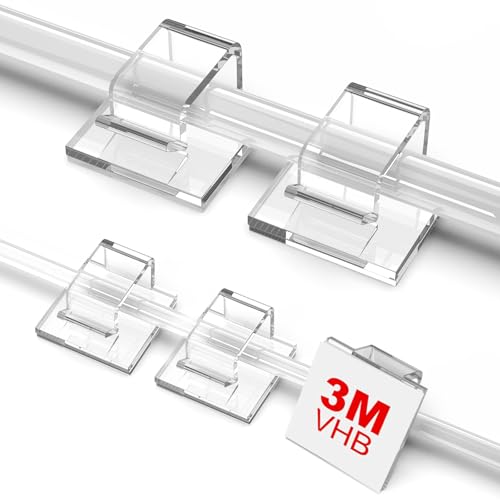
Assorted Sizes: Package include 55 pcs small adhesive cable clips and 50 pcs Large wire cord clips. Made of eco-friendly premium PA66 material, meet your needs for hanging outdoor string lights, perfect for christmas decorations, halloween decorations, holiday patio decor, porch decor and balcony decor.
Install Hooks and Clips on Drywall, Wood, or Brick
How will your chosen surface shape your approach? For drywall, you’ll select adhesive hooks designed for lightweight decor, spacing them twelve to eighteen inches apart to prevent sagging and preserve your wall’s clean lines. On wood, you’ll drive screw hooks for stronger attachment, allowing heavier strands to stretch gracefully across longer runs. When working with brick, you’ll employ brick clips or masonry screws with plugs, securing your lights without marring the textured surface. Clean adhesive hooks thoroughly before mounting, then allow them to set completely—these small rituals ensure maximum grip. Always respect manufacturer weight ratings; never burden a single hook or clip beyond its recommended capacity. Your restraint here creates the foundation for luminous, harmonious draping that honors both beauty and structural integrity.
Recommended Products

60 PCS Light Hooks Clips Per Box: Length 16mm/0.63inch, Width 15mm/0.59inch, Height 8mm/0.31inch; Suitable for cables with a diameter (maximum) of 5 mm/0.2 inches, size fits most wires, small size and space saving.

Teen Girl Gifts: Light Up Cherished Memories, Create a Cozy Haven: Photo Clip String Lights, soft lights illuminate photos, instantly evoke romantic memories, making home a room full of love and warmth, even bedroom corners filled with stories, light up life's beautiful moments

GREAT GIFT : Great gift for your lovers, friends and familiy's birthday party Christmas festival celebration. Warm white color make your life WARM!
Hang Lights With Enough Slack for Clean Draping
Why settle for rigid lines when your space deserves poetry in light? As you hang string lights, you’ll weave indoor lighting into something almost lyrical.
First, sketch your route to anticipate where draping will pool gracefully. Measure your path, then add ten to fifteen percent extra length—this slack transforms tension into flow. At corners, allow additional slack so the strand breathes rather than strains.
Space your anchors twelve to eighteen inches apart; this rhythm keeps hanging lights visually taut yet free to curve. Position extension cords mindfully, letting pull distance allow massaging curves instead of sharp angles. Each gentle arc in your lighting design feels intentional, never accidental.
You’re sculpting with luminescence now, letting darkness and glow converse through refined, harmonious draping.
Recommended Products
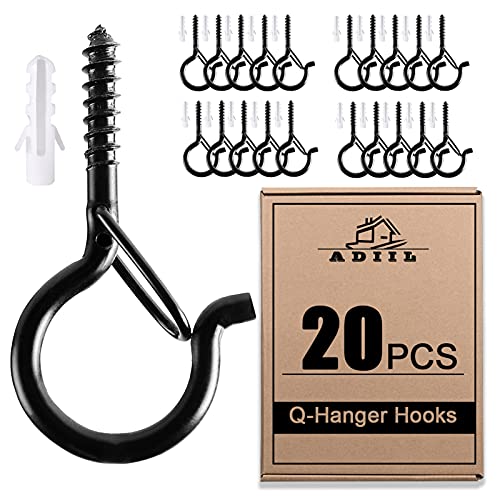
Safety Buckle Design: Add safety buckle design to prevent hanging objects from falling, even in high wind. Compared with ordinary ceiling hooks, the q hanger hooks are weatherproof and wind resistant, suitable for hanging outdoor patio string lights. No worry about items being knocked off, more secure

Convenient & Practical: There have 50 pieces hooks and 50 pieces screws. use a phillips screwdriver can easily screw the nail into the wooden beam or tap it with a hammer and tighten it again.

Sturdy & Strong:Our durable outdoor hooks are perfect for both indoor and outdoor use. Made with high-quality materials and rustproof coatings, they can hold up to 40 pounds and last for years. The outdoor light hooks are 2.2 x 1 inch, Whether you're hanging plants, lights, or decor, our hooks will securely hold them in place.
Hide Cords and Fix Sagging Without Restarting
What spoils a luminous canopy faster than tangled cords drooping like forgotten garlands? You needn’t dismantle your entire lighting design to restore its grace.
Add adhesive hooks at sagging points to create new anchors, maintaining gentle tension that keeps cords taut without straining bulbs. You’re preserving the line’s poetry while smoothing its silhouette. For lightweight cords alone, clear tape tucks discreetly along baseboards, though you’ll rely on sturdier hanging methods for substantial strands.
Drape lighting across furniture edges to minimize wall cords entirely, letting the room’s architecture share the burden gracefully. Inspect your tension periodically—small adjustments prevent gradual droop. You’re curating atmosphere, not merely installing fixtures. With these refinements, your illuminated space breathes harmony, each cord precisely placed, each strand floating at perfect, luminous ease.
Recommended Products

Lewufe brick hook clips for hanging outdoors are great for hanging holiday decorations like Christmas, Easter, Halloween, Thanksgiving, Independence Day, or for hanging tools and artwork like Christmas string lights, stockings, picture frames, christmas roof decorations, craft items and more.
![5 Pack No-Drill Cinder Block Wall String Light Hangers,[4.3"-8" Adjustable][Damage-Free Duty Metal Hooks Clips] for Outdoor String Lights, Christmas Decorations, Patio, Garden Fence & Brick Walls](https://m.media-amazon.com/images/I/419MKk3OPjL._SL500_.jpg)
DAMAGE-FREE & DRILL-FREE INSTALLATION: Forget the power tools and permanent holes! Our innovative hangers use a powerful tension-and-grip mechanism to securely attach to your walls without drilling, or messy adhesives. It's the perfect solution for renters and homeowners who want to hang beautiful decorations while preserving the integrity of their brick, block, and stone walls.

100 Pack 1/4 Inch P-Style Rope Light Clips with Matching 304 Stainless Steel Screws, Complete Mounting Kit for Effortless Installation. Our premium cable management clips, P clamps, cord clips, and wire clips deliver simple, secure, and ultra-fast fixing for rope lights, string lights, LED light strips, cables, and wires. Perfect as cable holders, cord fasteners, and wire hooks fasteners for all your indoor and outdoor wiring needs.
Take Down Your String Lights Without Wall Damage
When the season shifts or your mood calls for change, you’ll want to lift those lights away as gently as you hung them, leaving walls pristine beneath their glow.
Master this refined removal technique: grip each removable adhesive hook and peel straight downward—never outward—to release tension without stripping paint. For cord securing with painter’s tape, lift slowly, letting the adhesive release on its own. You’ll find lightweight strands forgive hasty hands, but patience preserves your surfaces.
If you embraced draping as a damage-free method, simply unwrap and breathe easy. Your repositioning remains endless when you’ve planned ahead. No wall damage shadows your memory—only the warm echo of light you’ve gracefully moved elsewhere. Patch any tiny marks, step back, and admire the invisible art of care.
Recommended Products

Commercial quality string lights: The globe around the lights are shatterproof because they are made out of plastic. 100 led bulbs give off a warm white light. An ul listed power adapter comes with the lights. Diameter of the bulb is 0.7 inch, and the spacinga between bulbs is 4 inches

【Globe String Lights】The Led string lights come with frosted globes can create a soft, cosy light to take care of your eyes. So the lighting effect of the frosted ball is irreplaceable by other LED string lights. The cute string lights indoor provide a fun feel for room aesthetic to the bedroom, dorm, classroom, living room. The globe around the lights are shatterproof, it not only create a unique relaxing and soothing indoor atmosphere, but also enhances the durability of the string lights
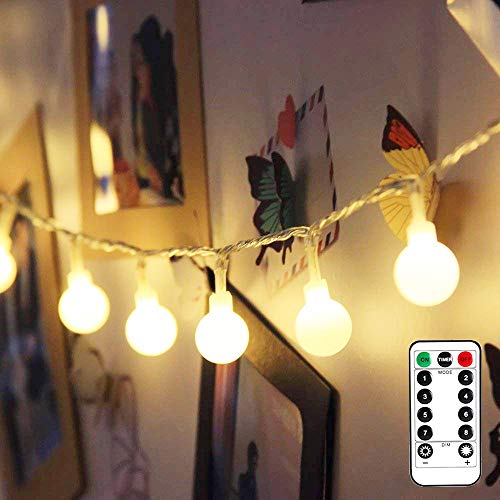
Fairy Lights with 50 White Globes. This ball string light is 16.4ft/5m long, and the diameter of each globe is 0.75 inch/1.9cm.
Conclusion
You’ve crafted a space that glows with intention—each strand draped just so, tension balanced, cords vanished into shadow. Your walls remain unmarred, your lines breathe with graceful slack. When the season shifts, you’ll peel away the hardware gently, preserving what you’ve built. The light was never merely functional; it was atmosphere, curated. Carry this precision forward, and every room you touch will carry that same quiet harmony.
Recommended Products

Keep your lights cord in place with our double hook clips:Conventional single hook design is often unstable when fixing, swaying from side to side, etc. The improved and upgraded outdoor light hooks design prevents the fixtures from sliding or sagging. You can adjust them to the most suitable height and enjoy the beautiful display effect.

Sturdy and Durable: Package include 30 pcs clear adhesive christmas light clips. Base 1.57”x 0.9”, Inner Height 0.2”. The double-hook design and the use of high-quality PA66 materials make our string light hooks sturdy and durable, no worry about light clips for outside string lights falling off.
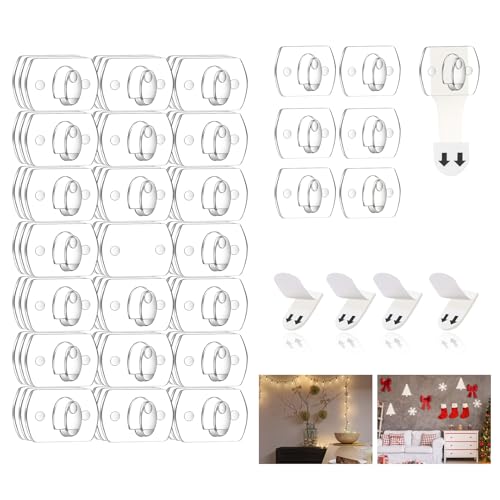
📦【PACKAGE】: These light strips clips are clear, blends seamlessly with the decor. Contains 60 mini clips and 60 strips. 1 hook holds 300g/0.66 lbs (please make sure that the load-bearing range is what you need before buy). Not suitable for hanging picture frames.