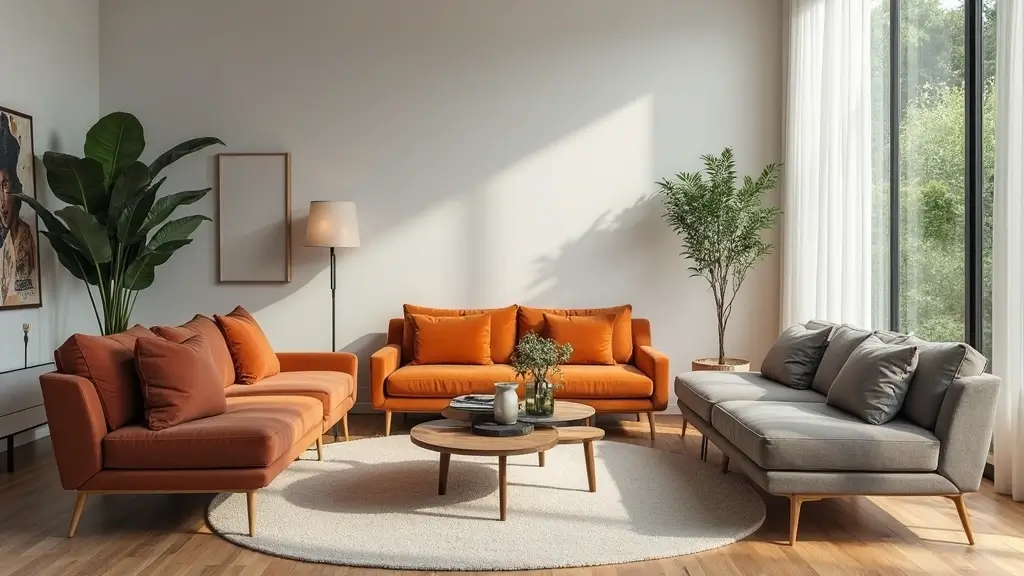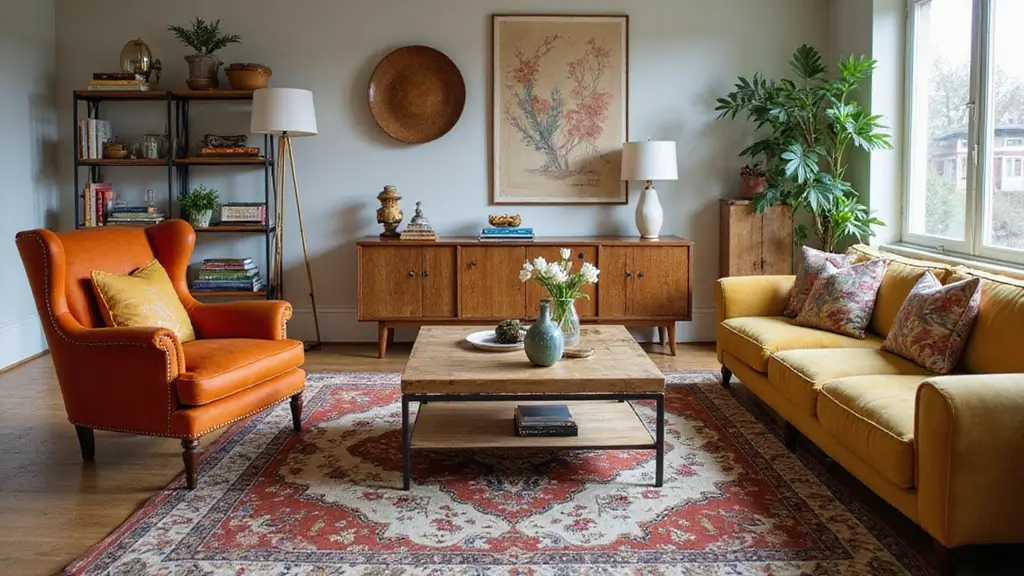

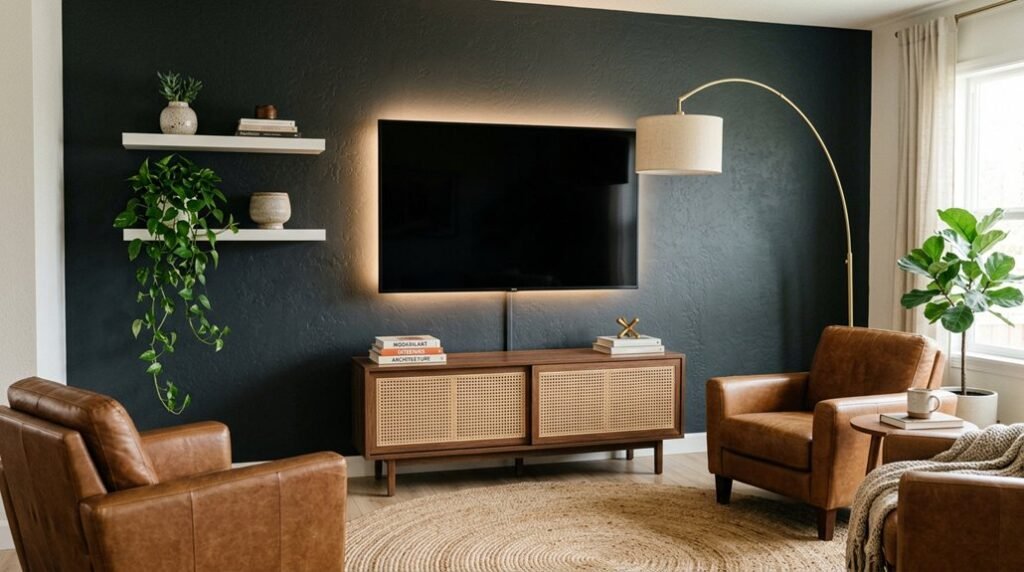
You face a common spatial dilemma: the television dominates your wall, yet it resists integration. Mount it flush, conceal its cables, and you begin to dissolve its bulk—but the real challenge lies in what surrounds the screen. The datum line, the frame, the negative space—these elements determine whether your TV anchors the room or disrupts it. Consider what happens when you treat the display not as an appliance, but as a planar element within a larger compositional system.
Mount Your TV Flush to Create a Seamless Focal Point
ONE OF THE MOST IMPACTFUL SPATIAL DECISIONS you’ll make is mounting your television flush against the wall plane. This technique eliminates protrusion, transforming your screen into a subtle focal point rather than an intrusive object.
You’ll achieve visual continuity by concealing hardware and cables within the wall cavity or behind millwork. The flush integration allows the television to read as a planar element, coordinating with adjacent surfaces rather than disrupting them. Consider surrounding your mounted screen with a gallery wall to reinforce this cohesion; the frame edges dissolve into the composition.
Professional mounting typically runs $100–$450, contingent on structural conditions and regional labor rates. You’ll want to establish proper viewing height—eye level when seated—to prevent strain. The result: a disciplined spatial relationship where technology submits to architectural order.
Recommended Products
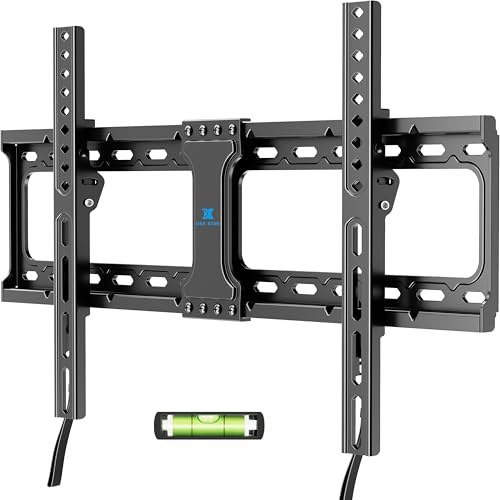
Fits most 37-86 Inch TVs: Please verify TV VESA (the mounting hole patterns of tv back) within 150*100 mm to 600*400 mm and TV less than weight 132 lbs; Up to 24 inch wood stud spacing
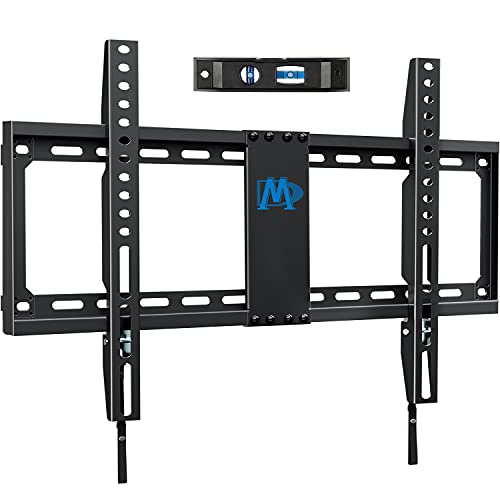
[Universal TV Wall Mount] Fixed TV wall mount fit most 42-84'' TVs, like general 43, 50, 55, 65, 70, 75, 80 flat screen or curved TV up to 132 LBS. Flat TV mount fixed on wall is designed for TV VESA/mounting hole spacing of 600x400mm/500x300mm/400x400mm/400x300mm/400x200mm/300x300mm/200x300mm/300x200mm/200x200mm/200x100mm. TV wall bracket work for most LED OLED LCD, like Samsung/LG/TCL/Sony/Vizio/Hisense etc. large screen TV. TV mount bracket fit 16”, 18", 24" wood stud and brick/concrete wall.
Frame Your TV With a Symmetrical Gallery Wall
Why settle for a screen that sits in isolation when you can integrate it into a deliberate visual system? You’ll achieve sophisticated TV decoration by deploying a symmetrical layout that positions evenly spaced frames on both sides of your screen, establishing spatial equilibrium across the wall plane.
Mount your display flush with adjacent wall art, aligning the top edge to a consistent horizontal datum line. Select frames with uniform width or finish to reinforce visual continuity; alternatively, specify frames that echo your wall color to dematerialize the screen’s mass. You’ll maintain the TV as focal point while preventing visual monotony by anchoring the gallery wall with several larger centerpiece pieces. A cohesive theme—whether chromatic, textural, or stylistic—unifies the entire assembly into a single, intentional composition.
Recommended Products

Kit Content: Each cable raceway comes with dimensions of 0.57 inch inner height, 0.96 inch inner width, ensuring a total length of 116 inches. The cable cover channel kit includes 6 couplings, 2 L-elbows, 1 T-fattings & 1 instruction, for maximum cable concealment

Bye bye messy TV wires! Hung your TV up but the HDMI and Internet cords are dangling down. The clutter of wires is really hard to look at. The wires are directly exposed and inadvertent touch can be easily tangled with the cords, a potential electrical hazard. Don't want something bulky and not in a position to put the wires behind the wall, so the Yecaye TV cord hider is a good option

【All-In-One in wall Cable Management 】Our in wall cable management kit can eliminate messy wires! Designed specifically for wall-mounted TVS and entertainment systems, it can hide messy power cords, HDMI cables, Ethernet cables and audio/video cables within the wall, creating a neat and professional layout and providing you with a clean and comfortable living space
Hide Your TV Behind Sliding Art Panels
Where else could you achieve total visual dissolution of technology while preserving instantaneous accessibility? You mount sliding art panels within a framed wall or alongside built-ins to maintain flush integration with surrounding wall decor. You conceal TV components behind identical or coordinating frames, transforming the screen into a hidden TV element within your gallery walls. When you’re ready to view, you’ll slide the panels apart—the curtain or panel mechanisms operate smoothly, revealing the display without disrupting your spatial composition. You ensure visual cohesion by selecting artwork that matches your gallery layout precisely. This technical solution lets you prioritize aesthetic continuity across the wall plane while retaining functional immediacy. You’ve achieved the ultimate spatial trick: pure art surface one moment, entertainment interface the next.
Recommended Products

Multi-size: 10pcs picture frames set come with TWO black frames 8x10in, FOUR gray frames 5x7in and FOUR wood grain brown frames 4x6in. Just remember to peel off the protective film on both sides of the plexiglass.

【ADAPTS TO ANY SPACE】No matter your home's style - modern, traditional, or eclectic - our sage green wall art adapts perfectly to any space. The serene green hues bring a refreshing and calming vibe, while the timeless prints infuse your surroundings with character and warmth.

Modern Minimalist Style: Our Picture frames are carefully packaged with minimalist art in mind, featuring natural colors such as black, white, and brown. Whether used as wall hangings or desk decorations,the gallery wall frame set is suitable for all seasons. We prioritize the perfect balance of aesthetics and functionality, ensuring a comfortable and natural experience for our customers.
Build Custom Shelving Around Your TV for Built-In Style
Custom shelving transforms your TV from an isolated screen into an architectural centerpiece, anchoring it within a deliberate spatial composition. You achieve seamless TV integration through built-in shelving that frames the screen with purpose, balancing display surfaces with functional requirements.
You select floating shelves or floor-to-ceiling millwork based on spatial constraints and visual weight. Floating shelves minimize mass in compact rooms; substantial cabinetry establishes presence in larger volumes. You incorporate hidden cord management within vertical channels and horizontal cavities, eliminating visual clutter that disrupts sightlines.
You configure symmetrical shelving to impose order or adopt asymmetry for dynamic tension. You integrate conceal TV doors—sliding or hinged panels—to preserve a gallery-wall aesthetic when viewing ceases. This hybrid system merges technology with curated display, transforming the screen into one element among comparable visual components.
Recommended Products

READY MADE: The package includes a panel Sliding Glass Door Curtains with 80" wide x 84" length. The same material back as of front makes Patio Door Curtains appear more elegant. As a general rule, for proper fullness panels should measure 1.5-2 times the width of your window/opening.

【58-Inch Frame & 65-Inch TV Compatibility】This 58'' farmhouse TV stand fits most televisions up to 65 inches for stable tabletop placement. The wide surface area accommodates your TV set and small decorative pieces, functioning as a practical entertainment center for daily media viewing and living room display needs.

【Sliding Barn Door & Farmhouse Style】:Two removable sliding barn doors glide smoothly on tracks. More convenient than drawers for accessing hidden storage behind. Farmhouse design adds vintage, casual charm – ideal decor for living rooms/entertainment areas
Paint or Panel the Wall Behind Your TV
How does a screen vanish into its surroundings without losing its functional presence? You achieve this through strategic wall color and surface treatment.
Paint a dark wall behind your television—black, charcoal, navy, or emerald—to create a TV backdrop that absorbs light rather than reflecting it. Select a matte paint finish; this ensures glare reduction by eliminating specular highlights that compete with screen visibility. You transform the surface into a feature wall that extends spatial depth, allowing the television to recede visually when powered off.
Your dark wall anchors the room’s focal point without fragmentation. Balance this depth with lighter adjacent elements to maintain cohesive decor. The technical application of low-sheen, deeply saturated pigment solves both optical and aesthetic challenges—you’re not hiding the screen, you’re integrating it.
Recommended Products
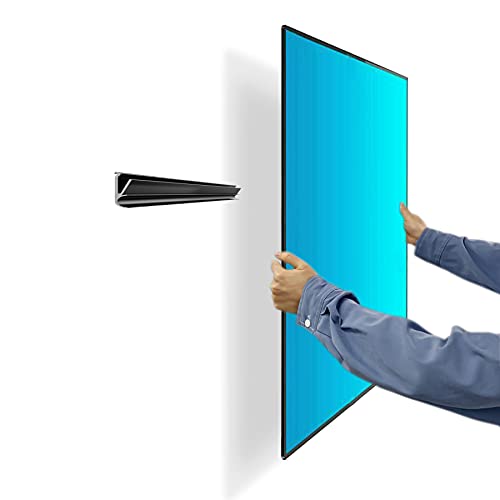
STUDLESS TV WALL MOUNT Compatibility: Drywall TVs bar fits SAMSUNG, SONY, LG, VIZIO, TCL, ELEMENT, SCEPTRE, HISENSE and other TV brands between 13 and 55 Inch screen sizes and up to 99 lbs with VESA size 100x100mm to 400*400mm (The VESA mounting patterns are the distances (in mm) between the four screw holes on the back of the TV) accommodating the majority of TV models on the market

Friendly Tips: Please measure the distance from the VESA hole to the edge of the TV and compare with the picture in the description to avoid wall mount exposure. Included screws are available in 14,16,30,35mm, please check compatibility with your TV.

No Drill TV Wall Mount: Tired of the hassle of drilling big holes or finding studs in your wall? This Perlegear renter friendly TV mount does not require any drilling or installation experience at all. Simply use a hammer to secure the wall plate onto drywall with nails.
Add Greenery, Texture, and Soft Lighting Below Your TV
Once you’ve grounded the screen in its architectural context, you turn your attention to the plane beneath it. You introduce greenery through trailing vines or potted specimens positioned to soften the screen’s technological rigidity without encroaching on the seating sightline. You layer texture via woven textiles, ceramic vessels, and timber elements across console styling and surrounding shelves, creating tactile contrast against glass and metal surfaces.
You deploy lighting strategically—diffused LED backlighting or offset warm sconces—to illuminate greenery and material depth while eliminating screen glare. You curate under-TV decor with spatial restraint, ensuring botanical and sculptural elements maintain clear viewing angles. This composition balances organic warmth with technical function, establishing visual equilibrium in the lower register of your media wall.
Recommended Products

【All-In-One in wall cable management Solution】Eliminate Messy Wires With Our Recessed Outlet Box + Brush Wall Plate Kit! Designed for Wall-Mounted TVs & Entertainment Systems, It Seamlessly Conceals Power Cords, HDMI, Ethernet, And A/V Cables Behind Walls for a Clean, Professional Setup—No More Tangled Cables or Bulky Adapters.

HIDE LOW-VOLTAGE CABLES FOR A CLEANER SETUP – Instantly tidy up visible wires behind wall mounted TVs, speakers, security cameras, routers, and smart home devices with mini in-wall cable hiders designed for a cleaner, more professional finish.

X-Large capacity 3pcs cable management kit: Designed to hide 1 to 5 cables, these cord hiders are perfect for multiple cable setups. Measuring 1.6 inch wide by 0.8 inch high, they can accommodate up to 4 HDMI cables or 5 Cat 6 Ethernet cables
Use a Console and Decor to Anchor Your TV Without Wall Mounting
A console beneath your TV grounds the screen through deliberate proportion and weight, transforming it from floating appliance to anchored object within your room’s visual field. You select a low-profile console that spans horizontally beneath your TV, establishing visual equilibrium through mass and linear extension.
Your console provides storage compartments to organize remotes, media devices, and cables, while you integrate baskets or closed compartments to conceal cords from sight. You utilize open shelving to position decor—books, ceramics, or botanical elements—that interrupts the screen’s technological dominance and generates spatial rhythm.
You flank your TV with framed artwork or sculptural objects, allowing the display to merge with its surrounding context rather than command sole attention. This intentional arrangement anchors your TV within a relational furniture grouping.
Recommended Products

【Durable Material】Our collage frame is made of well made wood frame. Comes with a plastic cover, which provides a clear view of photos and is lighter than glass. No need to worry about hurt by glass broken.

Aluminum Photo Frames: Crafted from lightweight aluminum, our metal picture frames provide a modern, rustic look while ensuring long-lasting use. The sleek finish adds a touch of elegance to any setting

Multi-size: 10pcs picture frames set come with ONE black frame 11x14in with mat for 8x10 photo, TWO wood grain brown frames 8x10in with mat for 5x7 photo, FOUR gray frames 5x7in, THERE black frames 4x6in. Come with HD plexiglass to protect your picture(Please tear off the protective film before use, there is a protective film on both sides of the plexiglass).
Conclusion
You integrate your TV by establishing planar continuity with flush mounting, datum-aligned cables, and concealed hardware. You dissolve its visual mass through symmetrical gallery framing, sliding art panels, or dark matte backdrops that recede spatially. You anchor the composition with built-in shelving, textural greenery, and calibrated lighting below. Whether wall-mounted or console-based, you maintain proportion, negative space, and material cohesion so the screen reads as intentional architecture, not intrusive appliance.
Recommended Products

Sturdy and Selected Material: The TV stand is made of high quality engineered wood that promises a long service life. The overall finish is waterproof and easy to clean. Wooden TV stand can be used in bedroom, living room, gaming room. It will be a great addition to room furniture.
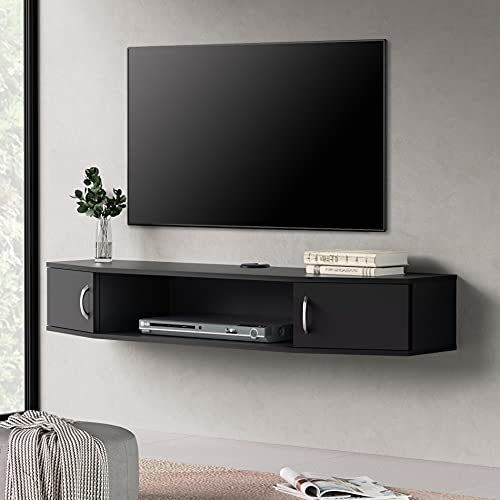
Multi Storage & Hidden Cabinet: The storage space with wall-mounted TV shelves holds TV components, game accessories, books and decorations. The hidden doors of the floating entertainment center on both sides can cleverly protect privacy, while the center door can place game consoles, stereo speakers, DVD players and CDs to make reasonable use of the space

【Retro Mid-Century Style】Deep walnut brown finish with textured sliding doors creates a rich, layered look. Long gold handles add a touch of elegance — blending retro charm with modern simplicity that fits effortlessly into any living space.