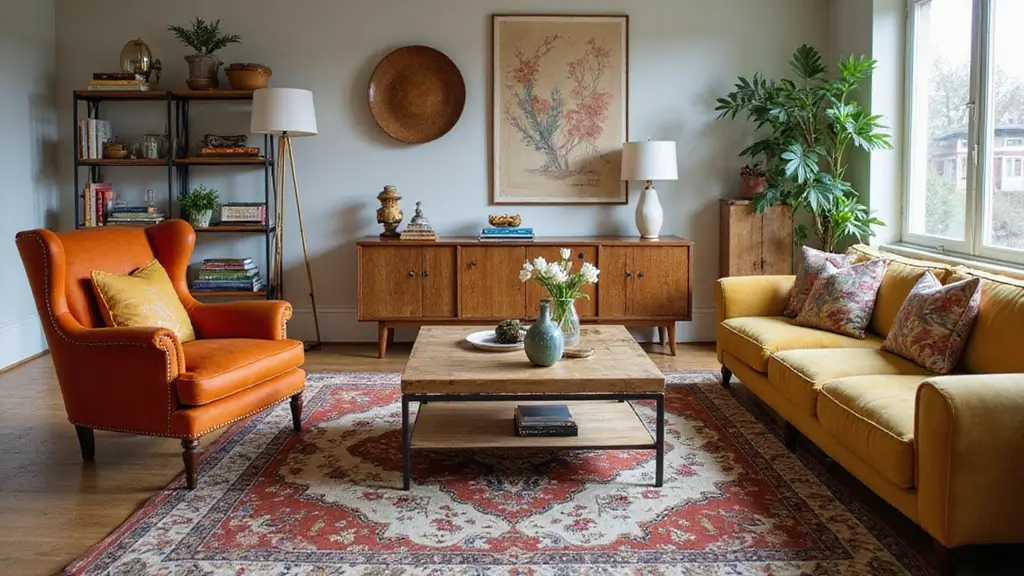

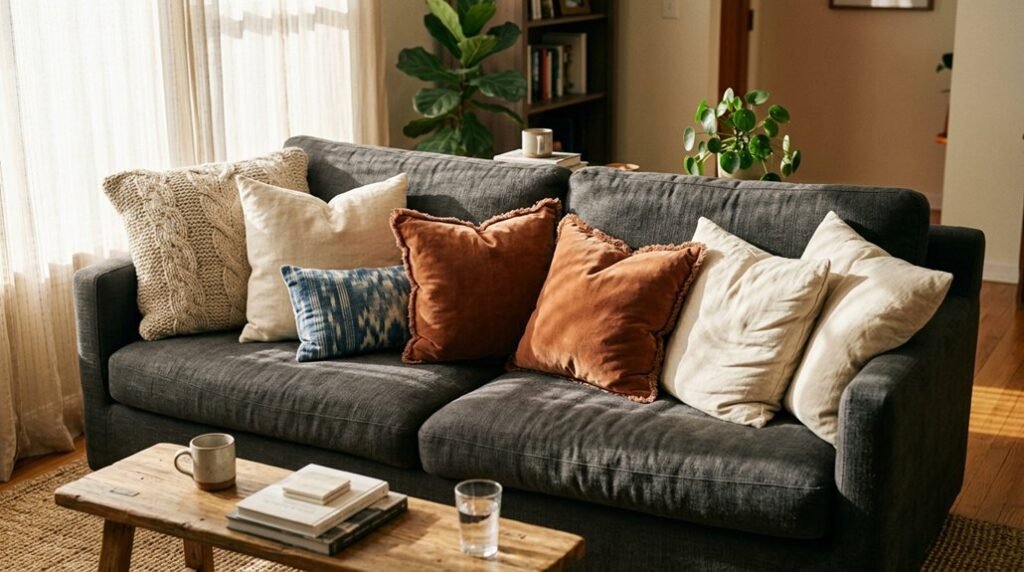
You want your sofa to look inviting, not cluttered, but the line between styled and stuffed is thinner than you’d think. Start with too many pillows and you’ll fight for seating space; too few, and the room feels unfinished. The real question isn’t just how many—you’ll need to consider size, layering, and whether you’re dressing for daily life or a dinner party.
Start With Sofa Size and Seat Depth
How do you decide where to begin? You start by measuring your sofa size and seat depth, as these determine your throw pillows strategy.
For a standard 72-inch sofa, you’ll place two large anchors at each end and fill between with one to three smaller pieces, creating an odd-numbered arrangement that feels natural and inviting.
Seat depth dictates your layering approach. Deep couches accommodate 24- or 26-inch back pillows with front layers stepping down to 22 or 20 inches.
Shallower sofas demand 22- or 20-inch back pillows to maintain proportional depth and proportion. You’ll maintain two-inch steps between pillow sizes—24 to 22 to 20—to achieve intentional gradient sizing.
This structured progression creates visual harmony without clutter, ensuring your arrangement complements rather than overwhelms your seating.
Recommended Products

QUALITY MATERIAL: The pillow cover is composed of a soft and comfy corduroy which is a kind of polyester fabric, features a cute and elegant boho stripe design. Our pillow covers are of good workmanship, they are tightly sewn without loose threads.

ORDER ONLY THROW PILLOW COVERS: Including 2 or 4 pillow covers without inserts.12"x20", 16"x16", 18"x18", 20"x20" , 22"x22", 24"x24", 26"x26" inch, Please allow 1-2cm deviation because of manual cutting and measurement. Color may be different in different light or on different screen.
What Size Throw Pillows to Buy for Your Couch
Where exactly should your pillows fall on the measuring tape? You’ll want large cushions measuring 22–24 inches for back pillows on bigger sofas, while front pillows work best at 16–20 inches. This sizing creates natural depth through layering without overwhelming your seating.
Stick with an odd-numbered arrangement—three, five, or seven pillows total—across your couch or sectional. For a standard 72-inch sofa, you’ll start with three to five pieces: 20–24 inch back pillows anchored at the sides, 16–18 inch front pillows layered inward. Sectionals accommodate five to nine pillows distributed evenly across zones.
Try the 1-2-3 method: two 22–24 inch neutrals at ends, two medium accents centered, one smaller wild card upfront. These pillow sizes give flexibility for mixing patterns while maintaining balanced proportions. Scale up or down based on your frame’s footprint.
Recommended Products

High-Rebound Filling: These pillows bounce back into shape every time after use. They are filled with 100% virgin fiber. It makes them lightweight, comfortable, and supportive. Solving the long-standing problem of the pillows going flat or saggy

24 x 24 Pillow Inserts (Set of 4) – Standard fit for 24 x 24 pillow covers and protectors. Each insert features 850g / 1.9 lb of filling (15% more than standard inserts) for a fuller, fluffier appearance. For added fullness, use with covers one size smaller. Perfect for living room, bedroom, or patio décor.

Pick the Perfect Fit: This set includes a 24"×24"×4" seat cushion and a 24"×20" back pillow. Each package has 4 pieces total: 2 covers and 2 inserts. Be sure to measure your furniture's seating area before ordering to pick the perfect fit
Layer Large to Small: The Back-to-Front Rule
Once you’ve settled on sizes, you’re ready to arrange. You’ll place your back-to-front pillow arrangement by positioning two large back pillows at each end of your sofa. These anchor pieces, typically 22–24 inches, establish your foundation.
Then you’ll layer large to small toward the center, creating depth with progressively smaller foreground pillows—perhaps 20 inches, then 18. Your back layer must never dip below 20 inches, ensuring it properly supports what’s in front. This gradation feels intentional, not cluttered.
You’ll want an odd number total—three to five layered pillows for standard 72-inch sofas, scaling to five-to-seven for 84–96 inch widths. Match your pillow sizes to your sofa width; oversized arrangements overwhelm compact spaces. This hierarchy transforms random cushions into a cohesive, professional display.
Recommended Products

THROW PILLOW INSERTS

Premium Throw Pillows – Set of 2 decorative and aesthetic throw pillows that are breathable and highly supportive, giving you a soothing experience.

-Filling with upgraded microfiber polyester filler,great spring back ability,medium support.The cover is made of polyester.
Why Odd Numbers Look More Natural
Why do odd groupings catch your eye more than even ones? Your brain naturally seeks a focal point, and odd numbers create dynamic tension that feels organic rather than staged. When you arrange throw pillows on your sofa, you’re building visual interest through asymmetry.
You’ll notice that three or five pillows guide your gaze across the seating area without rigid symmetry. Mix pillow sizes strategically—place larger pillows at the ends and smaller pillows toward the center using the 1-2-3 method. This creates depth and prevents flat, predictable lines.
Balance emerges through varied textures and patterns rather than mirror images. Your sofa gains personality when you layer contrasting fabrics within odd-numbered arrangements. Whether you choose three pillows for a loveseat or seven for a sectional, you’re crafting a space that feels collected, not calculated.
Recommended Products
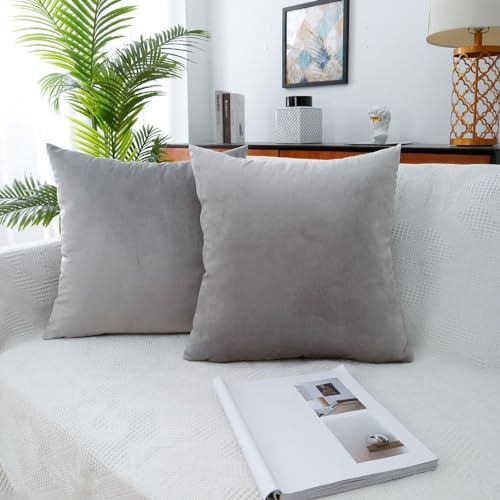
(PILLOW INSERT NOT INCLUDED BUT AVAILABLE IN OUR AMAZON STORE - FILLED VELVET PILLOWS ALSO AVAILABLE AT OUR AMAZON STORE)

(PILLOW INSERT NOT INCLUDED BUT AVAILABLE IN OUR AMAZON STORE - FILLED VELVET PILLOWS ALSO AVAILABLE AT OUR AMAZON STORE)

(PILLOW INSERT NOT INCLUDED BUT AVAILABLE IN OUR AMAZON STORE - FILLED VELVET PILLOWS ALSO AVAILABLE AT OUR AMAZON STORE)
Everyday vs. Guest-Ready: Two Arrangements
How do you balance a sofa that works for daily lounging with one that impresses when company arrives? You create two distinct arrangements using the same foundation.
Start with anchor-end pillows sized 22–24 inches at each corner—these stay put for your everyday setup. For daily comfort, you’ll keep just these two plus one front-layered smaller pillow (16–18 inches) in the middle, achieving that balanced look with minimal fuss.
When guests arrive, you layer in the full 1-2-3 method: add two mid-size pillows in contrasting tones, then finish with one smaller “wild card” piece. This brings you to five odd-numbered pillows total on a standard sofa width.
Your everyday vs guest-ready approach lets you scale up without starting over. You maintain visual cohesion while adapting pillow sizes and layering depth to the occasion.
Recommended Products

Cozy Modern Farmhouse Style – Bring warmth and charm to your space with Meekio solid pillow covers. Soft neutral tones and linen texture create a cozy farmhouse look for your living room or bedroom.

Pillow Inserts: A pack of two 22x22 inch pillow inserts, made from 100% polyester and shipped vacuum-sealed. Note: Inserts may appear flat upon opening—place them in the dryer on a low-heat setting to help them quickly regain full volume. For a fuller look, consider sizing up

【Touches Like Clouds】- This Down Alternative Throw Pillow offers chic style and luxurious comfort with a dreamy high-quality polyester fiber, mimicking the fluff of a natural down pillow. When you touch its ethereal filling, it's like stroking a fluffy cloud – we assure you'll be smitten from the first touch!
Adjust the Formula for Sectionals and Loveseats
Where do you start when your sofa isn’t a standard three-seater? You adjust your approach for sectionals and loveseats to maintain visual harmony.
For sectionals, you’ll need 7–9 pillows to achieve sectional balance across longer profiles. Anchor largest pillows—typically 22–24 inches—at each corner, then work inward with smaller sizes. This layering technique creates depth while preserving usable seating. You’ll distribute colors evenly across all sections to prevent lopsided visual weight.
For loveseats, follow simple loveseat guidance: use 3 pillows total. Place two 20-inch pillows in front with a larger back pillow anchoring the ends.
Recommended Products

【Natural Linen Fabric】 Made of grade natural ramie linen blend. Natural linen fabric makes it soft, comfortable, and breathable—good workmanship, tightly sewn
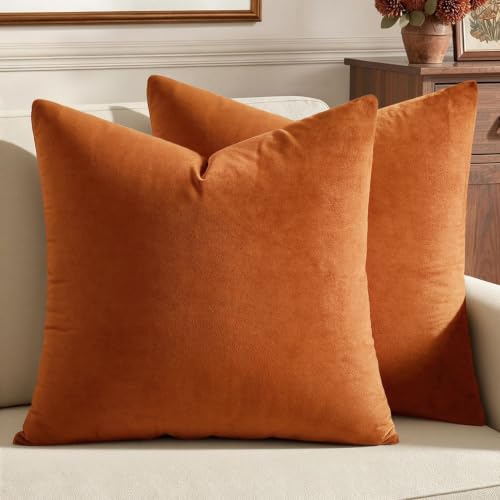
Luxurious Velvet Fabric:Crafted from premium velvet,both sides feature a soft, plush texture that feels cloud-like to the touch;this versatile aesthetic adds an elegant look to home decor,complementing both modern minimalist and classic luxury styles

Exquisite Velvet Comfort: Crafted from premium, ultra-soft velvet, our decorative pillow covers deliver luxurious softness and rich, velvety texture. Experience an exquisite touch that instantly elevates comfort and adds a sophisticated sensory appeal to your living space.
Choose Inserts One Size Up for Fullness
What size insert actually fills out your pillow cover properly? You’ll achieve ideal fullness by selecting pillow inserts one size up from your cover dimensions. For example, stuff a 24-inch insert into a 22-inch pillow cover. This straightforward size guidance prevents that sad, sagging look and gives your decorative pillows the plush shape they deserve.
You’ve already committed to an odd-numbered arrangement on your sofa, so don’t undermine that balanced aesthetic with flat, lifeless forms. The larger insert size creates tension in the fabric, maintaining crisp edges and proper proportion for your sofa pillows.
Apply this rule consistently across your collection. Whether you’ve chosen three pillows or seven, each one requires proper interior support. Your decorative displays will appear professionally styled when you prioritize structural integrity alongside your count strategy.
Recommended Products

【Packaging Content】 2 pcs24*24 inch decorative pillow covers made of premium (NO INSERT).The front of the covers is cozy faux rabbit fur, and velvet on the back, smooth and soft to touch, Suitable for indoors.

Pick the Perfect Fit: This set includes a 24"×24"×4" seat cushion and a 24"×20" back pillow. Each package has 4 pieces total: 2 covers and 2 inserts. Be sure to measure your furniture's seating area before ordering to pick the perfect fit

24 x 24 Pillow Insert: Pack of 2 decorative throw pillow inserts, each featuring a soft and durable cotton cover. Each pillow insert measures 24 by 24 inches
Fluff and Arrange for a Polished Look
Why settle for a haphazard pile when you can craft an intentional display? Start by selecting an odd number of throw pillows for your sofa—three for smaller pieces, five for larger ones—to achieve natural visual flow. Position two large anchor pillows at each end, typically 22–24 inches, then build depth through layering smaller sizes in front. You’ll maintain balance by using two-inch increments between pillow sizes, creating a graduated 24 → 22 → 20 arrangement that preserves clean sightlines. Mix textures throughout—linen, velvet, or woven accents—to add dimension without chaos. This structured approach ensures your sofa feels curated rather than cluttered, with each element contributing to a cohesive, welcoming composition.
Recommended Products

Throw Pillow Pack of 2– Masterly crafted pillows with dimension 16x16 inches, designed to provide an exceptional level of comfort while adjusting to the modern bedding setting.

16 x 16 PILLOW INSERTS: Pack of 2 decorative throw pillow inserts, each featuring a soft and durable cotton cover. Each pillow insert measures 16 by 16 inches

[ Durable and high-quality ]: Made of long-lasting burlap feeling machine washable polyester,this fall pillow cover is built to withstand multiple seasons and maintain its new look with proper care.
Three Rules for Knowing When to Stop
How do you know when your sofa’s perfectly dressed rather than overstuffed? You’ll use the 1-2-3 method and visual balance to guide your decisions.
First, match your pillow count to your sofa width. Standard sofas need 3–5 pillows, while larger sofas or sectionals handle 5–7. For a 72-inch sofa, start with three; scale to five for 84–96 inch pieces.
Second, embrace the odd number rule. Three pillows create natural flow on compact seating, five suit bigger spaces. This prevents rigid symmetry.
Third, prioritize balanced arrangement over accumulation. Add each pillow with purpose—perhaps a punch of texture or color—then step back. If seating feels compromised, you’ve crossed into excess.
You’ll avoid crowding by letting depth and layout dictate limits, not arbitrary numbers. Stop when function and form align.
Recommended Products

(PILLOW INSERT NOT INCLUDED BUT AVAILABLE IN OUR AMAZON STORE - FILLED VELVET PILLOWS ALSO AVAILABLE AT OUR AMAZON STORE)
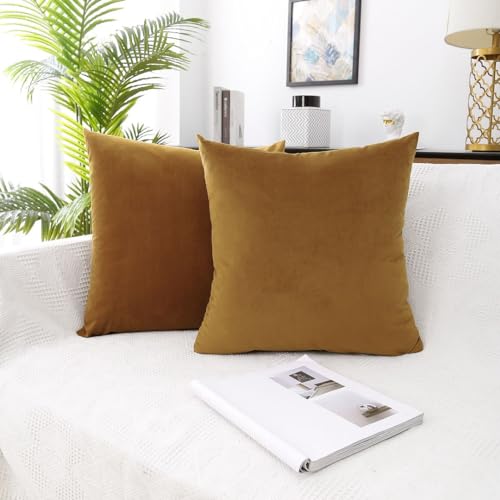
Upholstery-High quality Velvet Throw Pillow - Made from Durable rich faux Velvet Fabric

Upholstery-High quality Velvet Throw Pillow - Made from Durable rich faux Velvet Fabric
Conclusion
You’ve got all the tools you need to style your sofa like a pro. Start with your sofa’s size, layer from large to small, and stick with odd numbers for that natural, balanced look. Don’t forget to size up your inserts and fluff regularly. Whether you’re keeping it casual or dressing it up for guests, trust your eye—when it feels cluttered, you’ve gone too far.
Recommended Products

Package Info: 2 pcs pillow covers (NO INSERT).Perfectly fit for the same size pillow insert. Please Note: Hidden zipper is well disguised and stitched in across one side.
Material:100% Cotton. It is made with light weight, 100% high quality cotton canvas for comfort and durability.

PILLOW INSERTS: The package includes 2 decorative 22"x22" pillow inserts with 100% cotton cover, which is breathable and skin-friendly