
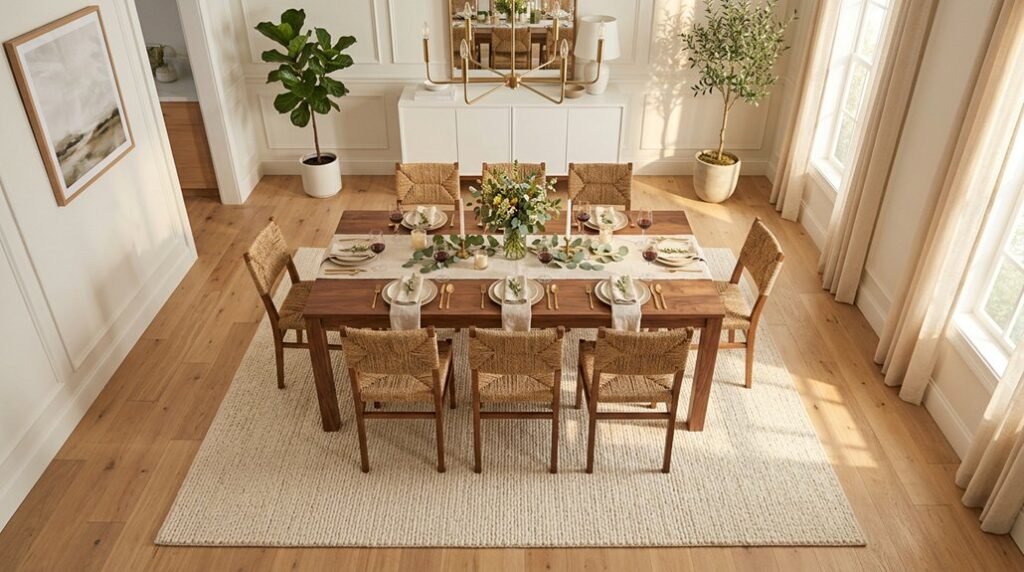
You need 24 inches of clearance on every side of your table—no exceptions. Pull out a chair; measure where the back legs land. That’s your minimum rug boundary. But room dimensions, table shape, and traffic flow complicate this simple rule in ways you haven’t anticipated.
How Much Bigger Should a Rug Be Than Your Dining Table?
How precisely should your rug extend beyond the table’s edges? Dining room rug sizing demands technical precision: you’ll typically extend beyond table dimensions by at least 24 inches on all sides, effectively adding four feet to both length and width for rectangular tables. This ensures chair movement remains fully supported—no legs catch the rug’s edge when you pull out seating.
Round tables follow a different calculation: add approximately 48 inches to your table’s diameter for optimal rug size, creating symmetrical visual balance. In compact spaces, you subtract 24 inches from room dimensions to estimate maximum rug size, maintaining 12 inches of exposed floor around the perimeter. When between sizes, outline your table and chairs with painter’s tape to visualize chair movement and confirm seating stays completely on the rug during use.
Recommended Products

Low Pile Design – Featuring short, durable fibers, this low pile round rug is not only easy to maintain but also stands up to heavy foot traffic without matting or crushing. Its low profile fits neatly under doors, so you won’t have to worry about door clearance.

WASHABLE RUG: This is a fully machine washable area rug for extra convenience. machine wash this living room rug in cold water alone for a deeper clean. regular vacuuming and spot cleaning will keep the rug looking fresh while the colors stay vibrant and won't fade, perfect for busy households with kids and pets

Machine Washable: For daily cleaning, can be easily cleaned by vacuum cleaner. For deep cleaning,machine wash in cold water (<87℉) and hang it to air dry. Say goodbye to stains, and enjoy a fresh, clean rug effortlessly
Standard Rug Sizes by Table Seating (4–10 Seats)
What dimensions actually align with your seating capacity? Standard dining room rug sizes correspond directly to your table’s seating capacity. For 4–6 seats, you’ll select an 8×10 rug, ensuring chairs remain fully supported when pulled out. For 6–8 seats, a 9×12 rug accommodates extended chair movement while maintaining proportional balance with 72–84 inch tables. For 8–10 seats, you’ll deploy a 10×14 rug in spacious dining rooms. These seating guidelines function on a single technical principle: the rug extend beyond table edges by at least 24 inches on all sides. This measurement captures chair movement completely—front legs slide back without catching the edge, rear legs rest securely when diners push in or out. You’re building both aesthetic harmony and functional performance into the floor plane.
Recommended Products

TIPS:When the area rugs arrive there will be some creases at the beginning, please don't worry, gently smooth them out,flatten them on the floor and walk around, the creases will disappear in a few days.

Luxuriously Soft & Non-Slip: This 8x10 area rugs features dense low-pile for ultra-soft underfoot comfort. Enhanced TPR non-slip backing keeps it securely in place on all floors, providing peace of mind for families with kids and pets

Great Value & Chic Style: This 8x10 area rug adds a vibrant touch to your living room with its beautiful colors and subtle pattern that complements your furniture and decor. It's soft to the touch and looks as elegant as more expensive entryway rugs, offering excellent value for its quality.
Sizing Down for Small Dining Rooms
Where exactly does your rug stop and your wall begin? You define this boundary through precise rug footprint clearance calculations. Subtract twenty-four inches from both your room’s length and width; this yields your maximum dining room rug size while preserving essential negative space. You’re targeting at least twelve inches of exposed floor between rug edge and wall to prevent visual compression.
Your rug extends under chairs even when pulled back—this isn’t negotiable. For a typical four-seat arrangement, you’ll deploy an 8×10 footprint, though you measure your specific table and chair travel first. Small dining room guidance demands you verify clearances: push every chair fully outward, mark positions, then size your rectangle. When calculations fall between standard dimensions, you size up slightly. Proportion triumphs over minimalism here; cramped furniture reads as error, not intention.
Recommended Products

Non-slip Protection: Our pad's signature grip keeps rugs securely in place, preventing bunching and sliding during daily use. It also protects your floors from wear and tear, including damage from high heels, children at play, and more.

Discover our Geometry Series—where precision meets artistry. This 6x9 (180 cm x 270 cm) rug features clean modern lines, designed to elevate contemporary spaces effortlessly. Tip: Always measure your area before purchase.
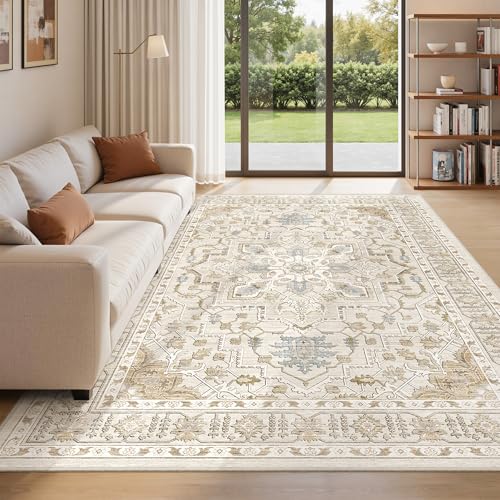
TIPS: When the area rugs arrive there will be some creases at the beginning, please don't worry, gently smooth them out,flatten them on the floor and walk around, the creases will disappear in a few days.
Why Oversized Rugs Work in Large Rooms
Small room constraints fall away when you’re working with generous square footage, and your rug strategy shifts from containment to expansion. In large rooms, oversized rugs ground your furniture and visually anchor the dining area, creating cohesion across expansive floor planes. Scale alignment prevents your table from appearing adrift; generous proportions maintain visual equilibrium.
Your dining table rug size must account for substantial rug extension beyond table edges—aim for at least twenty-four inches on all sides. This extension effectively enlarges the usable area, accommodating chair movement without catching legs. For round tables, add approximately forty-eight inches to the diameter; a forty-eight-inch table thrives on a ninety-six-inch rug.
Beyond aesthetics, oversized rugs enhance acoustics, muffling chair scrapes and dining resonance across broader surfaces. You’ll achieve proportional balance and functional performance simultaneously.
Recommended Products
Non-slip Protection: Our pad's signature grip keeps rugs securely in place, preventing bunching and sliding during daily use. It also protects your floors from wear and tear, including damage from high heels, children at play, and more.

Upgraded Fluffy Area Rug: The 10x14 Beige rug provides thermal and acoustic insulation, Are rug for bedroom has a thickness of 1.8 inch pile, No shed, No fade, No smell; Beige shag rugs use thousands of non-slip latex particle dots as backing to enhance friction to prevent it from sliding, more safely; The fluffy Beige rug with a high-density sponge interlayer, makes your bedroom rugs more soft; Small throw rugs make you feel like stepping out onto a cloud and shield toes from the cold floor

WASHABLE RUG: This is a fully machine washable area rug for extra convenience. machine wash this kitchen rug in cold water alone for a deeper clean. regular vacuuming and spot cleaning will keep the rug looking fresh while the colors stay vibrant and won't fade, perfect for busy households with kids and pets
Match Your Rug Shape to Your Table Shape
How should your rug’s silhouette correspond to your table’s form? Match your rug shape to your dining table for optimal visual cohesion. You’ll achieve the most harmonious result when a rectangular rug frames a rectangular dining table, extending approximately 24 inches beyond each edge to accommodate seated guests and define the spatial footprint.
For round tables, select a round rug, adding roughly 48 inches to the table’s diameter to establish radial symmetry and soften surrounding angular architecture. When rug shape aligns with table geometry, you’ll reinforce continuous visual lines and prevent awkward edge misalignment. If you diverge from matching shapes, ensure the rug still extends sufficiently beyond table perimeters to support chair movement without floor exposure. This correspondence anchors your seating arrangement and sustains balanced proportions, particularly within compact interiors.
Recommended Products

Safety And Non-Slip Rugs: Our area rug is made of the highest quality polyester fiber, and the non-slip TPR backing helps the carpet stay in place and hold the floor firmly, protecting your children and elderly from slipping and falling.

SIZE: This handwoven jute area rug is 8 Feet Round. We have many more sizes for you to choose from.

[Modern Abstract Area Rug] - Add a pop of color to your living room or bedroom with this area rug. Designed with a delicate palette, this collection impresses with an abstract print with splashes of grey, yellow, and beige hues. Its purposefully faded look fits right in modern industrial and contemporary homes.
Measure With Chairs Pulled Out: Not Just the Table
Once you’ve aligned your rug’s geometry with your table’s silhouette, you’ll need to determine precise dimensions—and this requires looking beyond the table itself. You’ll extend your measurement guide to accommodate chairs pulled out to their full seating position, not merely tucked beneath. Add approximately 24 inches of rug extension beyond each table edge—this ensures chair legs remain grounded on the rug during use. For your dining room, position chairs fully backward as you’d when seating guests, then mark these outer points. Your final rug size must encompass this expanded footprint.
Rectangular tables typically demand rugs adding roughly 24 inches per side—consider 8×10 for four-to-six seat arrangements or 9×12 for six-to-eight seat configurations. This functional approach prevents chair legs from catching rug edges, maintaining both aesthetic cohesion and practical stability throughout every meal.
Recommended Products

WASHABLE RUG: This is a fully machine washable area rug for extra convenience. machine wash this living room rug in cold water alone for a deeper clean. regular vacuuming and spot cleaning will keep the rug looking fresh while the colors stay vibrant and won't fade, perfect for busy households with kids and pets

SOFT&TIMELESS:A soft rug combines comfort with lasting style and a gentle color scheme, offering a cozy atmosphere. Walking or sitting on a soft area rug is a sensory pleasure, enhancing the overall comfort and relaxation of a room.Its timeless design blends seamlessly with any decor, ensuring enduring elegance and comfort for your home
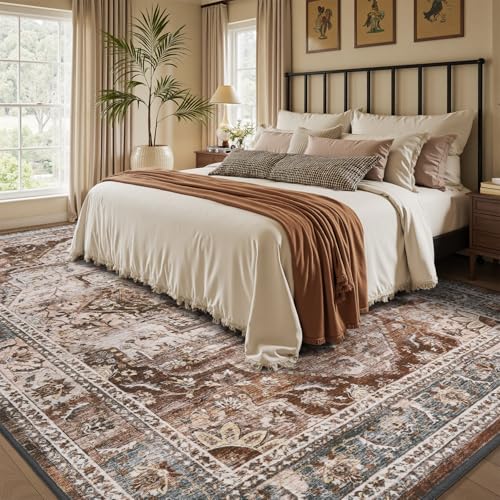
Comfortable&Soft: Dense, tight, velvety, skin-friendly fibers are surprisingly soft and comfortable underfoot. Cozy rug for walking, sitting, nap or lounging. No smell for sensitive people. Great choices to be home office rug, guest room rug, bedroom carpet, nursery rug, living room carpet.
Test Rug Size With Painter’s Tape Before You Buy
Where else can you verify spatial relationships before committing to a purchase? Rug size testing with painter’s tape lets you prototype exact dimensions on your floor. You’ll outline the table footprint plus 24 inches beyond each side—48 inches total added to length and width for rectangular setups. For a 36-by-71-inch table, you’re taping roughly 7-by-9 to 11 feet.
Now pull chairs fully out; all legs must stay within the taped dining table rug underlay zone during use. This simulates real chair clearance dynamics. When you’re torn between two sizes, tape both outlines side-by-side. You’ll instantly perceive which configuration prevents leg wobble and visual disharmony. The tape method eliminates guesswork, transforming abstract measurements into concrete, walkable geometry before purchase.
Recommended Products

【Living Room Rug】The DweIke area rug features a unique geometric pattern with color-blocking elements, complementing bedrooms, offices, dining rooms, kitchens, and home decor

Simple Rug Maintenance: This 4x10 rug is machine washable, so keeping this 4x10 washable rug clean is a breeze. If there are accidental spills or stains, a quick wipe is all it takes to fix them. Besides that, spot cleaning and vacuuming it are totally effortless—making this 4x10 runner rug an ideal pick for high-foot-traffic areas.

MACHINE WASHABLE RUG: Designed for modern homes, this washable 8x10 rug features a stain-resistant surface that helps protect against spills, pet accidents, and daily messes. Allowing quick spot cleaning for everyday spills before washing. Simply machine wash with cold water for easy maintenance. For larger sizes (6x9 and above), use a commercial washer. The quick-drying fabric helps restore your rug faster while keeping colors vibrant wash after wash
Best Dining Rug Materials for Easy Chair Movement
Painter’s tape outlines your dimensions; now consider what happens when chairs scrape against fibers thousands of times per year. You’ll want flatweave constructions—tightly woven with no raised pile—to eliminate snagging and resistance during chair movement. Low-profile dining room rug materials like wool or synthetic blends deliver durability without bulk, letting casters glide smoothly across stable surfaces.
You’ll benefit from pairing your selection with a quality rug pad beneath; this reduces friction against hardwood while preventing dangerous shifting as you push chairs in and out. All-in-One Rugs and flatwoven options maintain wrinkle-free planes essential for uninterrupted motion. Prioritize these technical specifications, and you’ll create an aesthetic foundation that performs functionally through countless meals.
Recommended Products

Non-slip Protection: Our pad's signature grip keeps rugs securely in place, preventing bunching and sliding during daily use. It also protects your floors from wear and tear, including damage from high heels, children at play, and more.

Material: microfiber, TPE| Pile: about 0.25 inches | Sizes: 5x7ft, 6x9ft, 8x10ft, 9x12ft. Area rug may contain creases upon arrival. Please allow time for creases to flatten and settle | Color: Multi

【Modern Area Rug】This 6x9 ft blue abstract rug perfectly integrates minimalist elegance with an irregular pattern design, perfect for living room, bedroom, dining room and playroom
Why Undersized Rugs Cause Chair Tipping and Visual Imbalance
Why risk a spilled dinner or worse? Undersized rugs create hazardous chair tipping when you pull seating outward—only front legs rest on the surface while back legs hang suspended, destabilizing against hard flooring. You’ll notice abrupt noise amplification too; inadequate coverage fails to cushion movement, producing jarring scrapes and footsteps.
Your visual balance suffers simultaneously. When the rug doesn’t extend beyond table boundaries sufficiently, the table dominates disproportionately while the dining zone floats disconnected from surrounding space. Spatial definition collapses.
Function demands precision. Ensure your rug extends beyond table perimeters by at least 24 inches on all sides—this maintains proportional hierarchy and keeps chair feet grounded. You’ll eliminate tipping hazards, dampen acoustic disruption, and establish clear territorial boundaries within larger rooms. Scale correctly.
Recommended Products

WASHABLE RUG: This is a fully machine washable area rug for extra convenience. machine wash this kitchen rug in cold water alone for a deeper clean. regular vacuuming and spot cleaning will keep the rug looking fresh while the colors stay vibrant and won't fade, perfect for busy households with kids and pets

Great Value & Chic Style: This 10x14 area rug adds a vibrant touch to your living room with its beautiful colors and subtle pattern that complements your furniture and decor. It's soft to the touch and looks as elegant as more expensive entryway rugs, offering excellent value for its quality.
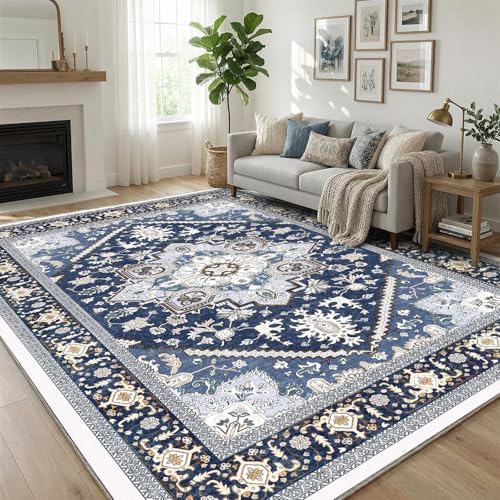
Ultra-Soft Velvet Feel: This rug for living room features a 13 oz/yd² faux wool surface, creating the ideal balance between softness and thickness. ----Most products only have 11 oz/yd² surface or less
Fixes for Snagged Chairs and Crooked Rugs
You’ve addressed proportional scale, but operational failure persists when chairs snag at rug edges or the whole surface skews underfoot. You solve this by selecting a rug size extending twenty-four inches beyond your table on all sides, ensuring chair movement stays contained within the boundary. You measure with chairs fully extended to confirm all legs rest on the surface during use. You add a rug pad beneath to anchor the foundation, reduce slippage, and prevent snagging on casters or leg bases.
For crooked placement, you test-fit with painters tape first, mapping the table-and-chairs footprint directly onto the floor to visualize alignment before committing. You correct asymmetry through precise measurement rather than eye alone. These interventions restore functional stability and maintain clean visual geometry underfoot.
Recommended Products

[Modern Abstract Area Rug] - Add a pop of color to your living room or bedroom with this area rug. Designed with a delicate palette, this collection impresses with an...
Conclusion
You’ve measured your table, mapped your room, and weighed material resilience against daily use. Select a rug that extends 24 inches beyond each edge, shape-match to your table, and anchor with a quality pad. Test dimensions with tape, prioritize low-pile weaves for smooth chair glide, and maintain proportional margins against your walls. Execute these specifications precisely, and you’ll engineer a dining zone that stabilizes seating, unifies spatial composition, and performs under sustained mechanical stress.