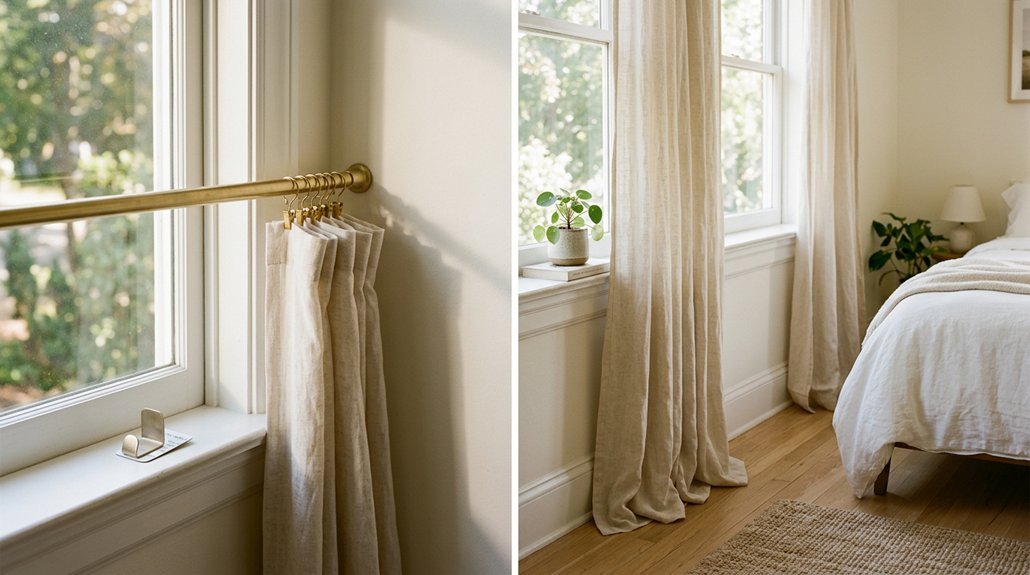

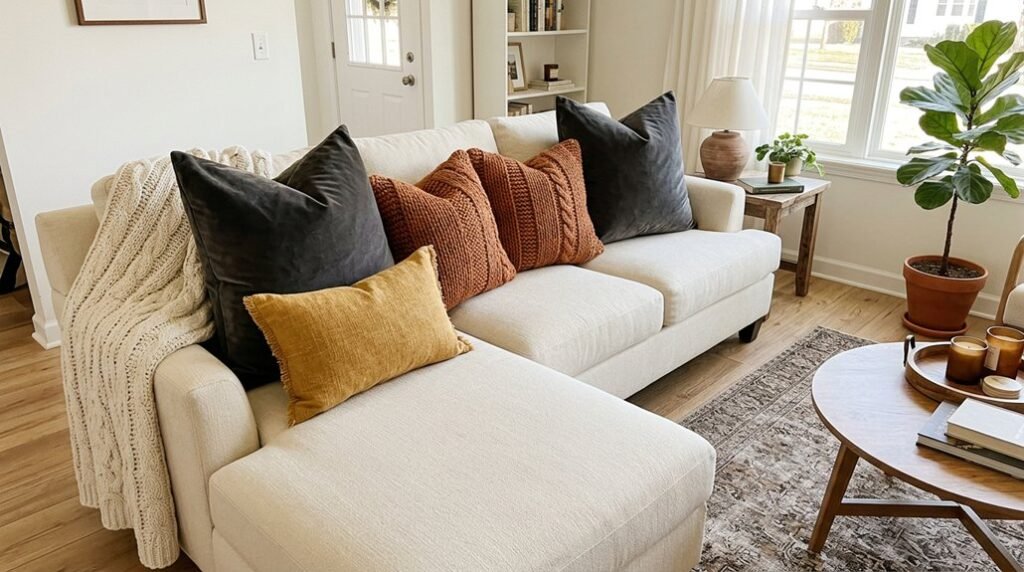
You stand before your sectional, pillows in hand, and realize there’s more to this than tossing shapes onto cushions. The right arrangement transforms your living room from functional to intentional—but get it wrong, and you’ve got chaos instead of comfort. Your sectional’s shape holds the answer, and you’re about to discover why corner placement changes everything.
Start With Your Sectional’s Shape: L, U, or Chaise
Where do you even begin with pillows? You’ll start by identifying your sectional shape. Whether you’ve got an L-shaped, U-shaped, or chaise-including configuration, this foundational step determines your entire approach.
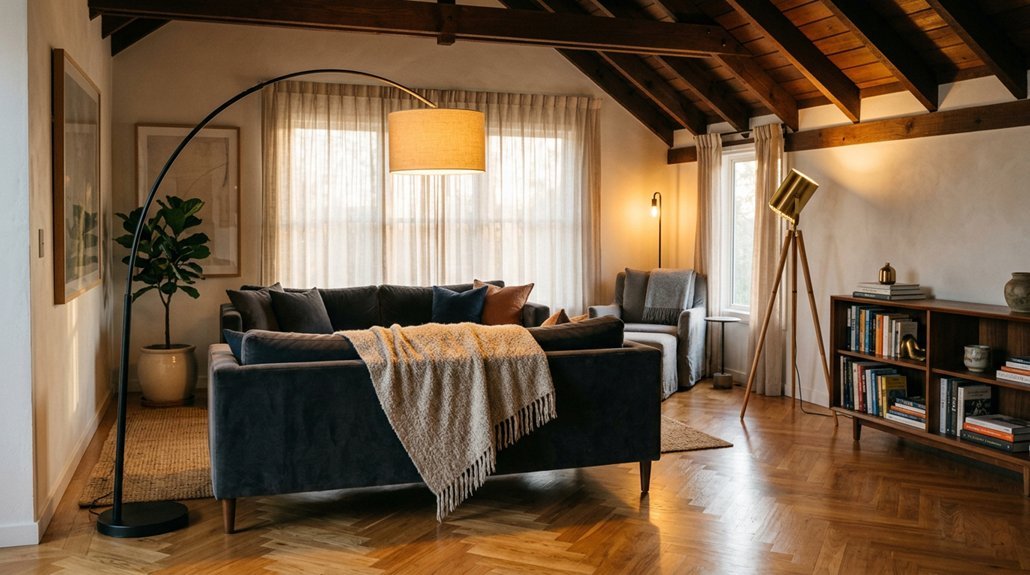
Once you’ve mapped your sectional shape, you’ll place a base row along the outer edges to emphasize that silhouette and create a continuous visual line. This isn’t arbitrary—your sectional shape dictates exactly where pillows anchor ends and how many layers you’ll need.
Got a chaise? You’ll balance that elongated arm with a larger pillow at that end. Working with a U-shaped or multi-corner arrangement? You’ll need 6—7 pillows to define each seating corner without crowding your center.
You’ll start with 22—24 inch pillows at the ends, then layer inward with 20—22 inch cushions for depth and structure. Your pillow placement follows this hierarchy naturally.
Recommended Products

Designed for Standard Square Covers: Sized at 18 x 18 inches, these square pillow inserts are made to fit standard decorative throw pillow covers neatly and evenly.


[Standard Size]Package included 4 pcs 20x20 inch blue pillow covers(no insert included,ue to manual measurement and cutting, 1-2 cm error may occur.)
Anchor Your Sectional’s Corners First
How do you keep a sprawling sectional from looking scattered? You anchor your sectional’s corners first with the largest pillow sizes, typically 22–24 inches, to create solid visual foundations.
Place these oversized pillows at each end to establish symmetrical balance and prevent smaller cushions from appearing overwhelmed. For deeper layouts, you’ll extend anchoring to the middle corners too, ensuring the largest pillows define both ends and center for cohesive weight.
Use the largest-to-next-largest progression—22–24″ anchors, then 20–22″ layers—to build dimensional depth without crowding. Smart sectional styling demands this hierarchical approach.
Choose colors and patterns within coordinated palettes so anchored corners read as anchors rather than focal clumps, maintaining overall harmony throughout your space.
Recommended Products


Soft and comfortable: Our pillowcases are made of ultra-fine fibers, with comfortable and breathable fabric that is soft and skin friendly. Good stitching and exquisite craftsmanship can also reduce loose threads.

PILLOW INSERT 24x24:Including 1 piece of 24 x 24 inch pillow insert with a cotton cover, durable and breathable. Soft yet supportive, it keeps a beautifully plump shape and is built for styling, making it easy to achieve the classic karate chop look with a full appearance.
Fill the Middle and Ends With Sized Layers
Once your corners are anchored, you’ll build outward by filling the middle and ends with sized layers that create depth without clutter. Anchor each end with your largest pillows, typically 22–24 inches, to establish a solid base for the pillow arrangement. You’ll add the next layer using 20–22 inch pillows across both ends and the middle, building balanced depth throughout your sectional.
For the center, place a lumbar or 14–16 inch pillow to accent patterns without overwhelming your focal pieces. You’ll use layering by positioning medium pillows in front of larger ones, creating contrast and dimension that draws the eye. Maintain symmetry at both ends while introducing a distinct middle variation. This approach keeps your pillow arrangement cohesive yet visually interesting, ensuring your sectional looks styled rather than overcrowded.
Recommended Products

22 x 22 Throw Pillows (Set of 2) – Offers a standard fit for 22x22 pillow covers and protectors. For a fuller, fluffed-up look, use them with covers one size smaller. Soft, fluffy couch pillows for living room, bedroom, or patio décor.

Long-lasting Durability: 100% Virgin Filling and 110 GSM Brushed Fabric combining aesthetics and practicality for long-lasting use. 20x20 pillow insert is filled with 600g/1.3lb filling (20% more than other).
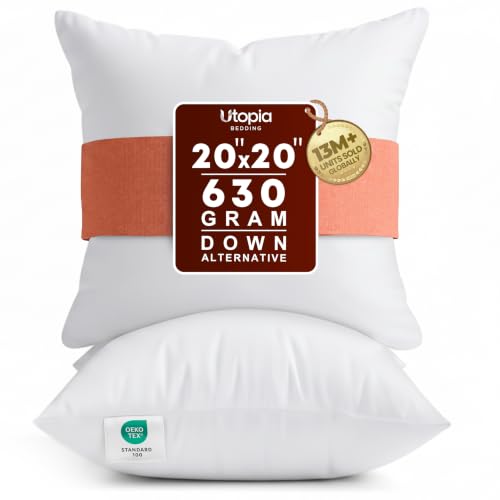
Throw Pillow Pack - Pack of 2 decorative throw pillows for your couches or bedroom; they are neither too big nor too small and they give off a homely vibe
Choose Pillow Sizes for Your Sectional’s Depth
Why does your sectional still look flat despite all those pillows? You’ve probably mismatched your pillow sizes to your sectional depth. Start by anchoring 22–24 inch pillows at the back corners or ends to establish a visual base. Layer 20–22 inch pillows on both ends and middle to build dimension without crowding seam lines. For deeper sectionals, you’ll support larger, layered arrangements—think 22–24 inch anchors, 20–22 inch mid-layers, and 16–18 inch or smaller lumbar pillows finishing the cluster. Compact designs demand restraint: simpler, fewer pillows prevent overwhelming the space. You’ll want balanced distribution—fuller ends, open middle—so conversation flows. Match your pillow sizes precisely to your sectional depth, and you’ll transform that flat surface into a dimensional, inviting arrangement that actually works.
Recommended Products

14 x 20 Pillow Inserts (Set of 2) – Offers a standard fit for 14x20 pillow covers and protectors. For a fuller, fluffed-up look, use them with covers one size smaller. Soft, fluffy couch pillows for living room, bedroom, or patio décor.

PILLOW INSERT 14x36:Including 1 piece of 14 x 36 inch pillow insert with a cotton cover, durable and breathable. Soft yet supportive, it keeps a beautifully plump shape and is built for styling, making it easy to achieve the classic karate chop look with a full appearance.

FRONT: 68% Polyester, 16% Cotton, 10% Rayon, 6% Nylon BACK: 100% Polyester
Pull Colors From Your Sectional and Rug
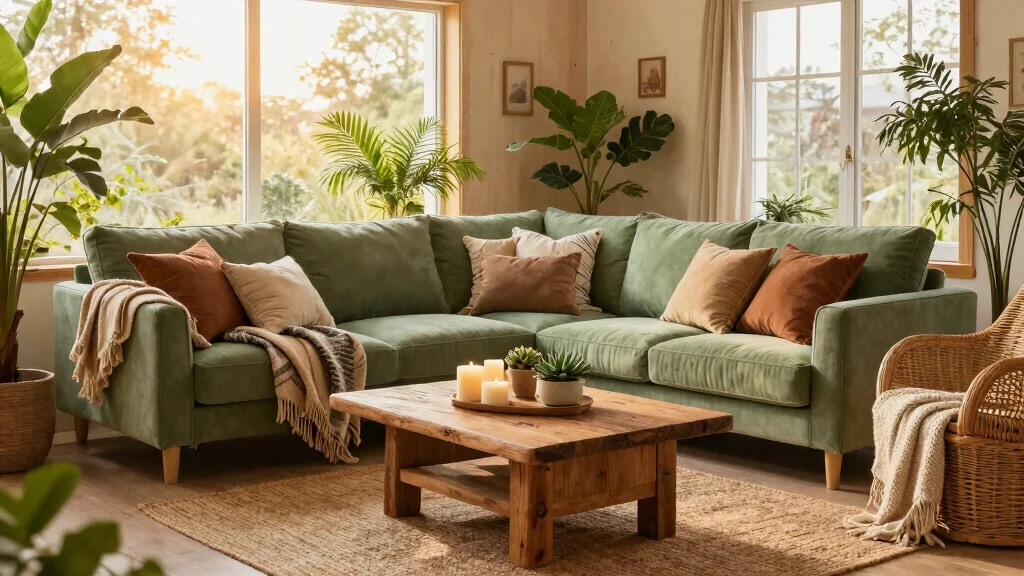
Where do you begin when your sectional and rug are already doing the heavy lifting? You start by sampling their hues to build your pillow arrangement’s color palette. Pull tones directly from these anchor pieces to create cohesion across your textiles.
You’ll want to establish neutral base tones on your largest pillows, then weave in complementary or accent colors drawn from your rug. This creates visual harmony without competing elements. Stick to two or three core hues to maintain balance while letting patterns breathe.
Repeat key rug colors in smaller pillows to reinforce accents throughout the sectional. For impact, introduce one contrasting shade in a middle pillow or throw—this creates a focal point without disrupting your carefully curated color palette.
Recommended Products

4 Convertible Modes & Flexible Modular Design: This modular sectional sofa is composed of 2 lightweight L-shaped oversized chaises, designed to bring maximum versatility to your living space. Unlike fixed sofas, it features 4 adjustable using modes—you can freely rearrange and combine the modules according to your daily needs, whether you want a compact layout for small spaces or a spacious setup for gatherings. It effortlessly adds a personalized touch while adapting to any living room style.

Flexible Configuration: This DIY combination couch bed offers free arrangement modes—such as L shaped couch, sofa & coffee table set, chaise lounge, entertainment corner, oversized sleeper sofa bed—making it the perfect choice for families, allowing for flexible layouts in living rooms or playrooms where parents and children can relax, play, or host guests together

SPACIOUS MODULAR DESIGN: Ball & Cast 127" L-Shaped Sectional Couch provides ample seating for up to 7 people, making it the perfect modular sectional sofa for hosting guests or relaxing with family. The L-shaped sofa configuration fits seamlessly into any modern living room sofa set and is available in 3 colors.
Mix Velvet, Linen, and Woven Textures
Color alone won’t carry your sectional styling—texture brings the arrangement to life. You’ll want to mix velvet, linen, and woven textures to build tactile depth and visual interest across your seating.
Start by placing solid velvet pillows for a luxe focal point, then layer in linen or woven cushions for breathable, casual contrast. Pair that glossy velvet sheen with subtly patterned linen to keep the balance refined, not busy. Vary your finishes by clustering matte linen with one glossy velvet piece at an end or middle grouping.
Anchor high-use areas with a textured woven lumbar or boucle pillow for comfort and structure. Repeat core hues—like navy, taupe, and ivory—across all textures to unify velvet, linen, and woven elements into one cohesive arrangement.
Recommended Products

QUALITY MATERIAL: The pillow cover is composed of a soft and comfy corduroy fabric that features a cute and elegant boho design. Our pillow covers are of good workmanship, they are tightly sewn without loose threads.

Size & Material: 4 pieces 45 x 45 cm pillowcases without pillow filling.Made of soft corduroy.very eco-friendly.durable.without unpleasant odor.The pillowcases are skin-friendly and ideal for children.also pets.

Size & Material: 4 pieces 45 x 45 cm pillowcases without pillow filling.Made of soft corduroy.very eco-friendly.durable.without unpleasant odor.The pillowcases are skin-friendly and ideal for children.also pets.
Zone Your Sectional: Chaise, Corner, and Middle Seats
How do you make every seat on your sectional feel intentional? You divide your sectional zones—chaise, corner, and middle seats—and tailor your pillow arrangement to each area’s purpose.
You’ll place supportive pillows at corner seats to boost back comfort, while keeping middle sections more open to preserve seating capacity. Anchor ends with larger pillows, layer in the middle, and use smaller lumbar or accent pillows for smooth transitions. You can adopt a symmetric approach at the ends with similar sizes, then introduce distinct variation in the central cluster for visual interest.
Adapt your strategy to activity: create a lounging zone with fewer pillows for relaxation, or build a formal seating zone with a fuller, layered arrangement. This zoned approach ensures every spot serves its function beautifully.
Recommended Products

Exact Size & Fit: Package includes 2 pieces of 24x24 inch (60x60cm) boho pillow covers; please note the fabric has slight stretch so sizing may vary by approximately 0.2-0.5 inches; for best results use a standard soft-fill pillow insert as overly firm or overstuffed pillows that exceed the stated dimensions may be very difficult to insert and could overstretch the fabric

【Natural Linen Fabric】 Made of grade ramie linen and cotton Natural linen fabric makes it soft, comfortable, and breathable—good workmanship, tightly sewn

【Premium Quality】ANT-HOME pillow inserts are filled with duck feather and duck down. Down feather pillow have perfect breathable and softness, comfortable, durable and skin-friendly. It can be optimally supportive for your head, shoulders, waist and back.
Swap Covers Seasonally Instead of Buying New
Why replace your entire pillow collection when you can simply swap the covers? Seasonal covers let you refresh your sectional’s look without draining your wallet or storing bulky inserts. You’ll switch from warm autumn tones to cool summer hues in minutes, keeping your space aligned with current decor.
Choose durable fabrics like performance velvet, linen blend, or microfiber to withstand frequent changes. When you swap, reuse your existing pillow sizes—20×20, 24×24, 14×20—to preserve your established pillow arrangement and maintain visual balance. Label each cover set or photograph your seasonal setups to streamline future swaps and ensure consistency year after year. This approach keeps your sectional looking fresh while saving money, storage space, and effort.
Recommended Products

【Material】22x22 inch Pillows Insert for 20x20 pillow case,21x21 throw pillow covers,Advanced microfiber polyester filling, strong resilience, medium support. This lid is 100% cotton covered, breathable and sweaty, soft and comfortable.Provides comfortable support for neck and waist
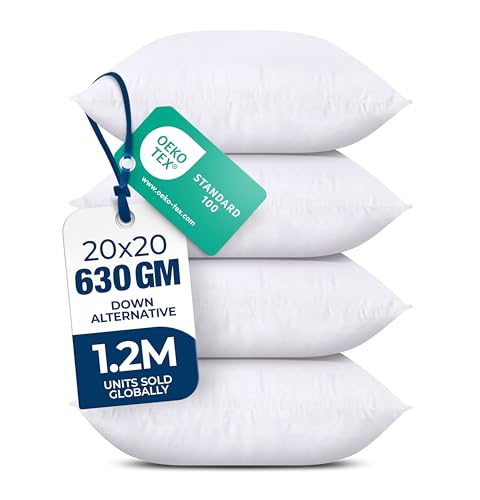
Throw Pillow Inserts - The pack of superior quality pillows is expertly woven and sewn to perfection.
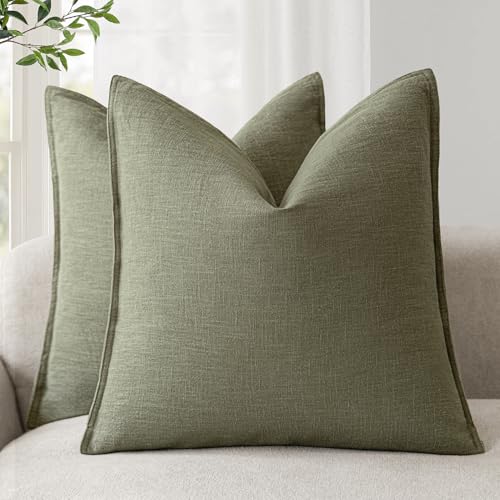
【Natural Fabric】Our pillow covers are made of 70% natural ramie and 30% cotton. Natural ramie fabric makes it soft, comfortable and breathable.
Conclusion
You’ve got everything you need to transform your sectional into a styled focal point. Start with your shape, anchor those corners, layer thoughtfully, and don’t forget to mix textures and pull from your existing palette. Swap covers seasonally to keep things fresh without breaking the bank. Now grab those pillows and make your sectional the coziest spot in your home.
Recommended Products

SIZE: 14x36 Inch, 35x90 cm. Please allow 1 to 2cm deviation because of hand-cutting and sewing

MIX and MATCH: A soft and comfortable Flowers Pattern throw pillow covers set that’s easy to mix and match with other Home decor

SIZE: 14x36 Inch, 35x90 cm. Please allow 1 to 2cm deviation because of hand-cutting and sewing