
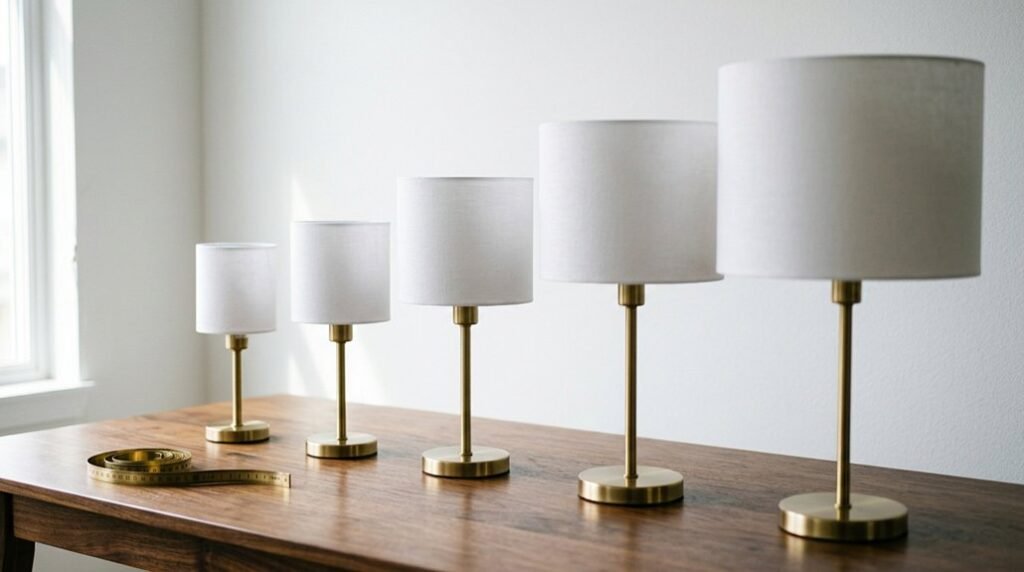
You’re staring at a lamp that looks slightly off, but you can’t pinpoint why. The shade sits too high, or maybe the proportions feel bulky beside your sofa. Getting the size right isn’t guesswork—it’s a simple formula of base measurements, fitter types, and room scale. One misstep throws off the entire fixture. What’s the first measurement you actually need?
Key Takeaways
- Shade height should be roughly two-thirds of the lamp base height for balanced proportions.
- Shade width should extend 2 inches beyond the base’s widest point on each side.
- Measure base height from bottom to socket top, excluding finial or harp hardware.
- Match shade fitter type to hardware: spider-fitter for harps, uno fitter for threaded sockets.
- Ensure the bulb remains hidden when viewed at seated eye level.
Recommended Products

Reliable Quality and Suitable Size: featuring PET material and acrylic adhesive, adhesive black light tape features good masking and insulation, not easy to break and tear, and this tape measures about 25 m/ 82 feet long, 5 cm/ 2 inches wide and 0.06 mm/ 2.36 mil thick, offering light management solutions for multiple optical display devices, and most widely applied in LED and LCD products

✨ Elegant Floral Design - Enhance your decor with dual blue & white floral patterns on a crisp white background, blending vintage charm with modern aesthetics.
How to Apply the 2-Inch Lampshade Width Rule
Why settle for a lampshade that overwhelms or underwhelms your lamp? You’ll find balance with the 2-inch rule, a simple guideline that transforms your lighting from awkward to elegant.
Here’s how you’ll apply it: measure your lamp base’s widest point, then choose a shade that’s 2 inches wider on each side. If your base spans 8 inches, you’ll select a 12-inch shade diameter. You’re creating proportional harmony between base and shade.
You’ll position the shade so it covers the hardware without hiding the base’s decorative elements. When you look at your lamp from eye level, you shouldn’t see the bulb or socket peeking out. You’re aiming for visual weight that’s evenly distributed—neither top-heavy nor bottom-heavy. Trust your eye, but let this rule guide your measurements.
Recommended Products

Shade Dimension: Top diameter: 11.6 inch , bottom diameter:12.6 inch, height: 9.8 inch, screw thread diameter: 0.43 inch. Medium size suits most table lamps and floor lamps. Please check the shade size carefully to make sure they are suitable for your light fixtures before purchasing.

【Dimensions】D:10in x H:4.72in. The Opening of the white Lamp Shades is 1.65 Inches (43.68mm) in Diameter. Designed for standard E26 socket with fixing ring
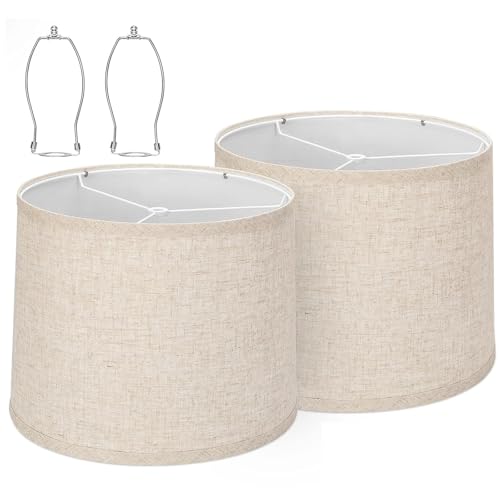
Shade Dimensions: Top diameter: 11.6 inches, bottom diameter: 12.6 inches, height: 9.8 inches, screw thread diameter: 0.43 inches. This medium size is suitable for most table lamps and floor lamps. Please check the shade size carefully to ensure it fits your light fixtures before making a purchase.
How to Calculate Lampshade Height From Base Height
You’ve balanced the width—now you’ll tackle the height. You’ll measure your lamp base from the bottom to the top of the socket, excluding any finial or harp hardware. Take that measurement and multiply it by two-thirds. That result gives you your ideal lampshade height. For example, if your base stands 18 inches tall, you’ll want a shade approximately 12 inches high. This ratio creates visual harmony and prevents the shade from overwhelming or underwhelming the base. You’ll also ensure the bulb sits hidden when viewed from eye level. If your lamp features an unusually long neck or decorative elements above the socket, you’ll adjust downward slightly. Trust your eye, but stick close to this formula for proportionate results.
Recommended Products

【Complete Lamp Harp Kit】Includes 1 nickel-plated 8 inch lamp harp, 1 detachable harp holder, 1 cap knob finial, 1 E26 UNO fitter adapter, and 1 IPS standard saddle. Designed for lamp shade replacement, repair, or lamp upgrade projects.

【Complete Lamp Harp Kit】Includes 1 nickel-plated 8 inch lamp harp, 1 detachable harp holder, 1 cap knob finial, 1 E26 UNO fitter adapter, and 1 IPS standard saddle. Designed for lamp shade replacement, repair, or lamp upgrade projects.

8 Inch Antique Brass Lamp Harp Kit -Detachable Pratical Spare Parts included. 2 kinds of harp holder -saddle base adapter and E26 screw base uno fitter included. And 2 cap knob finials -normal type and Bronze Metal Lamp Finial Cap Knob included for replacement
How to Measure Your Lamp Base Correctly
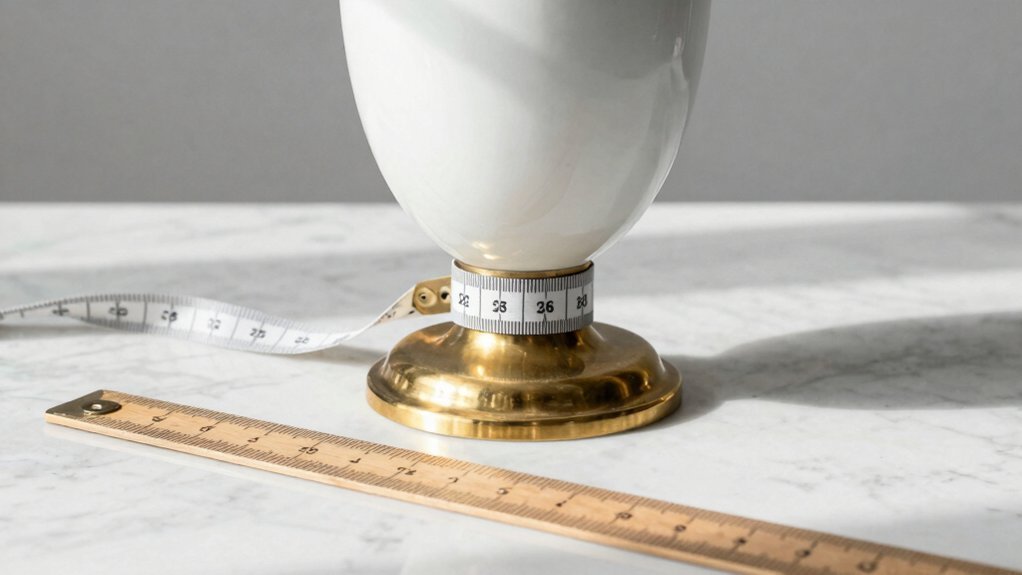
Where exactly should you place your tape measure? You’ll measure your lamp base’s height from its bottom to where the hardware meets the socket. Wrap your tape around the widest point of the base to capture its diameter. Don’t ignore uneven shapes—record the maximum width.
You’ll use these numbers to select proportional shades. Multiply the base height by two-thirds; that’s your target shade height. The shade width should equal the base width or extend slightly beyond it.
Take straight, level measurements. A tilted tape gives false readings. Record dimensions in inches for consistency. Jot notes as you go—don’t rely on memory.
Check your base’s hardware type now. You’ll match this to fitting styles later. Avoid guesswork; precise measurements prevent mismatched purchases and returns.
Recommended Products

【Product Size】The center opening measures 1 1/4" in diamter.Durable rust-resistant steel material,gold, Nice Looking.Applicable spider arm less than 0.12inch (0.3cm) diameter. Please measure the spider arm size carefully before purchasing.

【Product Size】The center opening measures 1 1/4" in diamter.Durable rust-resistant steel material,gold, Nice Looking.Applicable spider arm less than 0.12inch (0.3cm) diameter. Please measure the spider arm size carefully before purchasing.

FABRIC - White linen fabric is a natural white color with visible linen texture. Illuminate your living space with the refined touch of our Euro-Fitter Lampshade, blending functionality with style.
How to Tell If Your Lamp Needs a Harp or Uno Fitter
How do you know which shade fitting your lamp actually needs? You’ll need to examine your lamp’s hardware to determine this.
Look at your lamp’s socket. If you spot a U-shaped metal bracket rising from the base and curving over the bulb, you’ve got a harp. You’ll buy a spider-fitter shade and rest it atop that bracket, securing it with a finial.
No harp? Check if your socket features threaded ridges near its top. If it does, your lamp takes an uno fitter. You’ll screw the shade directly onto that socket, eliminating any need for a harp or finial.
Still unsure? Uno fitters typically sit closer to the bulb, creating a lower profile. Harps position shades higher, casting broader light pools. Match your shade to what you see—never force incompatible hardware.
Recommended Products

Make Sure Your Desired Size: Top: 16 inches, bottom: 16 inches, height: 9 inches, screw thread: 1.65 inches,drum lamp shade is suitable for E26 & E27. Please check the ring diameter of the light frame carefully before purchasing.

Note: This is a Spider mode shade, Your lamp must have a harp or bulb clamp adapter to assemble the lampshade. Please make sure it is clear before purchase, otherwise it will not be assembled.DEMENSION LAMPSHADE:5 inch top diameter,9 inch bottom diameter,7 inch tall; 0.43 inch screw thread diameter

High-quality material:The lampshade adapter is made of high-quality metal,electroplated surface,rust-proof,not easy to break,durable,and brings you a good experience.
Table Lamp Shade Sizes for Nightstands and Consoles
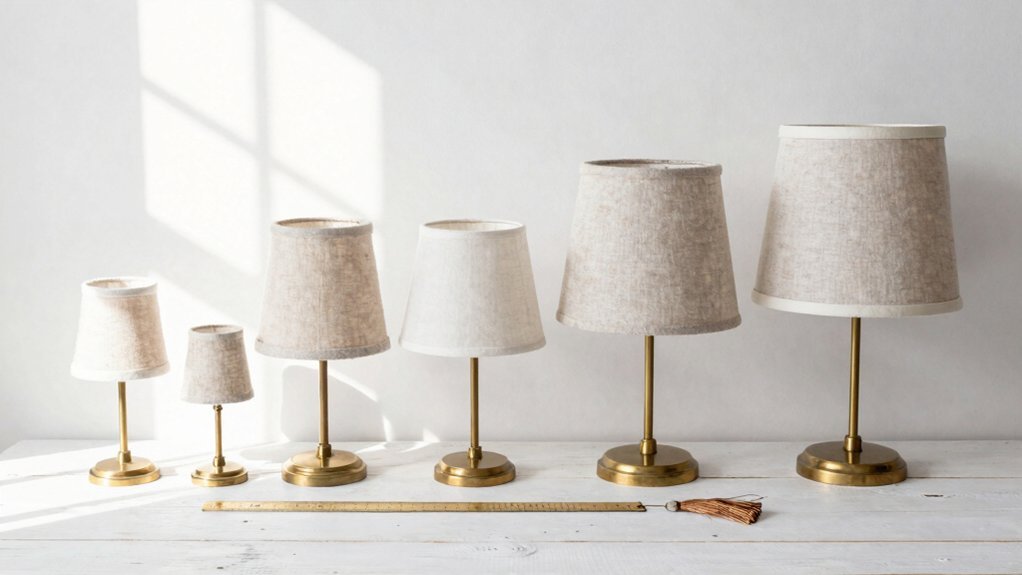
What’s the sweet spot for a bedside lamp? You’ll want the shade’s bottom diameter to roughly match your lamp base’s height, typically landing between 8 and 18 inches. For standard nightstands, aim for a shade that’s 12 to 14 inches wide—anything larger crowds your surface and risks you knocking it over when reaching for water.
Measure your console table first. You’ll balance the shade against the table’s depth, not its width. A 16-inch shade suits a 12-inch deep console beautifully. Remember: the shade shouldn’t extend past the table’s edge.
Check your proportions visually. The shade’s height should equal about two-thirds of your lamp base’s height. You’re creating harmony, not just illumination. When you set it down, you’ll know immediately if you’ve sized it right.
Recommended Products

Hardback Empire Shape Transitional (Mini Chandelier Lamp Shades) in Off-White

Specifications: Color: Red Bronze; Material: Meta; Surface treatment: high-temperature paint; Applicable lamp holder: E12 Candelabra Base Socket; Total Size: 50 x 22 mm/ 2 x 0.86 inch (H*OD); Inner diameter: 21 mm/0.82 inch; Packing list: 3 Pcs x candle socket covers, 3 Pcs x insulating sleeves
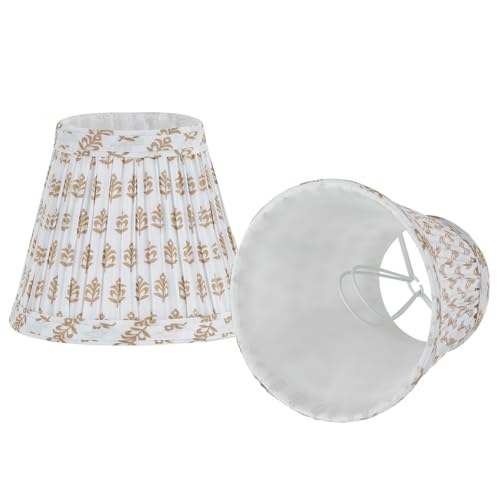
【2 Packs Clip On Lamp Shades Dimension】3" Top x 5.5" Bottom x 4.7" Slant Height,Material:pleated natural fabric.Before purchasing, please carefully check the size of your need.Package includes: 2 x mini Lamp Shades.
How to Size Floor Lamp Shades Correctly
Why does floor lamp sizing trip up so many buyers? You can’t apply table lamp rules here. Floor lamps demand different proportions because they sit at eye level when you’re seated.
You’ll want the shade’s bottom edge to sit roughly at eye level or slightly above when you’re sitting nearby—typically 42 to 48 inches from the floor. Measure your lamp base first; multiply its height by 0.33 to find your ideal shade height. For width, choose a shade that’s at least as wide as the base’s widest point, usually 16 to 20 inches across.
Pair drum or empire shades with contemporary bases. Try bell shades beside traditional designs. You’ll avoid glare and achieve balanced, warm lighting that fills your space without overwhelming it. Double-check measurements before you buy.
Recommended Products
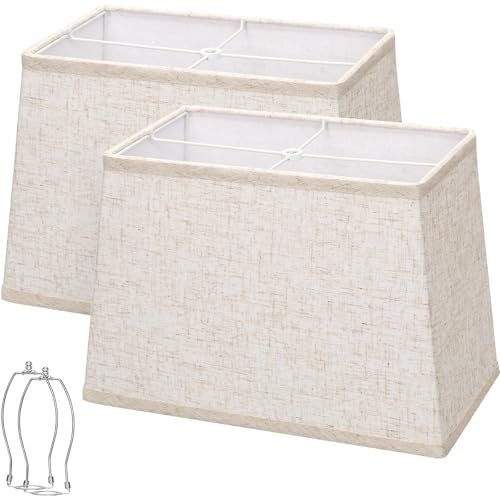
Rectangle Lamp Shade Size: Top diameter: 7"x12.5", bottom diameter: 9"x15", the vertical height is 9.8'', screw thread diameter: 0.43 inches. Designed to effortlessly pair with table lamps, floor lamps, and other fixtures, these beige lamp shades adds a unique allure to your home’s lighting. Please carefully check the shade size to ensure it fits your light fixtures appropriately before purchasing.

HAND CRAFTED:Every shade-making worker has more than a decade of hand-crafted experience. It requires simple assembly to use. It's collapsable, and allows for flat-pack shades, so it's portable.

Large Drum Lamp Shades Size: Top diameter: 12 inch, bottom diameter: 16 inch, height: 11 inch, screw thread diameter: 0.47 inch. Compared with typical linen lamp shade on the market, our white lamp shade offers a significantly larger size, making them versatile enough to fit medium-to-large table lamps and floor lamps. Perfect for those who hunt for grander shades. NOTE: Before purchasing, please carefully check the size to ensure they fit your light fixture
How to Size Pendant and Chandelier Lamp Shades
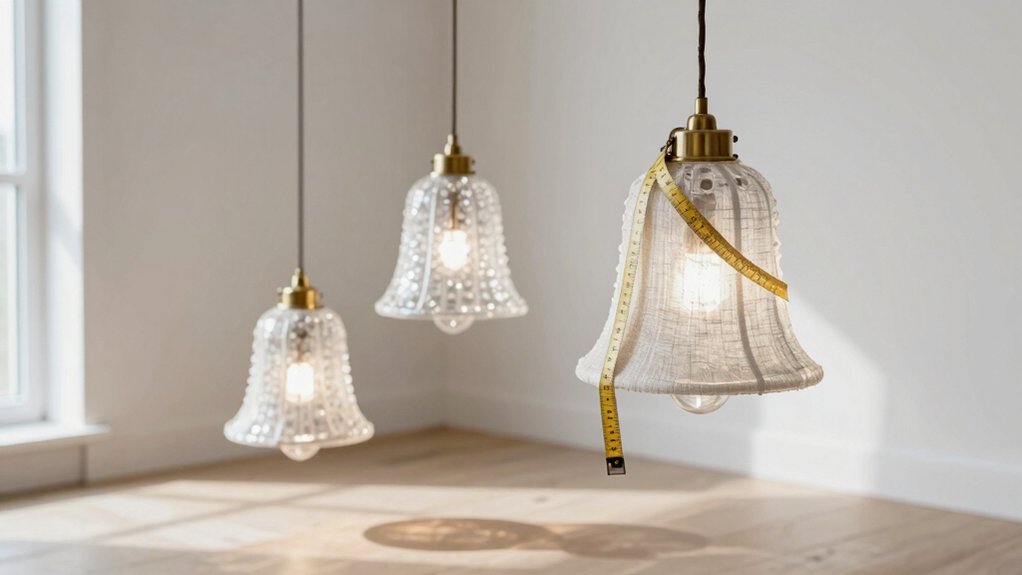
Where do you even begin when pendant and chandelier shades hang overhead rather than sit on furniture? You’ll measure differently, starting from the light bulb base rather than the surface below.
First, measure your fixture’s diameter. You’ll want a shade that’s two-thirds that width minimum, or equal to it at maximum. Height matters too—your shade should cover the bulb without swallowing the entire fixture.
Consider your hanging height carefully. You’ll position pendants at eye level when standing to avoid glare, typically thirty to thirty-six inches above surfaces below. Chandelier shades need proportion to your room—multiply your room’s length and width in feet, convert that total to inches, and you’ve got your ideal fixture diameter.
Don’t forget the shape. You’ll match drum, empire, or bell shades to your fixture’s style. Narrow shades direct light downward; wider ones spread it broadly.
Always check that your shade attachment type fits your fixture’s hardware before buying.
Recommended Products

【PACKAGE INCLUDES】 1 Piece lamp harp - 7 8 9 10 inch level 4 adjustable tall. Equipped with finials, 3/8 standard saddle, various lamp head converters, E14, E26, E27. You can choose the lampshade size that best suits your installation.

Shade Color & Material: White Linen Fabric | Fitter Color & Type: Brass, Spider Fitter

【Premium Quality】: Mornajina lamp shape harp holder kit are made with heavy duty metal nickel polished surface to prevent lamp harp from oxidation and rusting and has a longer service life.
How to Fix Lampshade Sizing: Too Big or Too Small
How do you salvage a lampshade that’s thrown off your room’s entire look? You tackle the mismatch head-on.
If your shade’s too big, you’ve got options. You trim the excess fabric carefully, or you swap the harp for a taller one to lift the shade higher. You can also replace the spider fitter with a smaller uno fitter to reduce the overall footprint.
When the shade’s too small, you add a riser to elevate it, creating visual balance. You layer a larger decorative ring beneath, or you simply exchange it for a properly sized replacement.
Measure your lamp’s height from base to socket and multiply by two-thirds—that’s your target shade height. For width, measure your base and double it. You’ll nail the proportions every time.
Recommended Products

These shade holders are made of solid brass and are designed to screw onto the UNO threads of a socket.

DIMENSION: Our deep empire basic lamp shade measures 6" x 12" x 9.25" (Top Diameter x Bottom Diameter x Slant Height)
Lampshade Sizing Tips for Small Rooms
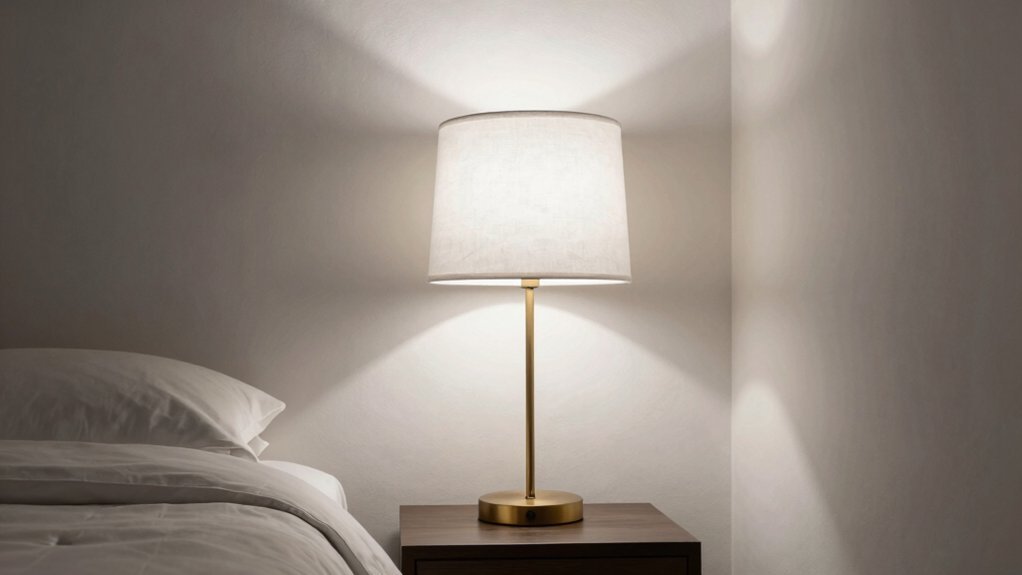
When you’re working with tight quarters, every design choice pulls double duty—and your lampshade is no exception. You’ll want to prioritize proportion over presence. Choose shades that sit closer to the lamp base; they create cleaner sightlines and won’t dominate your limited surface area. Stick to tapered or drum shapes rather than oversized bell styles that eat visual space.
You’ll also benefit from semi-translucent materials. They diffuse light broadly, reducing your need for multiple fixtures. Mount a smaller shade higher on a wall sconce or swing-arm lamp, and you reclaim precious table space entirely.
Don’t forget verticality either. A narrow, taller shade draws the eye upward, making ceilings feel higher than they are. Finally, match your shade’s color to nearby walls; you’ll blur boundaries and expand the room perceptibly without sacrificing function.
Recommended Products

【Lampshade Dimensions & Material】Crafted with premium pleated white fabric, this classic empire lampshade features precise measurements: 8 inches top diameter, 13 inches bottom diameter, 10 inches slant height, with a 0.4 inch spider fitter opening. This versatile white pleated lampshade serves as an ideal replacement to refresh and upgrade your existing home lighting decor. Double-check all size specifications before ordering to ensure perfect compatibility with your lamp fixtures.

COORDINATE YOUR BABY NURSERY DECOR: The Elise Crib Bedding Collection fills the nursery with gorgeous flowers in greys and pinks; Coordinate babyÕs room with other items from the Baby Elise range including the fitted sheet, changing pad cover, fuzzy blanket, lamp base and shade, mobile and a matching stuffed toy

【Lampshade Dimension】5" Top x 9" Bottom x 7" Slant Height , Material: pleated natural fabric.The center threaded Uno fitter diameter: 1 1/4" inch. Small size suits many table lamps,uno lamp socket. liquor bottle lamp kit and floor lamps,Please check the uno lamp shade size carefully to make sure it is suitable for your light fixtures before purchasing.Package includes: 1 x Uno Lamp Shade.
Lampshade Size Chart by Lamp Type
Small rooms demand smart choices, but matching your shade to the right lamp type matters in every space. You’ll find table lamps typically need shades between 8 and 18 inches in diameter. Measure your lamp base’s height, then select a shade roughly two-thirds that measurement.
Floor lamps require larger shades—usually 16 to 20 inches wide—to maintain proper visual balance. You’ll want the shade to cover the bulb when you’re seated nearby.
For pendant lamps, match the shade width to your fixture’s scale; most range from 6 to 12 inches.
Wall sconces take smaller shades, generally 4 to 8 inches, so they don’t overwhelm your wall space.
Buffet lamps pair best with tall, narrow shades about 10 to 14 inches wide.
Always check that your shade hides hardware while allowing adequate light disbursement.
Conclusion
You’ve got everything you need to find your perfect lampshade match. Measure your base, apply the two-thirds height rule, and don’t forget that extra inch of width on each side. Check your fitter type before you buy, and always consider your room’s scale. When in doubt, reference a size chart for your specific lamp type. With these guidelines, you’ll balance form and function beautifully.