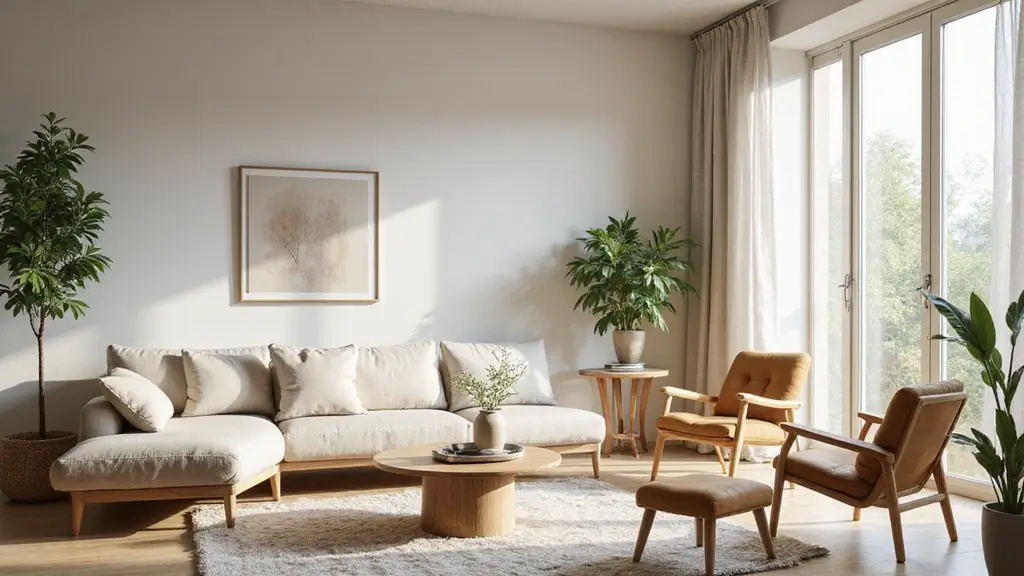

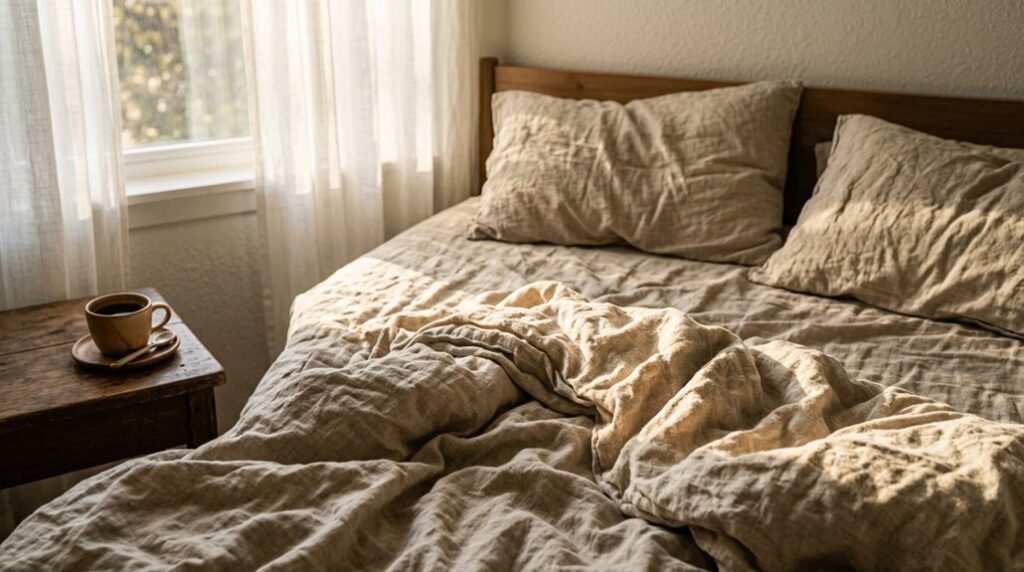
You slide between linen sheets on a summer night, and the fabric feels crisp, almost cool against your skin—nothing like the immediate softness of cotton, yet something shifts as weeks pass. The texture loosens, the fibers yield, and you begin noticing what price tags rarely reveal: whether that transformation justifies the cost, or if you’ve simply paid premium for wrinkles. But here’s what most comparisons miss entirely.
Linen or Cotton Bedding: Which Should You Choose?
When you’re lying awake at three a.m., drenched in heat, the fabric against your skin suddenly matters more than the thread count on the label. You feel every fiber—linen breathes where cotton traps, its open weave inviting air to circulate against your damp shoulders. Cotton greets you with immediate softness, smooth from the first night, while linen arrives coarser, demanding patience. But you notice the difference in longevity: linen’s durability strengthens with each wash, cotton’s fibers thinning faster than you’d expect. You check GSM, not thread count—150 to 190 grams per square meter tells you heft and breathability. You accept the wrinkle, embrace the rumpled texture. You’re choosing between instant gratification and bedding that cools, softens, and outlasts your expectations.
Recommended Products

4 PIECE BED SHEET SET: 2 pillow cases and flat sheet and fitted sheet. Flat Sheet (108" x 102") Fitted Sheet (80”x 78”) 2 Pillow Cases (20”x 40”)

ULTIMATE COMFORT: Get ready to sleep soundly every night with your new luxurious twin bed sheets. Soft, cozy and comfortable, they're the perfect way to treat yourself to the ultimate sleep experience.
The Real Benefits (and Drawbacks) of Linen Sheets
Why do linen sheets command such devotion despite their rough arrival? You discover that breathability triumphs immediately—long flax fibers and loose weave pull moisture from your skin, making these sheets salvation for hot sleepers who wake damp on cotton.
You’ll notice the texture transforms through seasons of care and laundering. Those initially stiff fibers soften with washing, developing a relaxed, lived-in drape that cotton rarely achieves. The durability意味着 you’ll replace cotton sets twice before these fray.
Yet wrinkle resistance never arrives; you embrace crumpled elegance or surrender to ironing.
Sustainability matters—you’re choosing biodegradable European flax, though certification varies by brand. The cost stings upfront, requiring air-drying patience. Your reward? Sheets that age like weathered linen shirts, cooler summers, and decades of sleep before threads thin.
Recommended Products

100% FRENCH NATURAL LINEN: ONLYSET' linen sheets are made from French linen - a true luxury, since premium quality linen is extremely rare. They are naturally grown and made with environmentally friendly production methods to maintain the breathability and durability of natural linen. At the same time, the queen size linen sheets are OEKO-TEX Standard 100 certified, which means that no harmful chemicals

True 100% Natural Linen Sheets: DAPU pure linen sheets set is sourced from Normandy, France, where flax is considered the gold standard. OEKO-TEX Standard 100 certified, which means no harmful chemicals were used and eco-friendly.
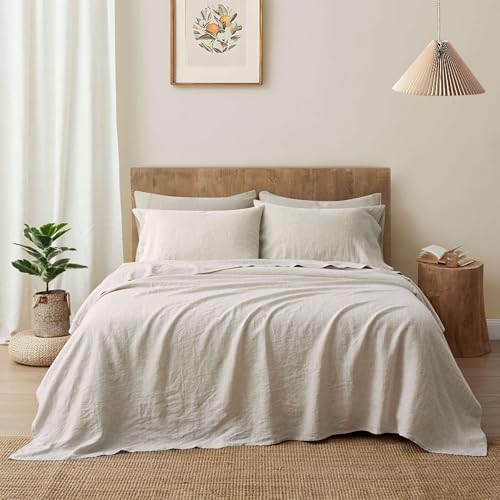
100% French Flax Fiber - Breathable natural fabric regulate temperature year-round, promoting faster sleep onset and sustained deep rest.
What Quality Linen Actually Looks Like
You’ve accepted the wrinkles and the price—now you need to know what separates heirloom-grade linen from disappointing imitations.
Run your hand across quality linen sheets and you’ll feel yarn slubs—those charming, irregular bumps that whisper of the flax plant’s natural fiber. This texture isn’t a flaw; it’s your proof of authentic European flax, not processed cotton masquerading as linen. Look for weight GSM between 160–180: lighter feels insubstantial, heavier turns stiff. Belgian linen or European Flax certification guarantees traceable origin and sustainable harvesting.
Prewashed or stonewashed finishes accelerate that coveted softness, though raw linen softens beautifully with time. Hold the fabric to light—you’ll see an open, breathable weave that promises airflow. Quality linen drapes with relaxed heaviness, crumpling naturally rather than creasing sharply. Trust your senses: coarse initial touch, visible fiber variation, and that unmistakable earthy scent signal you’ve found the real thing.
Recommended Products

100% NATURAL LINEN - Magic Linen Flat Sheet is made of 100% European flax. Linen production is fully biodegradable and can be easily recycled, making it one of the most sustainable fabrics in the world.

100% NATURAL LINEN - Magic Linen Flat Sheet is made of 100% European flax. Linen production is fully biodegradable and can be easily recycled, making it one of the most sustainable fabrics in the world.

100% FRENCH LINEN:Experience the luxury of authentic European linen, woven from premium French flax fibers. Renowned for its exceptional strength and breathability, this natural fabric provides a consistently dry, comfortable sleep. It naturally softens with every wash, developing a personalized, lived-in elegance that only improves over time.
How Much Should You Actually Spend on Linen Sheets?
How does a $140 Casaluna set from Target stack against Cultiver’s $480 queen collection when both claim the same flax heritage? You feel the difference immediately—Casaluna’s slightly stiffer weave versus Cultiver’s supple, stone-washed drape against your skin.
Brands pricing reveals the real story. That sub-$200 sale on Riley Linen at $183 delivers best-value: substantial savings without sacrificing authentic 100% flax. Premium options like Pottery Barn’s $289 Belgian Flax strike middle ground.
You must scrutinize what’s included—separate pillowcases inflate total cost. Weigh upfront cost against longevity; linen’s durability justifies higher spending through reduced replacement. Factor care requirements into your cost-per-year calculation.
Always check return policy before committing. Your smartest move? Balance sensory pleasure with mathematical value across decades of sleep.
Recommended Products

Pure Organic Comfort: Experience the luxurious comfort of our Lane Linen bedding sheets, meticulously crafted from OEKO-TEX certified 100% Organic Cotton. The crisp percale weave provides a hotel-quality feel—soft, yet durable—offering breathability and supreme comfort.

100% COTTON SHEET SET. 100% Cotton Percale Weave Sheet Set brings the crispiness and longevity that is comparable to prestigious hotel. The sheets are weaved using high quality Long-Staple Combed Cotton yarns in India, to make it the valued crispy percale 200 TC sheets in the industry. Varied colors to match your solid or printed duvet, quilt or comforter set in white, ivory, sage, taupe, dark blue (navy blue), baby blue, silver, and charcoal.

Keep Cool This Summer With 100% Cotton Percale Sheet Set: Summer heat getting to you? Ditch the synthetic microfiber sheets and opt for 100% organic cotton sheets queen. Crafted from long staple cotton and percale weave, our organic sheets queen size are crisp, cooling, and breathable, making them ideal for hot sleepers. This percale cotton sheets weave keeps things crisp and breathable all summer long.
Best Linen Sheets by Budget and Sleep Style
Where should your money land when sleep style matters as much as budget? You’ll find linen sheets worth it at every tier.
For budget linen sheets, grab Target’s Casaluna—$140 buys Oeko-Tex certified linen with 11 colors and deep pockets.
Quince European flax sheets deliver affordability and value under $200 with 365-day return policies and guarantees, though you’ll shop online only.
Hot sleepers need breathable linen bedding. Saatva’s Belgian set costs more but cools aggressively—best linen sheets for hot sleepers by far.
The Citizenry Stonewashed offers durable linen sheet sets at moderate prices, balancing sleep comfort with linen through all seasons.
Premium seekers choose Brooklinen or West Elm for immediate softness. European flax sheets soften fast, delivering long-term durability without compromise.
Recommended Products

FIRST OF ITS KIND: Tru Earth's ultra-concentrated fabric softener, made in Canada, is the industry's first laundry softener sheet designed for your washing machine, not your dryer. This liquid alternative can be used with any standard or HE washing machines in both hot and cold water settings.

STATIC CONTROL: Reduces static cling and fights wrinkles while softening clothes for a comfortable feel

WASHING MACHINE SOFTENER SHEETS: Soulnk's ultra concentrated clothes softener is designed to soften clothes in the washing machine. This product easily and completely dissolves without leaving any residue on your clothes and can be used in any standard or HE washing machine on both hot and cold water settings.
Do Linen Sheets Get Softer? Your First Month Explained
When you first slide between linen sheets, they’ll greet you with a crisp, almost papery resistance—nothing like the instant surrender of worn cotton or the slick welcome of microfiber. You’ll notice the texture and wrinkles immediately, a rumpled topography against your skin.
Yet linen sheets soften dramatically as you persist. Choose prewashed linen or stonewashed linen and you’ll skip some initial stiffness, though you’ll still experience a break in period. With GSM 150–190, the softness trajectory unfolds steadily through regular washing rather than overnight. Each cycle relaxes the fibers further.
Recommended Products

4-PIECE QUEEN SIZE SHEET SET – COMPLETE BEDDING SOLUTION: Includes 1 generously sized flat sheet (90” x 102”) for full coverage, 1 fitted sheet (60” x 80”) designed to snugly fit your mattress, and 2 matching pillowcases (20” x 30”) for a coordinated look. Thoughtfully sized to provide a neat, secure fit and a smooth finish, this set is ideal for everyday use in bedrooms, guest rooms, dorms, or vacation homes.

SOFT AND COZY: Experience ultra-soft comfort with our 85 GSM brushed microfiber sheet set
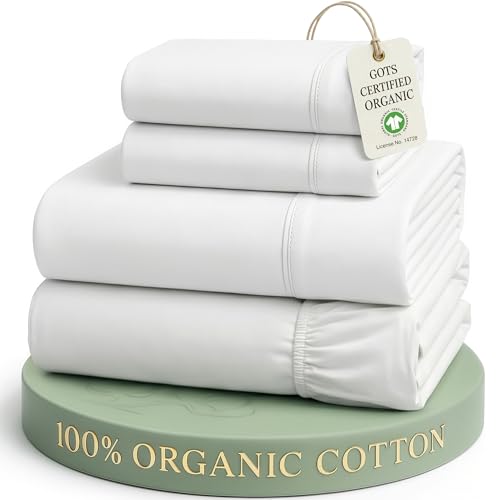
Naturally Cooling Organic Comfort : Stay cool and comfortable with Lane Linen 100% Organic Cotton Percale Queen Sheets, made from GOTS Certified organic cotton. The crisp percale weave and finer yarns create a lightweight, breathable feel that promotes airflow and balanced temperature for year-round comfort. Gets softer and smoother with every wash. Great as deep pocket Queen sheets, a cooling Queen sheet set, and breathable Queen bed sheets.
Skip Linen If This Sounds Like You
Why commit to linen when your priorities pull elsewhere? If you’re price-conscious, you’ll feel the sting immediately: queen sets range from $140 at Target Casaluna to $480 at Cultiver, with premium brands climbing higher. That budget buys multiple cotton sets elsewhere. You crave instant softness, but linen arrives rough against your skin, demanding weeks of washes before yielding—cotton caresses you now.
You need twin sizes? Pottery Barn Belgian Flax, Parachute, and Cultiver shut you out entirely. Wrinkling haunts your mornings; linen creases relentlessly despite stonewashing, unlike smoother cotton rivals. Color options shrink too—brand variance leaves you hunting while cotton shelves overflow. For these use cases, durability and breathability can’t justify the trade.
Skip linen; your sleep doesn’t require the compromise.
Recommended Products

NATURAL COTTON-LINEN BLEND: A genuine cotton-linen blend combining natural linen breathability with cotton comfort. OEKO-TEX certified (BJ000 221815). This is a blended fabric — offering a practical way to enjoy the relaxed look and airy feel of natural fiber bedding

MATERIAL—Made of 100% Premium Quality French Flax Fabric with Pre Washed, 160 ± 5% GSM. Our linen products have been certified according to STANDARD 100 by OEKO-TEX, which is eco-friendly. The flax bedding can bring you a healthier life, durable for a long period

MATERIAL—Made of 100% Premium Quality French Flax Fabric with Pre Washed, 160 ± 5% GSM. Our linen products have been certified according to STANDARD 100 by OEKO-TEX, which is eco-friendly. The flax bedding can bring you a healthier life, durable for a long period
Conclusion
You’ll feel linen’s crisp, textured weave against your skin that first night—cooler than cotton, slightly rougher, alive with subtle slubs. Over weeks, you’ll watch it soften, wrinkle, breathe. You’ll pay more upfront, but you’ll sleep deeper through sticky summers and own sheets that outlast cheaper sets three times over. If you crave instant smoothness, choose cotton; if you want bedding that ages like wine—rumpled, relaxed, unmistakably yours—linen’s worth every penny.
Recommended Products

PACKAGE –King Size Linen Fitted Sheet is 78"x80"+14". 1 pc fitted sheet Only! 14 Inch Deep Pocket with 360°wrapped elastic all around make the linen fitted sheet stay put much better on your mattress. Simple&Opulence linen fitted sheet will exceed all your needs.

PACKAGE –Queen Size Linen Fitted Sheet is 60"x80"+14". 1 pc fitted sheet Only! 14 Inch Deep Pocket with 360°wrapped elastic all around make the linen fitted sheet stay put much better on your mattress. Simple&Opulence linen fitted sheet will exceed all your needs.
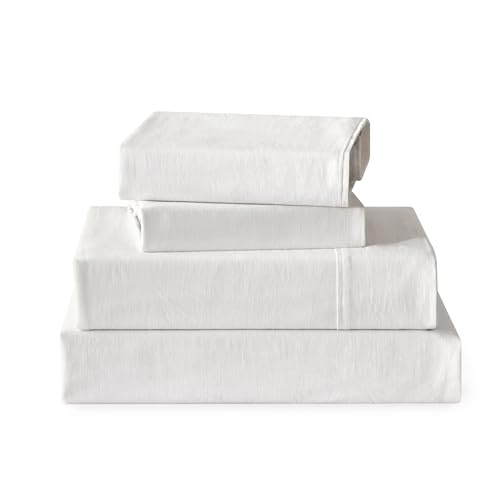
Stonewashed Linen Slub Texture: Prewashed sheet set blends 85% cotton 15% linen for breathability, moisture-wicking, keeping hot sleepers cool and dry all year