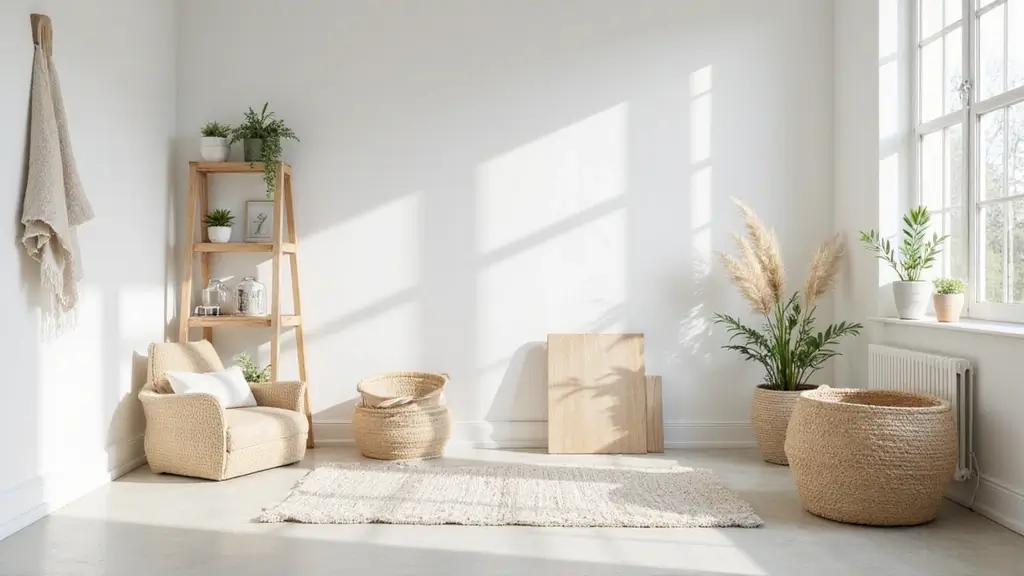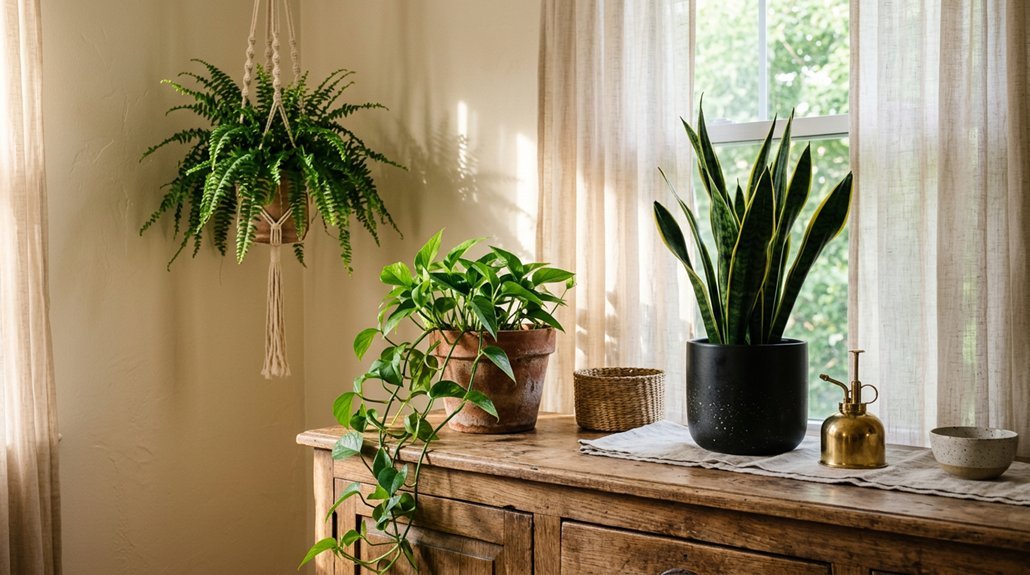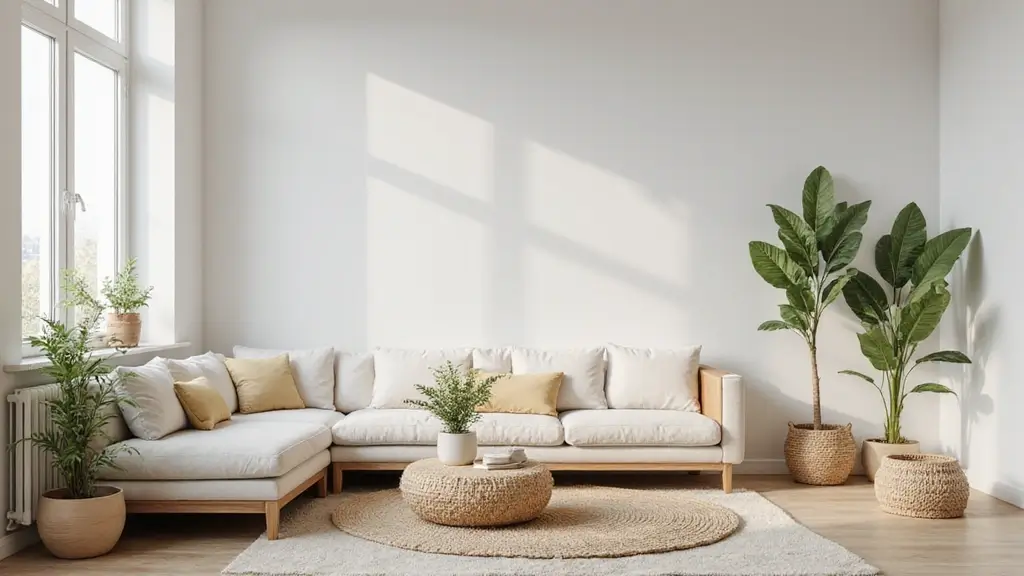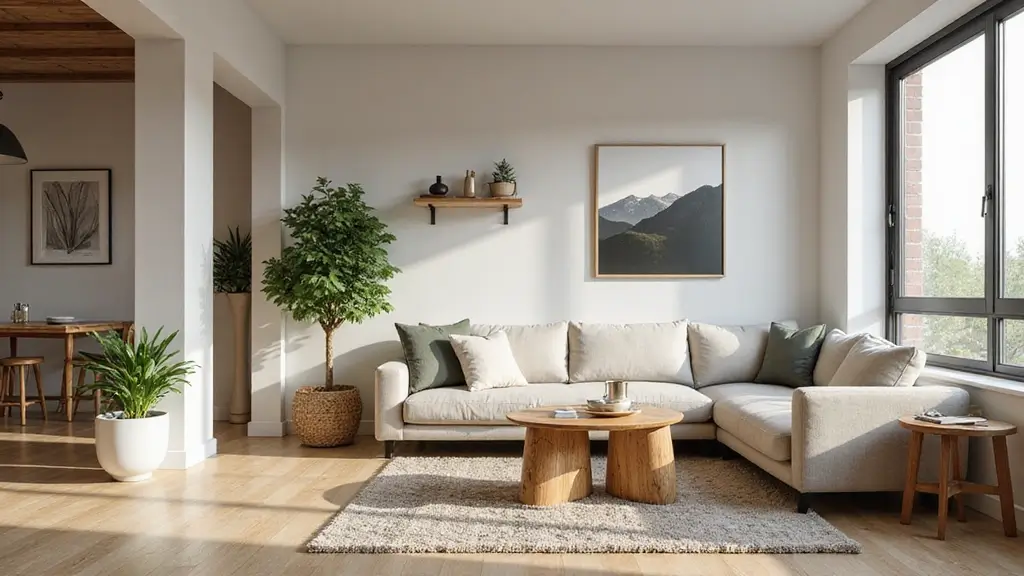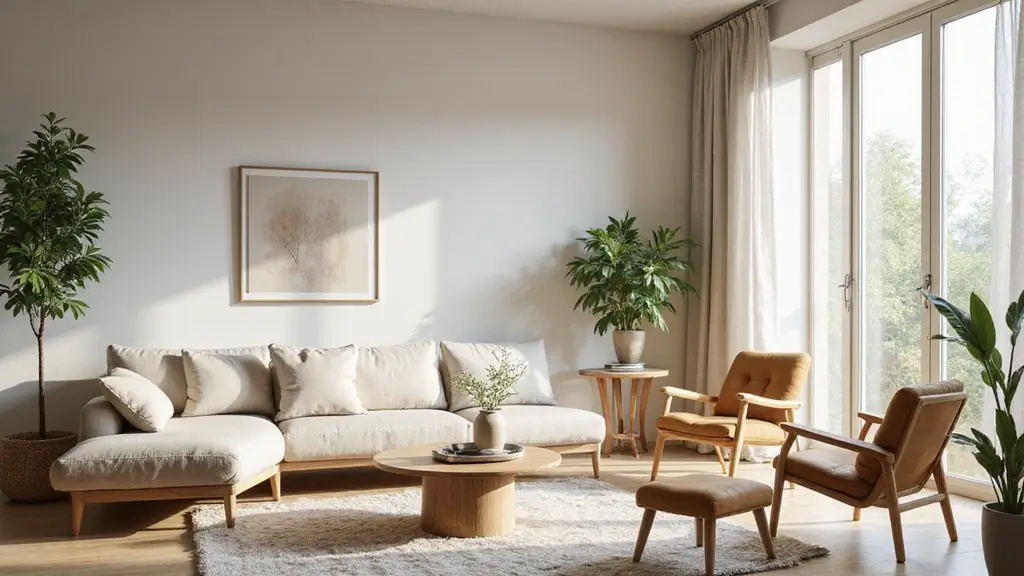

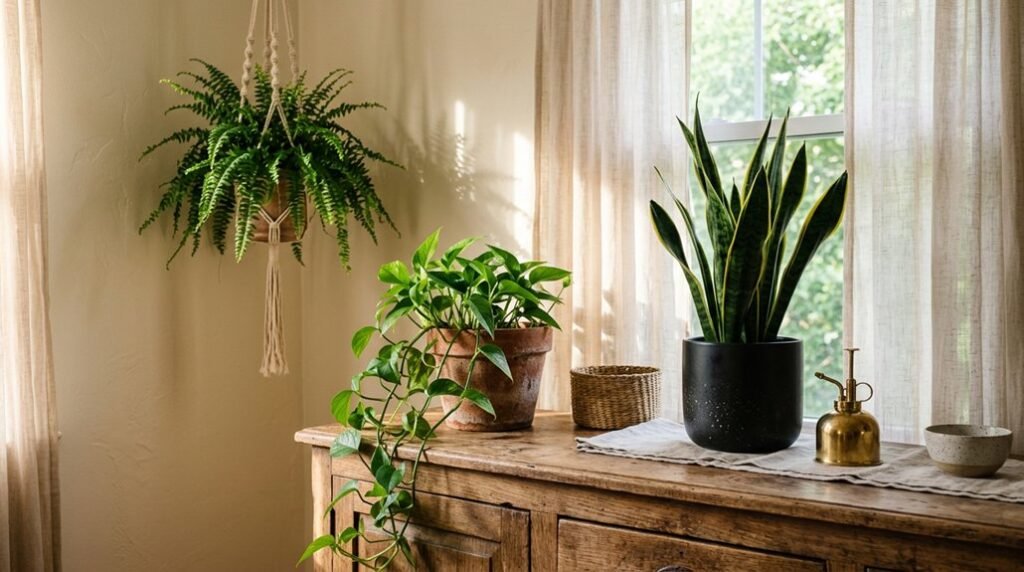
You walk into a room that feels lifeless, and you know plants could change that—but you might not know where to start without creating clutter or killing your first purchase. The trick isn’t buying more greenery; it’s choosing intentionally, then placing it where your eye naturally travels. Get that right, and your space transforms without effort. But first, you need to understand what your home is actually offering those plants.
Start Simple: Beginner-Friendly Plants That Build Confidence
Where do you begin when every shelf and corner seems ready for a touch of green? You start with beginner-friendly plants that forgive your learning curve. Grab a ZZ plant, Snake plant, Spider plant, Pothos, or some succulents and cacti. These tough varieties tolerate your mistakes while you develop care routines.
Visit your local garden center and ask staff to point out strong specimens. They’ll spot early pest signs you’d miss and steer you toward resilient options.
Focus on simple habits first. Water when soil dries. Notice how each plant responds to your home’s unique conditions. You’re building skills, not just a collection. Low-maintenance picks reduce losses while you learn. Watch, adjust, and grow your confidence alongside your plants.
Recommended Products

LIVE INDOOR HOUSEPLANTS: Includes a rotating assortment of 6 popular indoor plants in 2 in. grower pots, ranging in height by variety - approximately 4 - 6 in. tall

FARM-DIRECT PACKAGING & ARRIVAL: Each Money Tree is hand-selected at the greenhouse and secured in breathable, reinforced transit-safe materials. This direct-from-nursery process maintains plant integrity and soil moisture, providing a healthy houseplant ready for immediate indoor display
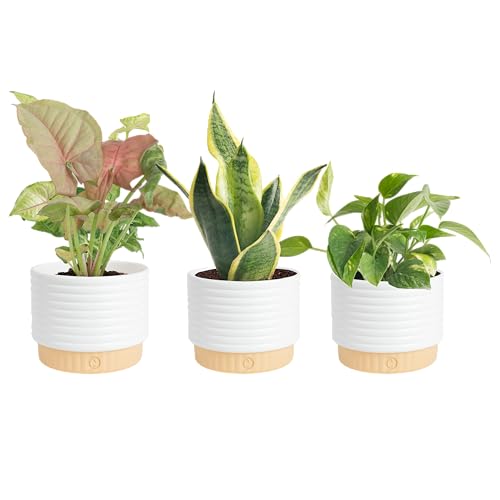
DECOR-READY LIVE INDOOR PLANTS: This 3-pack of houseplants offers incredible value to gift or instantly upgrade any space. Perfect for shelf, tabletop, or office desk. Varieties will vary — examples include Peace Lily, Snake Plant, Fern, and Pothos
Read Your Light: How to Pick Plants for Bright and Dim Spaces
Before you bring a single plant home, you’ll need to know exactly what light you’re working with, because even the most forgiving variety will struggle if it’s stuck in the wrong spot. Assess your windows: south- and west-facing ones deliver bright, direct sun perfect for succulents, cacti, and flowering African violets or kalanchoe. North- and east-facing windows offer bright indirect light where Calathea and Nerve plant show off their striking patterns without scorching.
Rotate every plant every 1–2 weeks to ensure even growth and prevent leggy stems.
For dim corners, embrace Pothos, ZZ plant, Snake plant, or Cast iron plant—they’ll thrive where others wilt. Matching light to plant isn’t just practical; it’s essential interior design that creates lasting visual interest throughout your space.
Recommended Products
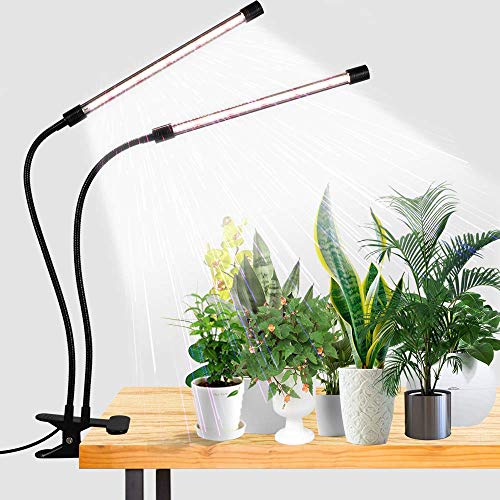
6000K White Light - equipped with 10 Red + 74 White LEDs, this growing Lamp is similar to the full-spectrum sunlight at noon,that is professionally designed for indoor garden plants.Moreover, its color rendering index is as high as 95, the light is soft and flicker-free, which is very suitable for reading lamp

Flexible Height & Sturdy Pole - height can be extended from 7'' to 18'', and its light board supports flipping up and down 180 degrees,just lock it in the height you like. Also it is also very compact and small,could emit a soft and efficient aperture, which is very portable and useful, especially for small and cute potted plants

RELIABLE & STYLISH FLOOR CAN LIGHT - All components are UL certified, including lamp holder, cable and switch, safe and durable. Black metal construction, 8" high × 3.5" wide beveled cylindrical shape give the uplights fashion and art, perfect for indoor accent lighting.
Match Plants to Your Interior Style for Cohesive Decor
How do you make greenery feel like it truly belongs in your space? You treat plants as intentional decor, not afterthoughts. Match your choices to your home’s personality. If you’ve embraced mid-century modern, you’ll select oversized plants in tall planters that echo that era’s bold proportions.
For farmhouse charm, you’ll tuck functional herbs into vintage or repurposed containers.
In eclectic spaces, you’ll cluster varied small plants with unified colors to add texture without chaos.
You’ll reinforce each room’s mood through your vessel choices—sleek containers sharpen modern interiors, while rustic pots warm cottage settings.
Finally, you’ll frame architectural features with strategic plant groupings, using greenery to create structure and balance that completes your design vision.
Recommended Products

Package Contents: you will get 6 boho planters with bamboo trays, each pot measures about 3.15 x 2.16 inches, bamboo tray measures about 3.2 inches in diameter, 0.47 inches in thickness, suitable for planting a variety of small indoor plants, making them versatile; Note: plants are not included

Durable Materials and Ideal Size: our funny plant pots made of ceramic and bamboo materials, it is durable and wear resistant; Each flower pot is 2.2 inches tall and 3.2 inches wide, suitable for placement on a table, desk, or windowsill; The included bamboo tray is ideal, measuring 3.1 inches wide and 0.4 inches tall, making these ceramic flower pots an ideal addition to home decor

Shop Local: What Garden Center Staff Know That Big Stores Don’t
Walking into a local garden center puts you face-to-face with specialists who spot healthy varieties and early pest signs that mass retailers routinely overlook. You’ll get recommendations tailored to your home’s specific light and humidity conditions, not generic advice that ignores your reality.
You can ask questions right then and there, receiving immediate, context-specific guidance instead of guessing from online descriptions. Staff often demonstrate proper potting techniques or troubleshoot your wilting fern on the spot, boosting your confidence as a beginner.
Your purchases support neighborhood businesses while giving you stock grown through regional practices that produce stronger, acclimated plants. The expertise you gain transforms plant shopping from overwhelming guesswork into an informed, personalized experience. You’ll leave knowing exactly how to help your new greenery thrive.
Recommended Products

🌿 【Self-Watering Pots with Water Level Indicator】 Designed for busy plant lovers, our 8/10/12 self-watering pots feature a built-in ABSORBENT COTTON WICK SYSTEM that automatically draws water from the detachable bottom tray. The TRANSPARENT WATER LEVEL WINDOW WITH MEASUREMENT MARKINGS lets you monitor hydration at a glance, ensuring no overwatering or underwatering. Perfect for indoor/outdoor plants, this system keeps soil evenly moist for up to 7-10 days—ideal for vacations or hectic schedules.

【Practical Size Combo】-These plastic planters indoor combines with 6 different sizes, 8 inch 7inch 6.5 inch 6 inch 5.5 inch 5 inch which are suitable for planting most small and medium-sized home office plants.Ideal gift,Carbonfree Certified.

【Efficient Self-Watering System】Each 4/5/6inch with 6pcs pot includes a built-in wick rope that delivers water directly to the roots, reducing watering frequency—ideal for busy plant owners.
Mix Sizes and Heights for Visual Contrast and Movement
Once you’ve brought home healthy plants suited to your space, you’ll want to arrange them with intention rather than scattering them randomly. You’ll create visual movement by grouping odd numbers—three, five, or seven—at varying heights, following the interior-design rule of three.
You’ll establish dynamic vertical rhythm by combining oversized plants with smaller specimens across different levels: floor, pedestal, and shelf.
You’ll guide the eye through your space by mixing tall, columnar plants like fiddle leaf figs with mid-height specimens on stands and low ground-cover varieties.
You’ll frame architectural features by placing contrasting heights near fireplaces, windows, and entryways, adding depth to these focal points.
You’ll achieve multi-tier contrast without overcrowding by elevating some plants on stands or in hanging planters while anchoring others at ground level.
Recommended Products

【Self-Watering Hanging Flower Pots with Removable Saucer】The innovative recessed design under each hanging indoor planter maintains optimal water levels for your plants and serves as a reservoir for consistent watering. This feature eliminates the hassle of watering plants while you're away on business trips or traveling, thanks to our hanging plant pot.

Self Watering Pot: Cotton rope in the tall self watering planter for indoor plants absorb water from bottom and keep the soil moist. Plant wick pots store water can feed plants for two weeks or more. It makes your travel or business trip an big ease! Plants Not Included!

VISIBLE WATER WINDOW, KNOW WHEN TO REFILL: These self watering hanging planters feature a clear water-level window on the removable base tray, letting you check the reservoir at a glance without taking down the planter. Less guessing, easier refilling, and more confident everyday plant care
Go Big: How One Oversized Plant Anchors a Room
If you’re hesitant about filling every corner with greenery, start with one statement piece that transforms the entire room. Choose an oversized plant like a fiddle leaf fig or Boston fern. These dramatic specimens deliver height and broad silhouettes that immediately command attention. You’ll create an instant focal point that anchors your space visually.
Position your statement plant where it’ll maximize impact. High-ceilinged rooms and entryways welcome this vertical presence and help balance proportions. Elevate it further with a tall, simple planter or stand. You’ll enhance the drama without cluttering your floor.
Keep surrounding furniture in neutral tones. This restraint lets the plant’s shape and presence define your room’s mood entirely. One bold choice accomplishes what dozens of small plants cannot.
Recommended Products
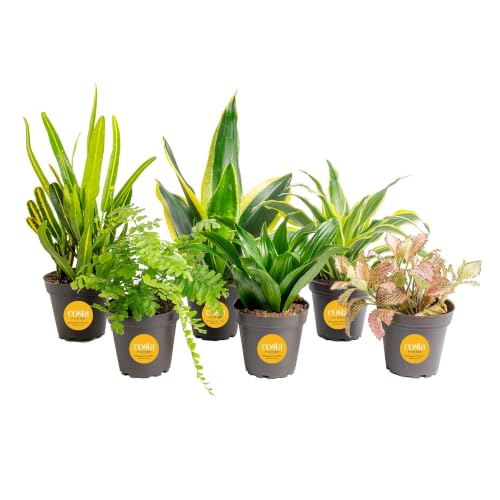
BEAUTIFUL ROOM DÉCOR BUNDLE: This 6-pack offers incredible value to instantly decorate multiple spaces with live houseplant room decor. Perfect for shelf or desk décor, or as party favors. Varieties will vary — examples include Peace Lily, Snake Plant, Fern, Dieffenbachia, Pothos, and others

SLEEK, STYLISH ROOM DÉCOR: The architectural upright leaves of a real ZZ Plant provide a modern, sleek look that defines minimalist home decor. An excellent, stylish live plant choice for an office desk, plant shelf, or tabletop

HOUSE PLANT BOX: Includes a rotating assortment of 4 greenhouse-grown, low-maintenance plants in 4.25" nursery pots
Group in Threes: Simple Arrangement Rules That Look Designed
Why settle for one plant when a trio instantly elevates your space? Arrange your plants in odd-numbered groups to create a pleasing, natural rhythm that feels both intentional and effortless.
Mix tall, medium, and small plants within your trio to add visual movement and depth. You’ll draw the eye through varying heights rather than letting it rest on a flat, single plane. Combine different green shades and textures across the three plants to build contrast and avoid a uniform, artificial look.
Position your grouping at strategic focal points—near a window, along a coffee table, or around a doorway—to punctuate the area without overcrowding it. Choose planters that stay cohesive or deliberately varied to reinforce your style while maintaining balance. You’ve designed a living centerpiece.
Recommended Products

[CURATED SELECTION] – Hand-selected live decorative houseplants sourced from professional local growers.
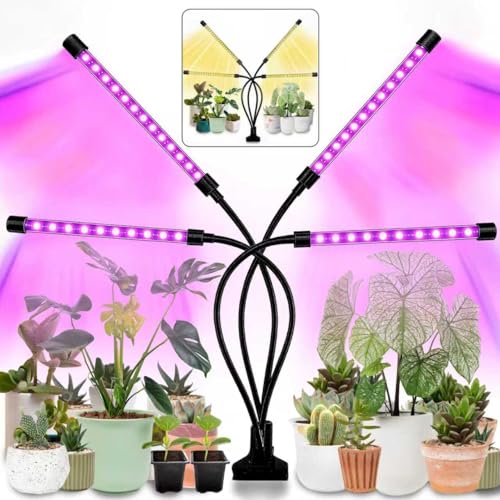
🌻Efficient LED Combination: This LED lamp has grow lights made up of 80 efficient growing LEDs ( 32 red lights, 12 blue lights,20 yellow lights and 16 white lights). It meets the conditions of plant growth without sunlight. 1--Full Spectrum(380nm-800nm): Suitable for all plants to root and sprout. 2--Red(660nm)+BLUE(460nm) Spectrum: for blooming and fruits. 3--Red+Blue+Full Spectrum: A mix of Red+Blue+Warm White is best to fuel the growth of your plants.

RELIABLE & STYLISH FLOOR CAN LIGHT - All components are UL certified, including light bulb, lamp holder, cable and switch, safe and durable. White metal construction, 8" high × 3.5" wide beveled cylindrical shape give the uplights fashion and art, perfect for indoor accent lighting.
The Best Plants for Steamy Bathrooms (That Won’t Mold or Wilt)
Where exactly should you turn when you want greenery that survives—and thrives—in your bathroom’s humid, dim conditions? You’ll find your answer in humidity-loving, shade-tolerant varieties.
Ferns, orchids, and peace lilies flourish in steamy air, resisting wilting as they soak up your daily showers. Boston ferns and maidenhair ferns prefer filtered light with consistently moist soil, thriving in indirect sun.
Calathea and pothos tolerate dampness and lower light, their leaves naturally resisting mold in heavy air.
For cleaner air and hardy vitality, peace lilies and snake plants endure fluctuating moisture with ease.
Don’t sabotage your selections—avoid overwatering, and always use pots with drainage. Choose breathable containers or trays that wick excess moisture away, and you’ll keep mold at bay while your bathroom greenery prospers.
Recommended Products

Quality material: This succulent planter pot is made of ceramic which is durable and will not fade. The glazed ceramic planter pot is both beautiful and artist.
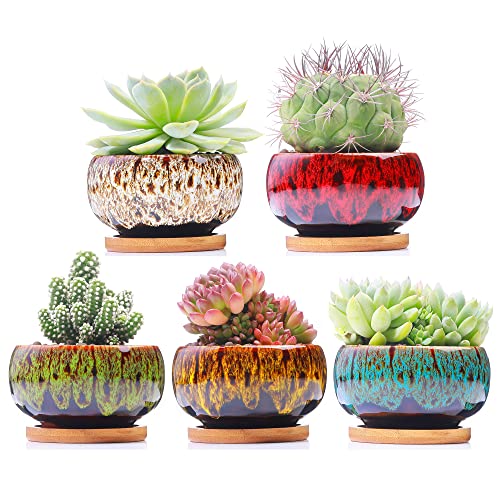
They are a very good choice for cactuses and other succulents and they're a nice size(4 inch X 2 inch/item) for putting on your desk at work or on windowsills at home. And they are also used for party favors at a wedding shower and were a big hit. excellent gift choice.
Add Color Through Blooms, Variegated Leaves, and Unusual Textures
When you’re ready to move beyond basic greenery, blooms and variegated foliage offer an easy upgrade. Flowering houseplants like African violets, bromeliads, kalanchoe, and begonias deliver bright focal accents that instantly energize any room.
Variegated leaves from Calathea, Nerve plant, and Croton introduce visual texture and contrast, adding depth without depending on flowers. Pair these flowering varieties with solid-green foliage to balance vibrant color with lush greenery, creating a cohesive, lively display.
For long-lasting hues that outlast seasonal blooms, use colorful leaves from croton or Chinese evergreen. Combine flowering plants with textured foliage in varied planters to craft dynamic, color-rich arrangements that draw the eye and transform your space.
Recommended Products

【Effortless Self-Watering for Busy Plant Lovers】 Designed for modern life, our self-watering planter uses a high-efficiency capillary wick to draw water steadily from the hidden reservoir into the soil. The visible water window with precise level markings lets you check moisture at a glance—say goodbye to overwatering or underwatering. Keep plants consistently hydrated for up to 10–14 days, perfect for travel or daily simplicity.

COMPACT SET OF 5 SIZES – Includes five small self watering plant pots measuring 4.9, 5.5, 5.9, 6.4, and 6.8 inches. These are small indoor planters designed for succulents, herbs, seedlings, flowers, and compact houseplants.

【Practical Size Combo】-These plastic planters indoor combines with 6 different sizes, 8 inch 7inch 6.5 inch 6 inch 5.5 inch 5 inch which are suitable for planting most small and medium-sized home office plants.Ideal gift,Carbonfree Certified.
Neglect-Proof Plants for Travelers and Forgetful Waterers
How do you keep plants alive when you’re rarely home or constantly forgetting waterings? You choose drought-tolerant species like ZZ plants, succulents, and snake plants that store water and survive longer between waterings. You use self-watering planters or moisture-retentive soil mixes—cacti-succulent blend or potting mix with perlite—to extend intervals between runs to water. You group plants with similar light needs and low maintenance requirements in accessible spots, reducing over- or under-watering mistakes. You consider air plants or terrariums as low-maintenance options requiring minimal direct watering while providing visual impact. You implement a simple weekly check: inspect soil moisture, watch for yellowing leaves signaling overwatering or drooping indicating underwatering, and adjust routines to prevent neglect.
Recommended Products
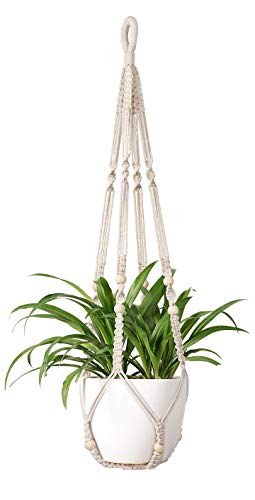
Pots and plants are not included!!

IDEAL SIZE - You will get 2 pieces boho indoor plant hangers and 2 S-shaped stainless steel hooks, the total length of the plant hangers is about 35 inches for pots from 3 inches to 8 inches. The height of the center basket is about 7.8 inches. Measurements were taken without pots in place, please note that the length will be shortened depending on the size of the pots. Pots and plants are not included.

Kvetto hanging planters feature color blocking design between pot and brown drainage tray, equipped with metal long-chains & screw-in hooks
Conclusion
You don’t need a green thumb or perfect conditions to create a stunning plant-filled space. Start with forgiving varieties, match them to your light and style, and group them with intention. Rotate, observe, and let your collection grow naturally. Your home becomes more alive, personal, and welcoming with every leaf you add.