
You’re standing in your living room, tape measure in hand, wondering why that beautiful rug you bought looks lost beneath your sofa. The truth is, most people size their rugs wrong from the start, and the fix isn’t about the room’s square footage at all. What you anchor with matters more than you’d expect, and the difference between a space that floats and one that feels grounded comes down to a few inches you probably haven’t considered yet.
Start With Your Living Room Sofa, Not the Room Itself
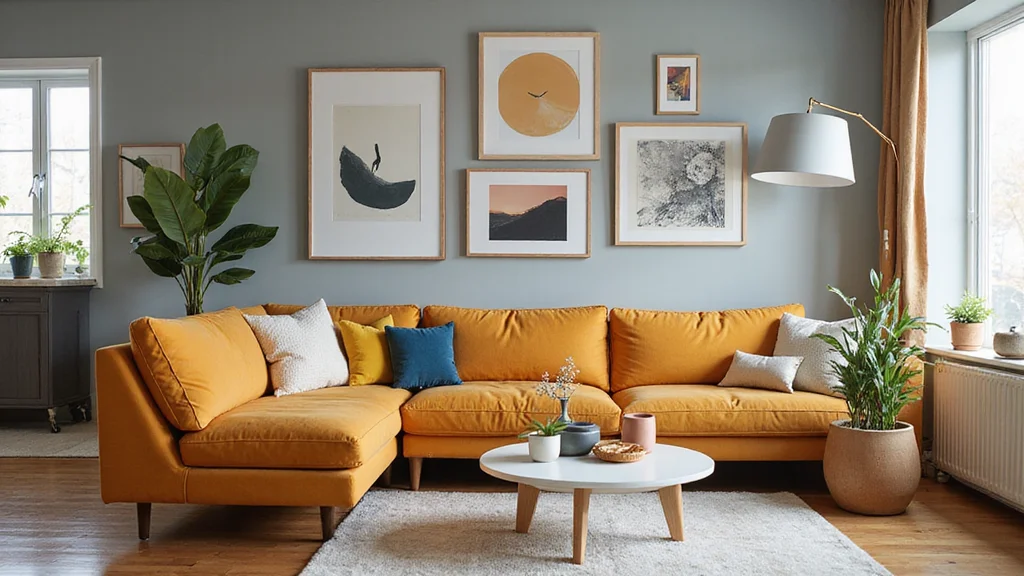
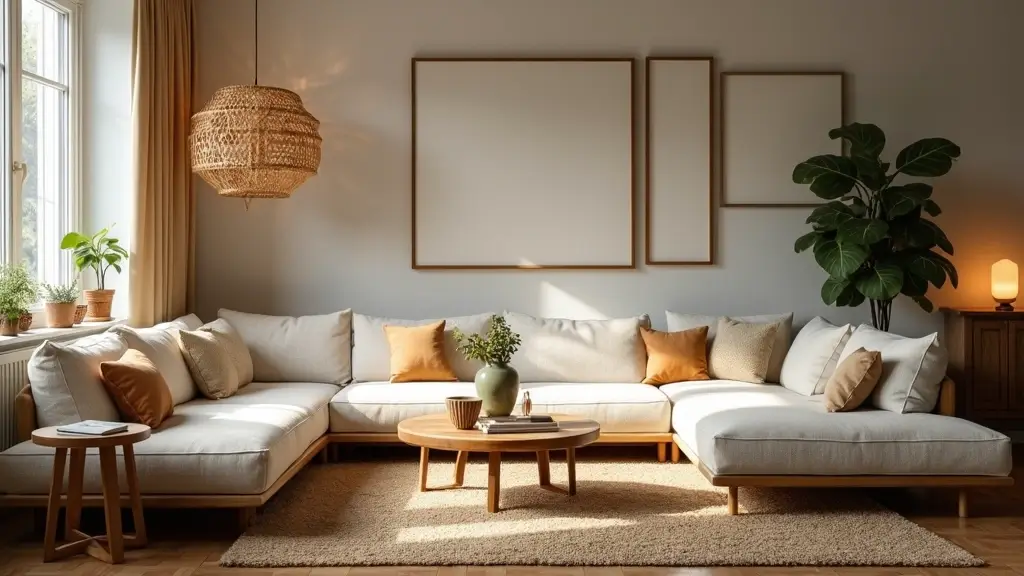
Where do you begin when sizing a rug for your living room? You start with your sofa’s dimensions, not the room’s square footage. Measure your sofa width and seating area first, then select a rug size that extends well beyond both sides of your furniture.
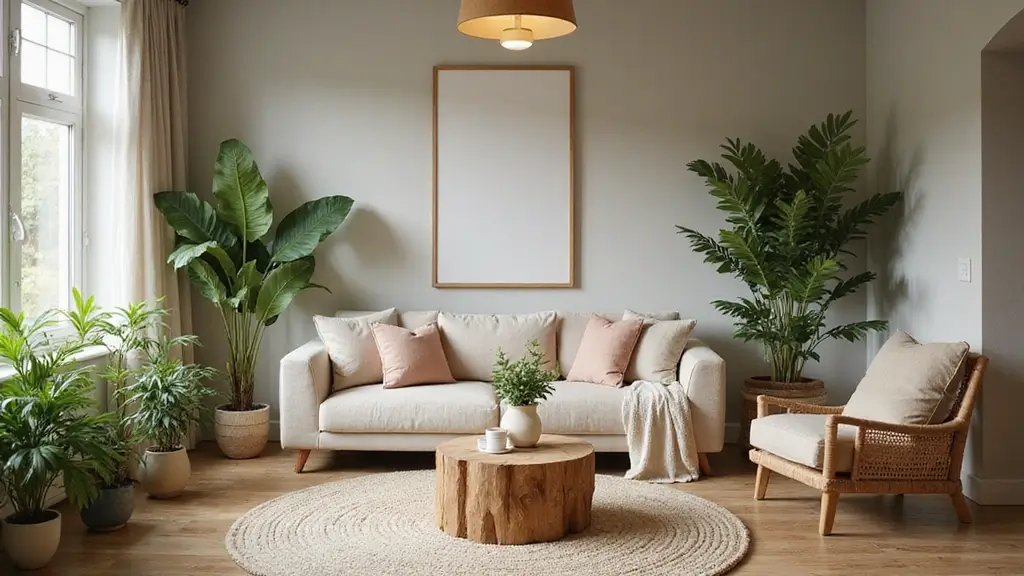
You’ll want the rug to run the full length of your sofa, achieving proper grounding by ensuring the front legs rest firmly on its surface. This technique helps anchor rug placement while creating visual cohesion across your arrangement.
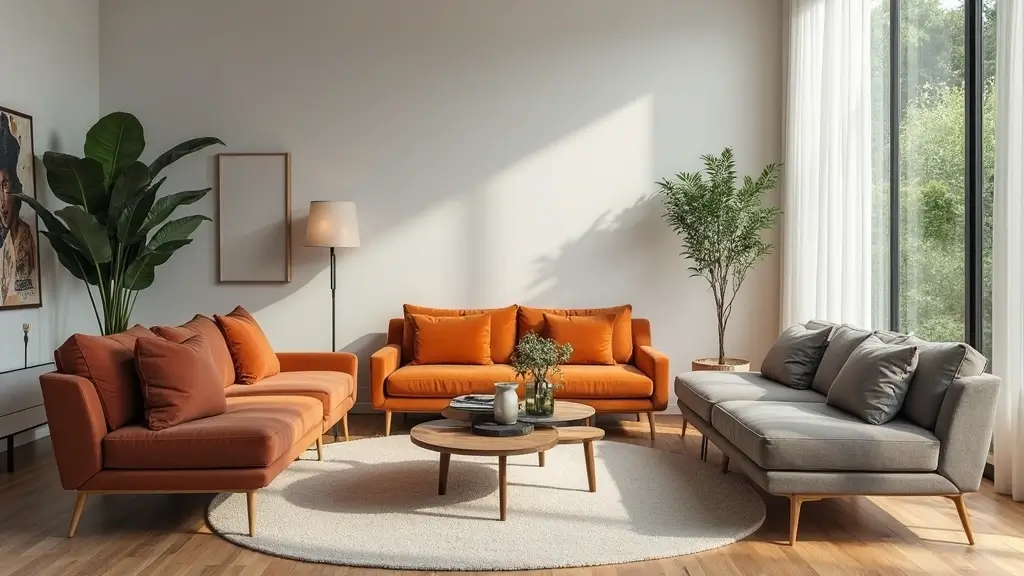
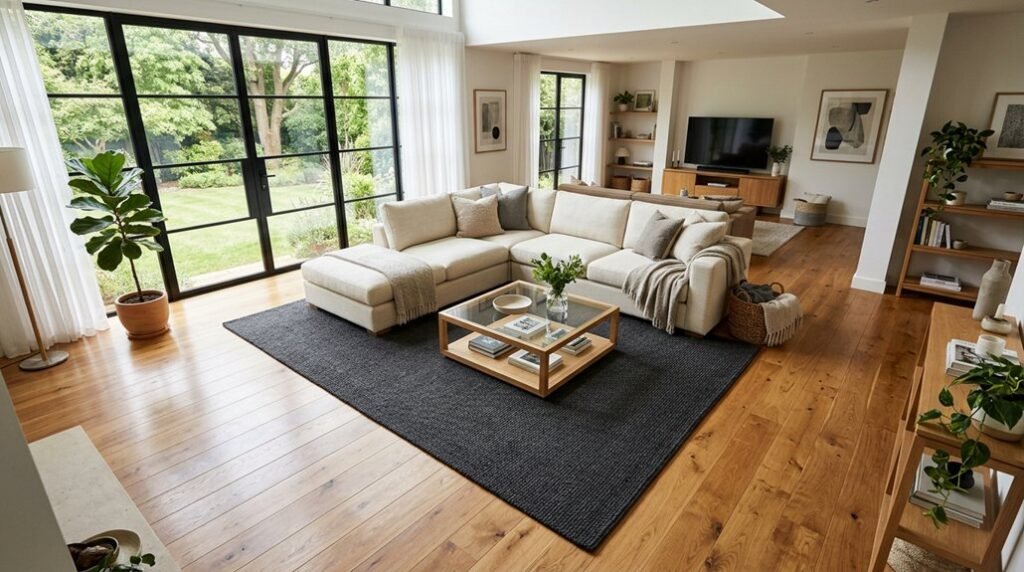
For open-concept layouts, you’re often working with multiple seating pieces that demand generous proportions—typically 9×12 rugs rather than standard 8×10 options. When budget or space constraints arise, you can employ a layered rug strategy, placing a smaller piece atop a larger base to maintain that essential grounding without sacrificing style.
Recommended Products

MACHINE WASHABLE: Our rug can be washed directly in washing machine in cold water and dried without heat. Daily maintenance is simple and convenient

CLOUD LIKE SOFTNESS & SUPREMELY COZY: Treat bare feet to absolute comfort. Crafted from premium faux wool, this living room rug delivers a luxuriously velvety soft texture that shields toes from cold floors. The tightly woven fibers to be non-shedding and durable, provides a relaxing environment.
Add 6–8 Inches to Your Sofa’s Width
Once you’ve measured your sofa’s width, you’ll add 6–8 inches to each side when selecting your rug. This ensures your rug extends beyond the sofa, creating essential edge clearance and visual breathing room. You’re establishing a proportional relationship between sofa width and rug size, which directly impacts room balance and spatial harmony.
That additional 12–16 inches of total width transforms your living room rug from a mere accessory into an anchoring rug that properly grounds your seating arrangement. You’ll position the front legs on the rug, connecting sofa and surrounding furniture into one cohesive zone. When weighing an 8×10 rug against larger options, calculate how those extra inches affect wall clearance and walkway flow. You’re optimizing rug under furniture placement, ensuring proportional coverage that elevates your entire space without overwhelming it.
Recommended Products

Soft & Durable: This 8x10 area rug low-pile combines soft faux wool fibers with a 0.25-inch height for comfort. Tight weaving reduces shedding and edge fraying, making it perfect for high-traffic areas like living rooms, bedrooms, and entryways

Soft Comfort & Certified Materials — Made from soft 100% polyester carpet material certified to OEKO-TEX STANDARD 100, this washable rug offers a cozy, comfortable feel underfoot. Available in compact, runner, and room-size options, it adds warmth to entryways, hallways, bedrooms, home offices, living rooms, and dining areas. Inviting for barefoot use and active households, it brings together everyday comfort, versatile style, and trusted material standards.

Machine Washable Rug: The 8x10 area rugs are machine washable and easy to clean. You can use a broom, vacuum cleaner, or robot vacuum for daily cleaning. If water or drinks spill on the rug, wipe it promptly with a dry towel. If you need a deep clean, this modern rug can be machine washed gently in cold water
Choose the Right Living Room Rug Size for Your Space
Why settle for a rug that merely fills space when you can select one that transforms your entire living room? Your rug size choice directly shapes how balanced and intentional the space feels.
Start by measuring your seating configuration, then weigh standard rug sizes against your layout’s demands. An 8×10 rug typically anchors seating in compact living room arrangements, while a 9×12 rug accommodates a sofa on rug plus multiple chairs in open plans. Ensure your rug extends at least six to eight inches past your sofa’s width on both sides to anchor seating properly. Maintain consistent borders to walls—roughly six to eighteen inches—to preserve visual breathing room. When uncertain, size up; a larger rug unifies the space, whereas you’ll layer smaller pieces only when absolutely necessary.
Recommended Products

【Machine Washable & Easy Care】 Made for real life with kids, pets, and everyday messes, this washable area rug is easy to maintain and keeps your space looking fresh. The water-resistant surface helps prevent spills from quickly soaking in, giving you time to wipe away coffee, juice, pet accidents, or food stains with a towel. For daily care, simply vacuum or shake off dust and pet hair. For deeper cleaning, machine wash separately in cold water on a gentle cycle and air dry naturally. No complicated maintenance needed.

【Classic Patterns and Stylish Textures】The gently faded pattern makes the 3x7 rug runner look well loved and wise while the bright coloring gives 3x7 rug personality and character. Timeless designs are chosen from a variety of styles. The 3 x 7 runner rug can complement a variety of decor styles from country to contemporary.

The Chris Collection area rug by Chris Loves Julia x Loloi is a fresh take on the classic stripe, with a soft color palette and neutral background.
Put All Legs On the Rug or Just the Front Ones?
Now that you’ve settled on dimensions, you need to decide how your furniture meets the rug. Placing all legs on the rug creates a cohesive, grounded seating area that immediately anchors your arrangement. However, using only front legs on the rug offers a lighter approach that can define space without visually enclosing it.
In open-concept rooms, you’ll find that all legs on the rug unites multiple seating pieces into one deliberate zone, while front legs on the rug maintains airier transitions between areas. When your rug size feels generous, position all legs on the rug to ground seating with intention. For smaller rugs or tighter quarters, front legs on the rug remains perfectly acceptable—you’ll still achieve space balance and keep the rug under furniture where it belongs.
Recommended Products

Machine Washable: A stain-resistant finish handles spills with a simple wipe, while the low-pile surface makes daily vacuuming effortless. For a deep clean, just machine wash on a cold, gentle cycle—maintenance this easy truly lets you live freely

Neutral Abstract Rug: This 8'×10' rug features a distressed abstract design in subtle tones, adding a modern, artistic touch to your space. It blends effortlessly with any home style, instantly enhancing your living room, bedroom, dining area, or office

Each set comes with 2 panels
Make a Too-Small Rug Work in Your Living Room
How do you rescue a rug you adore when the dimensions fall short? You transform that small rug into a deliberate design choice through strategic placement and creative layering.
Start by anchoring seating with front legs on the rug—position your sofa placement so at least the front two legs rest on the textile, with chairs on rug following suit. This creates intimacy without sacrificing cohesion.
Consider layering rugs when rug size limits your vision. Place your cherished piece atop a larger underlay rug—perhaps a natural jute or neutral foundation—to expand your living room’s visual footprint while preserving personality.
This technique enhances room framing, defines zones, and adds dimensional texture. You’re not compromising; you’re curating. The right approach turns spatial constraints into sophisticated, layered aesthetics that feel intentional, not improvised.
Recommended Products

Classic Vintage Area Rug: The vintage medallion design of the living room rug adds a timeless appeal that complements various decor styles. Whether your home leans towards a modern aesthetic or a cozy, rustic vibe, this carpet seamlessly integrates into your existing decor while providing a touch of retro flair. The beige rug provides a neutral backdrop, allowing it to enhance the beauty of your space without overwhelming it.

Modern Abstract Decor Rugs: The modern abstract rug 8x10 with modern neutral abstract design whether placed the carpet on the floor of living room, bedroom, or dining room rugs for under table, can integrated with home spaces perfectly, make your home space full of vitality
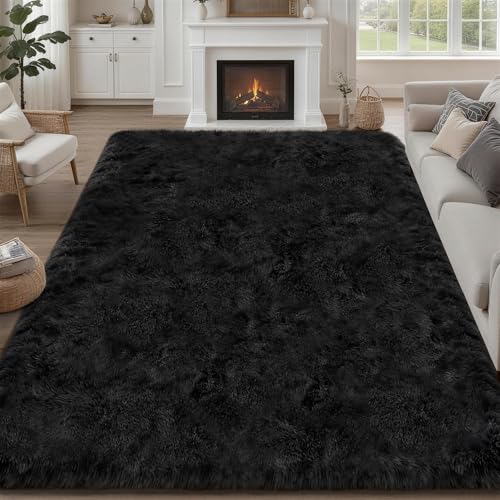
Ultra Soft Shag Rug: Experience cloud-like comfort with this fluffy 8x10 area rug. Its 1.4-inch high-density microfiber pile offers exceptional softness and gentle, soothing support whether you walk, sit, or lie down. Crafted from resilient fibers, the rugs for bedroom resists matting and retains its plush texture long-term, without shedding, fading, or retaining odors. Perfect for anchoring your living room or adding warmth to any space
Conclusion
Start with your sofa’s measurements, then add those essential 6–8 inches for breathing room. You’ll want the rug extending beyond both sides, anchoring your seating with either all legs or just the front ones resting on its surface. In open layouts, don’t hesitate to size up—bigger creates cohesion. Even when space feels tight, strategic placement transforms your living room into a grounded, visually harmonious retreat that feels intentionally designed rather than cramped.
Recommended Products

WASHABLE AREA RUGS: Worried about stains and difficulty in cleaning? Our washable rug is easy to clean and machine washable. Daily cleaning, wiping and sweeping robots are enough. For deep cleaning, just throw it into the washing machine
Ultra Soft Shag Rug: Experience cloud-like comfort with this fluffy 9x12 area rug. Its 1.4-inch high-density microfiber pile provides exceptional softness and soothing support for walking, sitting, or lying down. Made from resilient fibers, these rugs for bedroom resist matting and maintain its plush texture long-term, without shedding, fading, or retaining odors. Ideal for anchoring your living room or adding warmth to any space

【Machine Washable】 Keep your rug fresh with ease! Simply vacuum or spot clean for daily care. For a deep clean, toss it in the washing machine on a cold, gentle cycle and air dry. Enjoy a like-new, vibrant rug without the hassle of professional cleaning