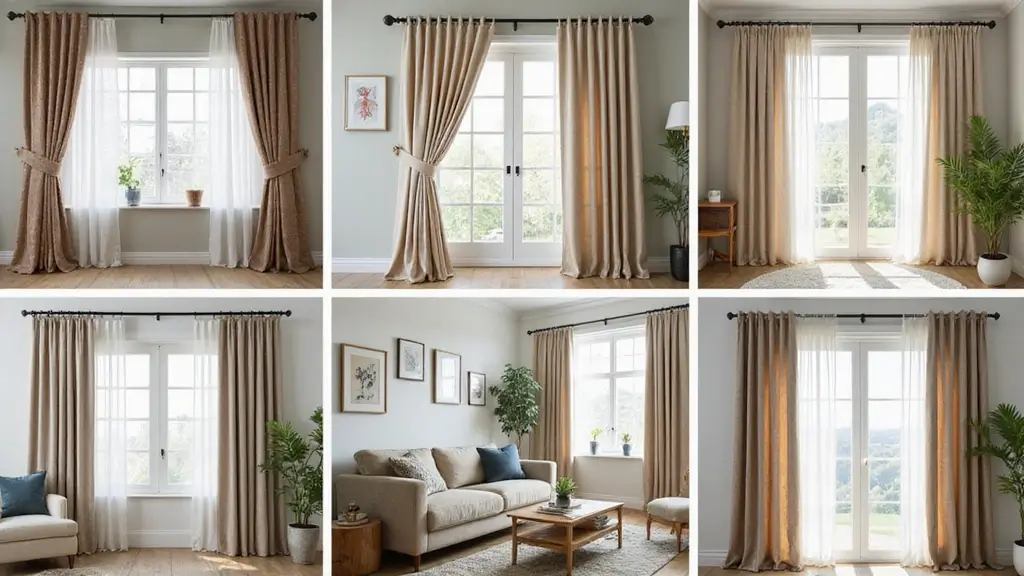

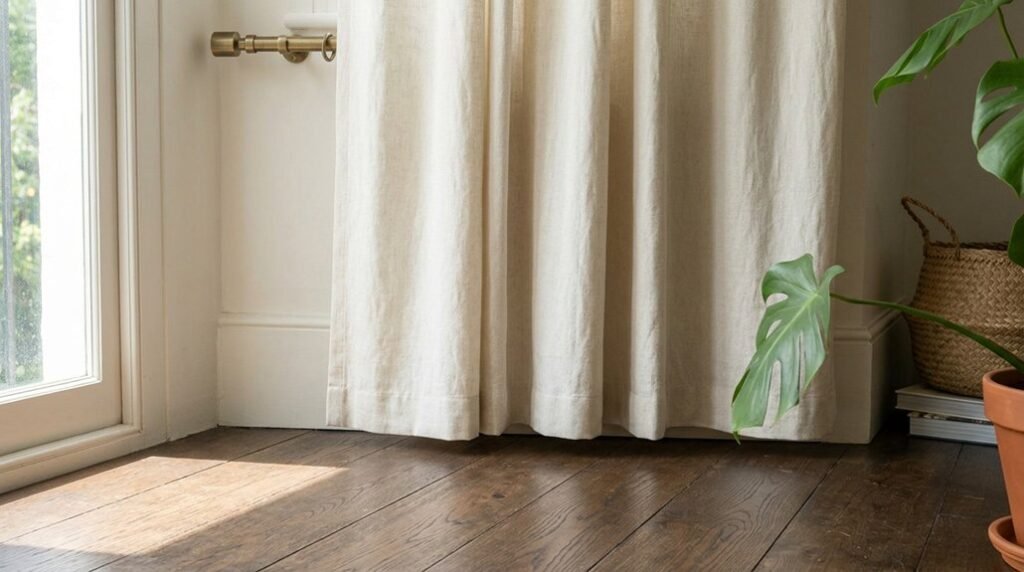
You’ve probably stood in front of your windows, tape measure in hand, wondering if that extra inch of fabric actually matters. It does—more than most people realize. The gap between your curtain hem and the floor can transform a room from polished to clumsy, or from practical to filthy. But here’s the catch: the “right” length depends entirely on where you’re standing and what happens there.
Do Curtains Need to Touch the Floor?
The question of whether curtains need to touch the floor doesn’t have a universal answer—it depends on your priorities. You’ll find that floor-length curtains deliver a polished, formal appearance and effectively hide rod hardware, making them ideal for living rooms.
However, you don’t always need your curtains to touch the floor. Hanging them slightly above the floor—about ½ to 1 inch—creates a tailored look while reducing wear in high-traffic areas.
If you’re after drama, you’ll love puddling, where extra fabric pools luxuriously at your feet. Yet you’ll want to skip this style if you’ve got pets, children, or busy spaces.
Consider your floor’s condition too; uneven surfaces benefit from break-length or puddle hems, while float-length offers modern crispness.
Ultimately, you’ll balance aesthetics against practical maintenance concerns like dust and cleaning.
Recommended Products

Heavyweight Linen Fabric:Crafted from 300GSM heavyweight linen blended with polyester, it features a rich, natural texture for depth and character. The linen offers a refined aesthetic, while the polyester provides enhanced wrinkle resistance, resulting in a look that is both timeless and durable

Heavyweight Linen Fabric:Crafted from 300GSM heavyweight linen blended with polyester, it features a rich, natural texture for depth and character. The linen offers a refined aesthetic, while the polyester provides enhanced wrinkle resistance, resulting in a look that is both timeless and durable
Hang Your Rod First: The Height Rule
Where exactly should you position your curtain rod? Mount it 4–6 inches above the window frame to create the illusion of added height. With very tall ceilings, you’ll want to position the rod even closer to the ceiling—just ensure sturdy brackets support it. Keep your rod height consistent across multiple windows to maintain symmetrical proportions and a cohesive look throughout your space.
Measure from your chosen rod height down to the floor to determine how your floor-length curtains will ultimately hang. This calculation directly impacts your curtain placement and the final aesthetic. Your ceiling height and chosen rod height work together to determine whether curtains graze the floor, hover above it, or create another effect entirely—decisions that balance both visual appeal and everyday practicality.
Recommended Products

LOCKING BUCKLE DESIGN – Curtain rod bracket features a plastic buckle to hold the rod firmly in place without wobbling. NOTE: curtain rod hooks fit 1 INCH diameter rods only; the anchors provided are not for drywall.

Anndason Heavy Duty Adjustable Curtain Rod Brackets,add a dash of Style and Elegance to your – home, office or anywhere else you decide to use then.

[ Quality Material ] Rierdge heavy duty curtain rod bracket is made of hign quality iron material which with strong hardness. Sprayed with elegant black paint on the exposed parts to provent rust. The curtain rod brackets add a dash of style and elegance to use then.
Break, Kiss, or Puddle: Three Ways Curtains Meet the Floor
How do you want your curtains to finish at the floor? You’ve got three distinct options: break, kiss, or puddle.
For a break or kiss, you’ll add 1–2 inches to your rod-to-floor measurement. This floor length creates a polished finish that hides minor floor irregularities and works beautifully in active spaces where you’re opening and closing panels daily.
Want drama? Choose puddle length by adding 3–6 inches. You’ll get luxurious fabric pooling on your floor, perfect for formal rooms with stationary furniture and thick, opulent materials.
Before you decide, assess your situation. Check your floor’s evenness, consider how much traffic you’ll have, and test your fabric’s drape. These factors ensure your chosen floor length reads exactly as you intend—clean and intentional, never accidental.
Recommended Products

ELEGANT DIMENSIONS & DESIGN: Package includes 2 beautiful beige curtain panels, each curtain panel measures 52" W x 63" L (total width 104 inches). These leaf curtains features a classic rod pocket design with a 1.2"+2.75" dual option for versatile hanging. The delicate ruffle top and a weighted 2" bottom hem ensure these drapes hang beautifully.

Packing Detail: The package includes 2 beige linen curtains and each linen textured curtain measures 52 inch wide and 96 inch length(104" wide total). The top style of the curtains is bronze grommets with 1.5 inch inner diameter, fit well with most rods.

Packing Detail: The package includes 2 Greyish Blue linen curtains and each linen textured curtain measures 52 inch wide and 96 inch length(104" wide total). The top style of the curtains is bronze grommets with 1.5 inch inner diameter, fit well with most rods.
Which Rooms Need Which Drop Style
Why limit yourself to one style throughout your home when different rooms demand different treatments?
In living rooms, you’ll want to choose based on your priorities: float length delivers crisp modernity, break length elongates the space elegantly, and puddle length adds luxurious formality—though you’ll reserve the latter for stationary, low-traffic areas.
Bedrooms favor break length for their restful, cohesive ambiance.
Kitchens practically require float length to minimize dust and simplify cleaning where moisture and activity dominate.
You’ll avoid puddle length in high-traffic zones since dragging fabric creates maintenance headaches.
Consider your floor’s evenness and furniture placement when deciding.
Ultimately, you’re balancing aesthetics against practicality, letting each room’s function guide whether curtains hover, kiss, or pool.
Recommended Products

WATERPROOF PEVA MATERIAL FOR EVERYDAY PROTECTION : Made from durable PEVA with a medium-weight 5 gauge thickness to help prevent water leaks and protect bathroom floors during daily use.

Sold as Pair: 2 panels per package, each measuring 40" wide and 72" long. 3 inches rod pocket, easy to install.
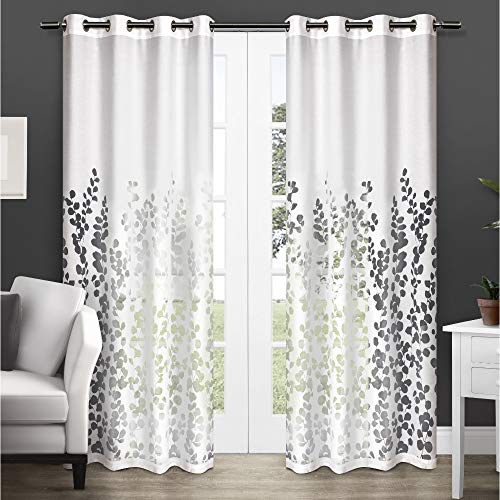
LEAFY FLORAL PATTERN: The Wilshire sheer curtain panels offer a beautiful leafy floral pattern that add elegance into any room.
Measure Right: The Exact Formula for Each Length
What separates amateur installations from professional results? Precise measurements. You’ll start by determining your exact rod-to-floor height—this single figure drives every calculation.
For float length, subtract ½ to 1 inch from your rod-to-floor measurement. The fabric hovers cleanly, ideal for uneven floors or high-traffic zones.
Prefer break length? Add 1 to 2 inches to that same rod-to-floor figure. You’ll get a crisp kiss where fabric meets floor without stacking.
For puddle length, extend 3 to 6 inches past your rod-to-floor distance. The excess pools dramatically below.
Uneven floors or fabrics that shrink or stretch demand flexibility—adjust by up to ½ inch to preserve your intended fall. Measure twice, note your offset, and you’ll nail the finish every time.
Recommended Products
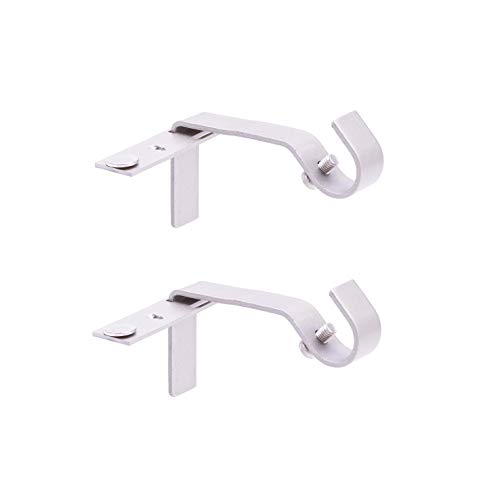
NO DRILL, NO MEASURE INSTALLATION FOR QUICK SETUP Fast Fit design installs easily without drilling or measuring, helping save time and reduce wall damage during setup.

【Curtain Rods Material】: made of hign quality iron material which with strong hardness, sprayed with elegant black paint on the exposed parts to provent rust. It's very durable and not easy to break, curtain rod bracket has a thick and strong metal structure that can support greahtter weig, you can use it both indoor and outdoor.

Anndason Heavy Duty Adjustable Curtain Rod Brackets,add a dash of Style and Elegance to your – home, office or anywhere else you decide to use then.
When to Puddle: and When to Skip It
Where exactly does puddling belong? You’ll find it shines in stationary, formal spaces where drama trumps utility. Add three to six inches beyond your rod-to-floor measurement, and you’ve got that magazine-worthy opulence puddling delivers.
Skip puddling when you’ve got kids, pets, or busy traffic patterns—you’re asking for snags, stains, and tripping hazards. Room size matters too; smaller spaces with lower ceilings can’t handle the visual weight, so stick with floor-length instead.
You’ve got to size precisely or you’ll create excessive creasing and dangerous pooling. Your curtain hardware must also cooperate—wall-mounted rods need clearance for fabric to cascade naturally.
Puddling disguises uneven floors beautifully, but you’re trading practicality for style. Ask yourself: is this room ceremonial or functional? Your honest answer determines whether you embrace the pool or walk away.
Recommended Products

Package Include: Boho crochet lace curtains 96 inch long 2 panels. Each curtain panel measures 52 inches wide, combined width is 104 inches. Each curtain panel has 3”rod pocket fits most standard rods. Each curtain size is measured fully unfolded
Package Include: Boho crochet lace curtains 72 inch long 2 panels. Each curtain panel measures 52 inches wide, combined width is 104 inches. Each curtain panel has 3”rod pocket fits most standard rods. Each curtain size is measured fully unfolded

Package Include: Boho crochet lace curtains 63 inch long 2 panels. Each curtain panel measures 52 inches wide, combined width is 104 inches. Each curtain panel has 3”rod pocket fits most standard rods. Each curtain size is measured fully unfolded
Heavy vs. Light Fabric: How Weight Changes the Hang
Your puddling decision doesn’t end with length—you’ve got to factor in what your curtains are actually made of. Fabric weight directly shapes how your panels behave at the floor.
Heavier fabrics like velvet or wool drape sharply and pool more readily, so you’ll need extra length to avoid blunt, wrinkled hems. For floor-length hangs, mount sturdier rods and keep hems discreet to prevent sagging. Light fabrics such as linen or sheer drape softly with minimal pooling, and they’ll forgive a slight gap—up to about half an inch—while floating crisply above the surface.
When you layer curtains, the heavier outer layer controls the final fall. You’ll manage floor contact there to prevent dragging or uneven stacking. Choose your fabric wisely, and you’ll nail the hang every time.
Recommended Products
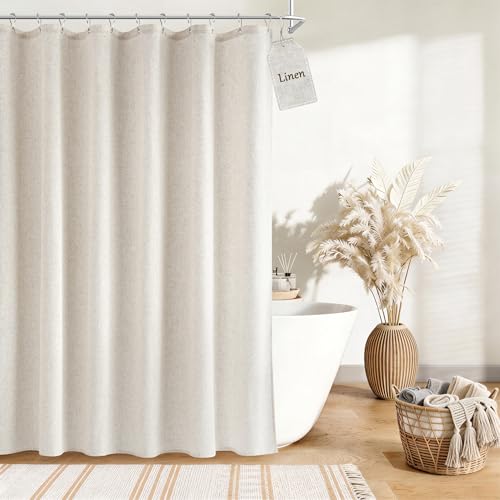
Natural Linen Blend:Imported linen blend fabric with natural slubs and cross weave texture. Soft, breathable, and lightweight. Earthy tones and two-color yarn weaving create...
Already Hung Them Wrong? Quick Fixes
How do you salvage curtains that miss the mark?
Lower the rod 4–6 inches above the window frame and recut or rehang to achieve float-length or break-length curtain length. If they’re too short, raise the rod height 8–10 inches above the frame to visually extend the fabric. For sills or below, adjust rod placement and use hemming adjustments to reach floor-touching or near-floor finishes. When pooling overwhelms, remeasure from rod to floor and trim before re-hanging. Always verify consistent rod height across windows to maintain symmetry. These tweaks transform a botched job into a correct hang without starting over. Small shifts in positioning and precise hemming adjustments redeem your investment and restore polished proportion to your space.
Recommended Products

FUNCTIONAL: Four adjustable steel brackets can be used in new installations or as replacement brackets for existing rods. Great for curtains, drapes, layering or extending over blinds. Matching screws included. Compatible with Umbra curtain rods.
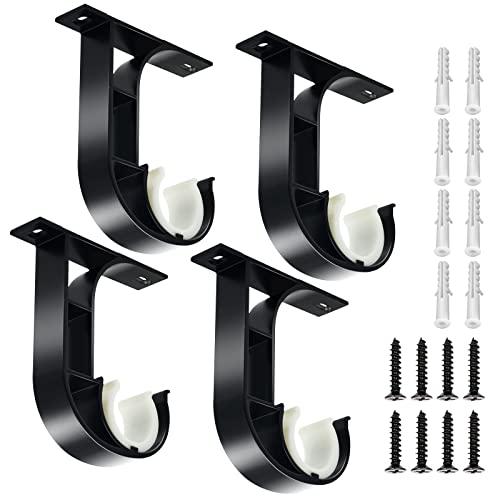
[Unique Buckle Design] -- Ceiling curtain rod bracket features a removable plastic clip to secure and protect rods from scratches. Fits 1 INCH diameter drapery rods; please measure before purchase.
Make Short Curtains Work in Modern Spaces
Why settle for floor-skimming drama when float-length curtains deliver modern edge without the fuss? You hang them ½ to 1 inch above the floor, creating clean lines that suit modern spaces perfectly.
You position the rod 4–6 inches above your window frame, maximizing light and faking extra height. In open-plan or minimalist rooms, you reserve floor-length coverage only where symmetry demands it; otherwise, you keep things uncluttered with float-length.
You want elegance without maintenance headaches? You choose break-length instead of puddling—just a light kiss against the floor. This curtain length balances sophistication with practicality, letting you walk through high-traffic areas without tripping over excess fabric. You get contemporary style that actually works for real life.
Recommended Products

Elegant White Short Curtains for Every Room: Simplebrand small white curtains are made of 100% Polyester, semi sheer curtains 63 inch length give it a more natural and organic look, with a slightly uneven surface that adds character and depth to the fabric. Also decorate your room elegant and chic, suitable for the living room, bedroom, dining room, farmhouse and many other occasions.

Packing Detail: The package includes 2 olive green linen curtains and each linen textured curtain measures 52 inch wide and 96 inch length(104" wide total). The top style of the curtains is bronze grommets with 1.5 inch inner diameter, fit well with most rods.
Kitchens, Baths, and High-Traffic Exceptions
Where do curtains face their toughest tests? You’ll find them in kitchens, baths, and busy hallways where function trumps form.
In these spaces, you shouldn’t let curtains touch the floor. You need above-floor placement instead. In your kitchen, you’ll appreciate curtains hanging well above the floor—they’re easier to wipe clean and won’t collect grease splatter or crumbs.
Your bathroom demands the same treatment; you’ll avoid moisture damage and mildew issues when fabric stays clear of damp floors.
For high-traffic durability, you’ll want float-length curtains that hover just above the surface. You’re practicing puddling avoidance here, and for good reason. You’ll prevent snagging, reduce dirt buildup, and extend your curtains’ lifespan. You sacrifice some drama, but you gain practicality. In these demanding environments, you’ll discover that raising your curtains preserves both your sanity and your décor investment.
Conclusion
You don’t need floor-grazing curtains in every room. Match your drop style to how you actually live—float for busy hallways, break for polished living spaces, puddle only where you won’t trip. Test your fabric’s drape, measure twice after hanging hardware, and prioritize function over fuss. Your curtains should work *with* your space, not against it. Get the length right, and you’ll clean less, replace less, and enjoy the view more.