

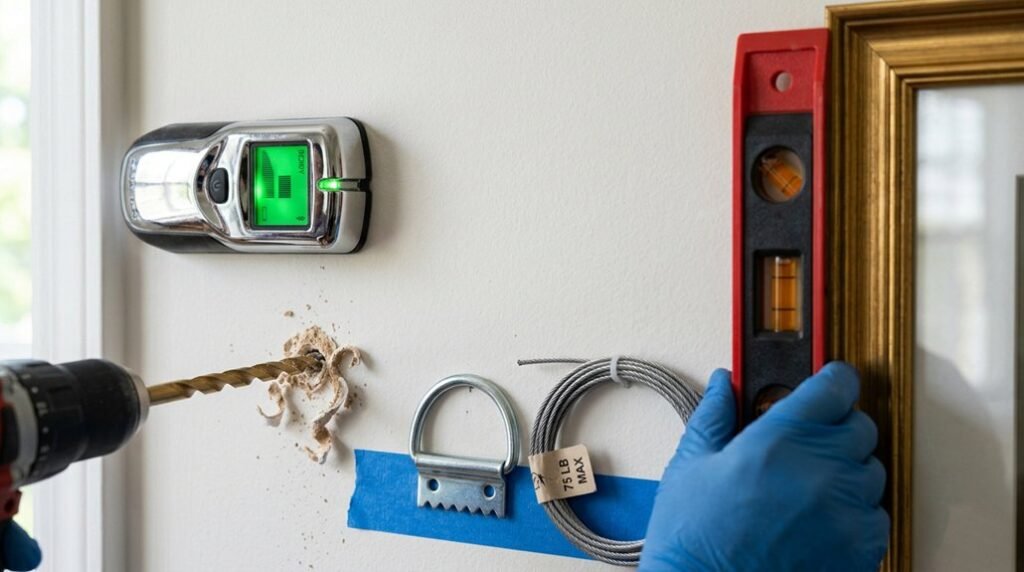
You’ll need to weigh your mirror before you pick up any hardware, because guessing its load is where most hanging failures begin. Once you’ve got that number, you’re still not ready to drill—you’ll need to find your wall’s structure, match your fasteners to the frame’s build, and decide if you’re trusting studs or betting on anchors. Get any of these wrong, and you’re not just risking the mirror.
Weigh Your Heavy Mirror and Choose Safe Hardware
How much does that mirror actually weigh? You’ll determine this through accurate weight measurement: place the mirror on a bathroom scale, record the reading, then weigh yourself alone and subtract the difference.
Heavy mirrors typically range from 35 to 100 pounds, and you’ll need this precise figure to select appropriate hardware. If you’re uncertain about the weight, enlist a friend’s assistance immediately—never risk injury from improper lifting.
For loads exceeding 35 pounds, you’ll mount directly into wall studs; drywall alone won’t suffice regardless of wall anchor quality. Choose heavy-duty wire and hangers rated for at least your measured weight.
Install D-rings approximately one-fifth down from the frame’s top. Only consider specialized wall anchors like Hillman no-stud hangers or 3M CLAW systems when your weight measurement confirms compatibility with manufacturer specifications.
Recommended Products

HEAVY DUTY STAINLESS STEEL WIRE: Package includes 2PCS premium stainless steel wire ropes, 6.6FT long, 0.06 inch diameter, supports up to 100lbs. Rust-resistant construction for long-lasting indoor and outdoor use.

Heavy Duty Picture Hanging Kit: Made from thickened iron, these powerful picture hangers ensure perfect support for any item. Totally 6 weight capacities – 10 lbs (10 pcs), 20 lbs (10 pcs), 30 lbs (10 pcs), 50 lbs (10 pcs), 75 lbs (6 pcs), 100 lbs (6 pcs)
Find the Best Spot to Hang Your Heavy Mirror
Where will your mirror serve both form and function? You’ll identify an anchor point that treats the mirror as an accessory, selecting a spot that complements nearby furniture and lighting. You’ll prefer locations away from electrical wiring, plumbing, extreme heat, or moisture to reduce mounting risks.
Consider placing your mirror adjacent to furniture, above a mantelpiece, or on a door depending on spatial constraints and intended use. You’ll reserve lighter, smaller spaces or dimmer rooms when balancing aesthetics demands it.
Your mirror weight directly dictates hanging hardware selection; you’ll cross-reference manufacturer specifications to determine whether heavy-duty wall anchors suffice. never mount blindly—weigh the consequences of improper load distribution. You’re assessing structural suitability now, ensuring the chosen location accommodates the necessary anchoring system without compromise to integrity or safety.
Recommended Products
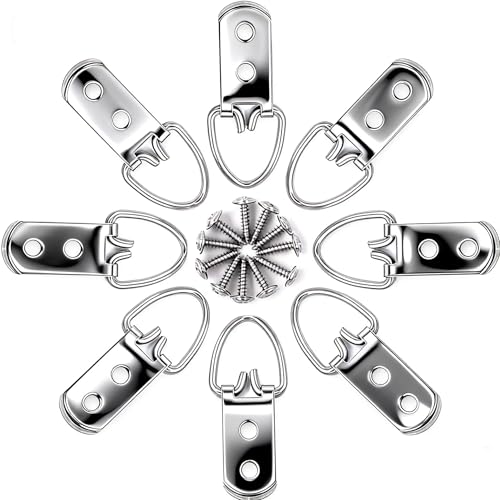
【Complete Picture Hanging Kit】 30 Heavy-Duty D-Ring Hangers with 60 precision-fit Stainless Steel Screws (#6 x 1/2"). Perfectly paired (1:2 ratio) for a hassle-free installation—no last-minute trips to the hardware store. Everything you need to create a professional gallery wall is in one box.

[Package includes] 30 pcs d-ring picture hangers + 60 pcs 13.5mm screws.

Complete Value Pack: each kit includes 20 durable mirror clips, 20 heavy duty screws, and 20 sturdy wall anchors; With enough hardware for multiple projects, it's the nice all in one solution for your home renovation needs
Locate Studs for Hanging Heavy Mirrors (Or Skip Them)
Why risk a costly mistake when you can anchor your mirror with confidence? Grab a stud finder and scan the wall at your desired hanging‑height to locate studs. When you find them, mark the center and measure left and right to quarter points; you’ll drive 3″ screws into at least two studs to distribute weight evenly.
No studs available? Install heavy‑duty anchors—molly bolts or toggle bolts rated for 50–100+ lbs—ensuring they protrude ¼” so hardware engages securely. Mark your top edge with a level, identify your center point, and position hangers accordingly. Verify everything stays level; a tilted mirror strains hardware.
Whether you’re using studs or anchors, double‑check capacity ratings—your safety depends on it.
Recommended Products

Practical kit: You will get 22 frame fixing clips with 22 screws and 22 fixing screws, which are enough to meet your daily needs; the mirror clip measures approx. 21 mm/ 0.83 inches in length, can be applied for installing glass that about 3/16 inches , please check the size of your mirror carefully before ordering

Dual Screws Mounted Hardware: The old designs are only can be fixed by one screw, but each of this new upgraded mounting hardware can be fixed by 2 screws. So the mirror will be more firmly fixed on the wall.
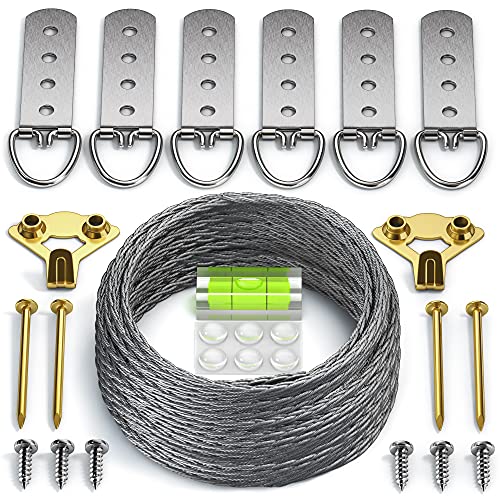
★ ALL-PURPOSE PICTURE HANGING TOOL KIT – Ideal for every DIY project this kit to hang pictures comes with all the tools, hardware, and accessories you’ll need to hang frames, clocks, mirrors, or pictures on drywall, studs, or wood surfaces.
Match Hardware to Your Mirror’s Weight and Frame Type
Once you’ve mapped out your studs or selected your anchors, you need hardware that won’t fail under load. Calibrate your hanging hardware to your exact mirror weight and frame type. For frameless installations, deploy mirror clips rated to 20 lbs or a mounting kit supporting 50 lbs. Frame-backed mirrors accommodate adjustable hanging kits or cleat systems rated to 100 lbs. If manufacturer specifications are absent, weigh your piece on a bathroom scale—subtract frame-only mass from total mass to isolate mirror weight. For loads exceeding 35 lbs, secure directly into studs or employ heavy-duty drywall anchors rated 50–100+ lbs. No-stud alternatives exist: Hillman hangers handle 200 lbs on specified drywall thicknesses, requiring paired installation. Match every component—screw, anchor, bracket—to your frame type and verified load requirements.
Recommended Products
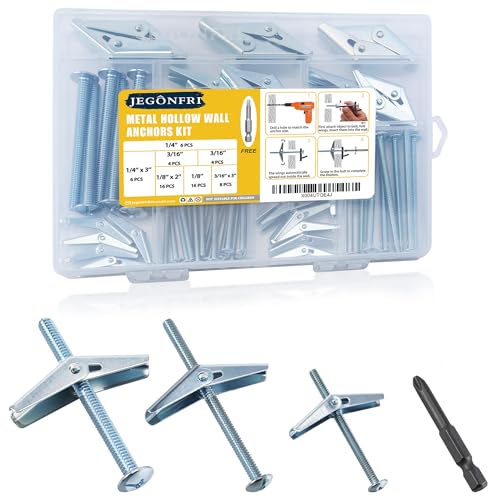
Heavy Duty Wall Anchors:These toggle bolts feature a wing nut design that opens behind hollow walls. The toggle bolt design spreads force evenly and prevents the anchor from pulling out under weight.

Toggle bolts quantity:100pcs(25sets)1/8 inch-13pcs Toggle Bolt,13pcs Wing Nut,13pcs nuts ,13pcs spacers. 3/16 inch-8pcs Toggle Bolt,8pcs Wing Nut,8pcs nuts ,8pcs spacers. 1/4 inch-4pcs Toggle Bolt,4pcs Wing Nut,4pcs nuts ,4pcs spacers. After installation, the wall is neat and beautiful.Different sizes and enough quantities can meet your different needs in your daily life.

MULTIPLE SIZE OPTIONS – This drywall anchors and wing nut kit contains toggle bolts set in 3 different sizes – 1/8in, 3/16in, 1/4in for your choice according to your actual mounting and load bearing requirements.
Hang Your Heavy Mirror: Step-by-Step for Each Method
The execution demands methodical preparation and an assistant’s steady hands. You’ll lift the Mirror slightly by its wire to tauten it, then measure the distance from the taut wire to the frame’s top. Locate Studs with a stud finder; anchor directly into them with 3″ screws when possible. Mark a level top edge line, establish two quarter-point vertical references on the wall, and transfer your wire-to-frame measurement to position the Hangers accurately.
If Studs align with your marks, drive screws at the calculated points. Your assistant must hold the Mirror during mounting to prevent slips. Seat the wire securely on each hanger, then confirm the installation is level. Double-check all connections before releasing the Mirror’s weight to the hardware.
Recommended Products

Tough steel hooks that dig deep into drywall - Hold up to 40 lbs each, built to last through all your hanging needs.


Package Contents: 6 of 1.6ft long, 2mm diameter wire rope with hooks. 12 of anchors. Bolts, Nuts, Screws and plugs pack, Installation Instruction.
No Studs? Hang Heavy Mirrors With Solid Wall Anchors
Where studs don’t align with your mounting points, you’ll rely on heavy-duty wall anchors to shoulder the mirror’s full weight. Select heavy-duty anchors—molly bolts or toggle bolts—rated for 50–100+ lbs based on your drywall thickness and bolt diameter. Mark your top edge line and center point on the wall, then transfer quarter-point measurements from the taut hanging wire to ensure your drywall anchors align precisely with the mirror’s wall mounting points.
Install two anchors at these calculated positions, leaving screws protruding approximately ¼ inch to secure wire or hooks. Use heavy-duty hanging wire or two-point D-rings rated for the mirror’s weight, maintaining slight slack so the wire rests behind the frame. Verify level after installing anchors. Have an assistant help lift and position the mirror to prevent damage or injury.
Recommended Products

BEFORE YOU BUY: Our 100 lb picture hangers are designed to hang heavy mirror on wall, framed artwork, and wall décor on drywall or plaster with included nails. This picture hanging hardware is not for shelves, furniture, TVs, or structural loads.
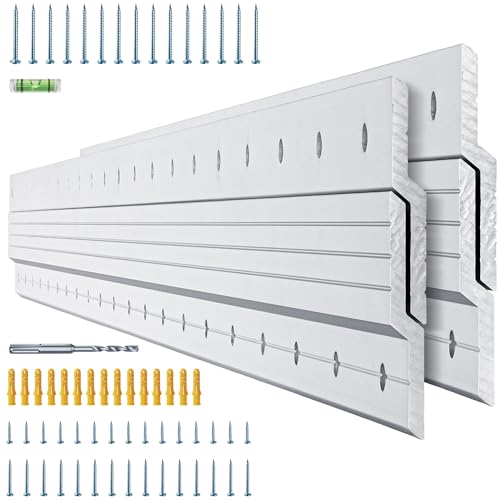
【Hold up to 500 Pounds & Solid Aluminum Construction 】- Say goodbye to falling frames and sagging shelves. Made from 3mm aircraft-grade aluminum, unlumm 41 inch french cleat hanger supports up to 500 lbs—offering unmatched strength and peace of mind. Unlike ordinary hanging hooks, our Z clips keep your heavy mirrors, cabinets, headboard and art frames firmly in place
Check Your Heavy Mirror Is Secure Before You Finish
With your mirror hung on the wall, you’re not done until you’ve confirmed it’s locked in place and stable.
First, verify the wire sits firmly on both hangers. Lift the mirror slightly to test seating; the wire should remain taut with no sag. If your mirror exceeds 35 lbs, double-check you’ve anchored into a stud or used heavy-duty no-stud hardware rated appropriately for your wall type.
Position two hangers per mounting point to distribute load evenly and prevent shifting. Now, perform a level-check: place a spirit level along the top edge. Adjust the cleats, hooks, or anchors until the bubble centers precisely. Re-test seating after adjustments. Confirm no tilt remains. Only when the mirror rests secure and level—without wobble or drift—can you finalize placement.
Recommended Products

[Package includes] 20 pcs d ring picture hangers + 40 pcs 13.5mm screws.

Each set comes with 12 heavy duty picture hangers,48pcs screws,and 1 bubble level.The cost-effective bulk packaging is ideal for personal use,ensuring you have enough hardware for all your picture and mirror hanging needs. With a universal fit for all frame sizes and mirror types, this picture frame hanging kit is the ultimate one-stop solution for all your wall hanging requirements.

【Package Included】 Each set includes 30 three-hole d-ring picture hangers and 90 mounting screws to meet your frame hanging needs.
Conclusion
You’ve weighed your mirror, matched hardware to its load, and verified stud placement or anchor ratings. Now, hang it with an assistant, check level, and confirm there’s no wobble. Torque all fasteners to spec, inspect wire tension, and retest after 24 hours. Don’t skip re-verification—failure risks injury and damage. Your installation’s only complete when you’ve confirmed every component’s secure.
Recommended Products

【Product Include】 You will receive 16 pieces of "J" type of mirror holders, 16 screws and 16 plastic expansion anchors. The protective rubber pads to prevent your mirror from being damaged. The quantity is enough for your daily use and replacement.

Quality Material: This black "J" mirror hanging bracket is made of japanese alloy steel materials, high hardness, corrosion-resistant, rust-resistant, one-piece molding, strong load bearing capacity, durable, perfect for hanging large, heavy mirrors

Aluminum Cleats are made of extruded aluminum 1-1/4" wide by 3/32" thick.