
Your coffee table is the centerpiece of your living room, yet you’re probably staring at it right now wondering where to begin. You don’t need a design degree to transform this surface from cluttered afterthought to intentional focal point. The secret lies in a few simple layers that create height, balance, and visual breathing room. But before you start stacking books or hunting for the perfect tray, there’s one foundational choice that will make or break your entire arrangement.
Start With Stacked Coffee Table Books as Your Base
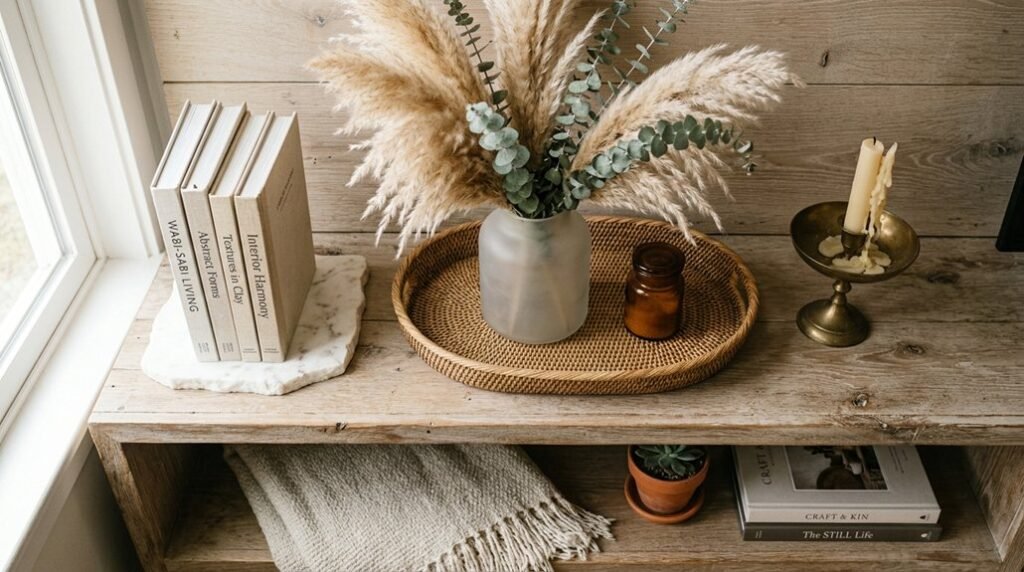
Stack three or four piles of coffee table books across your table’s surface, varying the heights to build a visual foundation for your display. You’ll create height variation by mixing tall and short stacks, establishing a visual base that anchors everything above.
Choose colors that echo your room’s palette—don’t hesitate to remove bright covers or hunt secondhand for perfect tones. Your stacked books aren’t just functional; they’re conversation starters revealing your travels, hobbies, and design sensibilities.
Use their top surfaces for decor layering, anchoring curios or small candles with taller items behind and shorter pieces in front to preserve sightlines from your seating. Balance these coffee table books with personal keepsakes nearby, letting your collection communicate personality while maintaining clean, intentional arrangement.
Recommended Products
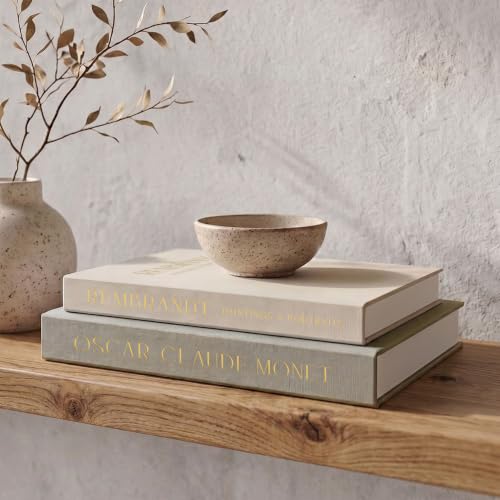
Get Ready To Impress: Transform your space into a realm of sophistication with these realistic decor books! The lovely coffee table books are destined to steal the spotlight as coffee table decor or bookshelf decor, leaving your guests in awe of your aesthetic taste

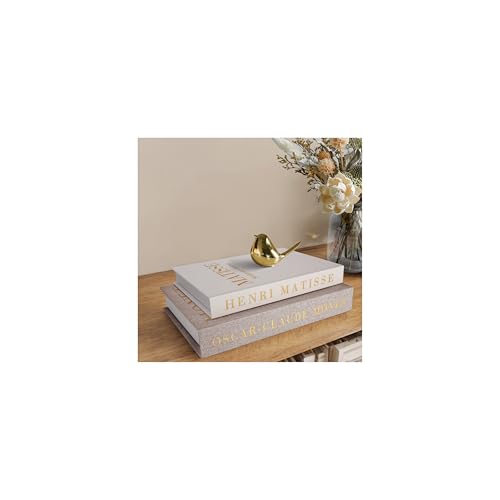
【Elegant Linen Decorative Books】 Featuring a neutral linen cover and realistic hardcover book style, these decorative books add a refined look to coffee tables, shelves, desks, and office spaces.
Add a Tall Vase or Candle for Vertical Interest
Where should your eye travel next? Upward. You’ll want to incorporate vertical layering to keep your arrangement from feeling flat. Grab a tall vase or cluster of candles and place them toward the back of your display—they’ll create height without blocking your shorter pieces.
A tall vase anchors your table styling beautifully, drawing attention upward while candles layer in ambient light and subtle fragrance. You’ll establish a multi-level composition that reads clearly from your seating position by pairing these taller elements with shorter objects like books or bowls.
Don’t forget cohesion. Choose finishes that complement your surrounding décor to maintain visual flow. You’ll also want to keep everything proportionate—too much height overwhelms smaller accessories and crowds your surface. Balance matters.
Recommended Products

Romantic Heart Vase Design: These white ceramic vases feature a unique hollow heart shape. When placed together, they create the enchanting silhouette of a couple embracing, while individually, each vase adds a charming and artistic accent to your space—infusing every day with a touch of love and romance

Size and Style: This set includes two matte Milky White handmade vases. The taller vase measures W 6.3" X H 8", with a vase neck of 1.3". The shorter vase measures W 5.4" X H 7", with a vase neck of 0.9". Both vases feature a boho style

Blue Vases For Decor - Showcase Your Style With This Decorative Blue Ceramic Vase Set Of 3. Create A Space In Your Home With Refined Rustic, Yet Elegant And Effortlessly Beautiful Home Décor Pieces, Perfect For All Seasons And Holidays. Blue Ceramic Vases Have A Delicate Texture And Are Easy To Wash Maintenance Free
Contain Clutter With a Tray or Basket
A tray transforms scattered objects into an intentional arrangement. You’ll corral remotes, coasters, and small items into one composed zone on your coffee table, instantly reducing visual busyness. Choose a tray with a raised lip to contain clutter and prevent spills or slips.
Position additional decor ideas beside your tray to balance the display while keeping it as your focal containment piece. Centralize your essentials on a single surface, or layer trays of varying heights to add depth and dimension. Coordinate your tray color with surrounding elements for cohesion, and rotate its contents seasonally to maintain freshness.
For larger items, incorporate storage baskets underneath or adjacent to your coffee table. These practical solutions hide magazines and blankets while complementing your styled tray arrangement.
Recommended Products

100% Water Does Not Flow Out: The coffee maker mat is built with 3/5" raised edge, like a tray and it can contain any liquid spills from the coffee maker. The premium material not only protect your countertop from scratches, especially protect the wood countertop, but also keep your your countertop tidy, clean.

100% Water Does Not Flow Out: The coffee mat is built with 3/5" raised edge, like a tray and it can contain any liquid spills from the coffee maker. The premium material not only protect your countertop from scratches, especially protect the wood countertop, but also keep your your countertop tidy, clean.

Unique Hollow Heart Cutout Handles – Romantic Gift-Centric Design Our round acacia serving tray features two one-piece hollow heart-shaped cutout handles, a standout romantic detail exclusive for gift-giving occasions. Unlike generic solid handles, the delicate hollow heart silhouette delivers warm love vibes, perfectly matching wedding, engagement, anniversary and Valentine’s Day aesthetics. The seamless integrated handle structure avoids loose fittings, allowing you to carry charcuterie, breakfast or wine sets smoothly from kitchen to living room without slipping.
Finish With a Plant or Fresh Flowers
Why let rigid decor dominate your space when living greenery can soften the entire arrangement? You’ll find that plants and fresh flowers inject life, softness, and color variety into your coffee table decor. These finishing touches break up the hardness of decorative objects and establish a natural focal point that draws the eye.
Consider orchids for your display—they’re long-lasting and demand minimal care, making them practical yet elegant. When fresh flowers aren’t feasible, you’ll want easy houseplants like pothos, creeping fig, ivy, or spider plants instead. Place your chosen greenery in a pretty basket or pot to elevate its presence and seamlessly integrate it with surrounding items. This final layer transforms your coffee table from static to vibrant, completing your vision with organic warmth.
Recommended Products

Package Includes: You will receive 3 color-blocked wooden candle holders, 1 heart-shaped candle tray, and a set of decorative pebbles. These rustic wooden candle holders for pillar add a cozy, farmhouse touch to your home decor, perfect for creating a warm atmosphere in any room.

- TOUCH OF BEAUTY: Elegantly contoured with an exquisite crackled mosaic design, this set of two candle holders makes for perfect brown table decorations and blends beautifully with any home decor. ★Candles and other decor accents shown are not included★
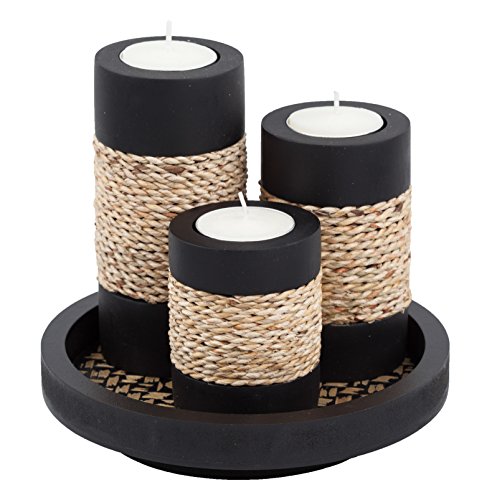
CREATE A BEAUTIFUL TABLE CENTERPIECE – This set of 3 wooden tealight candle holders with matching tray instantly transforms your dining table, coffee table, entryway, or fireplace mantel into a warm, inviting focal point for everyday living and special occasions.
Arrange Your Coffee Table in Two or Three Zones
Once you’ve anchored your arrangement with greenery, you’ll want to give your table a sense of structure that keeps it from feeling scattered.
Divide the surface into two or three zones to create balanced areas for grouped items and negative space.
When you’re styling a coffee table, mentally split each section by placing taller elements toward the back and shorter pieces in the front so everything’s visible from seating areas.
Use trays or books to anchor each zone, containing clutter while establishing cohesive mini-scenes.
You’ll want to vary textures and materials—wood, ceramic, metal, fabric—within and across zones to add depth and visual interest.
Finally, ensure your layout works from multiple angles; avoid single directional focus so guests can appreciate your coffee table decor ideas from wherever they’re sitting.
Recommended Products
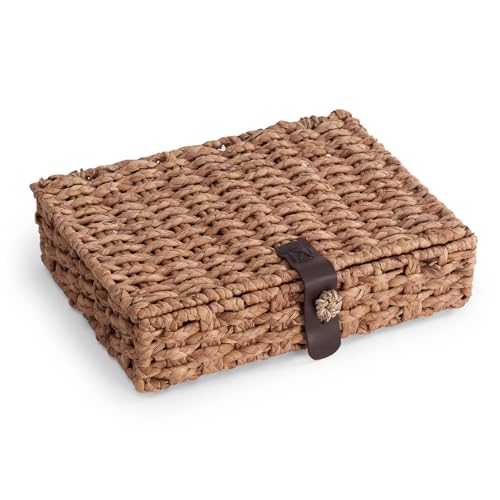
Elegant Look That Elevates Any Space - Our handwoven boxes are designed to instantly draw attention. The natural weave, warm tones, and leather strap closure create a relaxed yet elevated look. Whether stacked together or styled alone, they add texture and dimension that complete your coffee table, entryway, or shelving decor
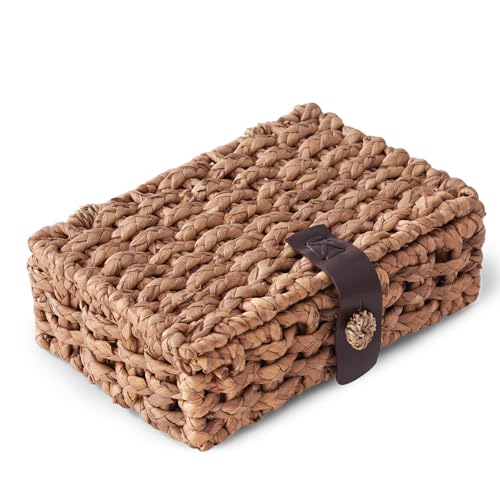
Elegant Look That Elevates Any Space - Our handwoven boxes are designed to instantly draw attention. The natural weave, warm tones, and leather strap closure create a relaxed yet elevated look. Whether stacked together or styled alone, they add texture and dimension that complete your coffee table, entryway, or shelving decor

Small Size: 8.3"L x 4.7"W x 1.6"H; Small size, please pay attention to the size before purchase (Only 1Pcs small rattan tray, accessories are not included)
Conclusion
You’ve transformed your coffee table into a stylish focal point by layering books, adding height with vases or candles, corralling essentials in trays, and finishing with fresh greenery. By dividing the surface into balanced zones, you’ve created a functional display that’s intentional from every angle. Step back, enjoy your curated space, and know you’ve mastered the art of coffee table styling.
Recommended Products

Preppy Set: You will receive a flat box containing a set of 3 folded decorative books for home decor, namely "Paris", "London", and "New York". You need to take them out and simply assemble them. They can be stacked and used in combination according to your needs. Delicate and stylish, they add more charm to your space

【Modern Decor Books】: This coffee table books use high quality cardboard with modern design. The stylish outlook of the decorative books gives it a luxurious feel that is going to help impress people at every visit. Add a unique touch to your home decor with simple but stylish design books.

[Fveuc Versatile 3-Size Set] Achieve the perfect shelf styling with our graduated set. Large: 10.62"x7.48"x1.57"; Medium: 9.44"x6.69"x1.18"; Small: 8.66"x5.90"x0.82". Stack these faux books to create dynamic table centerpieces, or use them as space fillers for living room shelves.