
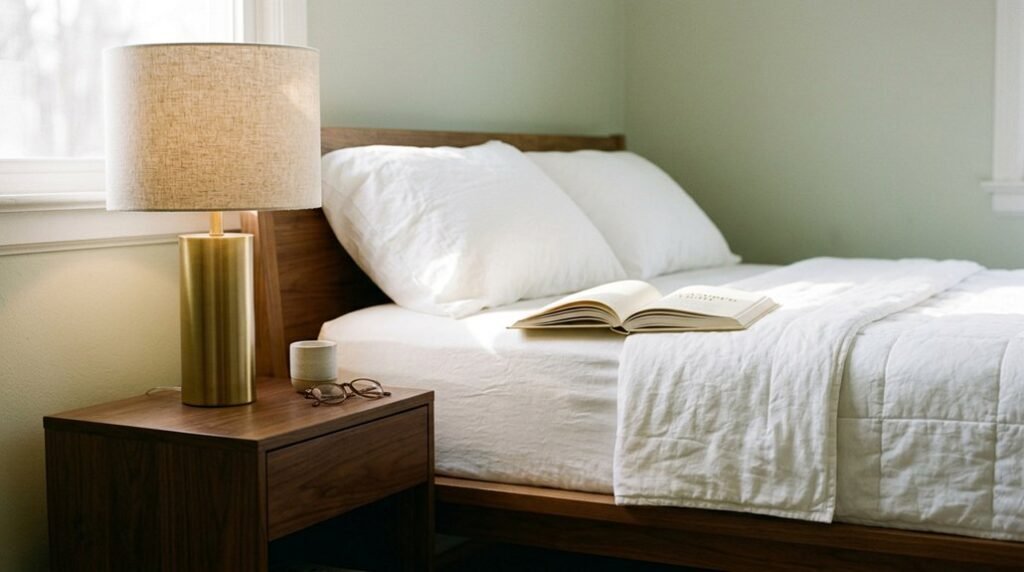
Your bedside lamp stands at a precise intersection of ergonomics and proportion. At 28–30 inches, its shade bottom hits near eye level—seated, reclined, or lying down—eliminating bulb glare without dimming your page. You’ll match one-third shade-to-body ratio for visual balance; scale up to 34 inches only against tall headboards or high ceilings. Nightstand width and bed size further constrain your choice. The measurements seem simple, but misjudge by even two inches and the fixture fails its single purpose.
Bedside Lamp Height: The 28-to-34-Inch Rule
How do you dial in the perfect lamp height? You start with the 28-to-34-inch bedside lamp height range. Standard lamps measure 28 to 30 inches, but you’ll scale to 34 inches when your headboard or ceiling demands vertical extension.
You position the shade so its bottom edge hovers near eye level when you’re seated upright in bed. This blocks bare bulb exposure without dimming your page. The shade itself comprises one-third of total lamp height—maintain this ratio or you’ll lose visual balance.
You’ll check reach next: the switch must sit within arm’s span from your pillow. Scale the base and shade proportionally to your headboard mass. A towering lamp against a low headboard reads wrong; you’ll adjust until the silhouette harmonizes with your bed’s architecture.
Recommended Products

Height Adjustable Modern Table Lamps: Experience the perfect blend of style and functionality with Kondras set of 2 flexible table lamps for bedroom. These modern adjustable nightstand lamp sets feature a height adjustable design, allowing you to easily customize the height in your space. With a height range of 23" to 30", our tall skinny table lamp are ideal for bedrooms, living rooms, kids' rooms, offices

Noiseless Sensitive Touch Control Feature with Indicating Light: designed with an upgraded sensor, our lamps for bedrooms set of 2 provide you with 3-level brightness with a gentle tap on the button, meeting your various lighting demands. The great idea is the little indicating light on the button. It will always be on while plugged in, which makes you get rid of fumbling with the switch in the dark and gives you more convenience.
The Eye-Level Alignment Test for Glare-Free Reading
Where exactly should the shade sit? Position the bottom edge of the shade at or just below your eye level when you’re seated on the bed. This alignment blocks direct bulb exposure and eliminates glare.
Most bedside lamps landing in the 28″–30″ range achieve this automatically. You’re seeing the shade, not the bulb. That visual barrier diffuses light downward onto your page rather than into your retinas.
If you’ve chosen a taller lamp—perhaps 34″ to balance a tall headboard—you’re not exempt. You still need that shade bottom near eye level. A shade sitting too high floods your vision with glare; too low, and light pools uselessly below your book.
Test it yourself: sit, read, adjust. Your eyes confirm the correct height through comfort, not calculation.
Recommended Products

MINIMALIST BEDROOM LAMP: Modern style lamp for bedroom features: black metal base and a square lampshade, which can create a cozy and relaxing atmosphere in your house. Black flax fabric lampshade will make the light soft and protect your eyes to create a comfortable atmosphere. Touch Table Lamp can decor your home, living room, guest room, study reading room, kids room, etc.

3-Level Touch Dimming- Enjoy effortless control with our 3-level touch dimming feature. A simple tap on the metal touch button adjusts brightness to low, medium, or high, perfect for reading, working, or relaxing. These touch table lamps offer more versatility than non-dimmable lamps, catering to all your lighting needs.
Match Lamp Scale to Bed Size (King, Queen, Full)
Why let a king-size bed dwarf your lighting? You’ll match bedside lamp scale to your bed’s footprint. A king demands taller, broader fixtures—typically 30″+—while full beds accommodate compact 26″–28″ profiles. You adjust lamp height against headboard and ceiling dimensions; soaring upholstered panels require elevated bases for visual parity. You maintain a 2:1 shade-to-base ratio so proportions read correctly beside expansive versus narrow mattresses. You verify switch accessibility from lying and seated positions regardless of scale.
Queen beds split the difference—aim 28″–30″ with moderate base width. You ensure the lamp scale balances the bed’s mass without overwhelming adjacent surfaces. Scale proportionally, and you’ll achieve compositional equilibrium across king, queen, or full configurations.
Recommended Products

[ Innovative Design ] Designed with convenience in mind, this is the world’s first no-drill reading lamp for bed over the headboard. Simply fix the light by inserting the support panel into the gap between the wall and the headboard without damaging the wall. Use the provided foam pad to fill in large gaps up to 1.6 inches. *The lamp requires a gap LESS THAN 1.6 inches between the headboard and the wall. NOT suitable for slanted, uneven and hollow headboards.*

【Professional Eye-Caring Wall Lamp】Wall-mounted reading light with 14 premium SMD2835 LEDs delivers 3000K-6000K adjustable color temperatures, eliminating glare and flicker for bedtime reading. 10 dimming modes (10%-100%) adapt to late-night sessions while keeping bedrooms dark. Flexible 360° gooseneck focuses a 60° beam precisely on books without disturbing partners. Includes screw/tape mounting for headboards or walls.

5 Dimming Levels & Eye Caring Technology: This Bedside Headboard Light provides gentle, non-flickering light with 5 dimming levels, ensuring a comfortable warm glow for your eyes. The Book Light features 5 brightness levels for dimming, which is sufficient for twilight and late night using. Enjoy optimal reading experience with 36 LED bulbs offering adjustable 5 color temperatures
Nightstand Width Requirements for Stable Lamp Placement
What width secures your lamp without tipping the visual balance? You’ll want an end table measuring at least 28 inches wide for full-size bedside lamps. Anything narrower—like 18-inch models—invites wobble and scale mismatch.
You must apply the 2:1 shade-to-table width rule: your shade width can’t exceed the end table’s surface, or proportion collapses and stability falters. Wider tables anchor taller lamp height configurations without appearing top-heavy, giving you room for books or objects beside the base. You’ll notice the difference immediately—a broad foundation visually locks the lamp in place.
Recommended Products

【600 Lumens Bright Table Lamp】 Surprisingly bright for its size - this 6.5W LED bedside lamp delivers 600 lumens of warm light (60W equivalent). The frosted opal glass shade diffuses light evenly with zero hot spots, creating the perfect balance of bright reading light on HIGH and cozy ambient glow on LOW. 3000K warm white color temperature helps you relax and fall asleep naturally. No flickering, no buzzing - just pure, comfortable light
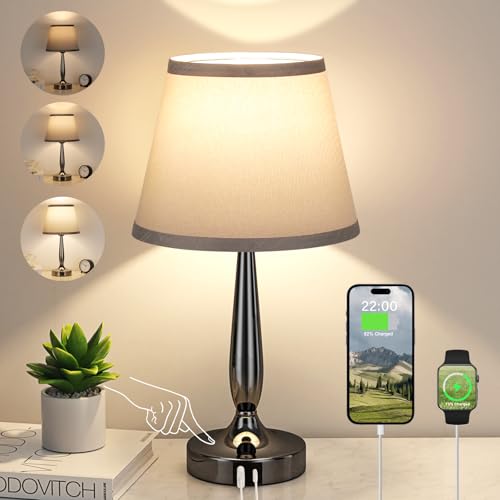
3 Way Dimmable Touch Control: The gray touch bedside nightstand lamp with dual USB ports is available to turn ON/OFF by touching the lamp base. Tap any place of the pearl black metal base and body to switch 3 modes of lighting: high, medium and low for working, gaming, reading and relaxing to show bright, moderate and soft light, which accommodate a variety of usage scenarios
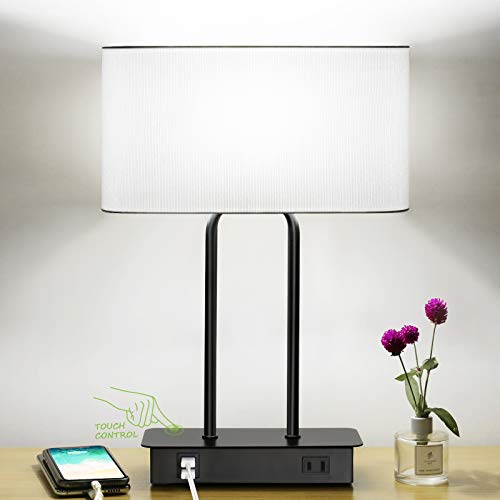
3 Level Brightness Touch Control Table Lamp: This modern bedside lamp has 3 different brightness options (low, medium and high) to meet your various demands at different times or occasions. Upgraded touch control feature makes it exactly convenient to turn on/off and adjust to your favorite brightness level, just tapping any metal part of the sturdy base, stems or even the finial on the socket, greatly handy to operate, no more minding switch lost or broken.
Shade Height Should Be One-Third of Total Lamp Height
How precisely should you calibrate shade height against the lamp body? You calculate shade height as one-third of total lamp height, including bulb and harp.
For a standard bedside lamp measuring 28″–30″, you’ll select shades around 9″–10″. At 24″ lamp height, you target roughly 8″, tolerating variation within two inches.
This 1:3 ratio ensures the shade base sits at seated eye level, eliminating glare while maintaining proportional balance. You’re engineering visual harmony between shade and base—neither element dominates. The shade crowns the structure without overwhelming it, creating a cohesive silhouette.
Measure your fixture’s full vertical dimension, then derive one-third for optimal shade height. This mathematical relationship governs successful lamp composition, delivering functional illumination and refined aesthetics in equal measure.
Recommended Products

ONE-TOUCH CONTROL FOR HARD-TO-REACH SPOTS: Effortlessly turn on/off overhead lights, under-cabinet appliances or high-wall sockets; no more bending, climbing or stretching to reach awkward outlets

Just-right Size: With a height of 11.8 inches and a width of 6.6 inches, this bedside lamp is compact in size but also provides sufficient illumination. It's especially great for areas that require additional light but lack the space for larger lamps, such as small dorms, apartments, and kids' rooms. Whether you need to study, read, or work, this desk lamp won't take up much space but will provide the necessary light to get the job done
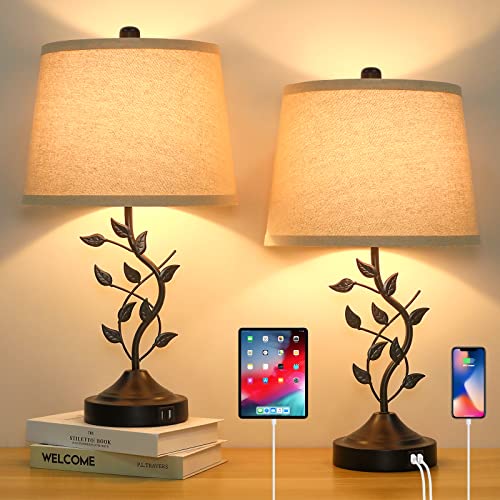
❤【Dimmable Touch Table Lamps for Bedroom】Boasting the advanced dimming technology, these traditional table lamps offer 3 levels of brightness to meet your lighting needs at different times or occasions. With built-in touch sensor, you can turn on/off the light and adjust brightness by a simple tap on the metal lamp base or lamp body. The noise-free touch control design and convenient dimming function make them an excellent choice of bedroom lamps.
Tall Headboard Solutions: When to Choose 34-Inch Lamps
Where exactly does your lamp disappear against an imposing headboard? You solve this by scaling your lamping height to 34 inches, creating vertical balance against substantial headboards.
You pair these lamps with end tables at least 28 inches wide, establishing a grounded, hotel-like presence. Your 34-inch lamp anchors higher ceiling rooms when the headboard provides visual mass above the mattress—without this anchor, the lamp risks floating disconnected in space.
You position the shade so its bottom sits near eye level when seated, eliminating glare while directing reading light precisely. For tall headboard contexts, you employ larger shade proportion, pushing the shade-to-base ratio near or above the standard 1/3 rule to maintain silhouette coherence. Scale your shade proportion upward, or you’ll visually dwarf an otherwise commanding fixture.
Recommended Products
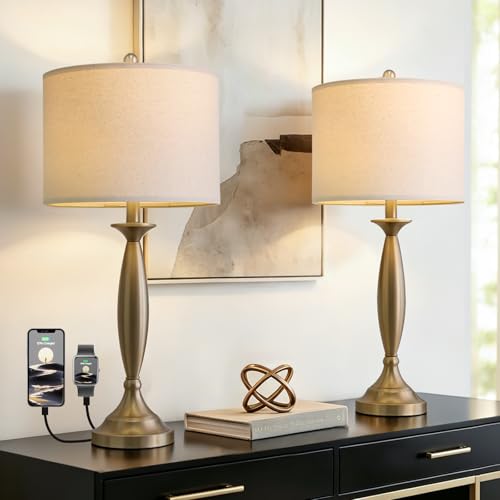
Product Specifications: This set comes with 2 table lamps. Materials: metal body and linen shade. Each lamp is 28" tall, lampshade is 13"-diameter and 9.5"-high. Base built-in USB ports and the lamp head with rotary switch for simple on/off

【Elegant & Unique Design】This bedroom lamp features a unique triple gourd silhouette and is crafted from high-quality white ceramic with subtle fluting. It is paired with a striking gold metal base and finial, adding a sophisticated, modern touch to any room. (Lampshade requires assembly)

Unique Dual-Light Design Table Lamp: This table lamp for living room features a distinctive dual-light design — the main light provides more bright illumination for reading or working, while the built-in night light at the base creates a cozy, intimate glow for relaxing evenings. The night light is operated by the easy-to-use button switch on the base, while the main light is controlled by rotary switch. Perfect for use on sofa, recliner, club chair, bed, or dining area.
Wall-Mounted Lamps for Small Bedrooms
Why sacrifice precious nightstand real estate to a lamp base when wall-mounted sconces deliver the same function without the footprint? You reclaim critical surface area while maintaining proper bedside lamps functionality.
Mount your sconces at eye level—approximately 42 to 48 inches from the floor—to direct light where you need it without glare. You’ll read comfortably without craning your neck or squinting against harsh bulbs.
Install swing-arm fixtures for maximum flexibility. You pull them closer for task lighting, then swing them flush against the wall when finished.
Select dimmable units outputting 200–400 lumens. You control intensity for late-night reading versus soft ambient glow in tight quarters.
Anchor your installation visually. You position wall-mounted bedside lamps adjacent to artwork, drapery, or architectural features so they don’t hover awkwardly on sparse walls.
Recommended Products

Warm Soft Glow to Your Home: A nice, warm and romantic atmosphere will be created thanks to the 2700K warm white color temperature and the linen fabric lampshade. SEESINY small table lamp with soft ambient light makes you feel comfortable alone or together with your beloved.

3-Level Touch Dimming- Enjoy effortless control with our 3-level touch dimming feature. A simple tap on the metal touch button adjusts brightness to low, medium, or high, perfect for reading, working, or relaxing. These touch table lamps offer more versatility than non-dimmable lamps, catering to all your lighting needs.
Common Scale Mistakes That Ruin Good Lamp Choices
Even with wall-mounted sconces solving your space constraints, selecting the right lamp scale remains a separate battle. You create top-heavy glare when you choose lamp height exceeding your nightstand’s horizontal mass. Your shade disrupts visual balance if it measures half the lamp height instead of maintaining proper proportion.
You break room scale pairing undersized lamps with tall headboards or king beds, creating lopsided negative space. Giant bases on small tables crowd surfaces and fight bedding for visual dominance. You undermine silhouette integrity violating the 2:1 shade-to-base ratio—wide drum shades crush narrow stems.
You detach lamps from architectural context ignoring headboard adjacency, overhead lighting, or window treatments. Without vertical anchors above, your lamp height floats disconnected, weakening spatial cohesion. Scale demands holistic measurement, not isolated fixture selection.
Recommended Products

Headboard Reading Lamp : Evelots Over-the-bed light provides the perfect amount of light for reading, knitting, crossword puzzles and other activities while in bed. Sold on Amazon for over 7 years
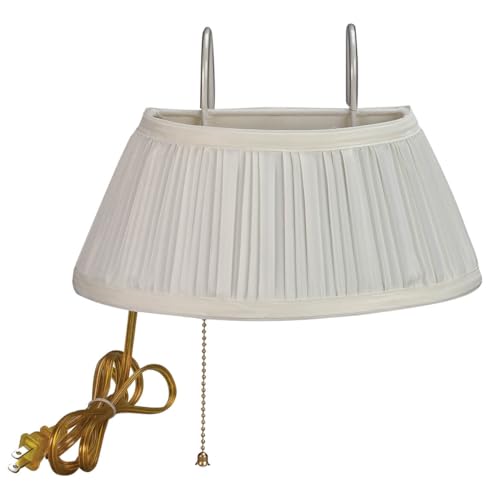
Reading lamp measures 11 1/2" wide x 7 1/4" high x 5 1/4" deep overall
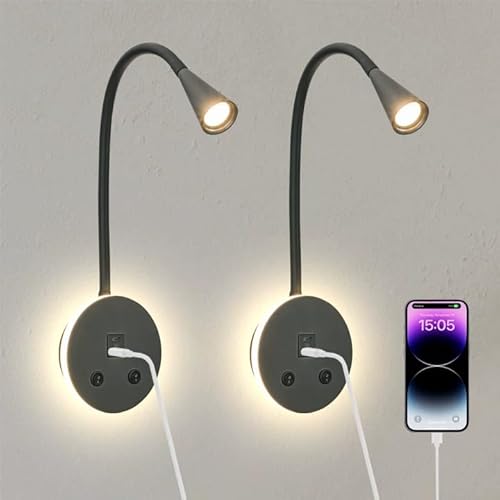
Gooseneck Reading Light Design: 720 degree adjustment, The right reading lighting allows you to enjoy reading without disturbing your significant other.
How to Measure Lamp Height Correctly
How do you pin down the exact height your bedside lamp needs to be? Start with the surface: measure your nightstand height against your mattress—keep them within two inches. Then calculate lamp height from that base up, targeting 28″–30″ total. For taller headboards or ceilings, stretch to 34″, but never let the shade rise above eye level when you’re seated in bed.
Check shade proportion: the shade should span roughly one-third of the total lamp height, including bulb and harp. This keeps the silhouette balanced, not top-heavy. Verify the switch falls within easy reach from your pillow position. Measure twice: once from nightstand surface to shade bottom, once from floor through nightstand to shade top. Precision prevents glare and awkward stretching.
Recommended Products
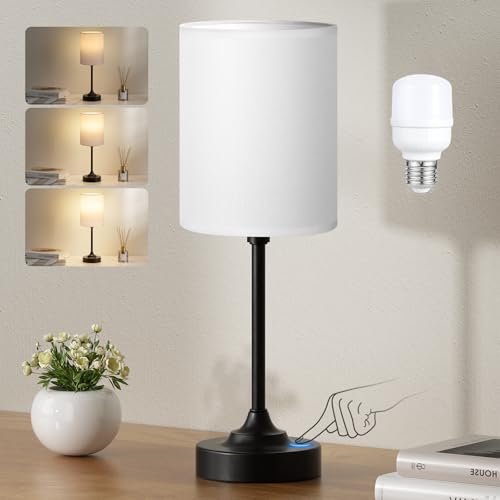
Touch Control Bedside Lamp - This smooth dimmable touch control table lamp featured with touch-sensitive sensor, to make quick changes to 3 different level brightness (Low, Medium, High), and soften the atmosphere quickly for you. Simply a touch or a pat on the bedside lamps' base or lamps' supporting pole when you want the nightstand lamp On/Off, brighter/dimmer.

𝐂𝐡𝐞𝐜𝐤 𝐒𝐢𝐳𝐞 𝐂𝐚𝐫𝐞𝐟𝐮𝐥𝐥𝐲: Your complete lamp (with current shade) should be at least 20" tall from table to top. 𝐅𝐥𝐨𝐨𝐫 𝐋𝐚𝐦𝐩 𝐒𝐡𝐚𝐝𝐞𝐬: The bottom diameter of your current drum lamp shades set of 1 should not be more than 13" for proper fit. Shade dimensions: 11.6" top x 12.6" bottom x 9.8" height. Only suitable for harp-supported lamps

Shade Dimension:6.7 inch top diameter,13 inch bottom diameter, 10 inch tall; 0.4 inch spider diameter.Please check the shade size carefully to make sure they are suitable for your light fixtures before purchasing.
Bedside Lamp Height for Adjustable and Low Beds
Where do you position light when your bed sits low to the ground or shifts height throughout the night? You target bedside lamp height between 28″–30″ to align with eye level when seated or reclining. You keep the lampshade bottom near or just below eye level when lying down—this cuts glare and preserves visual comfort. You scale up to 34″ only with tall headboards or high ceilings, but you verify switch access remains effortless from the mattress. You apply the 1.5× rule: lamp height shouldn’t exceed one-and-a-half times your nightstand height, ensuring reachability holds. For adjustable bases, you select bedside lamp height that stays balanced across tilt and elevation ranges, preventing obstruction or shadow creep as the bed moves.
Recommended Products

【Set of 2 Retro Rustic Farmhouse Table Lamp】Our traditional table lamp set of 2 designs with meticulously hand-crafted Oak‘s leafwork texture on the white resin vintage antique lamp body, a premium rotary switch that blends classic and contemporary styles. With oatmeal shades that give off a warmer light, enhancing the overall aesthetic with its charm. The farmhouse lamps for living room is easy to fit in most decor for modern,classic,rustic,industrial,retro,nordic,country

【Rustic charm with a warm, inviting glow】 The column table lamps feature a beige-white finish with a decorative vertical pattern, topped with straight cylinder oatmeal fabric shades that pair beautifully with 2700K warm light for a cozy, clean ambiance. The light-colored palette and elegant silhouette of these living room lamps complement virtually any décor style — from farmhouse to contemporary — making the lamps set of 2 a versatile choice for living rooms, bedrooms, entryways, and beyond

Just-right Size: With a height of 11.8 inches and a width of 6.6 inches, this bedside lamp is compact in size but also provides sufficient illumination. It's especially great for areas that require additional light but lack the space for larger lamps, such as small dorms, apartments, and kids' rooms. Whether you need to study, read, or work, this desk lamp won't take up much space but will provide the necessary light to get the job done
Conclusion
You’ll position your lamp precisely: 28″–30″ is your baseline, scaling to 34″ for tall headboards. You’ll align the shade bottom with your seated eye level, keeping the shade at one-third total height for balanced proportions. You’ll measure from the nightstand surface to the finial tip—never guessing. You’ll avoid glare by testing the reclined reading angle before committing. Get this right, and you’ve engineered optimal task lighting without visual strain.