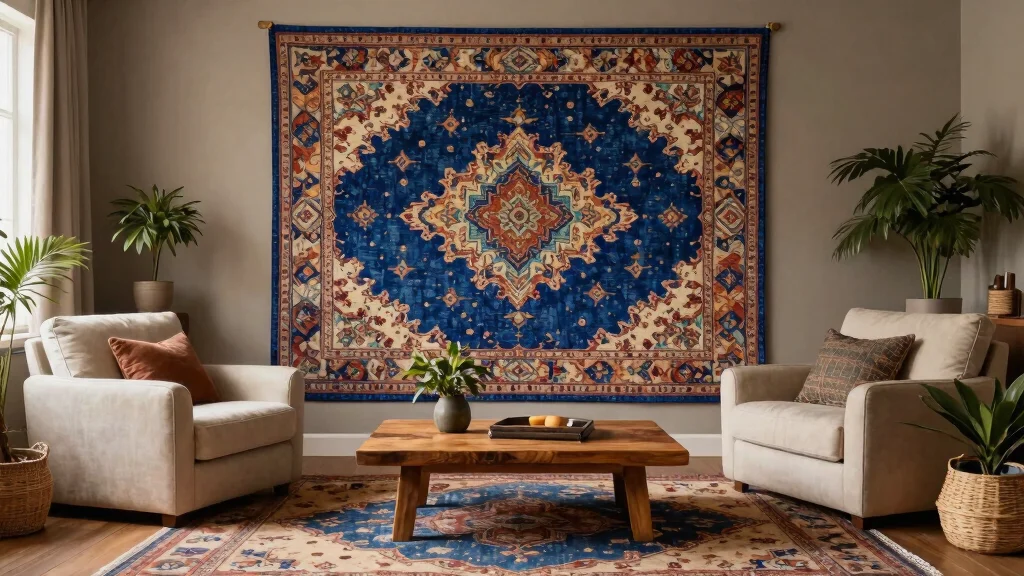

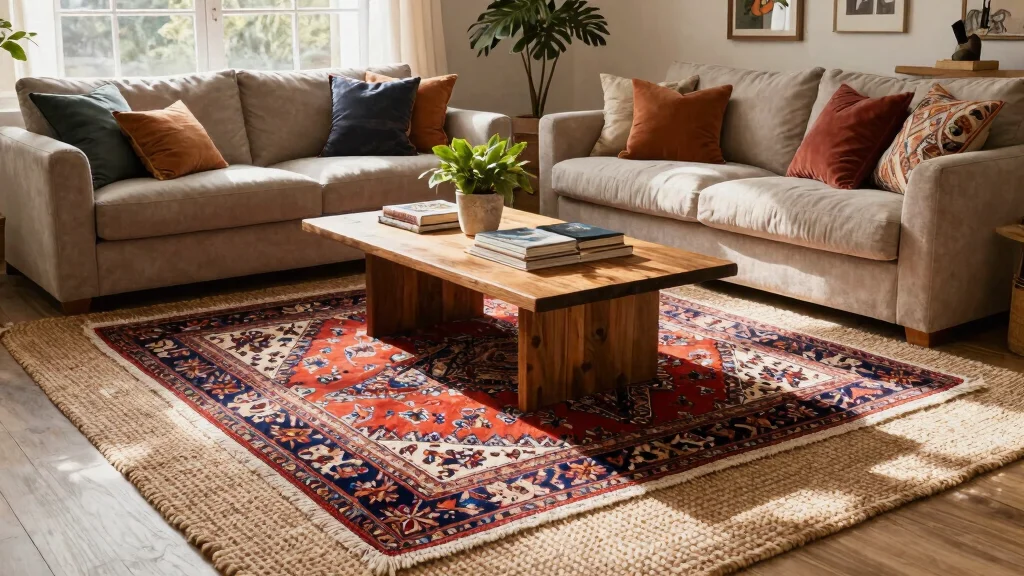
Are you looking to elevate your home decor with a touch of style? Layering rugs can transform any space into a chic, designer-inspired haven. I created this post to share tips that will help you achieve that effortlessly stylish look. Whether you’re a seasoned interior design enthusiast or just starting your decor journey, these ideas will inspire you to experiment with rugs in ways you might not have considered.
If you love creating cozy, inviting spaces, this guide is for you. You’ll discover practical techniques for combining different textures, colors, and patterns to create a layered effect that reflects your personality. Layering rugs is not just about aesthetics; it’s also about comfort and functionality. This guide will equip you with 11 crucial tips that make layering not only visually appealing but also practical for everyday living.
By the end of this post, you’ll have the knowledge and confidence to mix and match area rugs like a pro. You’ll learn how to start with a neutral base, mix textures, and even define spaces in your home. So, let’s dive into the world of rug layering and unlock the potential of your living space!
Key Takeaways
– Start with a Neutral Base: Lay a solid, neutral rug first to serve as the foundation for your layering. This will help other textures and colors stand out.
– Mix Textures for Depth: Combine different materials, like wool, jute, or synthetic fibers, to add visual interest and warmth to your space.
– Play with Patterns: Don’t shy away from using bold patterns. Mixing patterns can create a dynamic look, but keep a cohesive color palette for harmony.
– Define Your Spaces: Use layered rugs to delineate different areas in a room, such as a reading nook or dining space, creating a sense of organization in open-concept layouts.
– Personalize Your Layering: Incorporate personal touches. Use rugs that reflect your style, making your space truly yours while enjoying the comfort and style that comes with layering.
1. Start with a Neutral Base
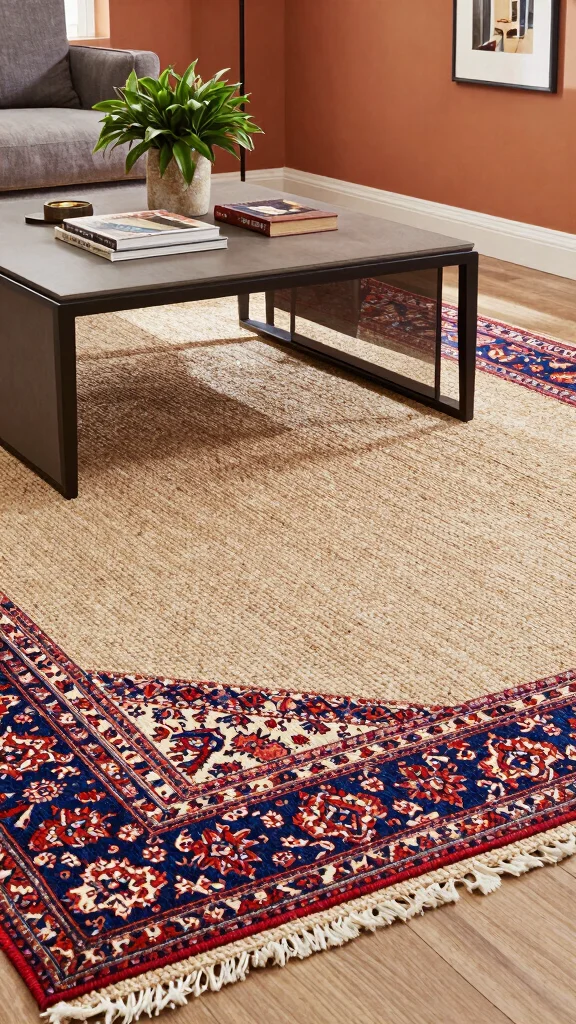
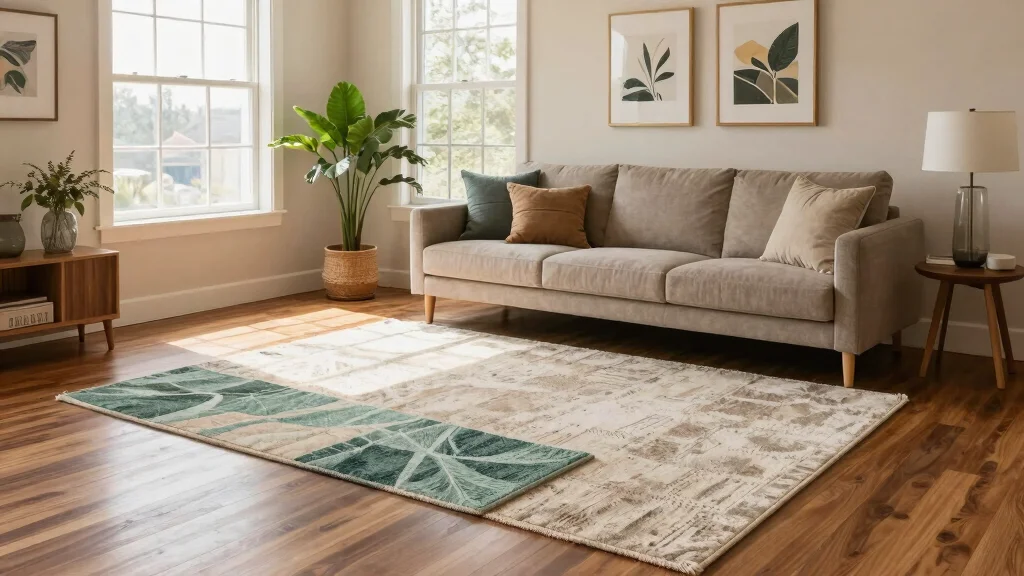
Beginning your rug layering journey with a neutral base provides a stable foundation for your design. A simple jute or a soft beige wool rug serves as a versatile backdrop, allowing you to effortlessly incorporate bolder patterns and colors above it.
This approach works because neutral tones can harmonize diverse decor elements, making it easier to experiment with various styles. Consider placing a vibrant patterned or textured rug on top to create a stunning visual contrast that enhances your space’s overall appeal.
Here are some tips for choosing the perfect base:
– Select durable materials that stand up to foot traffic.
– Ensure it complements your room’s overall color scheme.
– Look for larger sizes to effectively define your space.
These choices will help you build a cohesive look as you layer your rugs.
Dimensions & Size Guide
Standard Sizes & Measurements:
Choosing the right size rug is crucial for achieving that designer look. Here are some common sizes to consider when layering rugs:
– 5′ x 8′: This size works well in small living areas or under coffee tables. It’s best for defining a seating area.
– 8′ x 10′: Ideal for larger living rooms, this size allows you to place front legs of furniture on the rug. It creates a cohesive look in the space.
– 9′ x 12′: This size is perfect for dining areas, accommodating a dining table and chairs. A minimum of 24 inches of rug should extend beyond the table edges for comfort.
– 2′ x 3′: Great for entryways or small spaces, these rugs can be layered in front of larger area rugs or used as accents.
– Runner Rugs (2′ x 6′ or 2′ x 8′): Perfect for hallways or narrow spaces. They can also be used alongside larger rugs to create flow.
Minimum Requirements for Proper Fit:
When layering rugs, ensure the bottom rug is at least 6-12 inches wider and longer than the top rug. This creates balance and prevents the top rug from looking too small. Also, consider the thickness of the rugs. A thicker rug may require a thinner one on top to avoid bulkiness and tripping hazards.
Space Planning Considerations:
Think about the overall layout of your space. Measure your furniture and the area where you plan to layer rugs. Here are some tips:
– Always measure twice before purchasing. This helps avoid costly mistakes.
– Consider the furniture arrangement. Ensure enough space for people to walk comfortably around the rugs.
– Keep the rug placement in line with your furniture. This provides a polished look and makes the room feel structured.
Quick Reference Table:
Size/Dimension – Best for: [use case], Minimum space needed: [measurement]
– 5′ x 8′ – Best for: Small seating areas, Minimum space needed: 8′ x 10′ room
– 8′ x 10′ – Best for: Living rooms with furniture on it, Minimum space needed: 10′ x 12′ room
– 9′ x 12′ – Best for: Dining areas with chairs, Minimum space needed: 12′ x 14′ room
– 2′ x 3′ – Best for: Entryways or small accents, Minimum space needed: 3′ x 5′ area
– Runner (2′ x 6′) – Best for: Hallways or layered looks, Minimum space needed: 3′ width
Space Planning Tips:
1. Use painter’s tape to outline rug dimensions on your floor. This gives you a visual of how it will fit in the space.
2. Leave a gap of 12-18 inches between the rug and walls to create a more open feel.
3. Avoid odd shapes. Stick to rectangular or round rugs that complement your furniture layout.
4. Consider traffic flow. Make sure the rugs don’t obstruct movement between areas.
5. Think about layering heights. If using multiple rugs, keep their thickness in mind to avoid creating an uneven surface that could lead to trips.
Pro Tip:
Focus on the area rug that will serve as the base for layering. This rug should fit your room’s dimensions and furniture layout well. A well-sized base rug sets the tone for layering and helps other smaller rugs complement it seamlessly!


2. Mix Textures for Depth
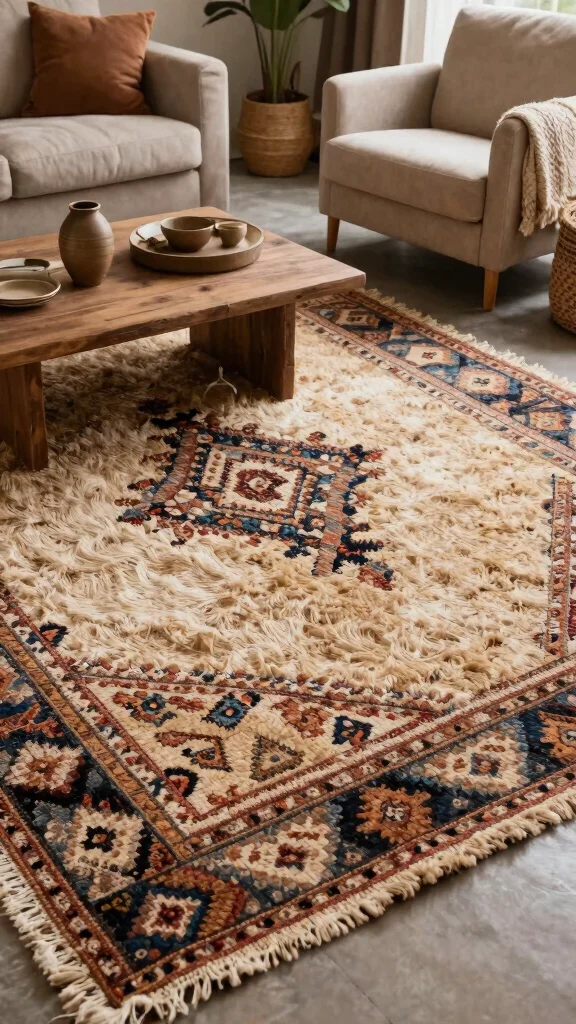
Incorporating various textures into your rug layering can create a rich, inviting atmosphere. For example, pairing a soft shag rug with a flat-woven kilim adds visual interest and tactile variety to your space.
The plush feel of the shag contrasts beautifully with the sleek finish of the flat-weave, inviting touch and creating a warm environment. Experiment with materials like cotton, wool, and synthetic fibers to discover your ideal combination.
Consider these layering texture tips:
– Pair a flat rug with a soft, fluffy one for added coziness.
– Incorporate natural fibers like jute and wool for an organic feel.
– Pay attention to height differences to keep the look balanced.
This technique can transform your room into a tactile haven that feels thoughtfully curated.
Rugs layering lives in the small details. Mix a plush shag with a flat-woven kilim, and you’ll feel depth instantly. It’s all about textures—cotton, wool, and synthetics—to craft a cozy, layered look you can actually live in.
3. Play with Patterns
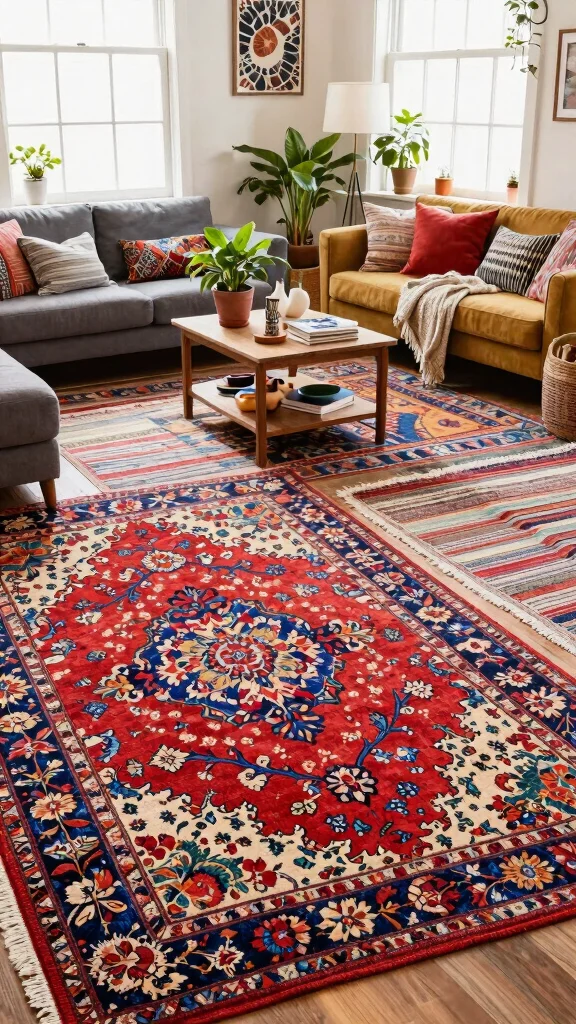
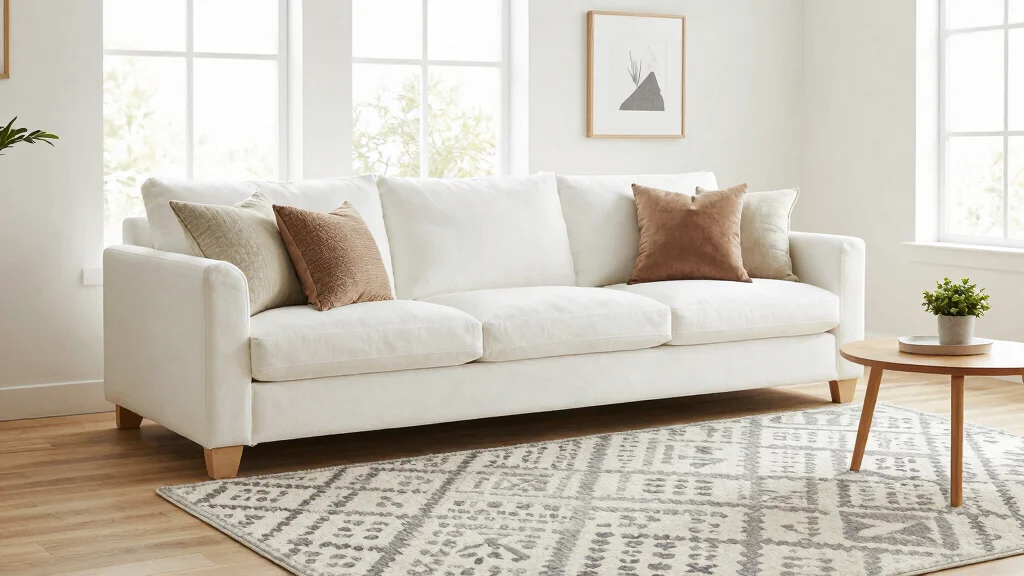
Layering rugs with various patterns is a joyful way to infuse character into your space. Mixing stripes, florals, and geometric designs can create a stunning and unique environment that reflects your personality.
To ensure harmony, consider coordinating colors so the rugs complement rather than clash. For instance, if you have a bold floral rug, a striped rug in matching shades can beautifully tie everything together.
Here are some pattern mixing tips:
– Choose a dominant color for a cohesive look.
– Balance busy designs with simpler patterns to maintain clarity.
– Keep experimenting until you find a combination that resonates with your style.
This approach can breathe life into your home decor, making it feel vibrant and engaging.
4. Define Your Spaces
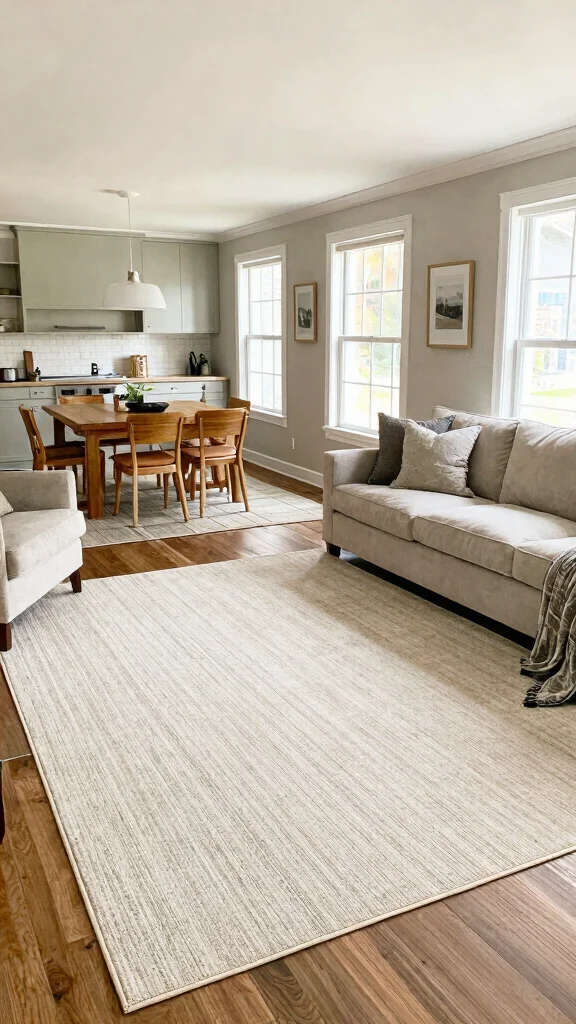
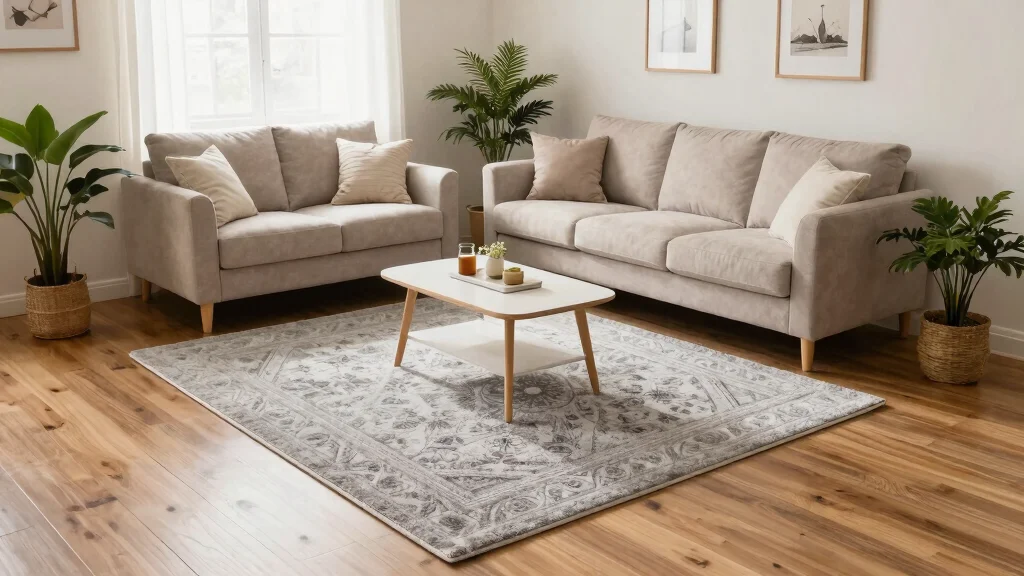
Using rugs to define different areas in a larger room is a clever layering technique that creates visual separation. For instance, placing a large area rug under your seating arrangement can clearly denote a conversation zone within an open-plan layout.
This method not only adds style but enhances functionality, guiding the flow of movement and indicating where specific activities occur. Choose rugs that harmonize in color and design to maintain a unified look throughout the space.
Tips for defining spaces:
– Use larger rugs for seating areas and smaller ones for transitional spots.
– Consider furniture shapes and sizes when selecting rug dimensions.
– Layer rugs in high-traffic areas for added comfort and protection.
By thoughtfully defining spaces, you can cultivate an organized and welcoming environment.
Rugs layering makes a room feel intentional—define spaces without walls. Place a large area rug under seating to create a conversation zone, then harmonize colors for a unified flow.
Define Your Spaces
Editor’s Choice
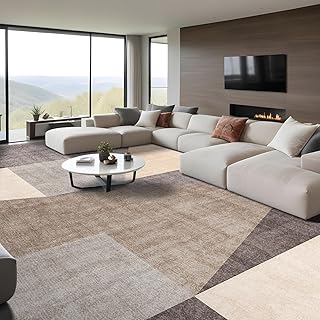
Washable Modern Area Rug: 10×14 Large Geometric Area Rugs for Living Roo…


Washable Large 9×12 Area Rug – Living Room Oriental Non Slip Soft Rugs I…

Large Area Rugs for Living Room 8×10, Machine Washable Rugs with Non Sli…

Washable Rug 8×10 Area Rugs for Living Room – Stain Resistant Non-Slip B…

Area Rugs 8×10 Living Room: Washable Rug Modern Abstract Large Rugs Soft…
📹 Related Video: The Art of Rugs | Shea McGee’s Guide to Style, Size & Material
5. Add Color with a Layered Accent
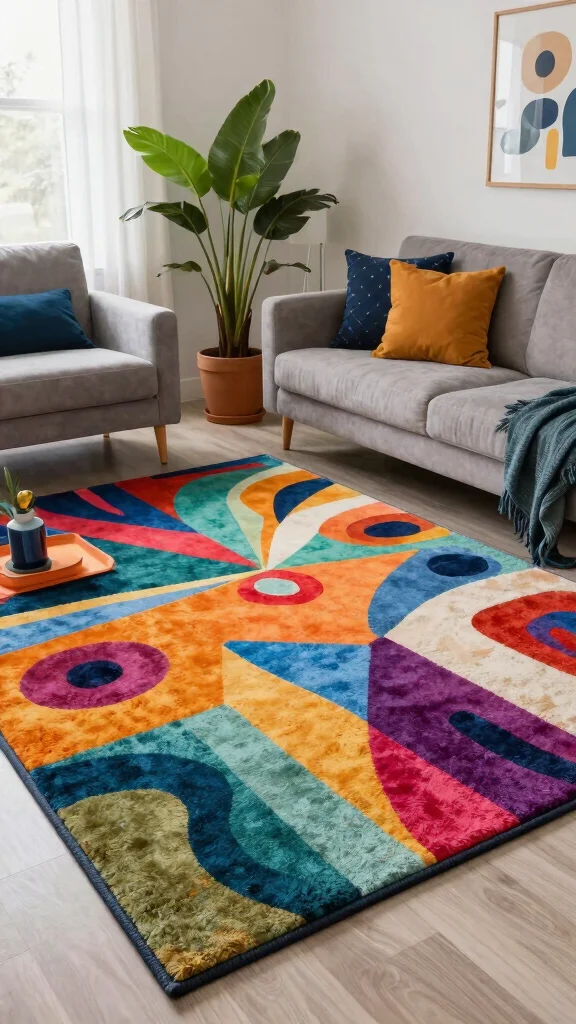
If your home leans towards a neutral palette, layering a colorful accent rug can infuse vibrancy and energy into your space. A bright, patterned rug can serve as a focal point, bringing excitement while complementing your existing decor.
Opt for a bold rug featuring graphic designs or lively colors to liven up muted areas, breaking the monotony and creating a dynamic atmosphere. Ensure that the accent rug harmonizes with your other rugs for a cohesive look.
Here are some color pop tips:
– Select a color from nearby decor to unify the design.
– Balance bold hues with softer accents to maintain harmony.
– Use layered rugs to transition through different color schemes in your home.
This technique can invigorate a room, making it feel fresh and inviting.
You might also like
6. Ensure Proper Sizing
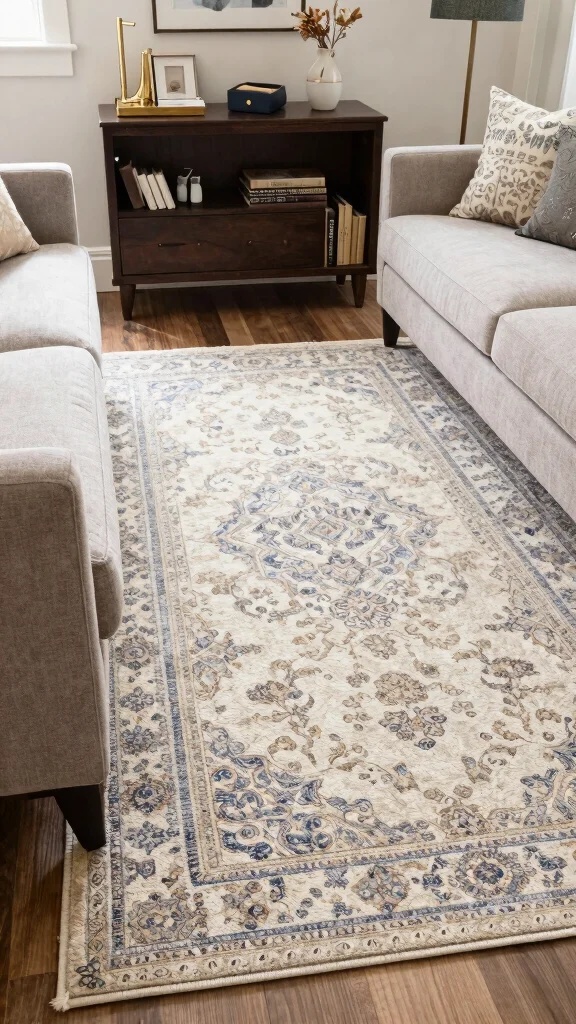
Sizing is key when layering rugs to achieve a polished, intentional look. Ensure your rugs are proportionate to your furniture and the overall space. A good rule of thumb is to have the front legs of your furniture on the rug, connecting the pieces for a unified feel.
A rug that’s too small can make the area feel disconnected, while an oversized one can overwhelm the room. Always measure your space before purchasing to avoid these common mistakes.
Sizing tips include:
– Use painter’s tape to outline the desired rug area for visual guidance.
– Consider the rug’s placement relative to walls and furniture.
– Layer smaller rugs on top of larger ones for added visual interest.
By ensuring proper sizing, you elevate the overall aesthetic of your home.
Fun fact: 60% of spaces feel more cohesive with rugs layering when the front legs of furniture rest on the rug. Measure first—small missteps can double the chance of a disconnected look. A properly sized rug invites pieces to unite and the space to breathe.
Ensure Proper Sizing
Editor’s Choice

PREXISO 2-in-1 Digital Tape Measure – 16Ft Rechargeable Measuring Tape R…


Roberts 50-588 Rug Gripper Indoor 3 Inch by 60 Foot Mat and Rug Carpet T…

7. Experiment with Layering Styles
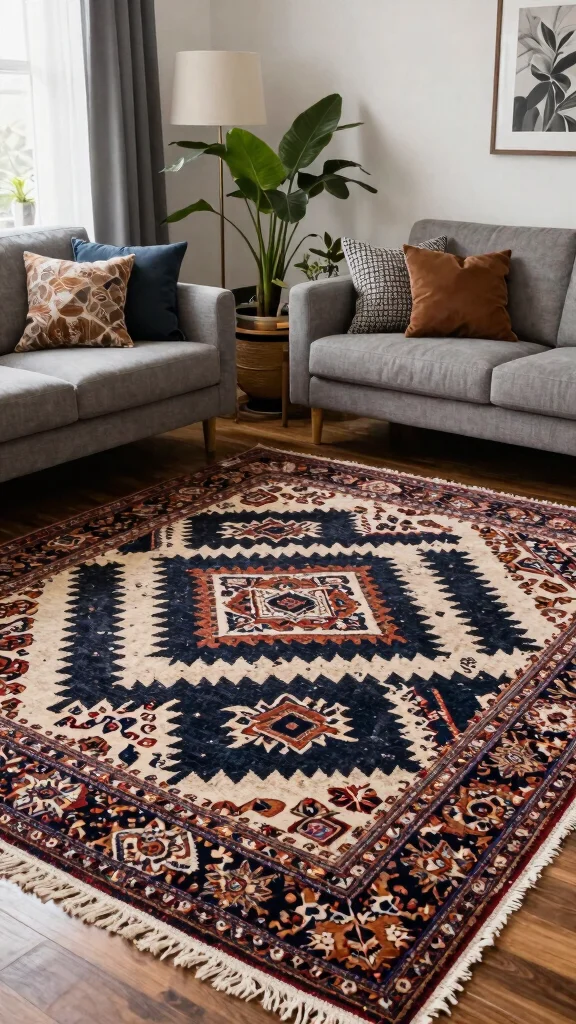
Don’t shy away from mixing different rug styles when layering; they can beautifully complement one another! Combining bohemian rugs with contemporary or traditional designs can create an eclectic yet cohesive vibe.
For example, layering a vintage Persian rug with a modern geometric piece can add warmth and charm while keeping your decor feeling fresh. Always consider the color scheme and materials to ensure they work together harmoniously.
Layering style tips include:
– Explore various shapes, such as round, rectangular, and square, for visual intrigue.
– Look for rugs with complementary colors to maintain harmony.
– Play with orientations, like placing a round rug over a rectangular one for flair.
This creative freedom can transform your home into a personalized sanctuary.
Experiment with Layering Styles
Editor’s Choice

JONATHAN Y Boho Vintage Blue/Multi Indoor Area Rug, 8×10, Bohemian Flair…

SAFAVIEH Area Rug 8×10 – Vintage Hamadan Collection – Large – Red & Mult…

CAMILSON Modern Rug 8×10 Luxury Geometric Pattern Micro Loop Area Rugs S…

BLISSA 8×10 Area Rugs for Living Room – Soft Large Washable Geometric Bl…

SAFAVIEH Area Rug 8×10 – Madison Collection – Large – Ivory & Orange, Bo…
8. Layer for Comfort and Warmth
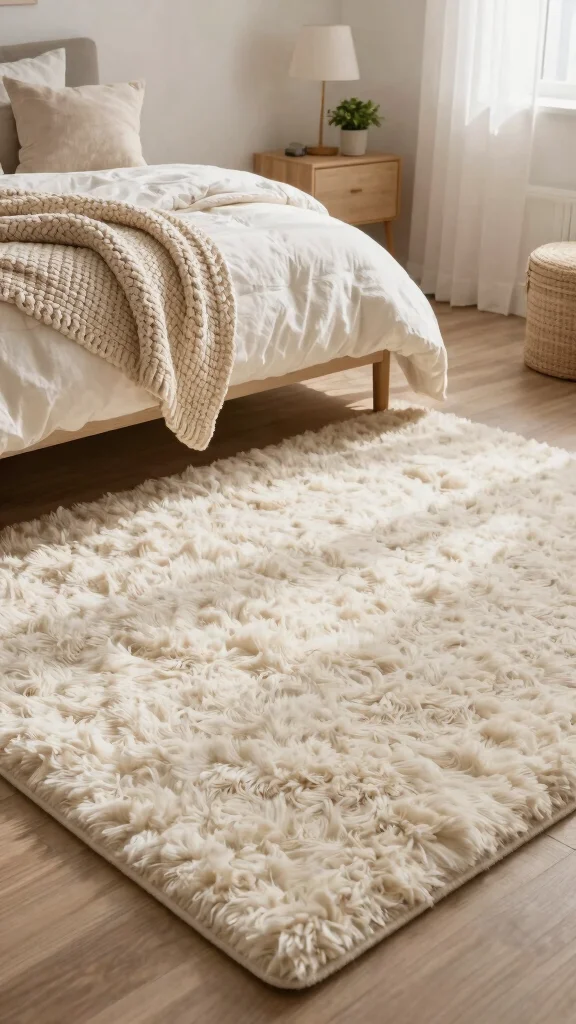
Layering rugs can significantly enhance the comfort and warmth of your living space. Rugs provide insulation against cold floors, creating a softer feel underfoot, especially in areas like living rooms and bedrooms where comfort is crucial.
Opt for thicker, cushy rugs for layering, as they will add a welcoming touch while keeping your feet cozy. Additionally, layered rugs can help absorb sound, making your home quieter and more peaceful.
Here are some comfort-focused tips:
– Choose plush materials like wool or shag for warmth.
– Use rugs in high-traffic areas to reduce noise and provide soft surfaces.
– Position rugs strategically near seating and beds for maximum comfort.
By prioritizing comfort and warmth, you can create inviting and relaxing spaces.
Layer for Comfort and Warmth
Editor’s Choice
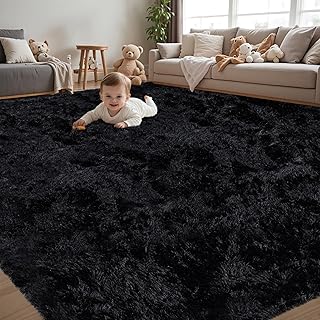
8×10 Area Rug for Living Room:Ultra Soft Fluffy Shag Black Rugs,Large Fu…

SAFAVIEH California Shag Collection Area Rug – 8′ x 10′, Ivory, Non-Shed…

Hand Tufted Wool Luxury Area Rug, Solid Modern Minimalist Rug for Living…

Handcrafted Modern Scalloped Wool Rug – 100% Wool Plush Carpet for Cedro…

Rugs USA Maru Handmade, Dark Brown, 5′ x 8′, Solid, Wool, Soft and Cozy,…
9. Use Area Rugs for Layering
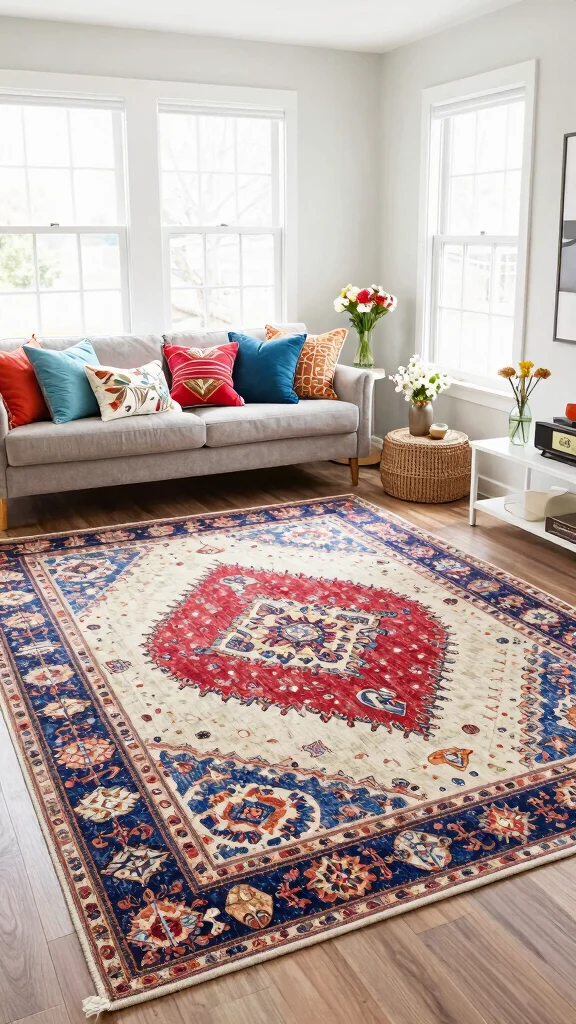
Area rugs are ideal for layering due to their versatility and variety. They can effectively anchor spaces, making them perfect for creating unique compositions in your home. Consider starting with a large area rug as a base and layering smaller accent rugs on top to enhance visual interest.
When selecting area rugs, ensure the designs complement each other while providing enough contrast for a dynamic look.
Area rug layering tips include:
– Choose oversized rugs to create a grounding effect in larger rooms.
– Use smaller rugs to define specific zones, like seating areas.
– Mix different rug shapes for added variety.
This approach elevates your design while adding a personal touch to your decor.
You Might Also Like
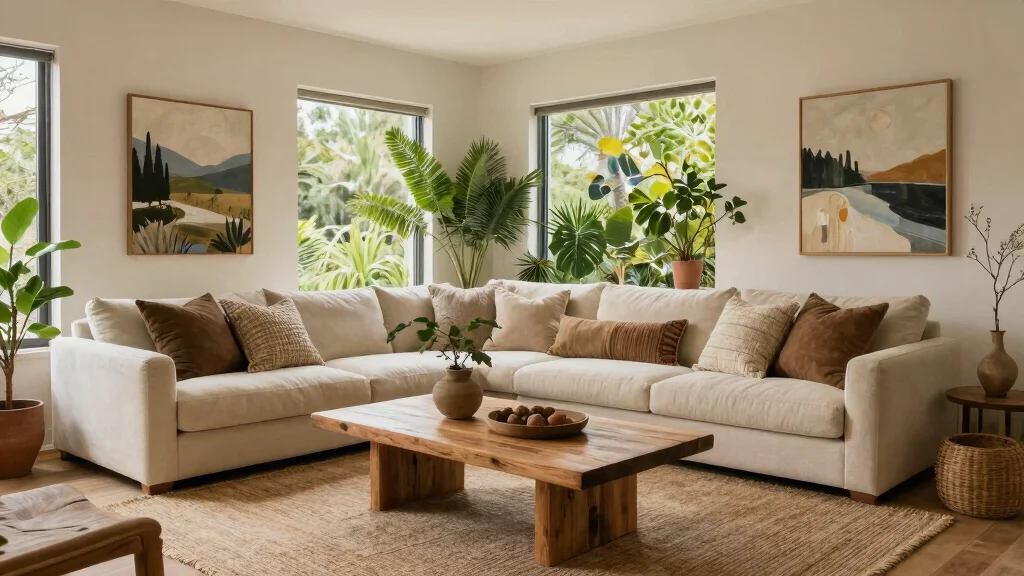
10. Keep it Easy to Clean
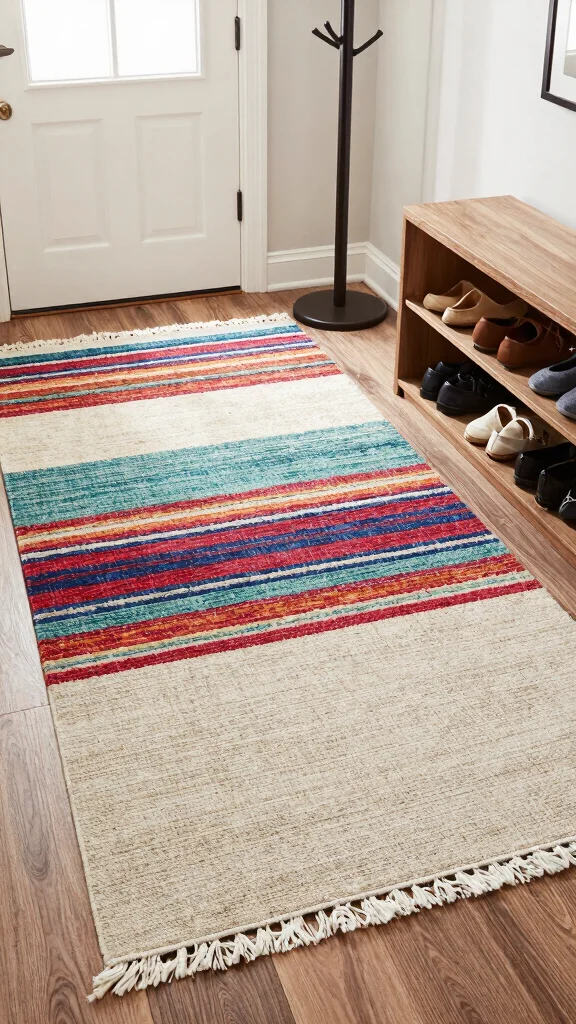
Practicality matters when layering rugs! Select materials that are easy to clean and maintain, especially in high-traffic areas or homes with pets and children. Synthetic fibers or washable options can be smart choices.
Layering rugs doesn’t mean sacrificing functionality for style; you can achieve both with thoughtful selections. Look for rugs that withstand wear and tear while still looking fabulous.
Cleaning tips include:
– Choose rugs with stain-resistant properties for easier maintenance.
– Rotate rugs regularly to promote even wear.
– Vacuum both layers to keep them looking fresh and new.
By considering maintenance, you can enjoy your stylish layered looks without added stress.
Keep it Easy to Clean
Editor’s Choice

Washable Area Rug 8×10, Large Soft Rugs for Living Room Vintage Beige Ca…

8×10 Area Rugs for Living Room, Washable Modern Abstract Large Area Rug …

Washable Rugs 8×10 Area Rugs for Living Room,Ultra Soft Faux Wool Retro …

5×7 Area Rug Living Room Rug: Washable Modern Abstract Soft Thin Rug Ind…

AMADA HOMEFURNISHING 8×10 Washable Area Rug, Low-Profile with Non-Slip B…
11. Personalize Your Layering
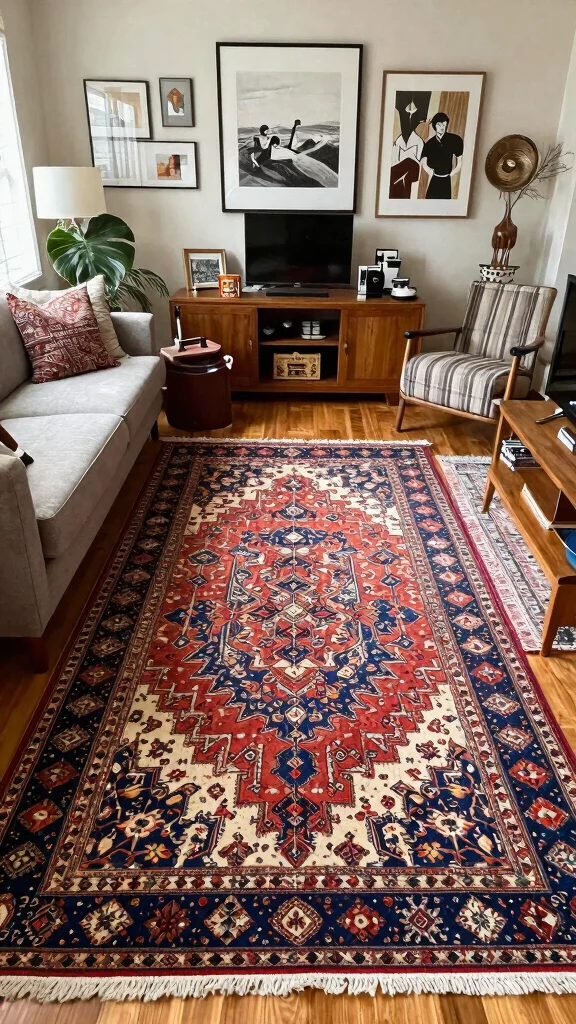
Personalization is essential in rug layering! Choose pieces that resonate with your style and tell your story. Incorporating family heirlooms, travel mementos, or unique handcrafted rugs can infuse character into your home.
Mixing personal artifacts with designer pieces adds depth and authenticity to your decor. Consider your favorite colors, patterns, and sentimental items when selecting rugs to layer, creating a space that feels uniquely you.
Personalization tips include:
– Combine rugs that reflect your travels or experiences.
– Use different shapes and styles to showcase your personality.
– Regularly update your layers based on seasonal changes or evolving tastes.
This final touch makes your home feel genuinely yours, inspiring creativity in your layering choices.
Conclusion
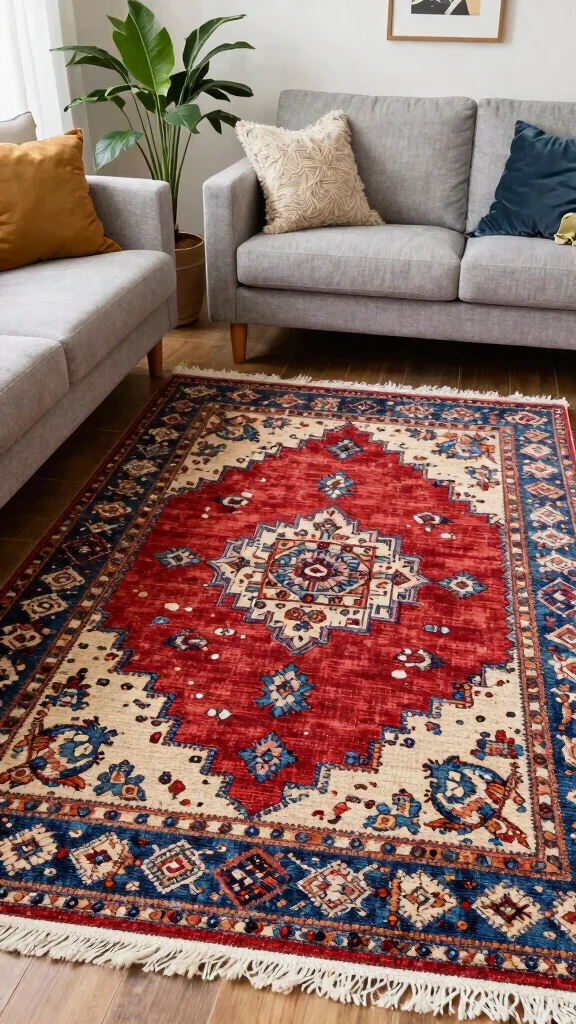
Layering rugs is an exciting way to express your personal style while enhancing the comfort and warmth of your home. By following these tips, you can create stunning visual interest, define spaces, and inject vibrant colors into your decor.
Remember, the key is to play around, experiment, and most importantly, have fun with your layering techniques. So go ahead, weave a beautiful tapestry of textures and hues that truly reflects your individual taste!
Note: We aim to provide accurate product links, but some may occasionally expire or become unavailable. If this happens, please search directly on Amazon for the product or a suitable alternative.
This post contains Amazon affiliate links, meaning we may earn a small commission if you purchase through our links, at no extra cost to you.
Frequently Asked Questions
What are the essential rug layering tips to achieve a designer look at home?
Start with a grounded base rug in a calm color to anchor the space. Then add a smaller, patterned top rug that complements the room’s color palette. Mix textures—think plush pile with a flatweave or kilim for depth. Keep the color palette cohesive by repeating 2–3 hues across layers to avoid visual chaos. For safety and comfort, use a thin rug pad under the base and, if needed, a non-slip grip under the top rug to keep layers in place. This approach captures the essence of rugs layering and rug styling for a designer look in home decor tips and interior design projects.
How do I choose colors and patterns when layering bohemian rugs?
Start with a neutral anchor base and let the other layers echo a few colors that appear in furniture, art, or throw pillows. Use patterns with different scales so they complement rather than compete—think a large kilim over a smaller geometric base. Balance bold prints with calmer textures like jute or sisal to keep the bohemian vibe approachable. Check the look in natural light and trust your eye—bohemian layering techniques thrive on warmth and personality. This is a core move in rugs layering, rug styling, and interior design decisions.
What practical steps prevent slipping and protect floors when layering rugs?
Lay a thin, breathable rug pad under the base rug to prevent shifting and protect floors. If the top layer slides, add a non-slip underlay beneath it or use individual grip pads for each rug. Keep edges flat and aligned so you don’t trip or catch doors on curled corners. Vacuum regularly to prevent dust buildup that can affect texture and longevity. These practical steps address layering techniques and the use of area rugs in everyday home decor tips.
What sizes work best for layered rugs in living rooms, bedrooms, and entryways?
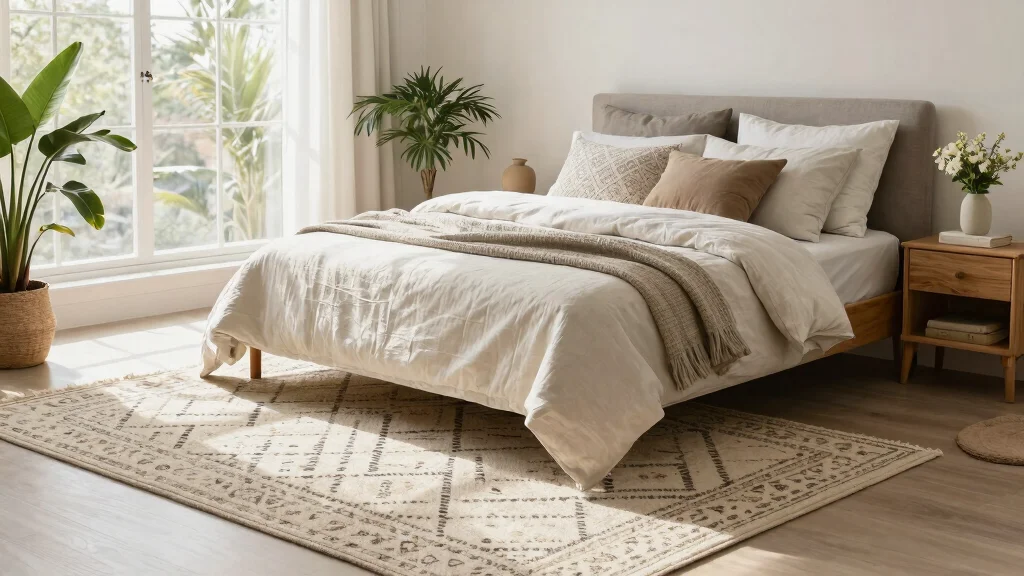
For living rooms, aim for a large base rug (8×10 or 9×12) with a smaller top rug (5×8 or 6×9) to create a framed, layered look. In bedrooms, place the base under the bed with a top accent rug peeking out on one or two sides for softness. In entryways or lounges, start with a compact base (4×6) and add a matching top rug (2×3 or 3×5) for impact. Ensure at least a portion of the base rug is visible under furniture, so the space feels anchored. These sizing ideas are practical for area rugs layering and align with home decor tips and interior design guidance.
What common mistakes should I avoid when rug layering and how can I fix them?
Avoid mixing too many patterns or colors; it can create visual chaos. Don’t choose a base rug that’s too small for the space, or the layering will look disjointed. Keep edges aligned and ensure all layers lie flat to preserve the designer look. Poor lighting can wash out color and texture—consider warm bulbs to enhance the layers. If it feels off, tweak the scales, swap one layer for a calmer texture, or test layouts with painter’s tape before committing. This practical approach captures the core of rugs layering, rug styling, and layering techniques.
Related Topics