
You’ve probably been told that 1000 TC means luxury, but the manufacturing data tells a different story. Fiber length, yarn twist coefficient, and weave structure determine tensile strength and hand feel more than thread count alone. Mills can inflate counts by using multi-ply, short-staple yarns that degrade faster. What you actually need to know about construction specs—and how they match your sleep environment—starts with understanding why those inflated numbers exist in the first place.
What Thread Count Actually Means (And What It Doesn’t)
How exactly do manufacturers quantify thread count, and why does this metric often mislead buyers? You calculate thread count meaning by adding warp and weft threads per square inch, yielding a fabric density measurement. Yet you’ve likely encountered inflated figures: manufacturers twist multi-ply yarns, counting each ply separately to double apparent density without improving actual weave quality.
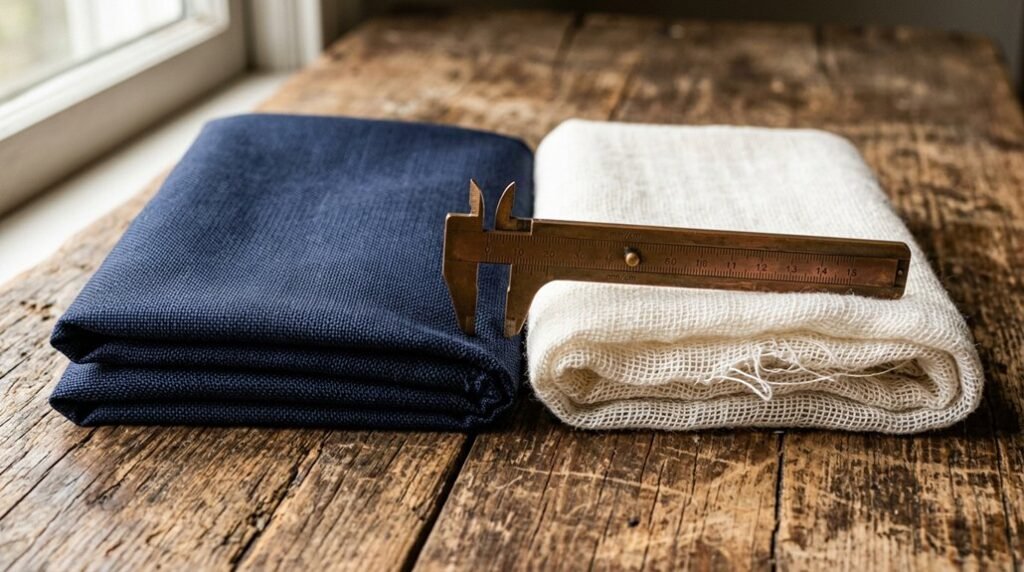
You’re observing a metric that measures tightness but not fiber quality. A 1,000 TC sheet constructed from inferior cotton feels stiff; one with fewer threads but superior cotton quality—specifically long-staple fibers—delivers superior fabric softness. You must distinguish percale vs sateen weaves, as material type and construction impact hand-feel substantially. You can’t rely on thread count alone; you’re evaluating manufacturing inputs, not inherent performance.
Recommended Products

Naturally Cooling Organic Comfort : Stay cool and comfortable with Lane Linen 100% Organic Cotton Percale Queen Sheets, made from GOTS Certified organic cotton. The crisp percale weave and finer yarns create a lightweight, breathable feel that promotes airflow and balanced temperature for year-round comfort. Gets softer and smoother with every wash. Great as deep pocket Queen sheets, a cooling Queen sheet set, and breathable Queen bed sheets.
Naturally Cooling Organic Comfort : Stay cool and comfortable with Lane Linen 100% Organic Cotton Percale King Sheets, made from GOTS Certified organic cotton. The crisp percale weave and finer yarns create a lightweight, breathable feel that promotes airflow and balanced temperature for year-round comfort. Gets softer and smoother with every wash. Great as deep pocket King sheets, a cooling King sheet set, and breathable King size bed sheets.
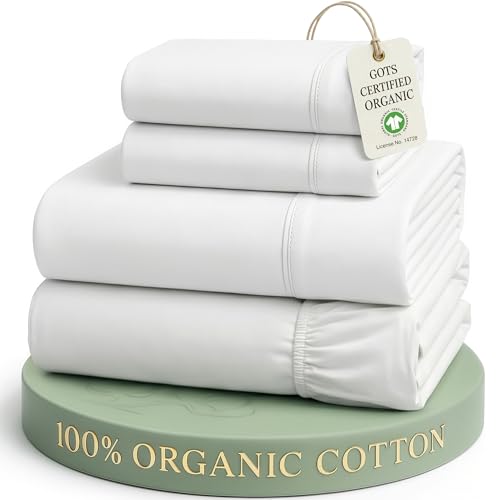
Naturally Cooling Organic Comfort : Stay cool and comfortable with Lane Linen 100% Organic Cotton Percale Queen Sheets, made from GOTS Certified organic cotton. The crisp percale weave and finer yarns create a lightweight, breathable feel that promotes airflow and balanced temperature for year-round comfort. Gets softer and smoother with every wash. Great as deep pocket Queen sheets, a cooling Queen sheet set, and breathable Queen bed sheets.
What Matters More Than Thread Count for Sheet Quality
Why fixate on a single integer when fiber provenance and construction geometry determine actual performance? You evaluate thread count as one metric, yet fabric quality stems from deeper variables. Long-staple cotton delivers superior tensile strength and fewer protruding fiber ends, directly elevating fiber quality beyond what mere marketing counts suggest.
Your weave selection—percale versus sateen—dictates breathability and thermal regulation more decisively than thread density. Percale’s one-over-one plain weave maximizes airflow; sateen’s float-rich structure enhances luster and drape. Yarn quality, encompassing ply structure and twist coefficient, governs pilling resistance and sheet longevity.
Fabric finishing—mercerization, calendering, singeing—modifies surface topology and hand feel post-construction. You recognize that inflated multi-plythread counts obscure true density. Prioritize substrate integrity and loom parameters over numerical benchmarks for genuine sheet softness.
Recommended Products

Forbes Vetted Award-Winning Comfort: Featured in Forbes Vetted and recognized by the 2026 MUSE Design Awards and the 2026 French Design Awards, this thoughtfully designed sheet set blends elevated aesthetics with everyday comfort for a refined bedroom experience
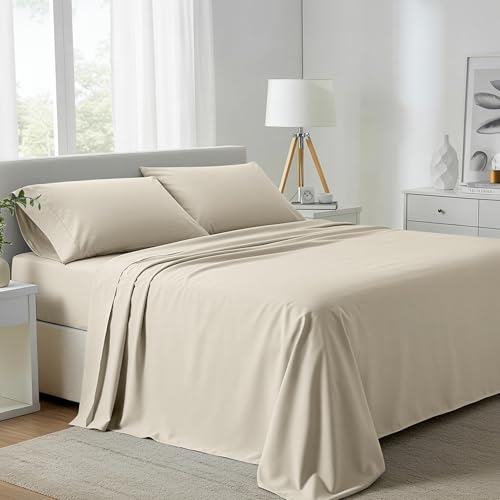
Thick, Silky 100% Egyptian Cotton Sateen — Cool & Breathable: This queen sheet set comes from our 800 Series Tulips Collection, woven from extra-long staple Egyptian cotton in a rich sateen weave that feels softer, silkier, and more durable than ordinary cotton. The high thread count fabric is thick and heavy like luxury five-star hotel bedding, yet it stays naturally cooling and breathable, so you sleep comfortably all night.

Thick, Silky 100% Egyptian Cotton Sateen — Cool & Breathable: This queen sheet set comes from our 800 Series Tulips Collection, woven from extra-long staple Egyptian cotton in a rich sateen weave that feels softer, silkier, and more durable than ordinary cotton. The high thread count fabric is thick and heavy like luxury five-star hotel bedding, yet it stays naturally cooling and breathable, so you sleep comfortably all night.
Is Higher Thread Count Better for Softness?
Where does thread count actually land in the hierarchy of softness determinants? You’ll find it trails fiber quality and weave in manufacturing impact. Thread count and softness correlate weakly when you isolate variables; 400–600 thread count sheets in long-staple cotton or bamboo outperform 1,000 thread count sheets of inferior fiber quality.
You observe diminishing returns because manufacturers inflate high thread count figures using multi-ply yarns, which reduce breathability without enhancing fabric quality. Prioritize fiber quality—specifically long-staple cotton—and weave selection: percale delivers crisp texture, sateen yields silkier surfaces.
You optimize softness by balancing these variables rather than pursuing maximum thread count. Data demonstrates that fabric quality stems from raw material specifications and construction methods, not numerical density alone.
Recommended Products

COMFORTABLE, LUXURY & BREATHABLE: Crafted from 100% Long-Staple Combed Cotton Sateen Weave, these densely thick 1000 thread count queen bed sheets set is made from specially compacted yarn with their heavy texture. Minimal artificial processing makes these bed sheets set queen size gentle on all skin types, prevents night sweats, absorbs moisture and regulates body temperature to sleep cool while maintaining the royal hotel look.
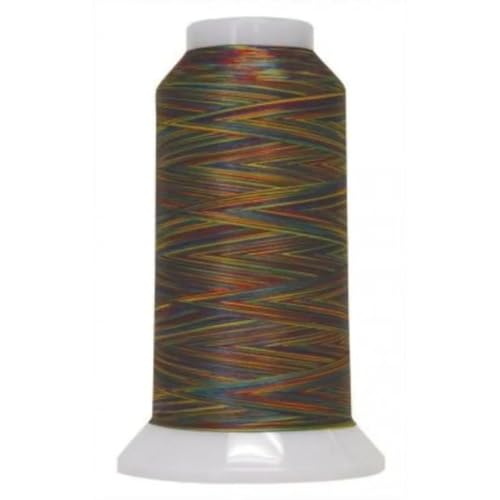
THREAD CONE: Features one 2,000 yard cone of Superior Threads Fantastico 40-weight variegated thread made from high-strength trilobal polyester

Vibrant Ombre Effect: This soft acrylic yarn features a beautiful ombre effect, gradually transitioning from bright pink to orange and yellow hues.
Do High-Thread-Count Sheets Sleep Hot?
Whether high-thread-count sheets trap heat depends on how thread density interacts with fiber composition and weave structure. You reduce airflow when you select high thread count constructions without examining fiber quality and weave pattern. Breathability depends more on material selection and manufacturing technique than thread count alone. You achieve optimal cooling with 400–600 TC percale or sateen weaves; counts exceeding 800 yield diminishing returns. Multi-ply yarns inflate stated thread counts without improving fabric quality or thermal regulation. You’re prioritizing the wrong metric if you chase maximum thread count as hot sleepers. You maximize cooling by selecting appropriate weave—percale enhances breathability through its one-over-one structure—rather than treating thread count as your primary selection criterion.
Recommended Products
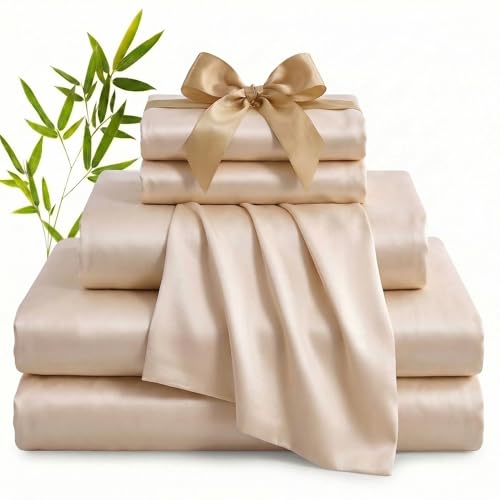
600 THREAD COUNT FABRIC: Woven with a 600 thread count, this sheet set offers a smooth, substantial hand feel and a refined sleeping surface. The viscose made from bamboo fabric drapes softly and feels gentle against the skin.

OUR DUVET COVER IS BACKED BY THE GOOD HOUSEKEEPING SEAL: Experience the difference in comfort and quality with our award-winning luxurious 400 thread count 100% cotton sateen white duvet cover queen/full. Feel the natural softness and breathable feel of the fabric against your skin. Our product also won the GH Best Bedding award in 2025. Complete your bedding ensemble with this duvet cover queen size.

Mercerized thread spread egyptian cotton sheets For Improved Softness & Shine: Our 400 Thread Count sheets queen are made from mercerized cotton for increased luster and brighter, deeper colors that don’t fade and pill after multiple washes. What’s more? Cotton is naturally good and keeps you cool, light, and breathable at night, especially in hot weather. These queen sheets are OEKO-TEX certified and safe for sensitive skin.
When Is High Thread Count Just a Sales Gimmick?
How exactly do you spot when thread count becomes pure marketing theater? You recognize the thread count gimmick by scrutinizing for ply inflation. Manufacturers twist multi-ply yarns and multiply the count, so you’re not getting denser weave—just arithmetic deception.
You see counts soaring past 800–1000 TC under luxury marketing, yet these sheets often sacrifice breathability for perceived prestige. A 1000 TC sheet built on inferior fiber type and yarn quality feels stiffer and sleeps hotter than a 300–600 TC competitor using superior inputs.
You must look past the number. True quality indicators encompass fiber type, yarn quality, weave (percale vs satin), and bedding finishing—not inflated metrics. Ply inflation misrepresents actual fabric quality. You’re buying engineering, not algebra. Demand substance over spec-sheet theater.
Recommended Products

Rest On 100% Natural & Soft Cotton Pillowcases: Sink into the soft and lightweight 600 Series Refined Collection pillow cases. Crafted from 100% premium, extra-long staple cotton, our sateen pillow cases are softer and more durable than other cotton pillowcases. Exceptionally cool and breathable, this king pillow cases set of 2 are beloved for all-season cooling, buttery-smooth feel, and five-star hotel luxury

Rest On 100% Natural & Soft Cotton Pillowcases: Sink into the soft and lightweight 600 Series Refined Collection pillow cases. Crafted from 100% premium, extra-long staple cotton, our sateen pillow cases are softer and more durable than other cotton pillowcases. Exceptionally cool and breathable, this king pillow cases set of 2 are beloved for all-season cooling, buttery-smooth feel, and five-star hotel luxury
Rest On 100% Natural & Soft Cotton Pillowcases: Sink into the soft and lightweight 600 Series Refined Collection pillow cases. Crafted from 100% premium, extra-long staple cotton, our sateen pillow cases standard size cotton are softer and more durable than other cotton pillowcases. Exceptionally cool and breathable, these standard/queen size pillow cases are beloved for all-season cooling, buttery-smooth feel, and five-star hotel luxury
Percale vs. Sateen: Best Thread Count for Each (And Your Sleep Style)
What thread count range actually suits your weave and sleep style? You’ll find percale performs optimally at 200–300, delivering crisp, breathable cotton sheets through a plain-weave structure with lower fabric density.
If you prefer silkier drape, select sateen at 300–600, where the satin weave finish creates lustrous comfort without excessive weight.
Your sleep style dictates weave selection: hot sleepers benefit from percale’s airflow at 200–300, while you might tolerate sateen at 300–450 if fiber quality remains high.
Remember, high thread count doesn’t guarantee performance—long-staple cotton and precise weave finish determine durability and feel.
You won’t improve comfort by exceeding 400 in percale or 600 in sateen; these thresholds simply reduce breathability. Match fabric density to climate, not marketing.
Recommended Products
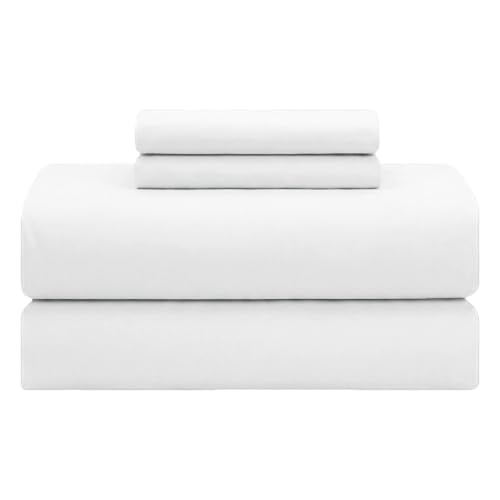
300 Thread Count Percale Weave: Crisp, Cool & Breathable for Comfortable Sleep

Winner of the 2026 Good Housekeeping Best Bedding Award - Everyday Ease Cotton Sheets: Our 400 thread count queen size bed sheets are made with single-ply 100% long-staple cotton for a smooth hand feel and lightweight comfort. Independently tested to earn the prestigious Good Housekeeping Seal. Complete your bedding ensemble with this queen sheet set.

100% COTTON SHEET SET. 100% Cotton Percale Weave Sheet Set brings the crispiness and longevity that is comparable to prestigious hotel. The sheets are weaved using high quality Long-Staple Combed Cotton yarns in India, to make it the valued crispy percale 200 TC sheets in the industry. Varied colors to match your solid or printed duvet, quilt or comforter set in white, ivory, sage, taupe, dark blue (navy blue), baby blue, silver, and charcoal.
How to Choose Sheets by Thread Count and Quality
Why fixate on a single number when fiber engineering and construction specs determine sheet performance? You evaluate thread count alongside fabric quality, prioritizing long-staple cotton for superior cotton fibers and durability. You select weave type strategically: target 200–300 TC for percale’s crisp breathability, or 300–600 TC for sateen’s silky drape. You scrutinize ply construction, recognizing that multi-ply yarns inflate thread count artificially without improving sheet comfort. You verify combed cotton processing and fiber origin, as these manufacturing variables outweigh marginal TC increases. You assess breathability through material composition and tactile testing rather than label arithmetic. Ultimately, you prioritize fiber length, weave structure, and honest construction over maximum thread count, ensuring optimal sleep performance through data-driven selection criteria.
Recommended Products

Thread Spread Egyptian Cotton sheets queen size bed set That Are Super Smooth & Silky: Treat your home to a 5 Star Hotel Experience with our PREMIUM 600 sheet set. Made from 100% extra long-staple cotton and a lustrous sateen finish, our queen sheet set is buttery smooth, thick, and crisp for a heavenly feeling. These queen sheet set cotton are breathable to keep you cool in the summer and cozy during winters for ultimate comfort all year-around
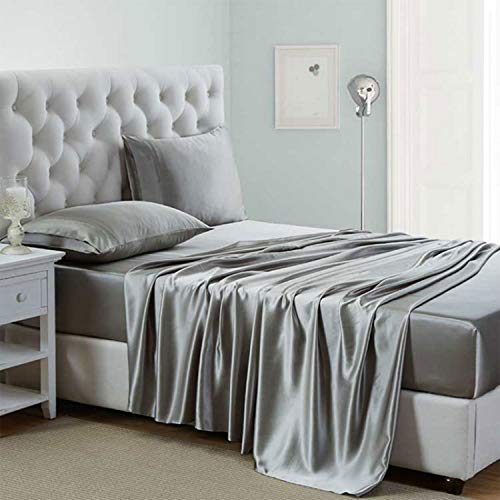
SILKY SOFT & COOLING COMFORT: Crafted from high-density polyester satin, these satin bed sheets provide an ultra-smooth, cool-to-touch feel that helps regulate sleep temperature through hot summer nights. Enjoy the luxury of 5-star hotel bedding with breathable, lightweight satin sheets for a refreshing sleep year-round

Thread Spread Egyptian Cotton sheets queen size bed set That Are Super Smooth & Silky: Treat your home to a 5 Star Hotel Experience with our PREMIUM 600 sheet set. Made from 100% extra long-staple cotton and a lustrous sateen finish, our queen sheet set is buttery smooth, thick, and crisp for a heavenly feeling. These queen sheet set cotton are breathable to keep you cool in the summer and cozy during winters for ultimate comfort all year-around
Conclusion
You can’t judge sheets by thread count alone. Fiber length, yarn construction, and weave density determine performance more than inflated numbers. Long-staple cotton with 400–600 TC often outlasts and outperforms 1000 TC multi-ply sheets. Prioritize single-ply construction, precise finishing, and breathable weaves matched to your thermal needs. Manufacturers use ply-stacking to inflate counts; inspect fiber provenance and construction specs instead. Quality emerges from material science, not marketing arithmetic.
Recommended Products

LUXURY, BREATHABLE & COOL: Crafted from 100% Long-Staple Combed Cotton Sateen Weave, this densely thick 1000 thread count duvet cover queen size set is made. Our specially compacted yarn and minimal artificial processing create gentleness on all skin types with its heavy-weight texture. Our cotton queen duvet cover prevent sweat, absorb high moisture and regulate body temperature, ensuring a sleep experience while maintaining the giving a royal hotel touch and feel

Simthread 50 wt. 3-ply long staple Mercerized cotton thread is designed for piecing, quilting, sewing, and applique, you can even use them for machine embroidery and hand embroidery

Generous Set with Practical Size: this complete set includes 30 balls of size 8 pearl cotton thread; Each ball provides 10 g or approximately 95 yards of thread, with a compact size of 1.97 x 1.97 x 1.57 inches/ 5 x 5 x 4 cm, offering ample quantity and variety to fulfill all your project needs