
You stand in front of your window with a tape measure, but you’re already unsure where to start. Inside or outside mount? Which measurements actually matter? Get this wrong, and your blinds won’t fit properly. The good news: you only need to know a few key steps to avoid costly mistakes.
How to Choose Between Inside and Outside Mount Blinds
Where you mount your blinds shapes everything—light control, aesthetics, and how your room feels. You’ll choose between two primary approaches for your window treatments.
Inside mount fits within the window frame, preserving trim and delivering a clean, built-in appearance. You’ll measure width at top, middle, and bottom points, plus height at left, center, and right. Select this when your frame offers adequate depth and you want that precise, architectural look.
Outside mount extends beyond the frame, covering the entire window and surrounding wall. You’ll use outermost width and height measurements. Choose this when frames are shallow, irregular, or when you’re hiding moldings and seeking superior light blocking.
Consider professional measurement and installation to guarantee proper fit, alignment, and that your selected mount matches your window’s unique dimensions and depth requirements.
Recommended Products
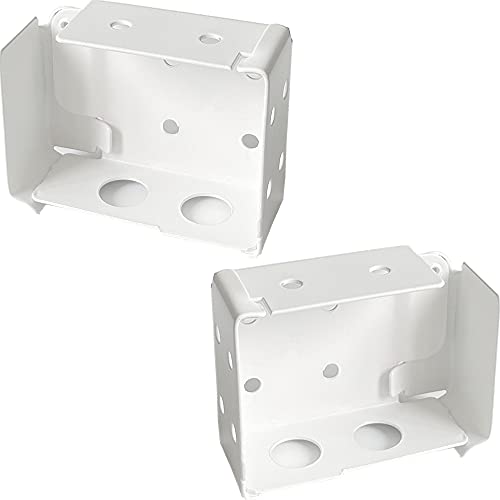
Package: A set(2 pieces - a left and a right) of low profile blind mount brackets, NOT INCLUDE any Screws

PRIVACY + LIGHT FILTERING (NOT BLACKOUT) – Softens sunlight and provides daytime privacy. At night with interior lights on, silhouettes may be visible (common for light-filtering shades).

About size: the window blinds headrail bracket measures approx. 1 inch (0.95 inch), please refer to pictures for checking the size information before purchase (make sure it's matched to your blinds)
How to Measure Inside Mount Blinds (Width, Height, and Depth)
Why guess when precision guarantees the fit? You’ll measure inside mount blinds using the exact window frame opening—no rounding allowed.
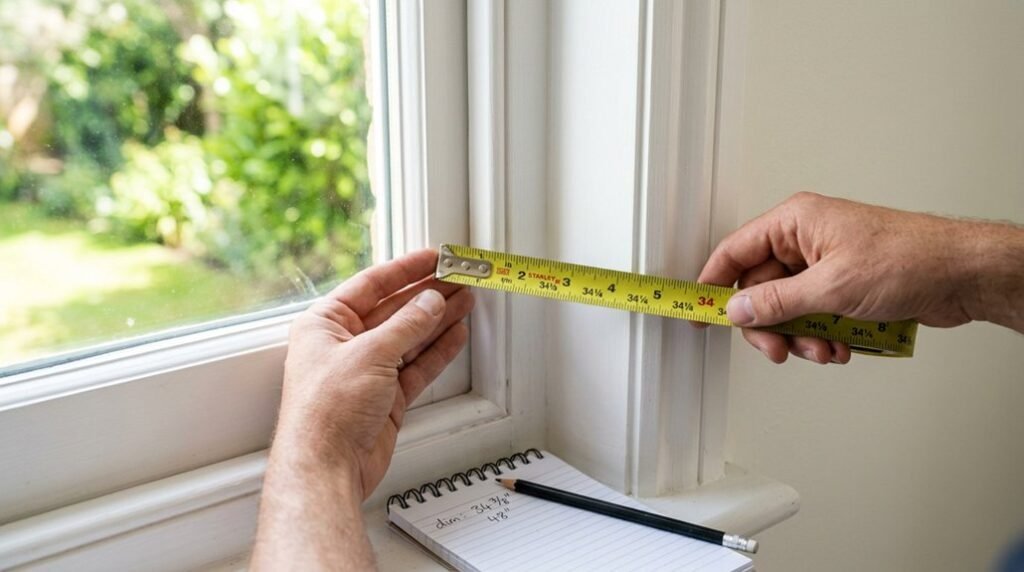
Grab your tape measure and record width at three points: top (A), middle (B), and bottom (C). Windows aren’t perfectly square, so you’ll catch any variation. Next, measure height at left (D), center (E), and right (F) to spot vertical differences.
Don’t skip depth. You’ll need this to confirm your blind fits without hitting molding or tracks. When discrepancies appear between measurements, document all six values—A, B, C, D, E, and F—following your form’s guidance exactly.
You’re building a complete picture of your window’s reality, not an idealized version. Precision now prevents gaps, light leaks, or installation headaches later.
Recommended Products

【Upgraded for Better】The all new blink camera mount is compatible with Blink Outdoor 4, Blink Outdoor 2K+, Blink Outdoor (3rd gen) Cameras.No influence to night vision, with the buckle button on cover, your Blink Outdoor Camera won't fall down and there is no need to use screws while putting your camera into or out of the case. (Blink Camera and Module are Not Included.)

[Compatibility] Gohonor Mount Bracket compatible with All New Blink Outdoor 4th & 3rd Gen Camera System,It can be installed indoors or outdoors.

| 1% SOLAR SCREEN | Made from a durable easy to clean polyester material ideal for kitchens or any rooms with high sun exposure. UV protection, glare reduction, and fading prevention for furniture and carpets. Light can pass through the fabric of our Solar Screens with 1% openness and 99% opacity.
How to Measure Outside Mount Blinds for Full Coverage
How much coverage do you actually need? For outside mount blinds, you measure width across the outermost points of your window frame and height from top to bottom outermost points. You’ll ensure full coverage this way, including the entire area—not just visible glass—and you may extend beyond frame edges if desired. Alternatively, you measure from where your blind begins to where it ends, aligning with your preferred placement on frame edges.
Frame depth won’t affect your vertical measurements in outside mount setups; you simply choose dimensions that guarantee complete light obstruction and privacy. While you can perform these measurements yourself, you’ll benefit from hiring a professional to measure and install your outside mount blinds, ensuring accurate width and height for proper full coverage.
Recommended Products

7 FOOT RULER: 1 3/4 inch wide Height Indicator on a Sticker Roll that measures 7 feet, but can be cut down to a smaller size to fit your needs
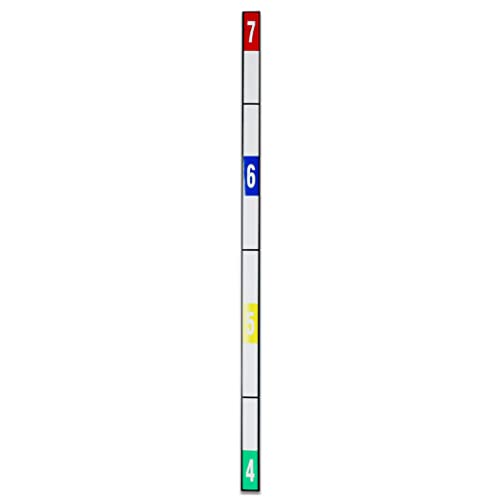
HEIGHT MEASURING TAPE STICKER: This color-coded height indicator can be pasted to or near door frames for added security. It helps you to determine the approximate height of an individual as they enter or leave your house.
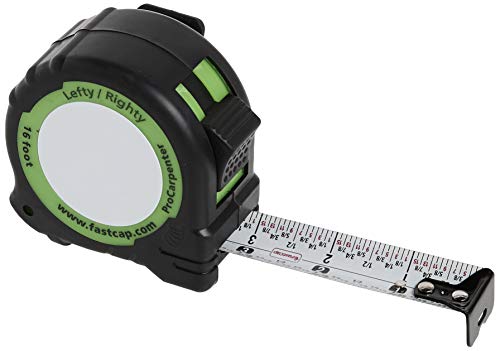
Dual Reading Capability: The Standard/Standard Reverse features standard measurements that are readable when the tape is extended from either the right or left hand
Common Measuring Mistakes That Ruin Your Blind Fit
What happens when your carefully chosen blinds arrive, only to hang crooked or leave glaring gaps? You’re likely dealing with preventable measuring errors.
You cripple your fit when you measure from the wrong window points, like the top edge instead of the outermost frame. This shrinks your blinds or throws them off-center during outside mount installation. You skew the entire treatment when you mix inside mount width and height measurements incorrectly—your blinds hang unevenly with ragged side gaps.
You also sabotage the fit by ignoring molding depth and track requirements. Your blinds collide with trim instead of sliding smoothly. You invite disaster when you fail to use the exact frame opening as your baseline, producing blinds that float awkwardly or refuse to seat securely. Finally, you guarantee asymmetry when you record inconsistent widths at the top, middle, and bottom—your stacked blinds stagger instead of lining up.
Recommended Products

Note:Make sure it fits your blind – check size/shape in images and compare with your brackets.

Note:Make sure it fits your blind – check size/shape in images and compare with your brackets.

Material: the L brackets are made of metal material, durable and sturdy, not easy to break or deform, can serve you for a long time.
When to Hire a Professional to Measure Your Windows
Exactly when should you call in a professional? You should hire one when precise measurements are critical for a perfect fit, especially for inside mounts where multiple points must align exactly with your window frame.
Opt for professional measurement and installation because trained teams are pre-screened, insured, and licensed. You’ll reduce your risk of mismeasurement and fit issues substantially. Choose professionals to guarantee proper fit and appearance, with support available during the measurement process to address any access or hardware concerns.
Use a pro for outside mounts when coverage must account for outermost frame points and exact height from top to bottom, ensuring your blind covers the desired area. Consider professional service if you want to avoid measuring errors that can occur from frame depth variations or irregular window shapes that complicate your calculations.
Recommended Products

Package: 2pcs Center Support Brackets For Low profile Window Blinds 2inch.

Durable and lightweight material: these hold down brackets are made of quality plastic materials, sturdy and long-lasting, durable and lightweight, easy to install and less likely to deform or break; They are suitable for most blinds or windows and can serve you for a long time

High-quality fabrics and components: Our blinds are made of 100% high-quality polyester, with good ventilation, anti-static, dust-proof and durability. The upper rail and the bottom rail are strong and durable, and the assembly parts are made of more solid and durable high-strength steel, which can be easily maintained for several years.
Final Checklist Before Ordering Your Blinds
Whether you’ve measured yourself or hired a professional, you’re ready to place your order once you’ve verified every detail. Double-check your measurements against your notes. For inside mounts, confirm you’ve recorded width at the top (A), middle (B), and bottom (C), and height from left (D), center (E), and right (F).
For outside mounts, verify you’ve measured width and height at the outermost frame points.
Check that your depth accommodates mounting hardware, especially for inside mounts. Review whether your order specifies inside or outside mount and matches the corresponding measurements. If you used a professional guideline or pre-screened installer, confirm their measurements align with your final order. Precision prevents costly mistakes and ensures proper fit and aesthetic alignment.
Recommended Products

Custom Size Cellular Blinds&Shades Perfection: Click the "Customize Now" button and design your own shades that ensure perfect fit. We appreciate consumers for accurate measurements and exact order options, color, size, light blocking or light filtering window blinds are customizable. Any questions, feel free to message us via Amazon. We provide friendly customer service and your satisfaction is our top priority.
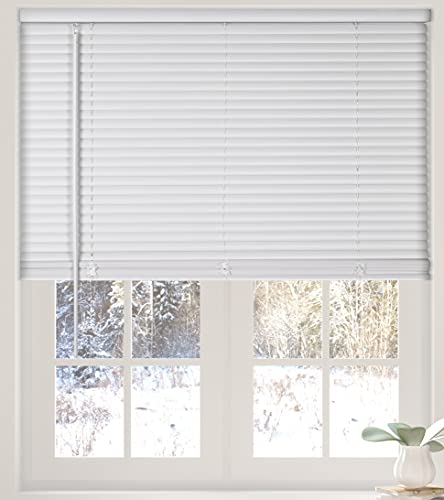
Important: This blind is 22.5" wide. For inside mounts, your window frame should be 22.75" – 23.5" wide for the best fit. Wider windows will have larger light gaps; narrower ones may not fit. Check product images for detailed measuring instructions and size options. Ideal blinds for indoor windows, these cordless mini blinds combine functionality with style. Refer to product images for measuring and size details. Proper sizing enhances the performance and appearance of these horizontal window blinds in your kitchen, bathroom, or living room.
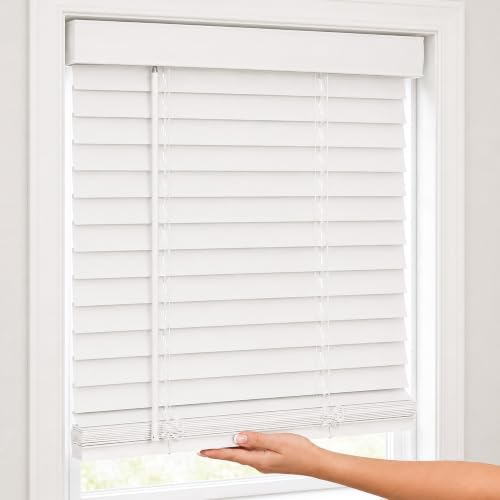
Smooth Wood-Look Slats (No Grain Texture) - 2" composite faux-wood slats with a clean white finish that complements modern, transitional, classic or minimalist décor. Smooth, low-maintenance surface with no wood-grain texture.
Conclusion
You’ve got everything you need to measure your windows like a pro. Double-check your numbers, verify mount type, and confirm product specs before ordering. When in doubt, call a professional—perfect blinds are worth the extra care.
Recommended Products

【Quality Material】Blind clips is made of high quality clear plastic, sturdy and durable, light and safe, can serve your blinds for a long time.

| OUTSIDE MOUNT | Your blind will mount outside the window frame. Your valance will clip to the top rail of the blind and extend beyond the window frame and will connect to both 3½ inch return/side pieces. The ends of your valance and side pieces will be cut at 45° to properly attach at a right angle.
| OUTSIDE MOUNT | Installed above the window frame and includes 3 1/2-inch valance returns to cover the headrail. Must be mounted on a flat surface.