
You unroll your new rug and pause. The edges curl upward, defying the clean sightlines you’ve envisioned. You smooth the fibers with your palms, feeling the weave’s texture, yet something remains unsettled. The room’s geometry depends on this piece lying perfectly flat. What you do in these first hours determines whether your space achieves that deliberate, gallery-like calm—or remains slightly off-kilter. The solution isn’t immediate force; it’s a quieter process you haven’t considered yet.
Get Your Rug to Lay Flat: Unbox and Position It Right
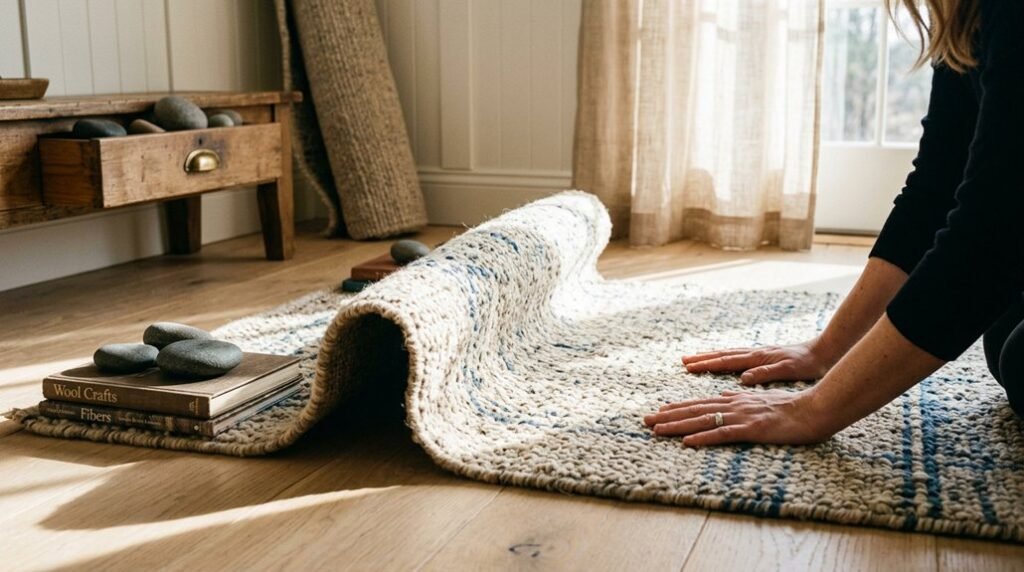
Where should you begin? You’ll want to unbox your rug in an open area where you’ve already positioned your rug pad. Remove excess packaging materials carefully, protecting edges against snagging. Unroll the rug atop the pad, working slowly to avoid creases from taking hold. Let the rug acclimate at room temperature for several hours—this patience preserves the fibers’ integrity. You’ll smooth fibers gently with your palms, feeling texture respond beneath your touch. Proper positioning now determines how beautifully your rug will lay flat.
Resist placing heavy furniture immediately; instead, grant the weave breathing room to settle into its new spatial context. This deliberate approach transforms a rolled package into an anchored element of your interior landscape, ready to define and elevate the room’s aesthetic.
Recommended Products
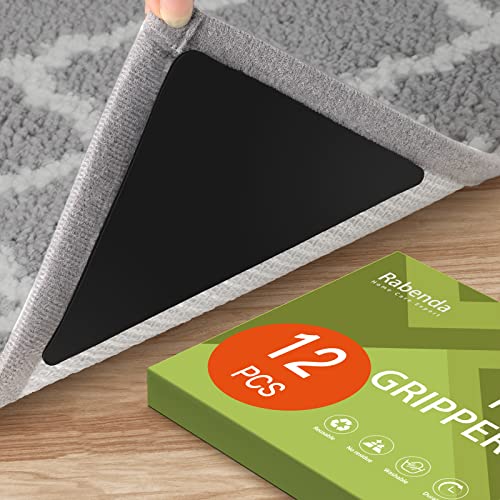
Advantaged Triangle Design: The Triangle Design grippers for area rugs and hardwood floors will maximum increase the contact surface. The strong adhesion will help stick firmly and keep your area rugs in place. Moreover, the rug stickers for wood floors will prevent the rug corners and edges curling and always keep your rugs steady and safe

Grip Design: the original Gorilla Grip grippers for hard floors help to keep your rugs in place and prevent corner and side curling; easy to apply to the underside of carpet corners and floors to help rugs stay in place and flat against the floor

Unique Design: Do you still worry about the traditional glue rug tape harm your floor ? This gripper uses VACUUM TECH design which grips hard smooth floors firmly and easily, this design can protect your floor perfectly as no glue used on floor. But it does not work for rug on carpeted floor. It does not work for rubber backed rug ,jute rug or fluff backing rug.
Give Your Rug 24-48 Hours to Settle Naturally
Once you’ve positioned your rug atop its pad, step back and let time do what force cannot. Allow your rug to acclimate to its new environment for 24–48 hours, letting room temperature and humidity coax the rug fibers to relax naturally. Gently smooth the surface with your hands, then wait.
This waiting period requires patience—wrinkles and creases will ease as the textile settles into its spatial rhythm. Resist placing heavy furniture; you’re allowing the weave to flatten on its own terms. After this acclimation cycle, examine the surface for evenness. If persistent creases remain, continue with light smoothing and repeat the cycle before advancing to additional methods. Trust this unhurried process—the beauty lies in restraint.
Recommended Products
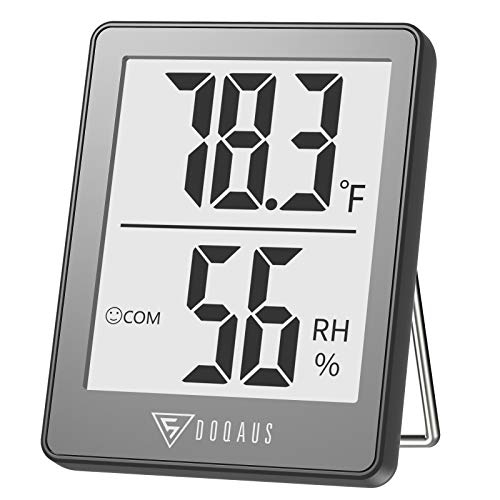
[High Accuracy & 5s Fast Refresh]: Built-in smart temperature humidity sensor, the indoor thermometer is accurate to ±1°F while humidity is ±5%RH. Enjoy precise data from...
Speed It Up: Weight Down Corners and Creases
Need a faster path to flatness? Accelerate your rug’s flattening by strategically placing weights on stubborn creases and upturned corners. Select objects with broad, flat surfaces—thick art books, smooth boards, or weighted pads—to distribute pressure evenly without marring your rug’s texture.
Position these weights directly atop problem areas, targeting only where creases disrupt the surface plane. You’ll preserve the smooth sections while intensifying focus where flatness lags. Whenever possible, work from the underside; this maximizes contact against the floor and hastens gradual turnaround.
Check your timetables after a day or two, lifting and redistributing weights as rollout progresses. Inspect beneath, then reapply if wrinkles resurface. Repeat until your rug achieves consistent flatness throughout its footprint, transforming compressed memory into polished, spatial harmony.
Recommended Products

Machine Washable: Say goodbye to worries about spills or stains! This neutral area rug is designed to be stain-resistant and incredibly easy to clean. Simply toss it in the washing machine, use cold water, and hang it to dry or air dry. For everyday maintenance, you can use a robot vacuum, broom, or just wipe it clean. If your vacuum has adjustable power settings, set it to low.

Great Value & Chic Style: This 2x8 hallway runner rug adds a vibrant touch to your living room with its beautiful colors and subtle pattern that complements your furniture and decor. It's soft to the touch and looks as elegant as more expensive entryway rugs, offering excellent value for its quality.

[COLOR & PATTERN]: SAFAVIEH's Monaco area rug features a pink-toned field with an ornate medallion, framed by a multicolor-toned floral border; actual color may appear darker or lighter than shown, depending on lighting and screen settings
Reverse Roll Your Rug to Lay Flat Overnight
Weights work wonders, but sometimes your rug needs a different kind of persuasion. Enter the overnight method: reverse roll your rug against its natural curl, creating tension that counters stubborn creases. You’ll find this technique particularly elegant for preserving textile integrity while coaxing flatness.
Begin by identifying where your rug resists—those raised ridges disrupting your spatial harmony. Roll tightly in opposition, securing with string to maintain form through the resting period. Twenty-four hours lets rug fibers gradually release their memory, yielding to your flattening plan.
Position the cylinder on an even surface, away from foot traffic. After the resting period completes, proceed with unroll assessment: unfurl slowly, observe how the pile responds. Should shadow traces linger, repeat the reverse roll protocol. This patience rewards you with relaxed fibers and restored visual flow.
Recommended Products
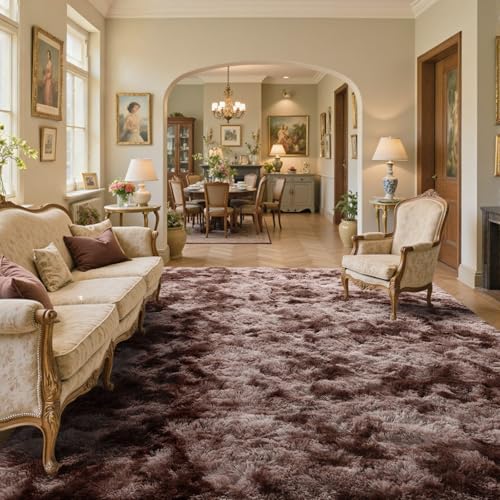
【Ultra Soft】The luxurious 1.8-inch high plush pile delivers an incredibly soft feel every time you walk on it. The rug is made of ultra-soft microfiber, perfect for cozy living rooms and bedrooms

【Ultra Soft】The luxurious 1.8-inch high plush pile delivers an incredibly soft feel every time you walk on it. The rug is made of ultra-soft microfiber, perfect for cozy living rooms and bedrooms

【Ultra Soft】The luxurious 1.8-inch high plush pile delivers an incredibly soft feel every time you walk on it. The rug is made of ultra-soft microfiber, perfect for cozy living rooms and bedrooms
Use Steam to Flatten Only If Your Warranty Allows
Why wrestle with persistent creases when a whisper of vapor might coax your rug into compliance? Steam offers an elegant flattening solution—but only if your warranty allows such heat treatments.
You must verify coverage before proceeding; certain manufacturers explicitly prohibit steam, and ignoring these terms risks voiding your protection. Once cleared, you’ll test a hidden corner first, holding your steamer several inches above the surface to assess fiber tolerance. Gentle heat relaxes stubborn fibers without saturating them, transforming dimensional tension into supple submission.
Apply these precautions deliberately: keep the device moving, maintain spatial distance, and never linger where moisture accumulates. Afterward, anchor cooled sections with flat weights to preserve the shape. This disciplined approach honors both material integrity and contractual boundaries.
Recommended Products

Instant Fix for Curling Rug Corners: These rug grippers feature a unique V-shape design that instantly secures rug corners, helping prevent curling, twisting, or lifted edges for a seamless look

Instant Rug Stability: StepNGrip rug grippers instantly flatten rug corners to hold rug down; effectively prevents curling and slipping for a neat appearance and added safety in any space

ELIMINATE CURLING CORNERS: Instantly stop rug corners from rolling and curling out of place. Our rug gripper system keeps rugs perfectly flat, immediately improving your home’s appearance while removing dangerous trip hazards for a safer living space.
What If Your Rug Still Won’t Lay Flat? Contact Support
Where persistent waves still ripple across your floor despite every careful intervention, you’ll find your next move in direct conversation with those who crafted or sold your piece. Contact support strategically: gather your purchase documentation, review your care instructions for heat/steam restrictions, and verify your warranty coverage before reaching out.
Explain your rug flattening attempts clearly, noting which methods touched your fabric fibers and which you avoided. Ask about approved professional services compatible with your material’s sensitivities. If technicians request photos or video, capture the creases from multiple angles to illuminate underlying causes they can’t see firsthand.
Should defects persist beyond repair, explore replacement options within your warranty window. You paid for flatness; expect it.
Recommended Products
NOTE: This gripper uses VACUUM TECH design which grips only hard smooth floors firmly and easily, it does not work for rug on carpeted floor. Also it does not work all rugs , it does not work for rubber backed rug ,jute rug or fluff backing rug , please check this. The adhesive surface can not be peeled once affixed on the rug.

NON SLIP AND CURLING: Unstable sliding carpets create household hazards. ZONGOOL rug tape stabilizes rugs and prevents corner curling. Compatible with all rug shapes for indoor and outdoor use, it holds carpets firmly in position and reduces common shifting and curling issues

THE ORIGINAL EXTRA STRONG GRIPPER: our trusted Gorilla Grip nonadhesive rug pads offer a unique, dual sided grip that firmly holds onto both the rug pad and your hard floor to help prevent rug movement
Conclusion
You’ve transformed your rug from a stubborn scroll into a grounded, expansive plane—let those fibers breathe across the space they’ve claimed. Feel the weave settle beneath your palms, the room’s geometry shifting as edges meet floor with intention. Patience, gentle pressure, and the right technique have reshaped not just fabric, but the very footprint of your room. Now your aesthetic foundation rests, flawlessly flat, ready to anchor everything above it.