
Expert Home Style – For the Price of a Coffee ($3.90)
Master high-end design secrets (Tuscan, Modern) without the expensive consultants.
🛒 Buy NowAre you dreaming of a kitchen that not only looks beautiful but also supports a healthier planet? You’re not alone! Many of us are craving spaces that reflect our values and lifestyle choices. When it comes to home decor, the kitchen often takes center stage, serving as a gathering spot for family and friends. That’s why I put together this list of 19 green kitchen design ideas that embrace sustainable decor and natural colors.
If you care about eco-friendly living and want to bring that ethos into your home, this guide is just for you. Whether you’re a seasoned decorator or a first-time homeowner, these ideas will inspire you to create a kitchen that feels inviting while being kind to the environment. You’ll find a variety of styles and applications, from earthy cabinets to smart appliances, all designed to meet your eco-conscious goals without sacrificing aesthetic appeal.
Get ready to explore inspiring concepts that combine practicality with sustainability. You’ll walk away with actionable insights and unique suggestions that will help you transform your kitchen into a green oasis. Let’s dive into these ideas that are not only visually stunning but also promote a more sustainable lifestyle!
Key Takeaways
– Discover the beauty of earthy toned cabinets to create a warm, inviting atmosphere in your kitchen.
– Explore biophilic design techniques to bring the outside in, enhancing both aesthetics and well-being.
– Learn how to incorporate recycled materials and natural stone surfaces that add character and reduce waste.
– Find out about sustainable lighting fixtures that brighten your space while being energy efficient.
– Get tips on using eco-friendly flooring and textiles that are stylish, functional, and easy on the planet.
1. Earthy Toned Cabinets
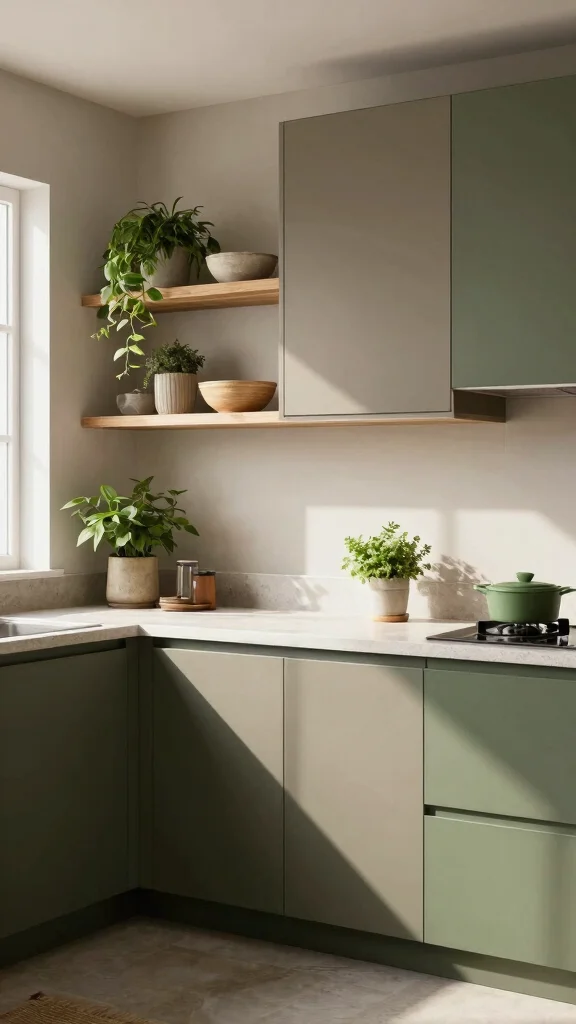
Earthy toned cabinets bring warmth and depth to your kitchen, creating a cozy atmosphere that feels inviting. Shades like taupe, moss, or deep forest green evoke nature’s tranquility, grounding your space in a way that fosters relaxation. Pairing these colors with natural wood accents or sleek metallic fixtures creates a harmonious blend of rustic charm and modern elegance. This timeless combination not only enhances visual appeal but also offers versatility in decor styles, making it easy to refresh your kitchen as trends evolve.
To make the most of these earthy tones, consider these practical tips:
– Opt for low-VOC paints to prioritize indoor air quality.
– Explore eco-friendly finishes that protect your cabinets while being kind to the planet.
Consider these elements to maximize this palette’s potential:
– Pair taupe cabinets with warm wood countertops.
– Use deep forest green for kitchen islands to create a focal point.
– Incorporate brass hardware to add a touch of glamour.
This approach ensures a timeless look while enhancing the natural beauty of your kitchen through rich textures and color contrasts.
2. Biophilic Design
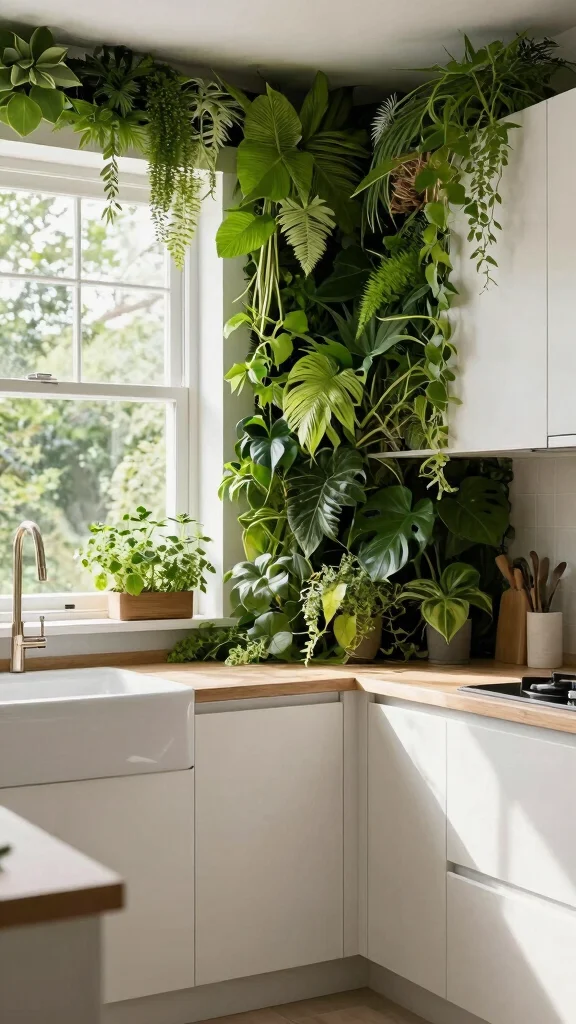
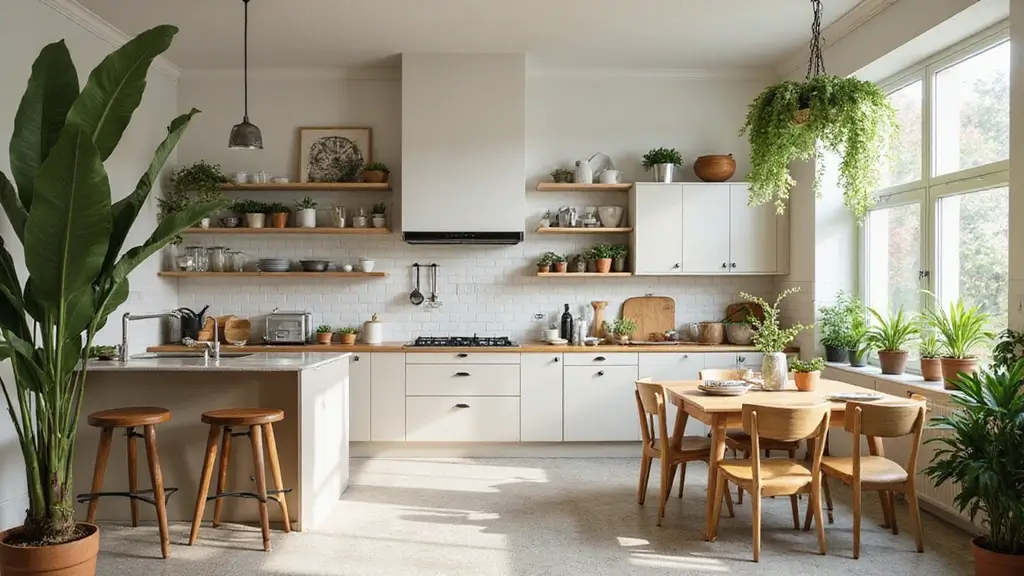
Biophilic design fosters a deep connection between your kitchen and the natural world, creating a sanctuary that nourishes your well-being. Integrating elements such as living walls, indoor gardens, or expansive windows allows sunlight to flood the space, promoting a peaceful atmosphere. Imagine vibrant herbs cascading from shelves or a lush vertical garden that serves as a stunning backdrop. This design philosophy not only beautifies your kitchen but also enhances air quality, making your cooking space healthier and more inviting.
To implement biophilic design effectively, consider these ideas:
– Use wall-mounted planters for easy herb gardening.
– Choose low-maintenance plants like succulents for effortless upkeep.
Explore these elements to embrace biophilic design:
– Install large windows for natural light and outdoor views.
– Incorporate textured stone or wood to connect with nature.
– Add greenery in unexpected places for a fresh feel.
This approach not only elevates your kitchen’s aesthetic but also supports a lifestyle that prioritizes wellness through nature.
3. Recycled Materials
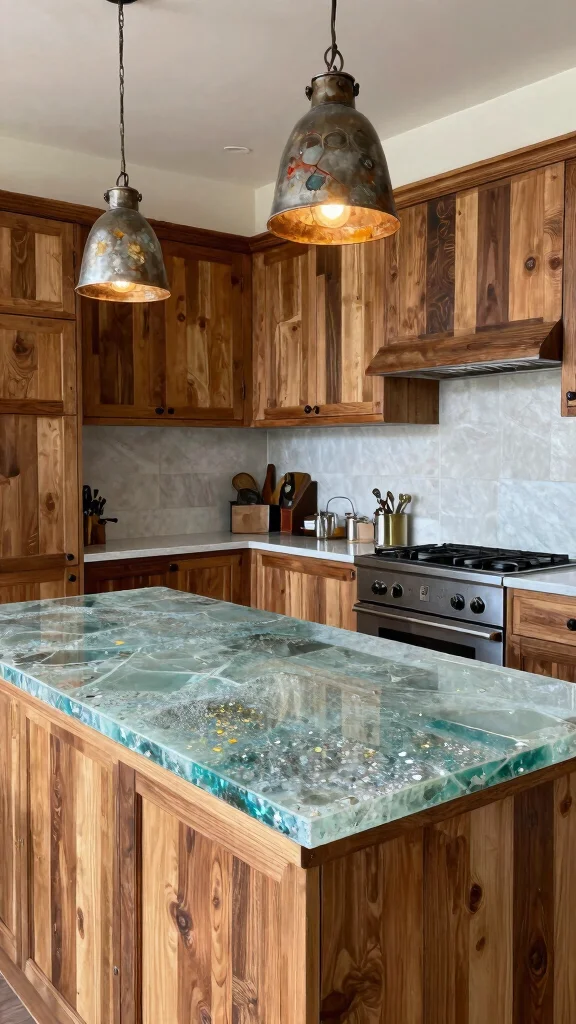
Incorporating recycled materials in your kitchen not only champions sustainability but also adds unique character to your space. From countertops crafted from recycled glass to tiles made from reclaimed wood, these choices tell a story of renewal and creativity. Each piece brings individuality and charm, serving as conversation starters that impress guests while reducing environmental impact. Utilizing reclaimed wood for open shelving or recycled metal for fixtures can elevate your kitchen’s design into a statement of eco-consciousness.
For practical implementation, consider these tips:
– Seek out certified vendors specializing in eco-friendly materials.
– Mix various recycled elements for a one-of-a-kind look.
Consider these elements to embrace recycled materials:
– Use recycled glass for stunning backsplashes.
– Incorporate reclaimed wood for cabinetry or shelving.
– Choose upcycled light fixtures to enhance your decor.
This thoughtful approach not only showcases your style but also highlights your commitment to protecting the planet.
4. Natural Stone Surfaces
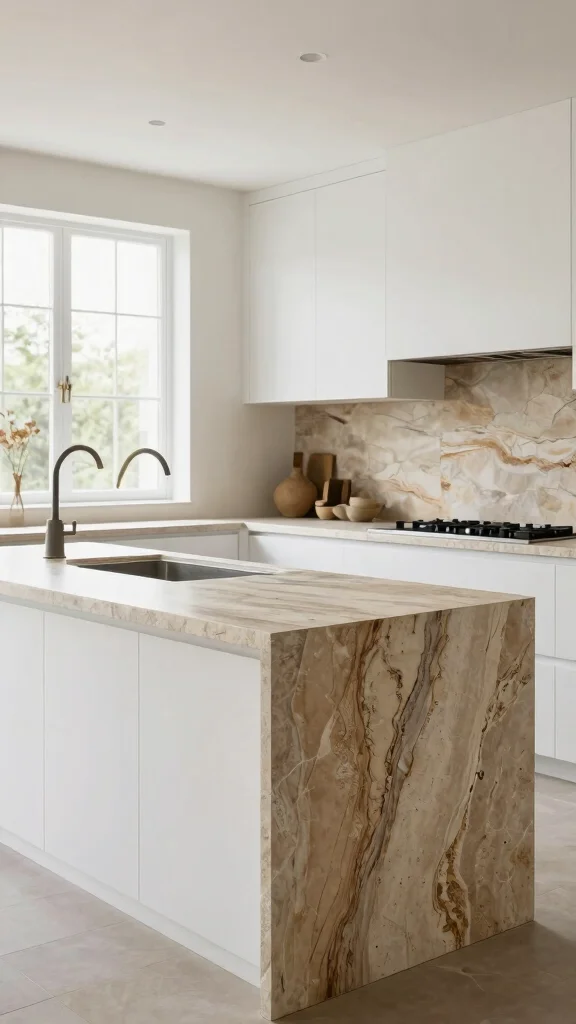
Natural stone surfaces lend an air of luxury while maintaining a profound connection to nature. Materials like granite, marble, and soapstone not only enhance the aesthetic of your kitchen but also promise durability and resilience. Each stone slab presents its own unique patterns and colors, ensuring that your kitchen remains a standout space. Choosing locally sourced stones can further minimize your environmental impact and support local artisans.
To maximize the benefits of natural stone, consider these tips:
– Seal surfaces regularly to maintain their beauty and longevity.
– Opt for lighter stone colors to brighten smaller kitchens.
Explore these elements to incorporate natural stones:
– Select granite countertops for durability and elegance.
– Use marble for stunning kitchen islands.
– Incorporate soapstone for a soft, warm touch.
This design choice enhances your kitchen’s overall elegance while ensuring functionality through natural materials.
5. Upcycled Kitchen Accessories
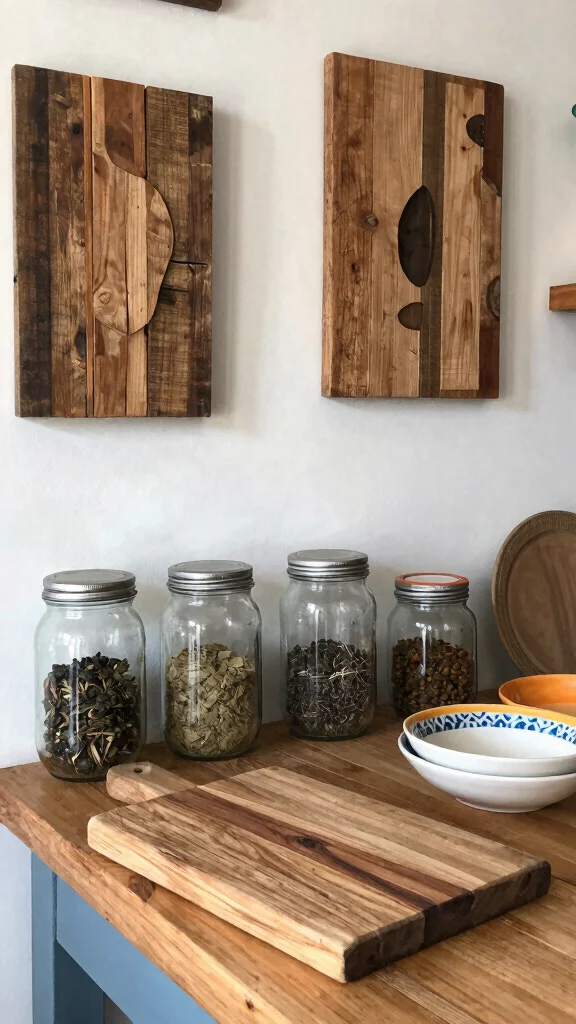
Upcycling kitchen accessories is a creative way to breathe new life into old items while adding personal flair to your decor. Imagine using vintage jars as charming storage solutions or crafting unique cutting boards from reclaimed wood. These thoughtful touches not only reduce waste but also infuse your kitchen with character and warmth. You can often find these treasures at thrift stores or local markets, making them budget-friendly options for unique decor.
To get started with upcycled accessories, consider these tips:
– Seek out DIY projects that inspire you to transform old objects.
– Combine various styles for an eclectic kitchen vibe.
Incorporate these elements for upcycled charm:
– Turn glass bottles into herb planters.
– Use old crates for stylish open shelving.
– Create wall art from repurposed utensils.
This approach not only showcases your creativity but also promotes sustainability through thoughtful design choices.




6. Green Color Accents
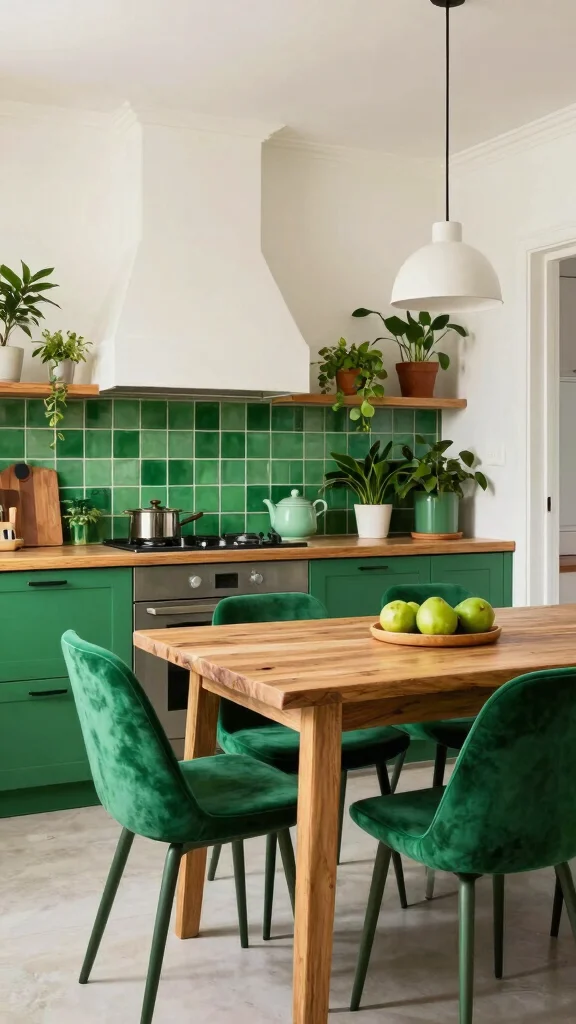
Incorporating green accents into your kitchen is a simple yet effective way to bring the outdoors inside. Consider vibrant green chairs, patterned backsplashes, or lively potted plants that infuse energy into the space. From soft sage to bold emerald, these shades can adapt to various styles and create a refreshing atmosphere that promotes relaxation and balance. Adding these hues enhances not only the visual appeal but also the overall ambiance of your kitchen.
To implement green accents effectively, consider these ideas:
– Balance brighter greens with neutral tones for harmony.
– Use removable wallpaper with green patterns for a temporary update.
Explore these elements to embrace green accents:
– Pair emerald dishware with white cabinets.
– Incorporate green textiles like table runners or curtains.
– Use wall art featuring botanical themes.
This approach ensures a lively and inviting kitchen that reflects your love for nature.
7. Sustainable Lighting Fixtures
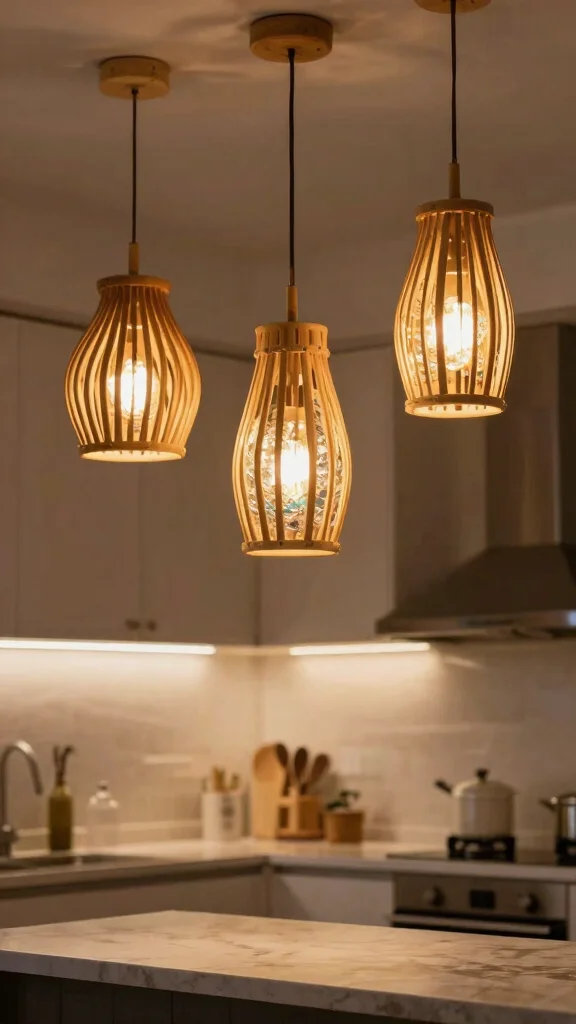
Selecting the right lighting fixtures can enhance your kitchen’s mood and reflect your commitment to sustainability. Look for energy-efficient LED lights or fixtures crafted from sustainable materials like bamboo or recycled glass. Natural fiber pendant lamps can create a warm ambiance while promoting eco-friendly practices. Dimmable lighting options allow you to adjust the brightness throughout the day, ensuring your kitchen remains functional and inviting.
To optimize your lighting choices, consider these tips:
– Layer different lighting types (ambient, task, accent) for flexibility.
– Choose fixtures that align with your kitchen’s overall design.
Incorporate these elements for effective lighting:
– Install LED under-cabinet lights for task areas.
– Use pendant lights over islands for stylish focal points.
– Choose wall sconces to add depth and warmth.
This thoughtful approach to lighting enhances both functionality and beauty while aligning with eco-friendly values.
8. Open Shelving with a Green Twist
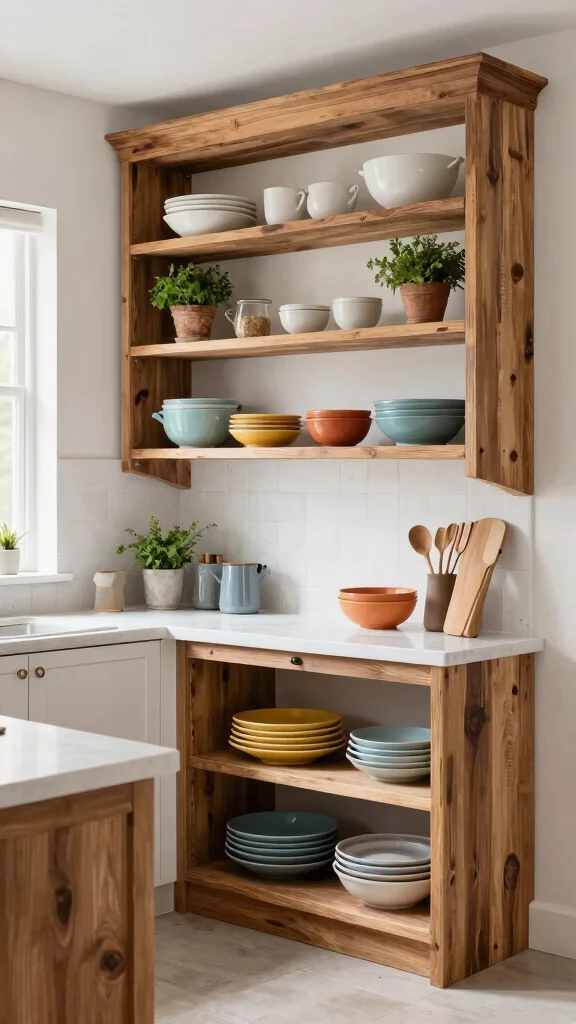
Open shelving introduces an attractive and functional element to your kitchen while promoting sustainability. Instead of traditional cabinets, consider shelves made from reclaimed wood, showcasing your favorite dishes and plants. This design choice not only conserves materials but also encourages organization and accessibility. Adding green plants or decorative dishes to the shelves brings life and color, creating an inviting atmosphere.
To maximize the benefits of open shelving, consider these tips:
– Mix functional and decorative items for a curated look.
– Balance open shelving with closed storage to maintain a clean appearance.
Incorporate these elements for open shelving:
– Use reclaimed wood for a rustic feel.
– Display colorful dishware for visual interest.
– Add potted herbs for a fresh touch.
This approach fosters an open and airy kitchen while enhancing your design’s sustainability.
How To Choose Eco-Friendly Kitchen Decor
Choosing eco-friendly kitchen decor can transform your space into a stylish, sustainable haven. With numerous options available, it’s important to select items that not only look good but also benefit the environment. Here’s how to make the best choices for your green kitchen design ideas.
1. Material Matters
Opt for materials that are sustainable and non-toxic. Look for natural fibers like cotton, linen, or wool for textiles, as these are biodegradable and often produced without harmful chemicals. For surfaces and cabinetry, consider reclaimed wood or bamboo, which are both renewable resources. Always check for certifications like FSC (Forest Stewardship Council) to guarantee ethical sourcing.
2. Color Palette
Choose a natural color palette that reflects the beauty of the outdoors. Earthy tones such as greens, browns, and soft neutrals create a calming atmosphere. These colors can also reduce the need for artificial lighting, making your kitchen feel brighter and more inviting. Using paint with low or zero VOC (volatile organic compounds) is also a smart choice for healthier air quality.
3. Energy Efficiency
When selecting appliances and lighting fixtures, look for energy-efficient options. Appliances with the Energy Star label use less energy, which is better for the planet and your wallet. Consider LED lighting for your kitchen; it lasts longer and consumes less energy than traditional bulbs. Adding natural light through windows or skylights can further enhance this eco-friendly approach.
4. Upcycled and Recycled Decor
Incorporating upcycled or recycled items into your kitchen decor is a great way to reduce waste. Look for unique pieces such as furniture made from reclaimed materials or decorative items crafted from old glass and metal. Thrift stores and online marketplaces often have hidden gems that can add character and sustainability to your space.
5. Sustainable Brands
Support brands that prioritize sustainability in their production processes. Research companies that use eco-friendly practices, such as sourcing materials locally or using renewable energy in manufacturing. Many brands now offer collections specifically designed with sustainability in mind, making it easier for you to find products that align with your values.
6. Functional Design
Lastly, choose decor that combines beauty with functionality. Consider multi-purpose items that serve more than one purpose, like storage solutions that also act as decorative pieces. Open shelving can display beautiful dinnerware while keeping your kitchen organized. A well-designed space encourages efficient use and minimizes clutter, further promoting a sustainable lifestyle.
Pro Tip: To create a truly eco-friendly kitchen, mix and match these elements according to your personal style. Don’t be afraid to get creative! For instance, you can pair vintage accessories with modern sustainable appliances for a unique look that is both functional and stylish.
By focusing on these key areas, you can create a kitchen that is not only visually appealing but also contributes positively to the environment. Remember, every small change you make can have a big impact!
9. Eco-Friendly Flooring
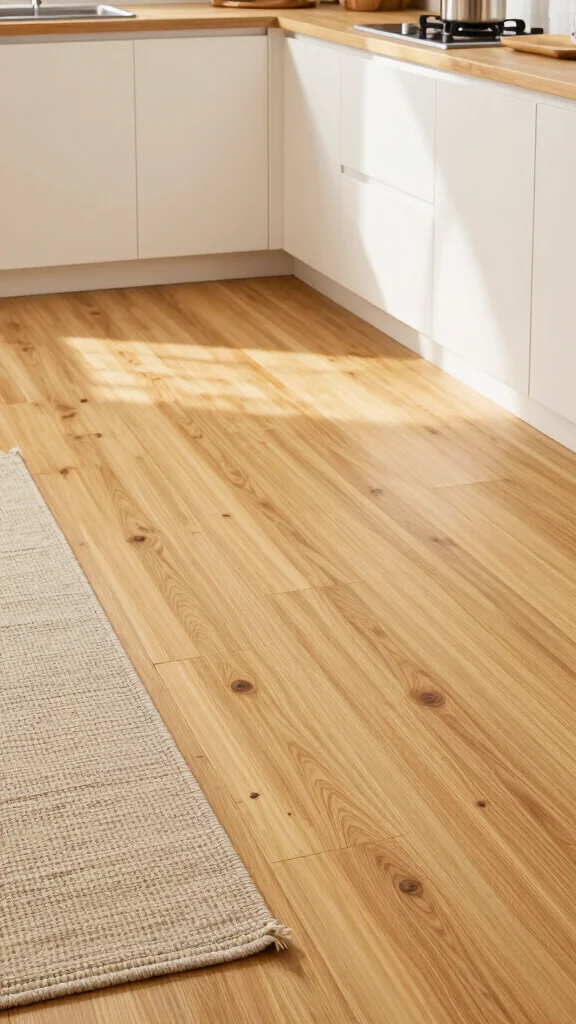
When choosing flooring for your kitchen, eco-friendly options offer both style and sustainability. Materials such as bamboo or cork are not only durable but also sourced from renewable resources. These flooring options provide warmth and comfort, often being more forgiving underfoot than traditional materials like tile or hardwood. Additionally, consider recycled or reclaimed flooring for a unique look that minimizes waste.
To choose the best eco-friendly flooring, consider these tips:
– Look for certification labels to ensure sustainable sourcing.
– Assess the climate in your area to select appropriate materials.
Incorporate these elements for eco-friendly flooring:
– Choose bamboo planks for a modern look.
– Use cork tiles for softness and warmth.
– Explore reclaimed wood for character and history.
This thoughtful selection enhances your kitchen’s aesthetic while contributing to environmental preservation.
Fun fact: Bamboo flooring renews annually as a fast-growing resource, a smart move in green kitchen design ideas and eco-friendly flooring for a warm look with a lighter footprint. Pro tip: Pair bamboo or cork with reclaimed accents to slash waste while keeping comfort underfoot.
10. Smart Appliances with Eco Features
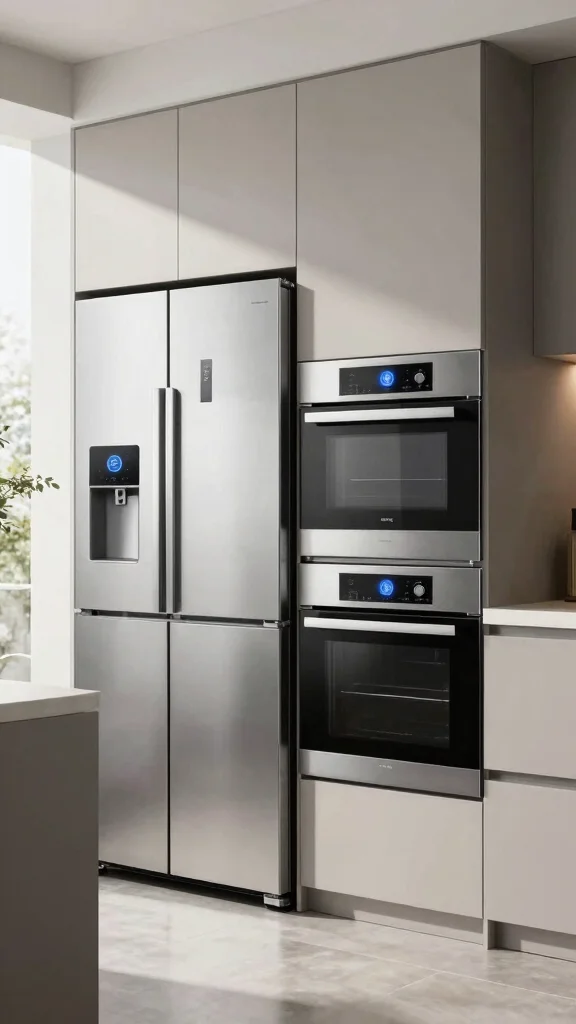
Embrace the intersection of technology and sustainability with smart appliances designed to conserve energy. Look for devices featuring energy-saving settings, such as smart ovens that adjust cooking times based on your input. Refrigerators with cutting-edge cooling technology optimize energy use while keeping food fresh, reducing your carbon footprint and lowering utility bills. Investing in these appliances enhances both functionality and eco-friendliness in your kitchen.
To make informed choices about smart appliances, consider these tips:
– Research energy ratings for models before purchasing.
– Ensure compatibility with your existing smart home systems.
Explore these elements for smart appliances:
– Choose energy-efficient dishwashers with quick wash options.
– Invest in smart refrigerators with built-in inventory tracking.
– Select ovens with self-cleaning and energy-saving features.
This approach not only elevates your kitchen’s efficiency but also supports a sustainable lifestyle.
11. Textured Fabrics and Organic Materials
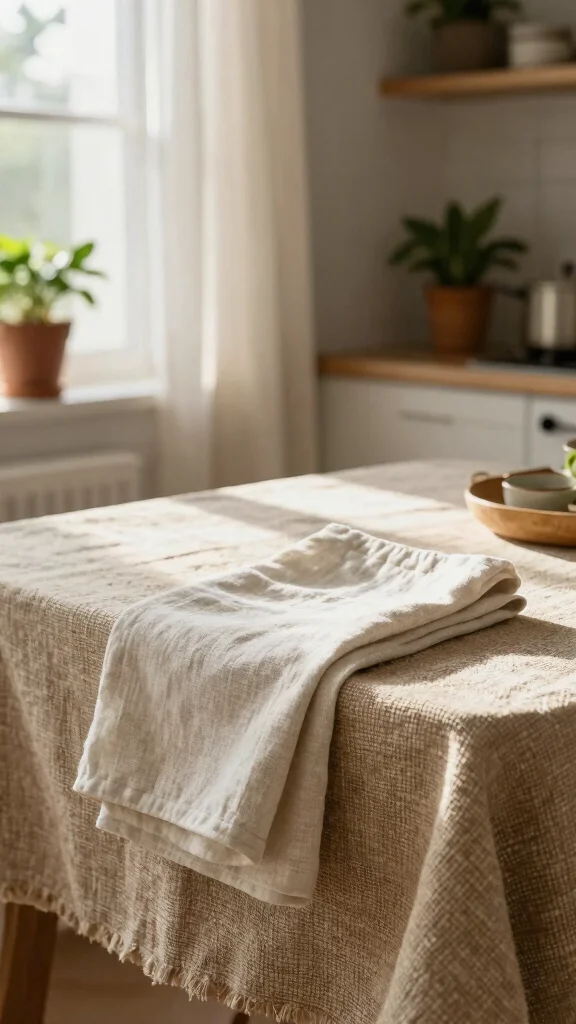
Incorporating textiles made from organic materials adds warmth and comfort to your kitchen, creating a welcoming environment. Opt for curtains, aprons, or dish towels crafted from cotton, linen, or hemp to enhance your decor with natural textures. These fabrics not only promote sustainability but also create visual depth, especially when mixing different textures like burlap and linen. This thoughtful selection can elevate your kitchen’s overall aesthetic.
To effectively use textured fabrics, consider these tips:
– Seek items dyed with natural colors for added eco-friendliness.
– Mix patterns and solids to create an engaging visual appeal.
Explore these elements for textured fabrics:
– Use cotton curtains for light filtering.
– Choose linen tablecloths for a fresh look.
– Incorporate hemp napkins for a rustic touch.
This approach ensures your kitchen feels cozy and inviting while reflecting your commitment to sustainable practices.
12. Vintage Charm with a Modern Twist
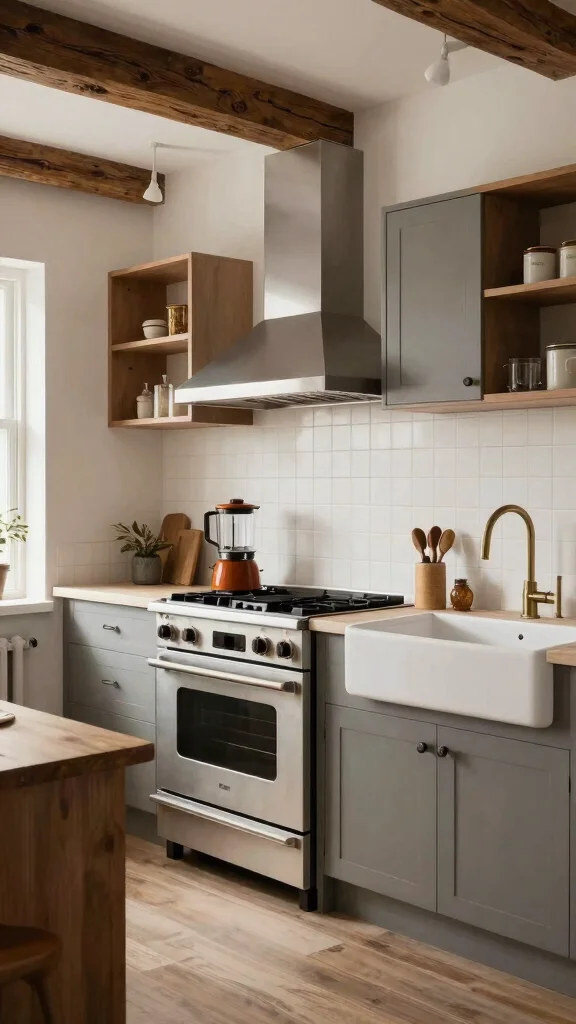
Infusing vintage charm with modern elements creates a distinctive kitchen style that is both nostalgic and fresh. Picture retro appliances paired with sleek countertops or classic fixtures accented by contemporary lighting. This blend allows for personalization, showcasing your unique taste while celebrating the beauty of different eras. Vintage touches, like a farmhouse sink, harmonize beautifully with modern cabinetry, resulting in a playful yet cohesive design.
To achieve this balanced look, consider these tips:
– Mix antique and modern pieces to maintain harmony.
– Stick to a cohesive color palette for visual consistency.
Incorporate these elements for a vintage-modern fusion:
– Use retro appliances as statement pieces.
– Choose modern cabinetry with vintage hardware.
– Include classic lighting fixtures for a nostalgic feel.
This approach not only creates a unique kitchen aesthetic but also promotes the sustainable use of vintage items.
13. Minimalist Green Design
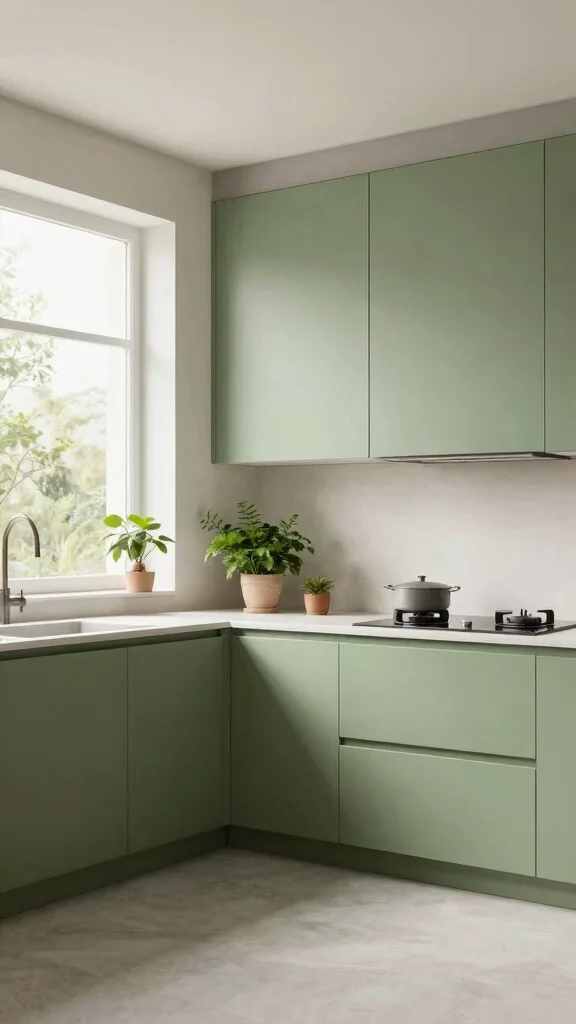
A minimalist green kitchen design emphasizes simplicity while making a powerful statement with eco-friendly elements. Utilize a limited color palette featuring greens and neutrals, complemented by sleek, functional furniture that avoids unnecessary embellishments. This style highlights clean lines and abundant natural light, fostering a calming environment that inspires creativity. Incorporate plants to inject vibrancy and select furniture made from sustainable materials to keep the look fresh and environmentally conscious.
To effectively embrace minimalist design, consider these tips:
– Keep decor minimal, focusing on quality over quantity.
– Utilize smart storage solutions to maintain cleanliness.
Explore these elements for a minimalist green kitchen:
– Choose neutral cabinetry with green accents.
– Incorporate natural wood surfaces for warmth.
– Use open shelving to display selected items.
This approach not only reduces clutter but also promotes mindfulness in your design choices.
14. Creative Backsplash Ideas
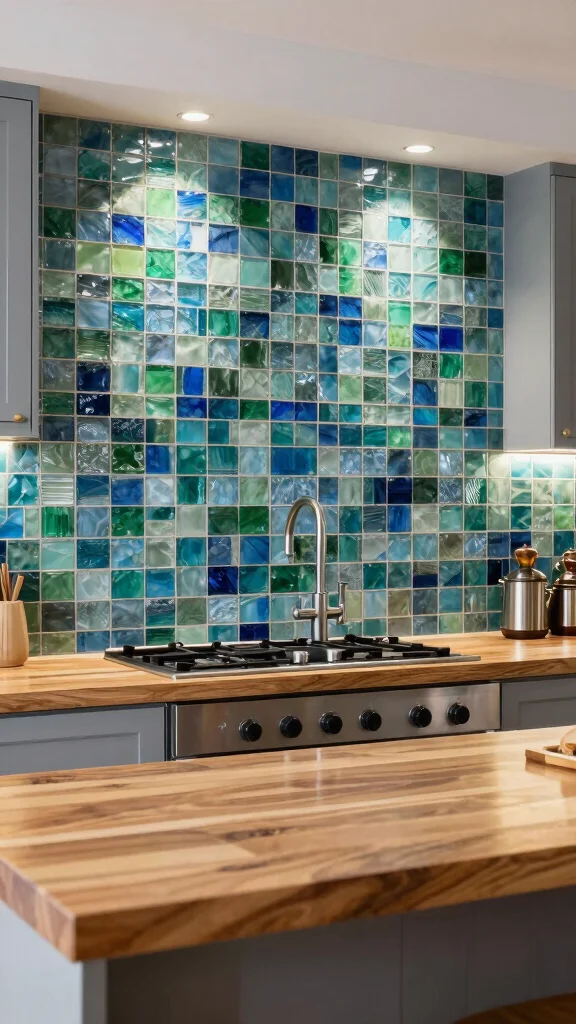
Your kitchen backsplash offers a fantastic opportunity to showcase eco-friendly choices while expressing your unique style. Consider using recycled glass tiles or natural stones to create a stunning and sustainable feature. Mosaic patterns made from various materials can transform your kitchen backdrop into an eye-catching focal point. Experiment with different shapes and textures to elevate your design while adhering to environmentally conscious practices.
To implement creative backsplash ideas, consider these tips:
– Choose designs that complement the overall kitchen style.
– Use eco-friendly grouting materials to support sustainable practices.
Incorporate these elements for a standout backsplash:
– Use recycled tiles for a colorful statement.
– Explore natural stone for sophisticated texture.
– Create geometric patterns for modern appeal.
This thoughtful selection enhances your kitchen’s aesthetic while highlighting your commitment to eco-friendly materials.
15. Smart Storage Solutions
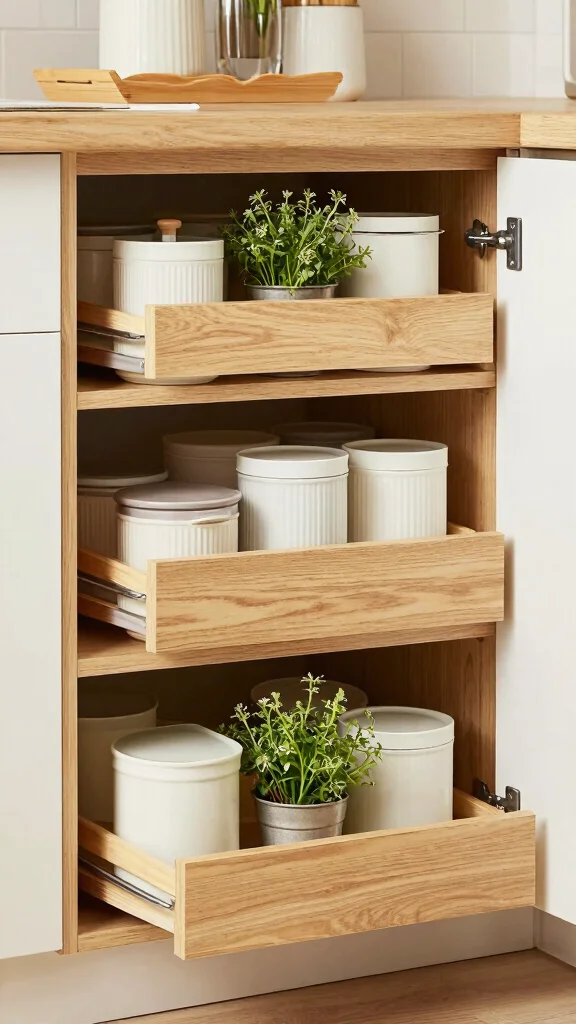
Effective storage solutions are essential in any kitchen, and eco-friendly options are becoming increasingly popular. Explore creative ways to maximize space with built-in shelving, pull-out drawers, and vertically hung pots and pans. Utilize containers made from sustainable materials for pantry organization, keeping your kitchen tidy while promoting efficiency. Clever storage solutions can also double as decorative elements, such as displaying herbs or cookbooks on open shelves.
To enhance your kitchen organization, consider these tips:
– Label containers for quick access and organization.
– Use clear containers to showcase colorful ingredients.
Incorporate these elements for smart storage:
– Opt for modular shelving that adapts to your needs.
– Use baskets made from natural fibers for stylish organization.
– Create vertical gardens for herb storage and decor.
This approach ensures your kitchen remains clutter-free while enhancing its overall design aesthetic.
Pro Tip: In small kitchens, vertical storage can add up to 30% more usable space—perfect for embracing green kitchen design ideas with tall shelves and peg rails. Use sustainable, reusable containers for pantry items and pull-out drawers to keep everything at your fingertips.


16. Cozy Nooks for Relaxation
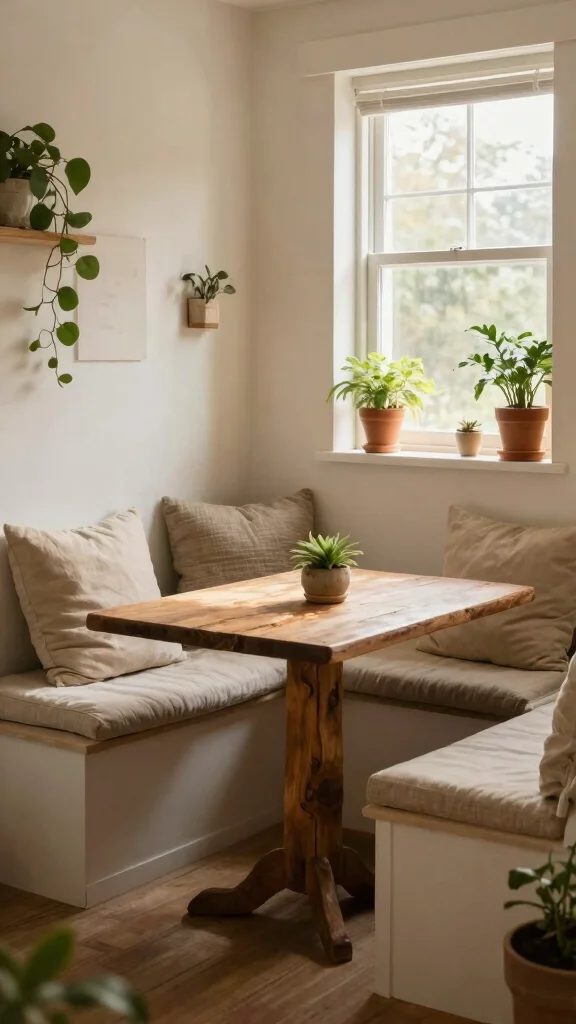
Creating a cozy nook in your kitchen offers a perfect retreat for family and friends. Consider adding a small table with comfortable seating or a built-in bench adorned with cushions. This inviting space encourages conversation and connection over a cup of coffee or a meal. Using natural fabrics and warm colors enhances the cozy atmosphere, making it a cherished corner of your kitchen.
To design your cozy nook effectively, consider these tips:
– Select furniture that complements your kitchen’s style.
– Add pillows or throws crafted from organic materials for comfort.
Incorporate these elements for a relaxing nook:
– Use a small round table for intimacy.
– Add a window seat with plush cushions.
– Decorate with plants for added warmth.
This approach enhances the communal aspect of cooking and dining, creating a welcoming environment for family gatherings.
17. Customizable Spaces
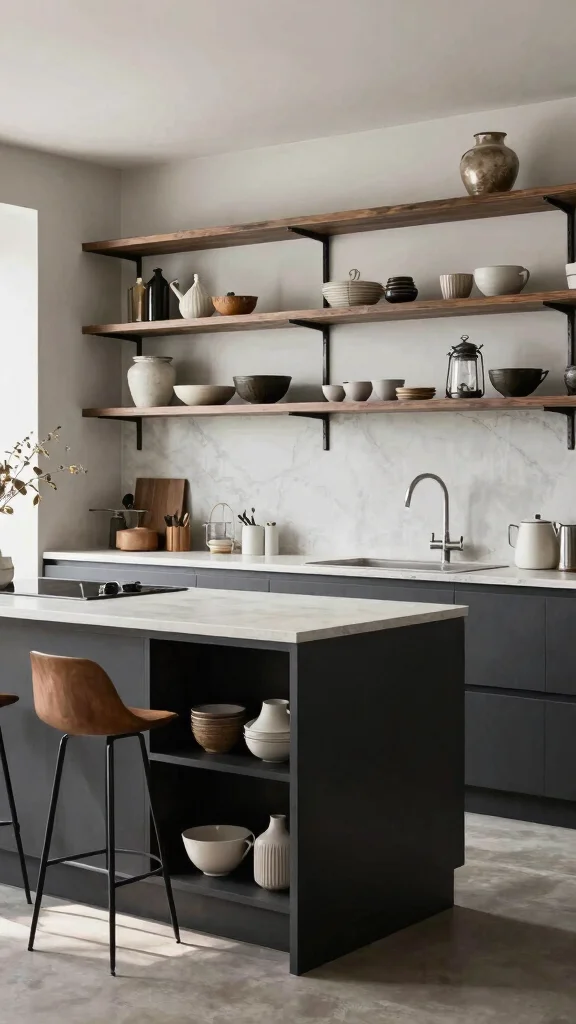
Personalizing your kitchen allows you to express your unique style while remaining eco-friendly. Customizable spaces can include movable islands, adjustable shelving, or interchangeable decor elements. This flexibility not only enhances your kitchen’s functionality but also allows you to adapt the space as your needs evolve over time. Incorporate items made from recycled materials that can be easily updated to keep your design fresh.
To effectively implement customizable spaces, consider these tips:
– Choose modular furniture that fits various layouts.
– Explore DIY projects to create affordable customizable pieces.
Incorporate these elements for flexibility:
– Use rolling carts for extra counter space.
– Install adjustable shelving for versatile storage.
– Employ decor that can be easily swapped out for seasonal changes.
This approach fosters a dynamic kitchen environment while supporting sustainable practices.
18. Colorful Utensils and Dinnerware
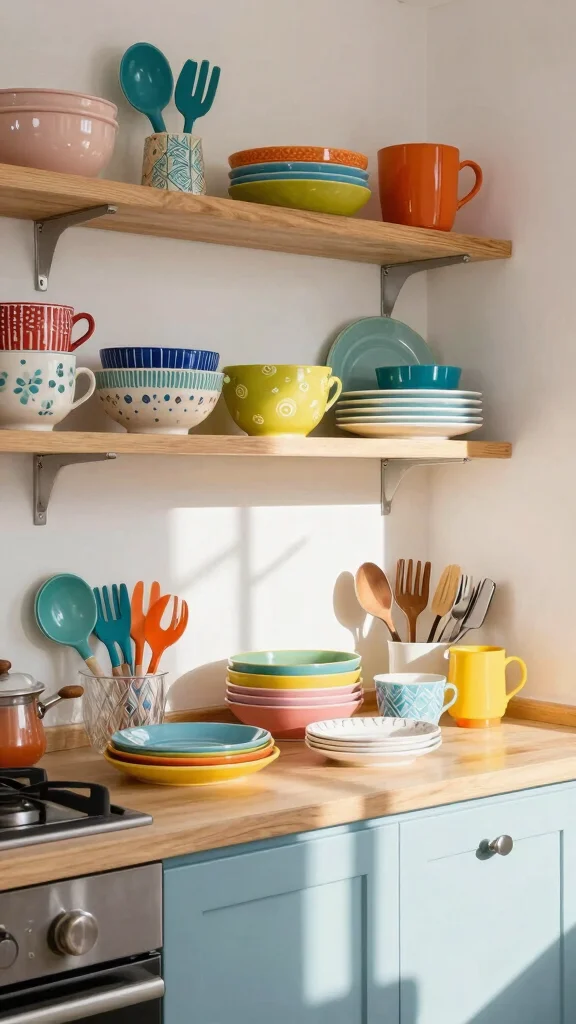
Brighten your kitchen with colorful utensils and dinnerware that reflect your personality and style. Opt for items made from sustainable materials that not only look appealing but also align with eco-friendly values. Mixing and matching different colors and patterns creates a lively atmosphere that inspires culinary creativity. This playful approach to dinnerware offers an easy way to inject personality into your kitchen while promoting sustainability.
To make the most of colorful utensils, consider these tips:
– Choose dishwasher-safe items for easy cleaning.
– Look for brands prioritizing sustainability in production.
Incorporate these elements for a vibrant kitchen:
– Use patterned plates for visual interest.
– Add colorful utensils that are functional and fun.
– Display dinnerware in open shelves for a cheerful touch.
This approach ensures your kitchen is not only functional but also a joyful space that reflects your values.
19. Eco-Conscious Window Treatments
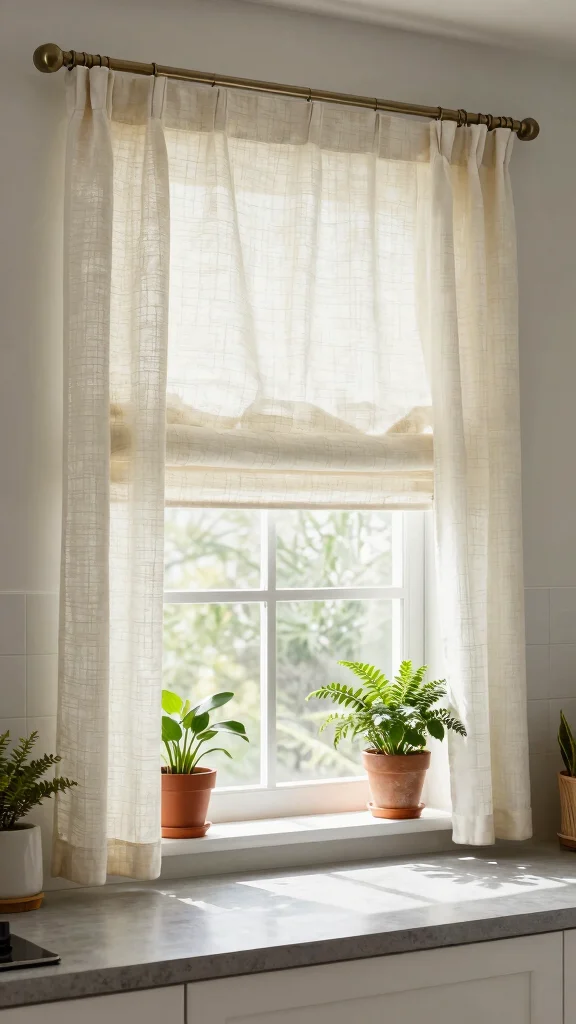
Window treatments play a crucial role in setting the mood of your kitchen while contributing to energy efficiency. Choose curtains or blinds made from organic materials like hemp or cotton, which allow natural light to filter in while providing privacy. These eco-conscious options can be stylish while also reducing energy costs through better insulation. Incorporating natural tones that fit your color palette creates a cohesive look throughout the space.
To select the best window treatments, consider these tips:
– Opt for light-filtering materials to maintain brightness.
– Layer treatments for added style and insulation.
Incorporate these elements for effective window treatments:
– Use organic cotton curtains for a soft touch.
– Choose bamboo blinds for a natural aesthetic.
– Add sheer panels for a light and airy feel.
This approach enhances the aesthetic appeal of your kitchen while supporting sustainable materials and practices.
Fun fact: Organic hemp curtains can filter sunlight while reducing heat transfer by up to 20%, cutting energy costs and keeping your kitchen cooler. Pair with natural toned textiles for a cohesive eco-friendly look— a staple in green kitchen design ideas.
Conclusion
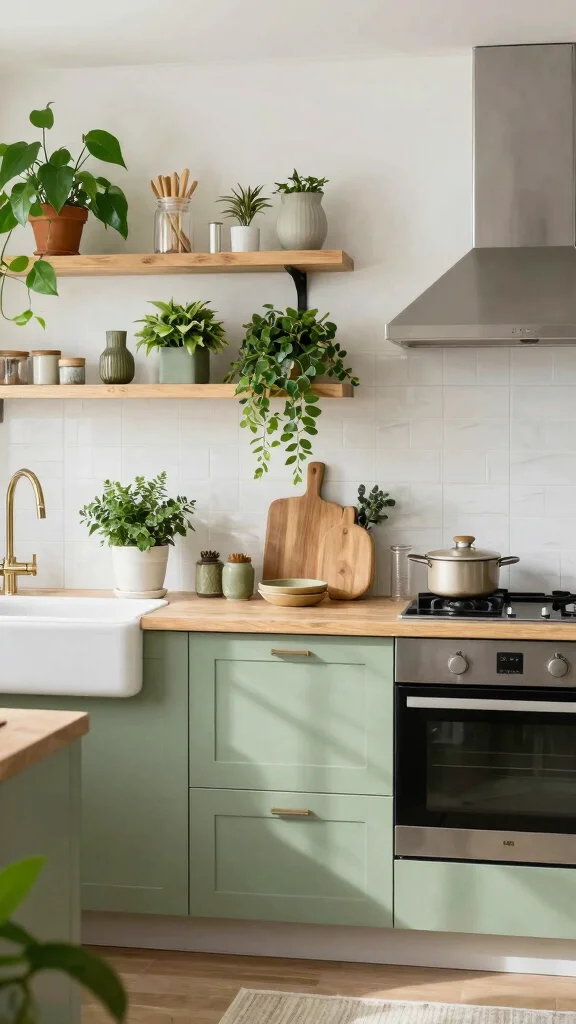
Transforming your kitchen into a green oasis is not just about aesthetics; it’s about creating a space that reflects your values and love for the environment.
With these 19 green kitchen design ideas, you can blend sustainability with style, embracing changes that benefit both your home and the planet. Whether you’re embarking on a full renovation or simply looking to make small changes, every step counts towards a more eco-friendly lifestyle.
Related Topics